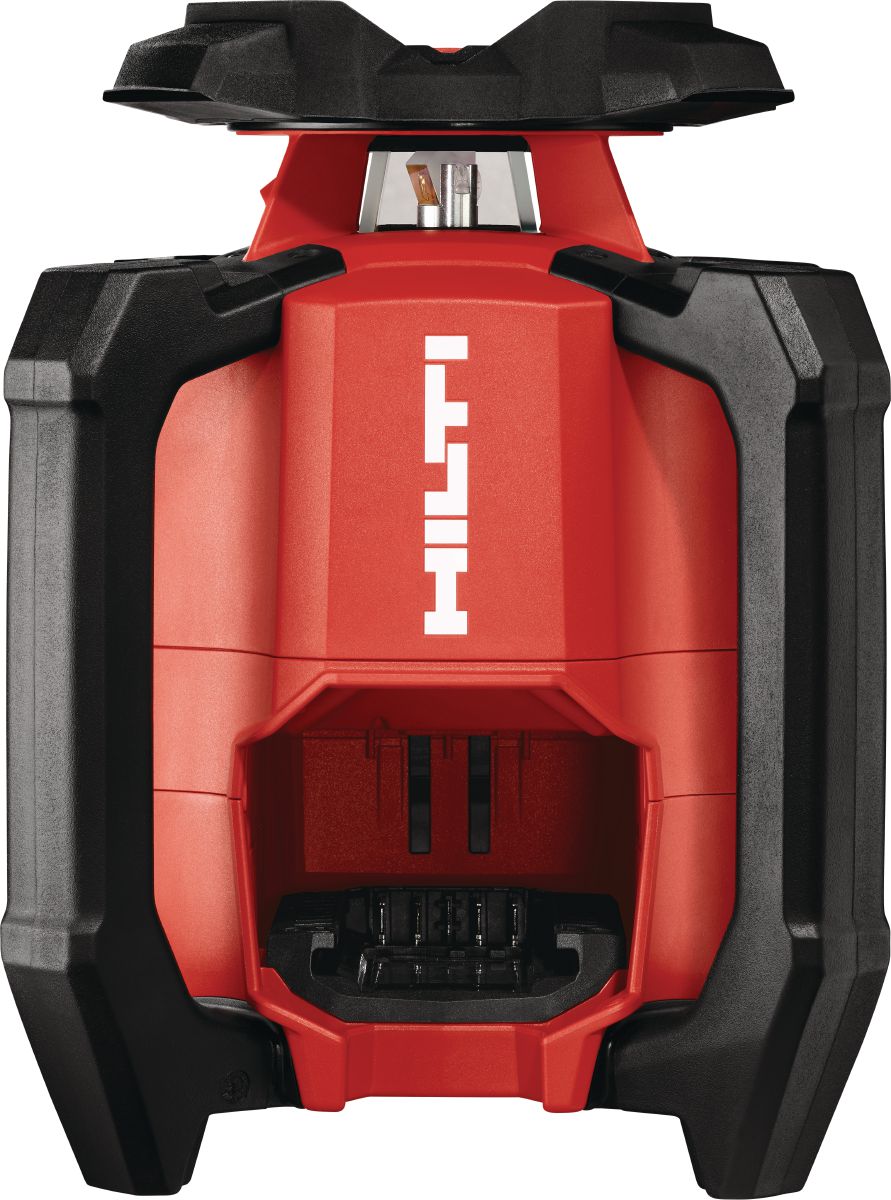

Rotary Laser Level
A rotary laser level is a self-leveling instrument that projects a rotating laser beam in a 360-degree horizontal or vertical plane to establish a consistent elevation reference across a work area. The device is used extensively in construction for grading, foundation layout, interior leveling, and alignment tasks where a visible or detectable reference line is required over distances from a few feet to hundreds of feet. The rotating head allows a single instrument to cover an entire jobsite with a level plane.
Fonctionnement
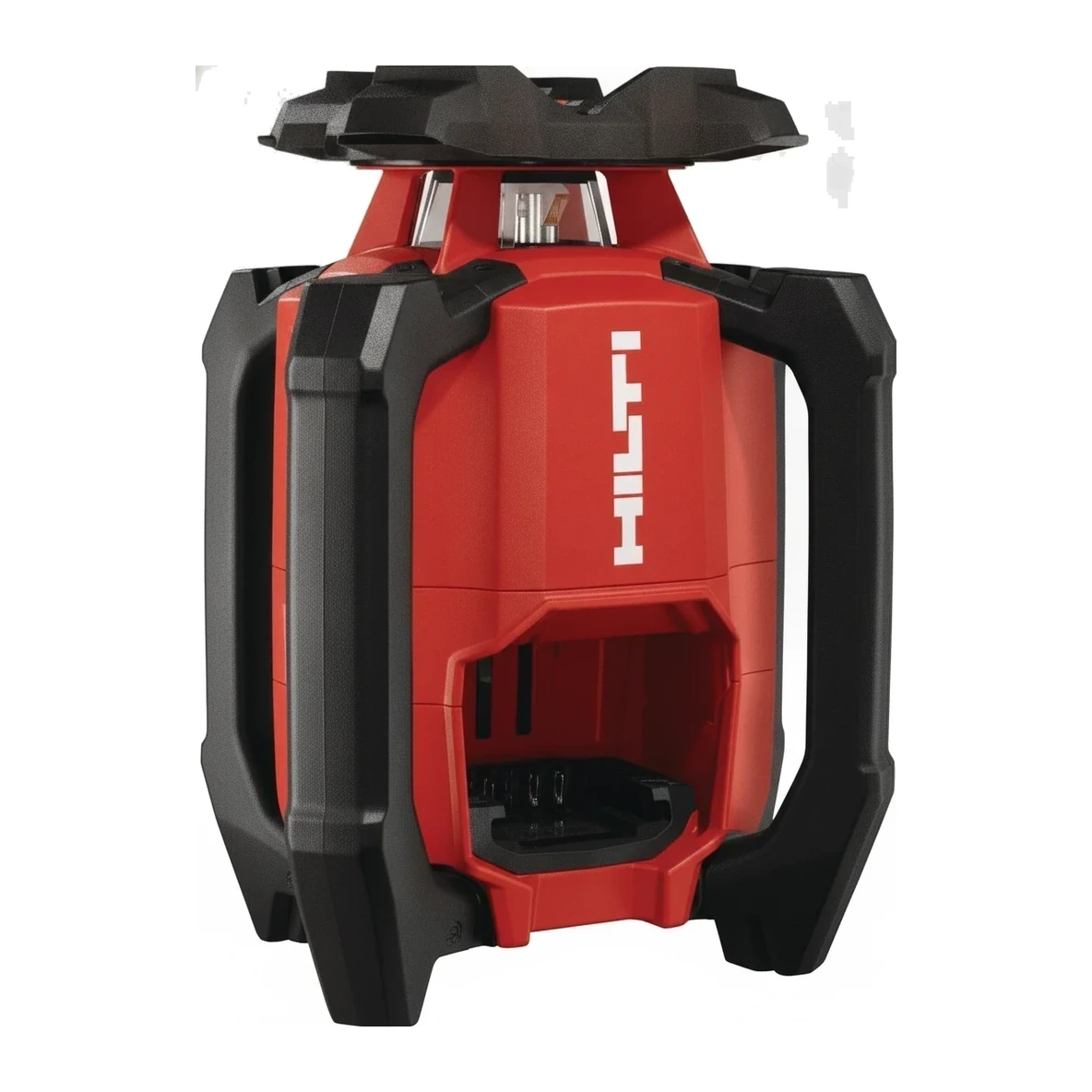
The unit contains a laser diode and a motorized rotating head, typically spinning at 300 to 600 RPM, which sweeps the beam in a full circle. An internal pendulum or electronic self-leveling mechanism automatically positions the beam to true level or plumb within a specified range (usually ±5 degrees), ensuring accuracy without manual adjustment. Most models emit a visible red or green laser; for outdoor use in bright conditions, the beam is detected using a handheld receiver that picks up the signal and indicates elevation relative to the plane. The operator mounts the laser on a tripod, activates the self-leveling function, and sets the desired plane (horizontal, vertical, or sloped on advanced models). The rotating beam creates a reference line on walls, stakes, or grade rods; receivers clipped to excavator masts, grade rods, or machinery provide audible and visual feedback to guide elevation work beyond visible range.
Types et variantes
- Single-Grade Rotary Laser
- Projects a level horizontal plane only; most common for general leveling, interior work, and basic site layout.
- Dual-Grade Rotary Laser
- Capable of creating slopes in one or two axes; used for drainage, grading, and applications requiring pitched planes.
- Green Beam Rotary Laser
- Uses a green laser diode, offering better visibility indoors and in low-light conditions compared to red beam models.
- Vertical Rotary Laser
- Projects a rotating vertical plane for plumb alignment, wall layout, and column positioning.
- Long-Range Rotary Laser
- Designed for exterior work with ranges exceeding 1,000 feet when used with a detector; typically features enhanced durability and battery life.
Spécifications clés
| Spécification | Plage typique | Signification |
|---|---|---|
| Range (Diameter) | 400-2,000 ft with detector | Maximum working diameter; visible range is significantly less, typically 100-300 ft in bright conditions. |
| Accuracy | ±1/16" to ±3/32" per 100 ft | Leveling precision across distance; tighter tolerances required for interior finish work. |
| Self-Leveling Range | ±5° to ±6° | Maximum tilt from level the internal mechanism can automatically compensate for before alarming. |
| Rotation Speed | 300-600 RPM (variable) | Speed of the rotating head; some models allow speed adjustment to improve line visibility or detector response. |
| Power Source | Rechargeable battery or alkaline cells | Operating runtime typically ranges from 20 to 100 hours depending on battery type and model. |
Comment l'industrie le dimensionne
The rental industry sizes rotary laser levels primarily by range, measured in feet (diameter), which determines suitability for interior versus exterior applications. Models with ranges up to approximately 400 feet are typically positioned for interior work, drop ceilings, wall layout, and slab checks, where the visible beam is sufficient. Units rated beyond 400 feet (often 1,000 to 2,000+ feet with a detector) are intended for site work including footings, foundations, grading, and long exterior runs in daylight, where a handheld receiver is essential. Additional considerations include beam color (red or green), accuracy class, and dual-grade capability, though range remains the primary sizing criterion.
Applications
- Establishing grade and elevation for site excavation, grading, and drainage work
- Foundation and footing layout, ensuring level reference planes for formwork and concrete placement
- Interior leveling for drop ceilings, suspended systems, and partition wall layout
- Slab-on-grade and flatwork elevation checks during concrete pours and finishing
- Alignment of structural steel, columns, and building components during erection
- Utility and pipeline installation requiring consistent slope or elevation control
Sécurité et opération
- Operators should avoid direct eye exposure to the laser beam; most units are Class 2 or 3R lasers requiring appropriate handling.
- The instrument must be positioned on stable, level ground or a secure tripod to prevent tipping and maintain accuracy.
- Use caution when working near reflective surfaces or water, which can scatter or redirect the laser beam unpredictably.
- Ensure the self-leveling mechanism is functioning and the unit alarms or shuts down if disturbed beyond its leveling range.
- Protect the equipment from moisture, dust, and impact; check the IP (Ingress Protection) rating to confirm suitability for outdoor or harsh conditions.
Normes et certifications
- ANSI/ASQ Z540.3
- Standards for calibration of measuring and test equipment; rotary lasers require periodic calibration to maintain rated accuracy.
- IEC 60825-1
- International standard for safety of laser products; classifies rotary lasers and defines labeling, exposure limits, and safety features.
- OSHA 29 CFR 1926 · Subpart N
- General construction safety regulations; addresses safe use of measuring and layout equipment on jobsites.
- ISO 12858-1
- Specifies test methods for determining the accuracy of construction lasers, including rotary laser levels.
Questions fréquentes
What is the difference between a rotary laser and a line laser?
When is a detector required with a rotary laser level?
How is accuracy verified and maintained for rotary laser levels?
Can rotary lasers create sloped planes for drainage or grading?
Équipements connexes
Parcourir par fabricant
Sources
Chaque spécification est vérifiée par rapport aux données publiées par le fabricant, avec la source liée pour référence.
Tous les modèles
22 modèles · Chaque spécification citée à la source