

Air Scrubber / Negative Air Machine
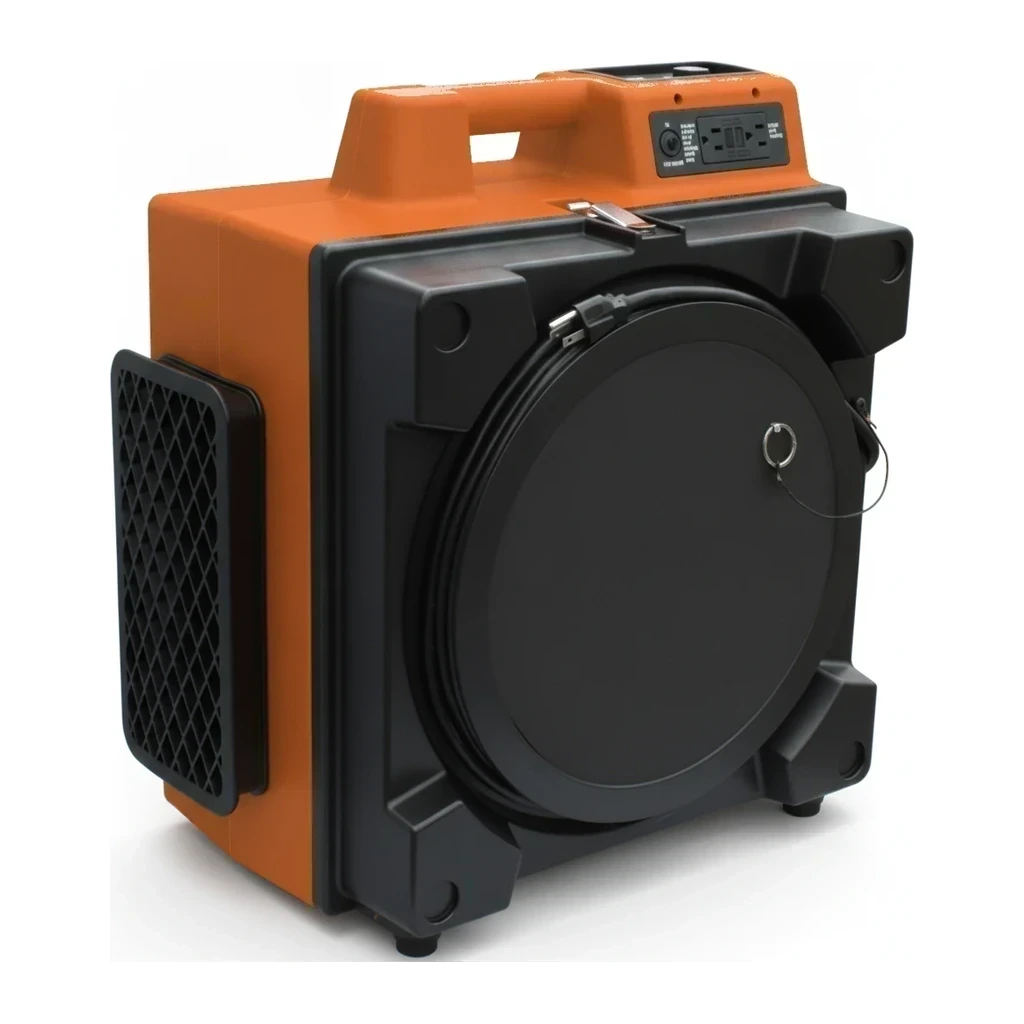
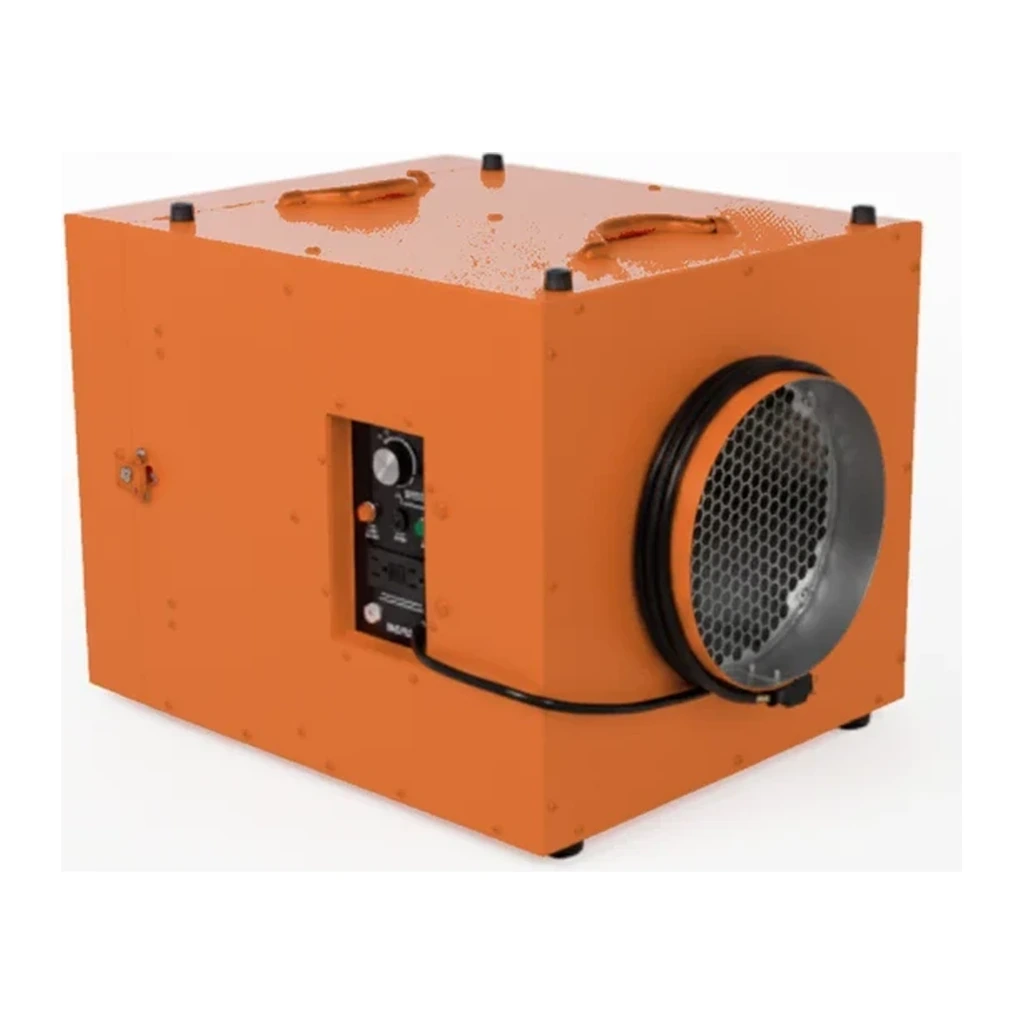
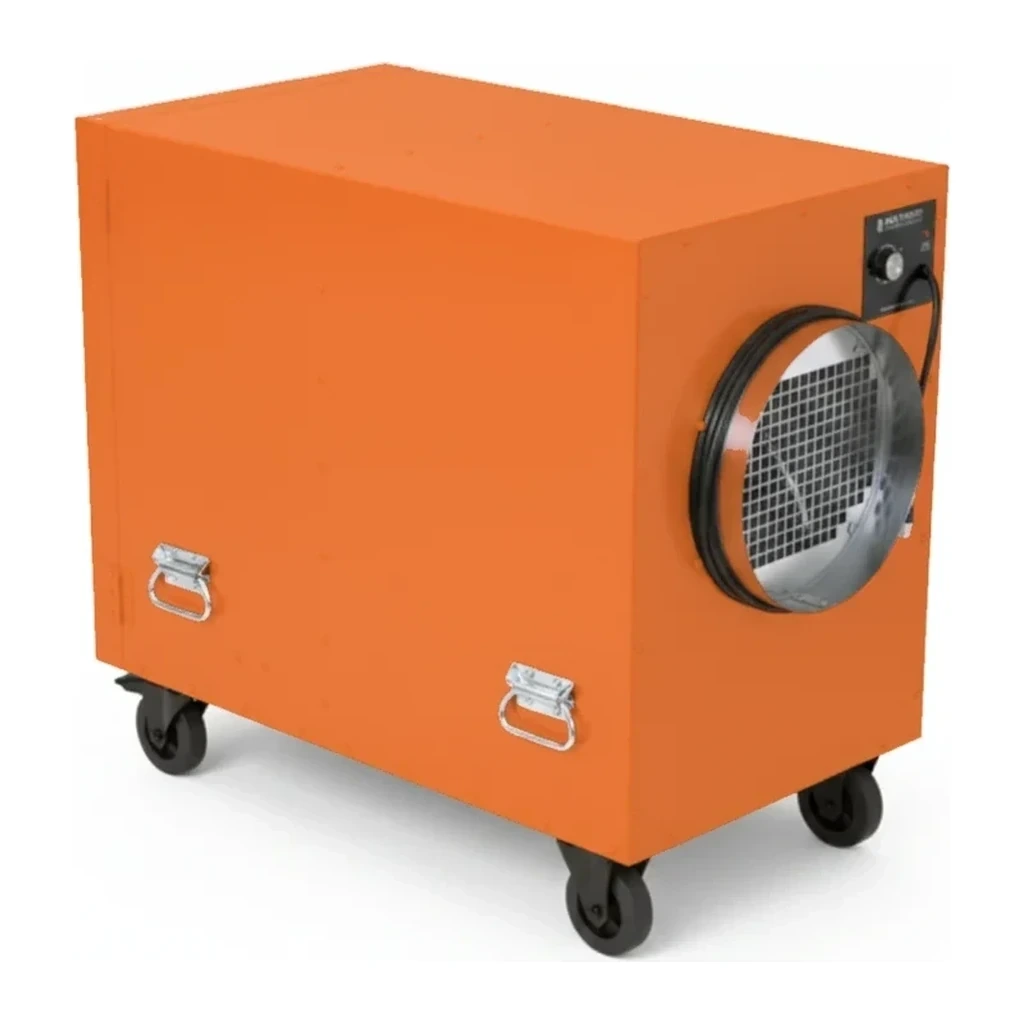
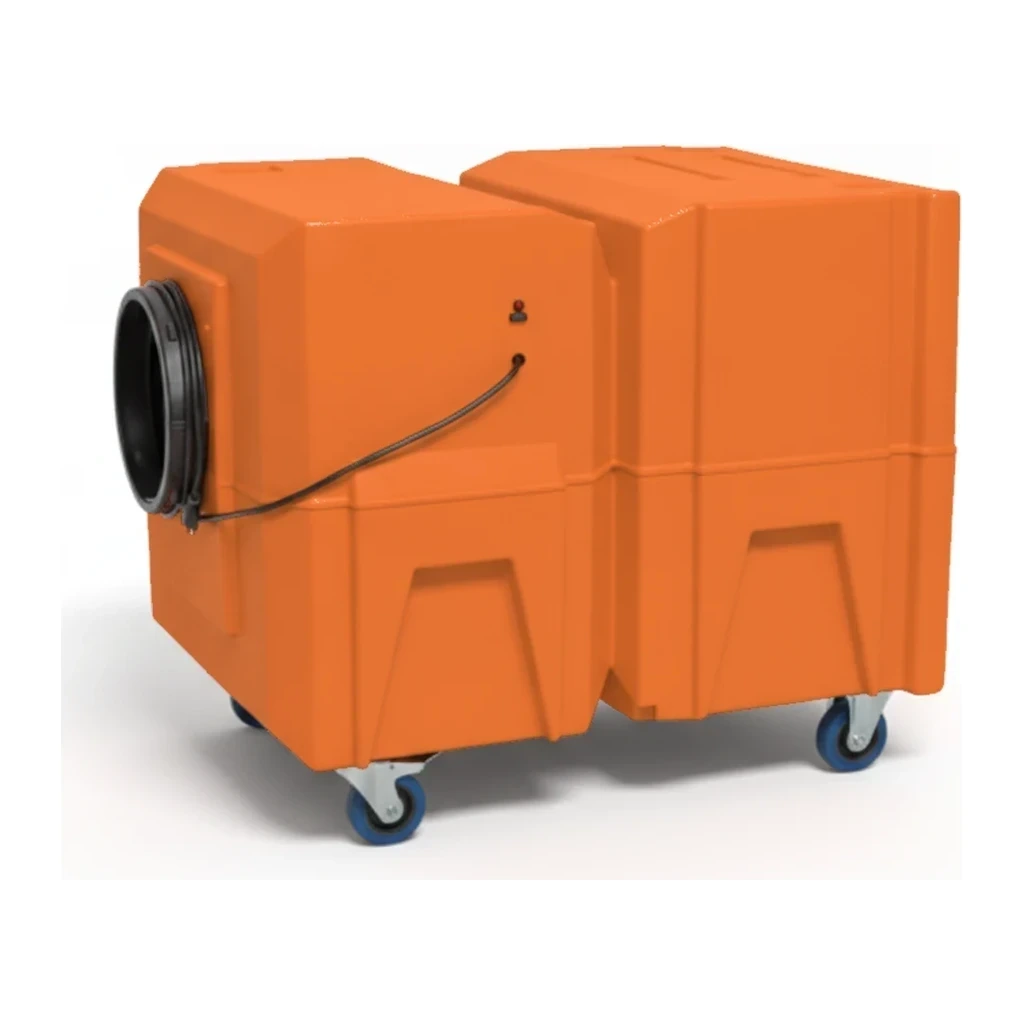
An air scrubber, also known as a negative air machine, is a portable air filtration device that removes airborne contaminants such as dust, mould spores, asbestos fibres, and particulates from enclosed or semi-enclosed spaces. These machines use multi-stage filtration, typically including HEPA filters, to create and maintain negative air pressure within containment areas during restoration, abatement, and construction projects. The equipment is fundamental to environmental remediation, ensuring that hazardous particles do not migrate beyond controlled work zones.
Cat classes
Choisissez une classe de taille : la capacité et la portée varient selon la gamme.
Fonctionnement
The machine draws contaminated air through an intake, passes it through a series of filters (pre-filter, optional activated carbon, and HEPA filter), and exhausts cleaned air either back into the space or outside the containment through flexible ducting. By exhausting more air than enters naturally, the unit creates negative pressure inside the containment area, preventing airborne contaminants from escaping into adjacent spaces. Airflow is driven by a centrifugal blower or axial fan, with variable speed controls allowing operators to adjust CFM output to match the size of the containment and required air change rate. Most units are stackable for higher CFM output and feature hour meters, differential pressure gauges to monitor filter loading, and multiple outlet configurations for ducting.
Types et variantes
- Standard HEPA Air Scrubber
- General-purpose unit with HEPA filtration for restoration, water damage, and light abatement work; typically 500-800 CFM with recirculation or exhaust modes.
- Negative Air Machine with Ducting
- Purpose-built for containment work with integrated collar or adapters for 6-12 inch flexible ducting to exhaust outside the work zone; common in asbestos and mould abatement.
- High-Capacity Industrial Scrubber
- Large-format machines delivering 1,200+ CFM for multi-room containments, industrial facilities, and large-scale environmental work where multiple smaller units would otherwise be required.
- Carbon-Enhanced Air Scrubber
- Includes activated carbon or potassium iodide filters in addition to HEPA stages to adsorb volatile organic compounds (VOCs), odours, and chemical fumes during fire restoration and odour remediation.
- Low-Profile / Compact Air Scrubber
- Smaller footprint units designed for tight spaces, crawlspaces, and areas with restricted access; typically under 600 CFM but with same filtration standards.
Spécifications clés
| Spécification | Plage typique | Signification |
|---|---|---|
| Airflow (CFM) | 200-4,000 cfm | Volume of air processed per minute; primary sizing metric that determines containment coverage and air change rate. |
| Filtration Stages | 3-4 stages (pre-filter, optional carbon, HEPA, optional final) | Number and type of filter media; HEPA (minimum 99.97% at 0.3 microns) is the industry standard for particulate capture. |
| Static Pressure | 0.5-2.5 inches w.c. | Maximum pressure the blower can overcome; higher values allow longer duct runs and multiple filters without airflow loss. |
| Noise Level | 60-75 dBA | Sound output at rated speed; relevant for occupied buildings and noise-sensitive environments. |
| Power Draw | 3-15 amps at 115V | Electrical consumption; larger units may require 230V circuits for high-CFM operation. |
Comment l'industrie le dimensionne
Air scrubbers are sized primarily by airflow capacity measured in cubic feet per minute (CFM). The industry categorizes machines into three broad bands: up to 600 CFM units provide HEPA filtration and negative pressure for one containment room: the standard 500 CFM restoration machine; 600-1,200 CFM machines cover a full containment on an abatement or mould job, delivering 1,000 CFM through 6 to 12 inch duct; and 1,200+ CFM industrial scrubbers address large containments and industrial work, with one machine covering the air changes that used to take three. Sizing calculations are based on containment volume, required air changes per hour (typically 4-6 ACH for abatement work), and applicable regulatory standards for the specific hazard being controlled.
Applications
- Asbestos abatement and lead paint removal containment with mandated negative pressure
- Mould remediation in water-damaged structures and HVAC systems
- Fire and smoke restoration to remove particulates and odours from affected areas
- Construction dust control in occupied buildings and hospitals
- Post-construction cleaning to reduce airborne debris before occupancy
- Healthcare facility containment during renovation or infectious disease response
Sécurité et opération
- Containment integrity must be verified before operation; the machine should maintain measurable negative pressure (typically -0.02 inches w.c. minimum) to prevent contaminant migration.
- Filters must be changed according to manufacturer intervals and when differential pressure gauges indicate loading; saturated HEPA filters reduce CFM output and containment effectiveness.
- Exhaust air discharged outside containment must comply with local regulations; some jurisdictions prohibit outdoor exhaust of certain contaminants without additional treatment.
- Electrical cords and ducting should be routed to avoid tripping hazards and damage in active work zones; GFCI protection is recommended in wet restoration environments.
- Operators handling contaminated filters must use appropriate PPE and follow waste disposal protocols for the specific hazard (asbestos, mould, lead) being abated.
Normes et certifications
- ANSI/IICRC · S500, S520
- Water damage restoration and mould remediation standards that specify air filtration requirements and air change rates for containment.
- EPA · Asbestos NESHAP
- National Emission Standards for Hazardous Air Pollutants mandate negative pressure and HEPA filtration during asbestos abatement activities.
- OSHA · 29 CFR 1926.1101
- Asbestos standard for construction requiring negative pressure enclosures and air monitoring during regulated abatement work.
Questions fréquentes
What is the difference between an air scrubber and a negative air machine?
How is CFM requirement calculated for a containment area?
Can air scrubbers be stacked or daisy-chained for larger containments?
When should carbon filters be used in addition to HEPA filters?
Comparer les modèles populaires
Chercher par spécification →Normalisé aux mêmes unités. Un tiret signifie que la valeur n'a pas été publiée.
| Modèle | Débit d’air | Capacité de carburant |
|---|---|---|
| Presvac Liquid Vac With VOC Scrubbing | 350 cfm | 500.0 gal |
| Xpower F-16 | - | 1,600.0 gal |
Équipements connexes
Parcourir par fabricant
Sources
Chaque spécification est vérifiée par rapport aux données publiées par le fabricant, avec la source liée pour référence.