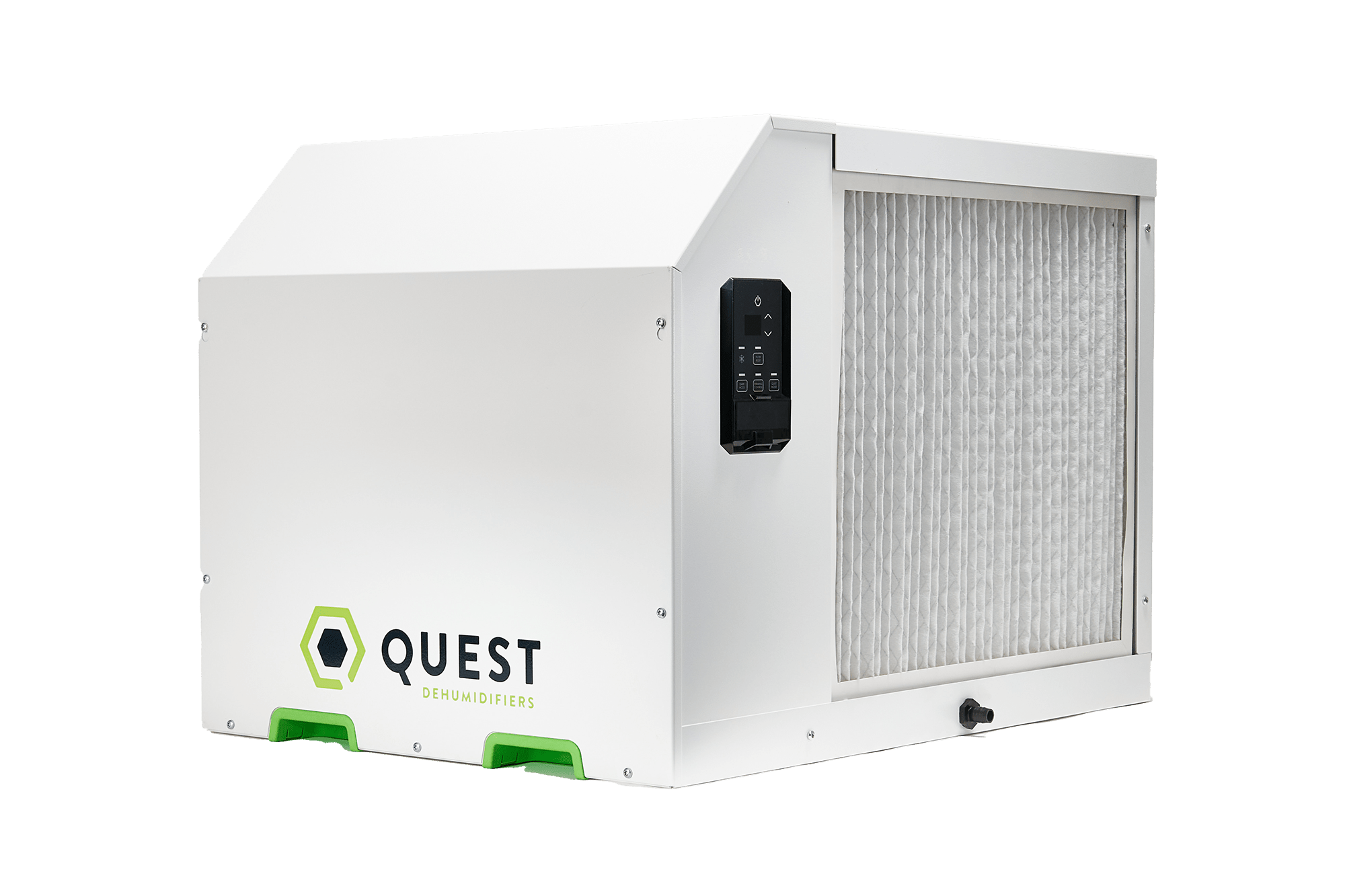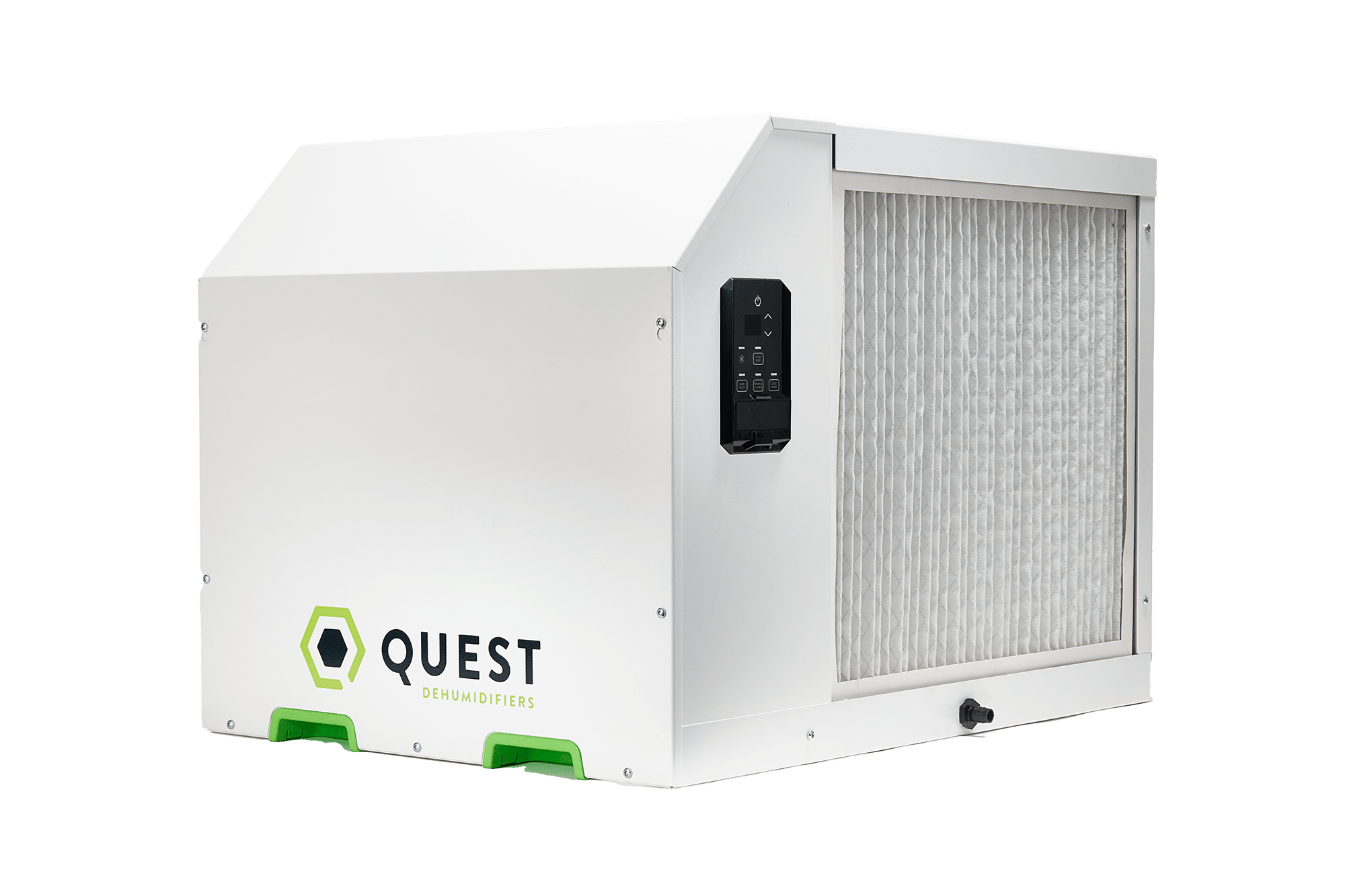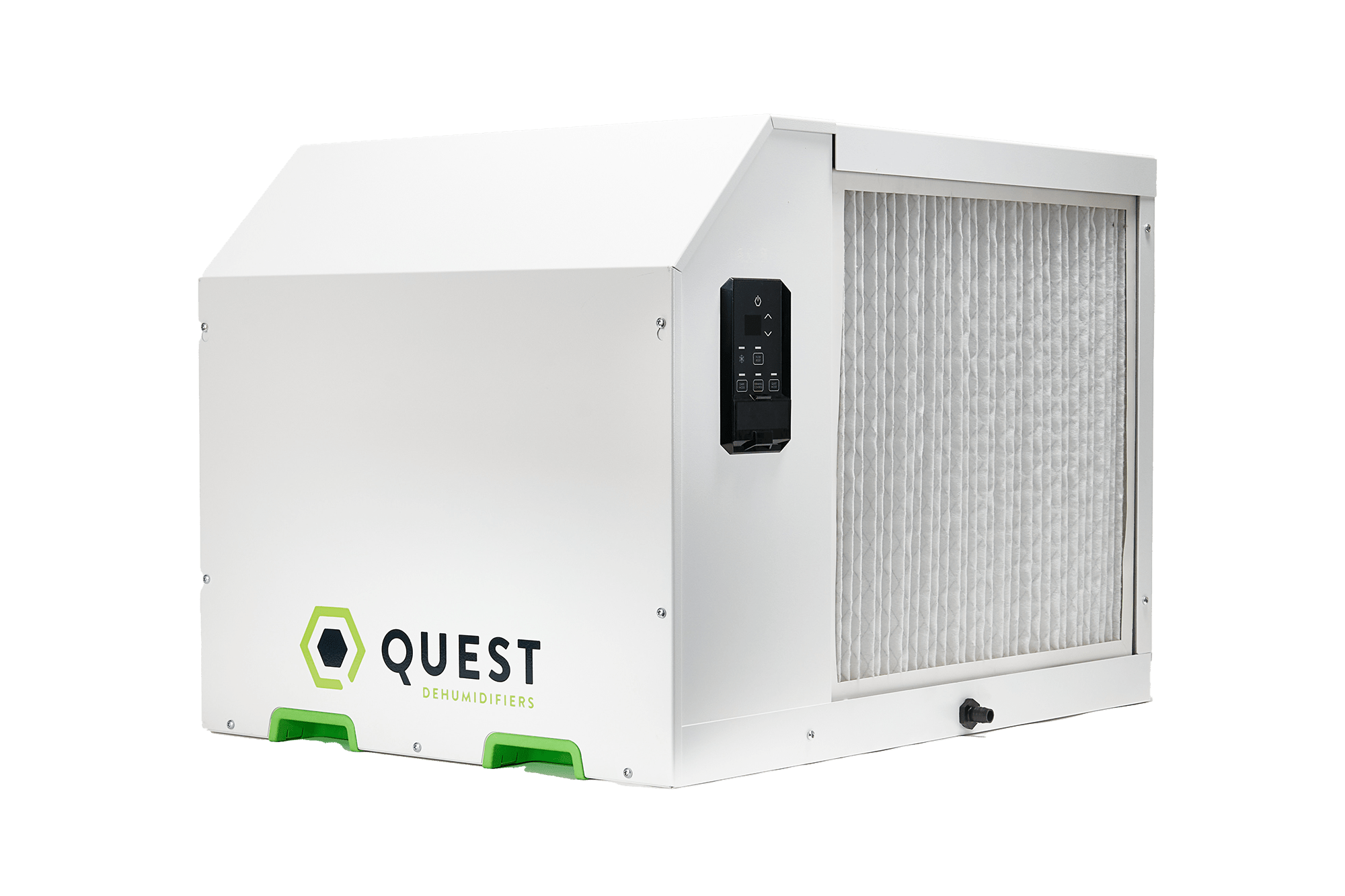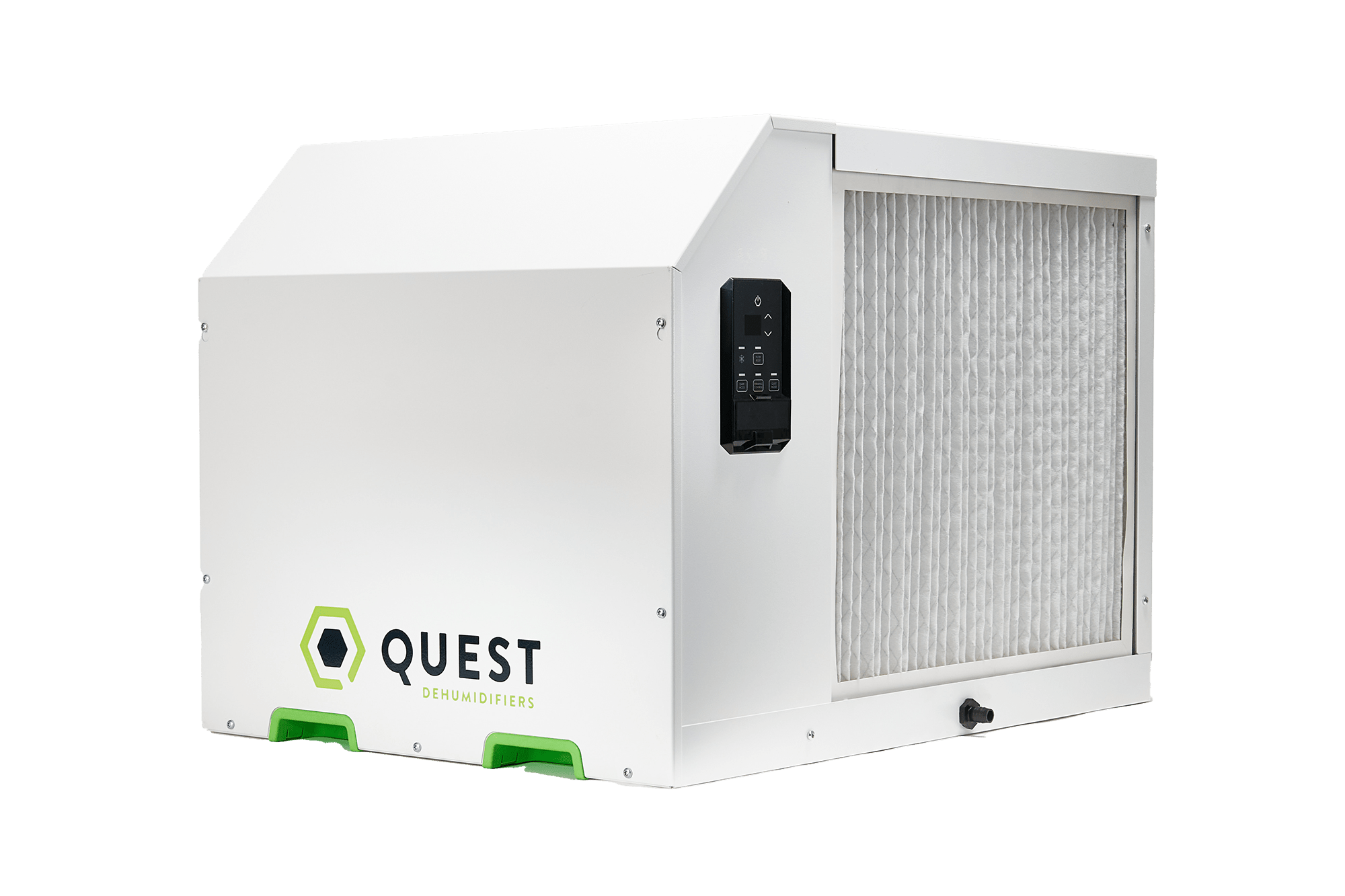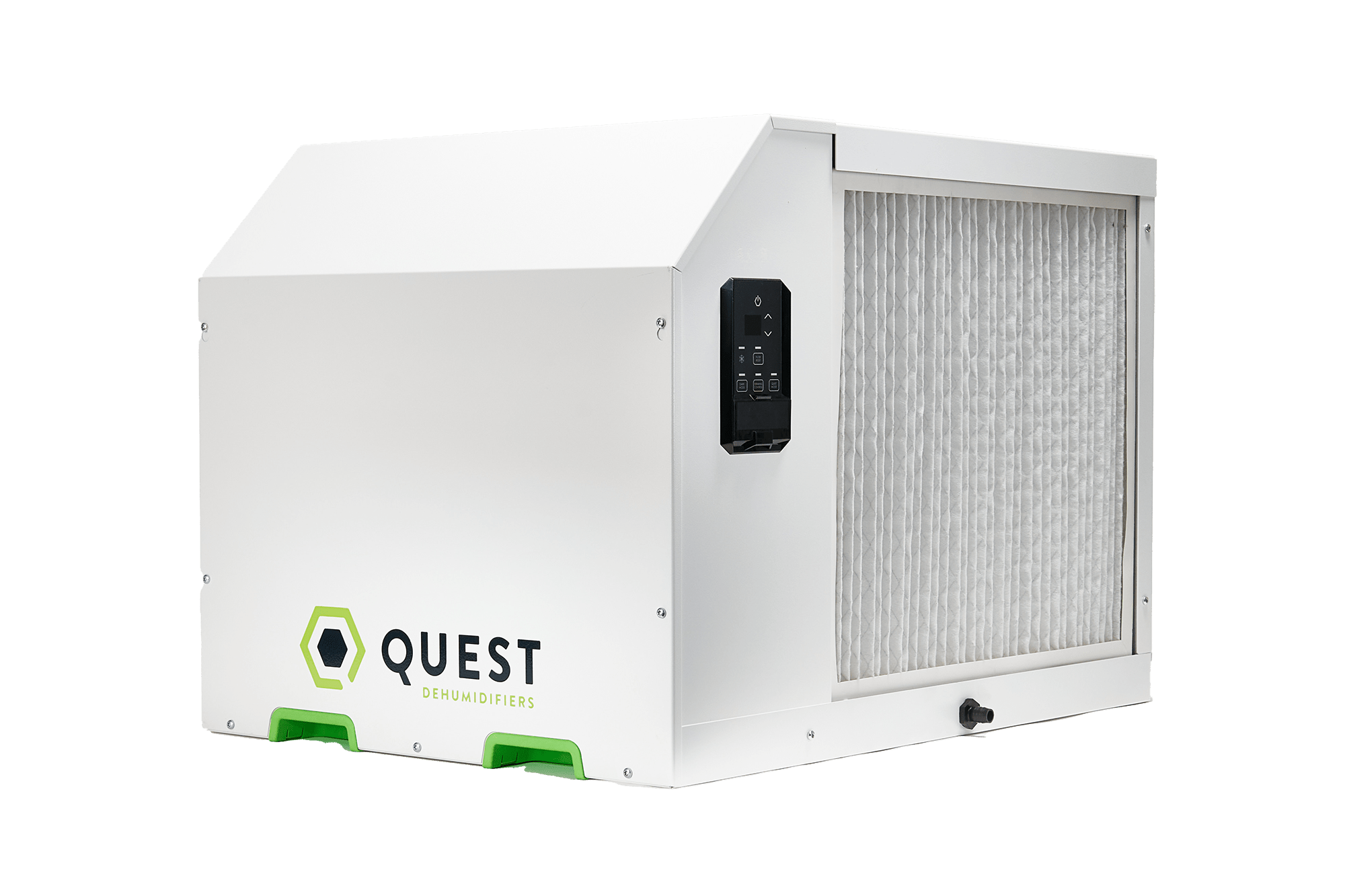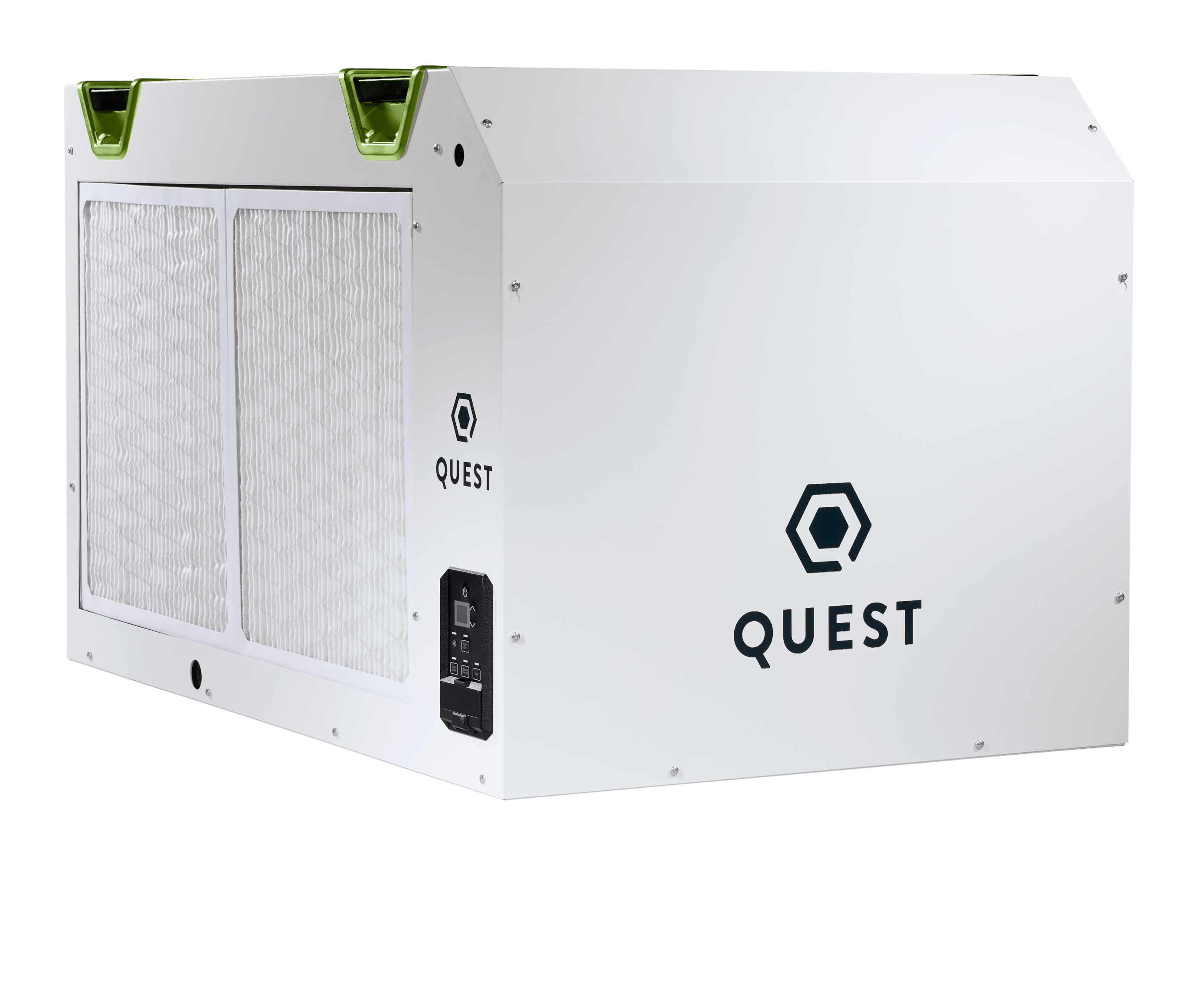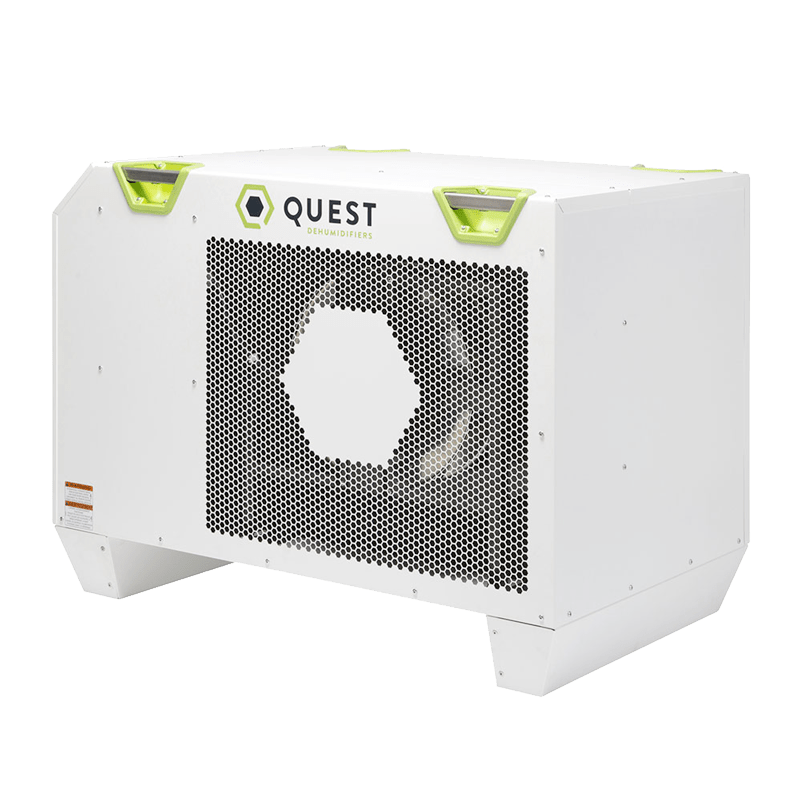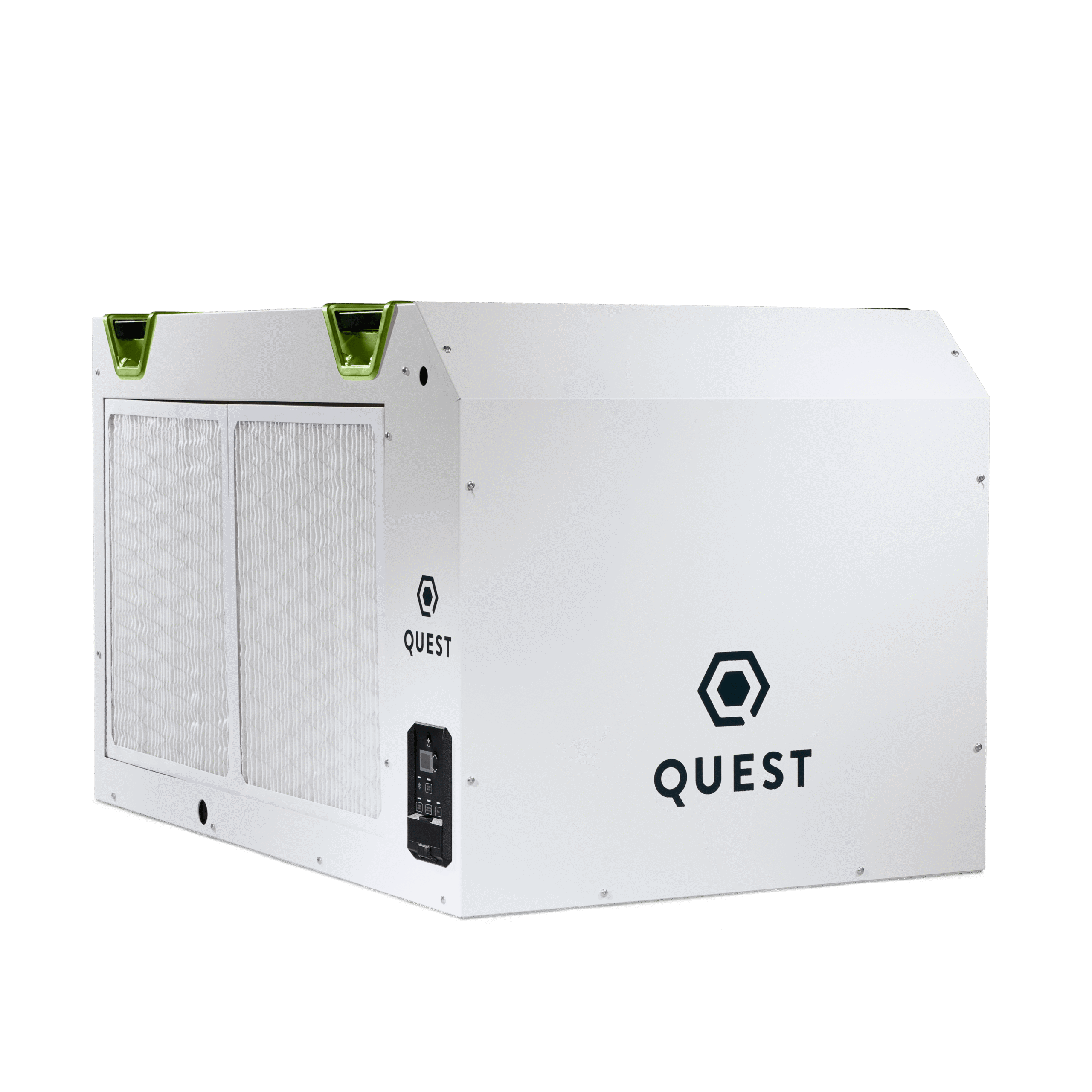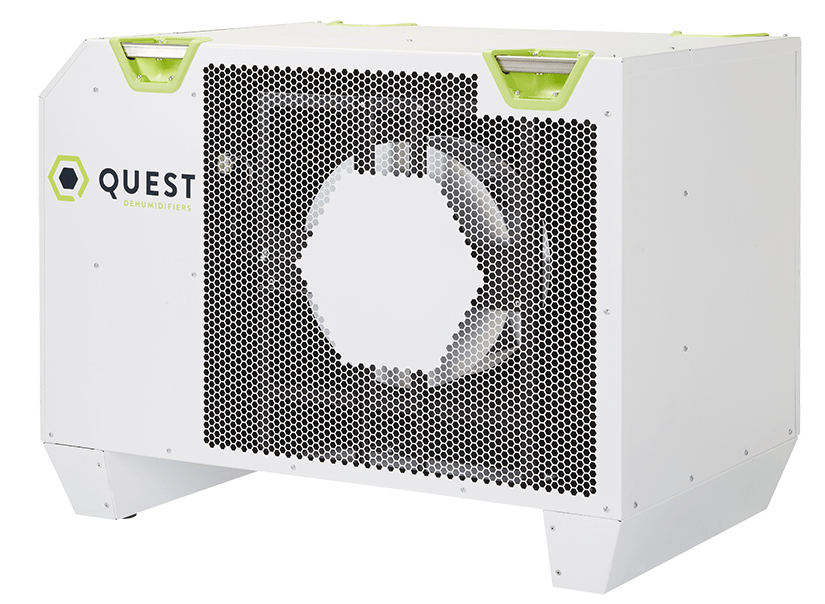

Desiccant Dehumidifier
A desiccant dehumidifier removes moisture by adsorbing it onto a slowly rotating desiccant wheel rather than condensing it on cold coils, so it keeps drying in cold spaces and reaches humidity levels refrigerant units cannot. The catalog lists 125 models from brands including Munters, Quest, Ebac, Santa Fe, Dri-Eaz and Abatement Technologies.
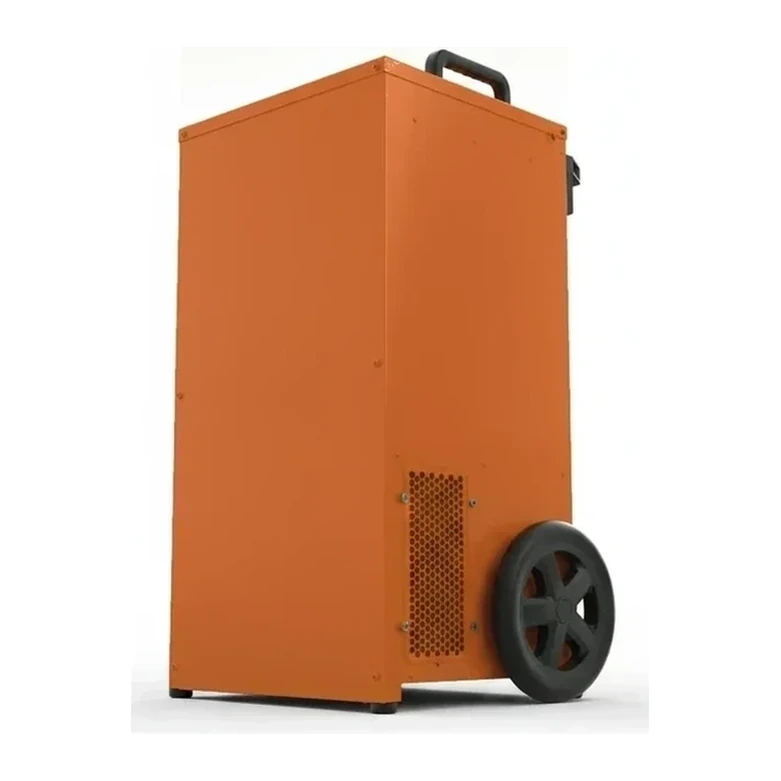
Cat classes
Choisissez une classe de taille — la capacité et la portée varient selon la gamme.
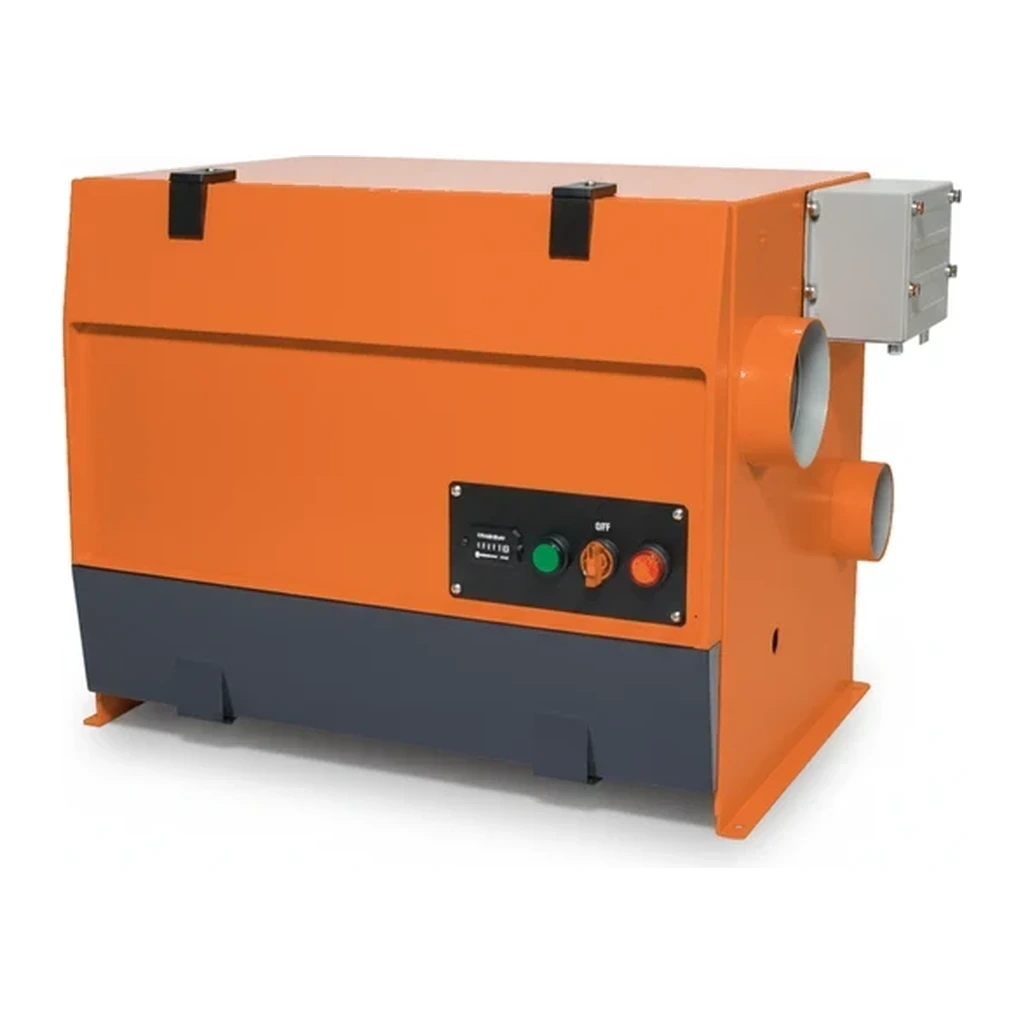
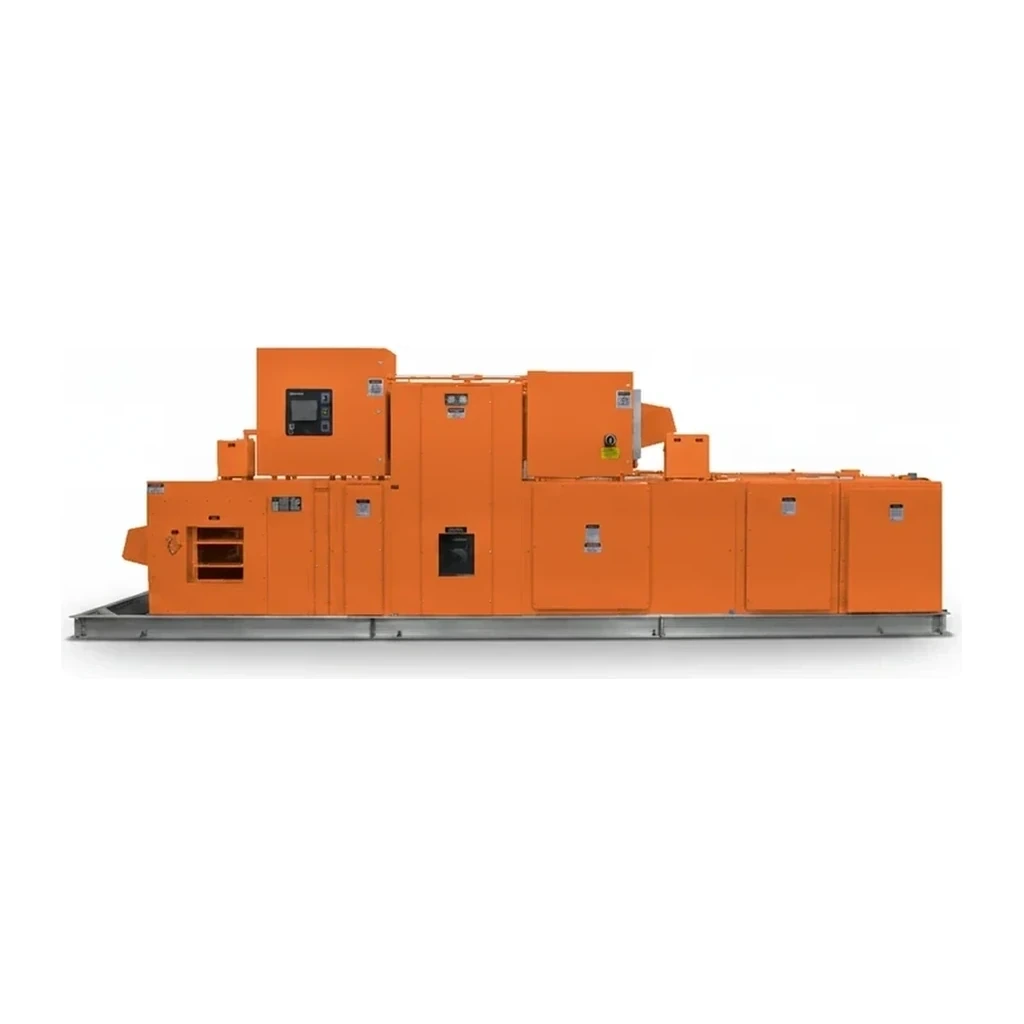
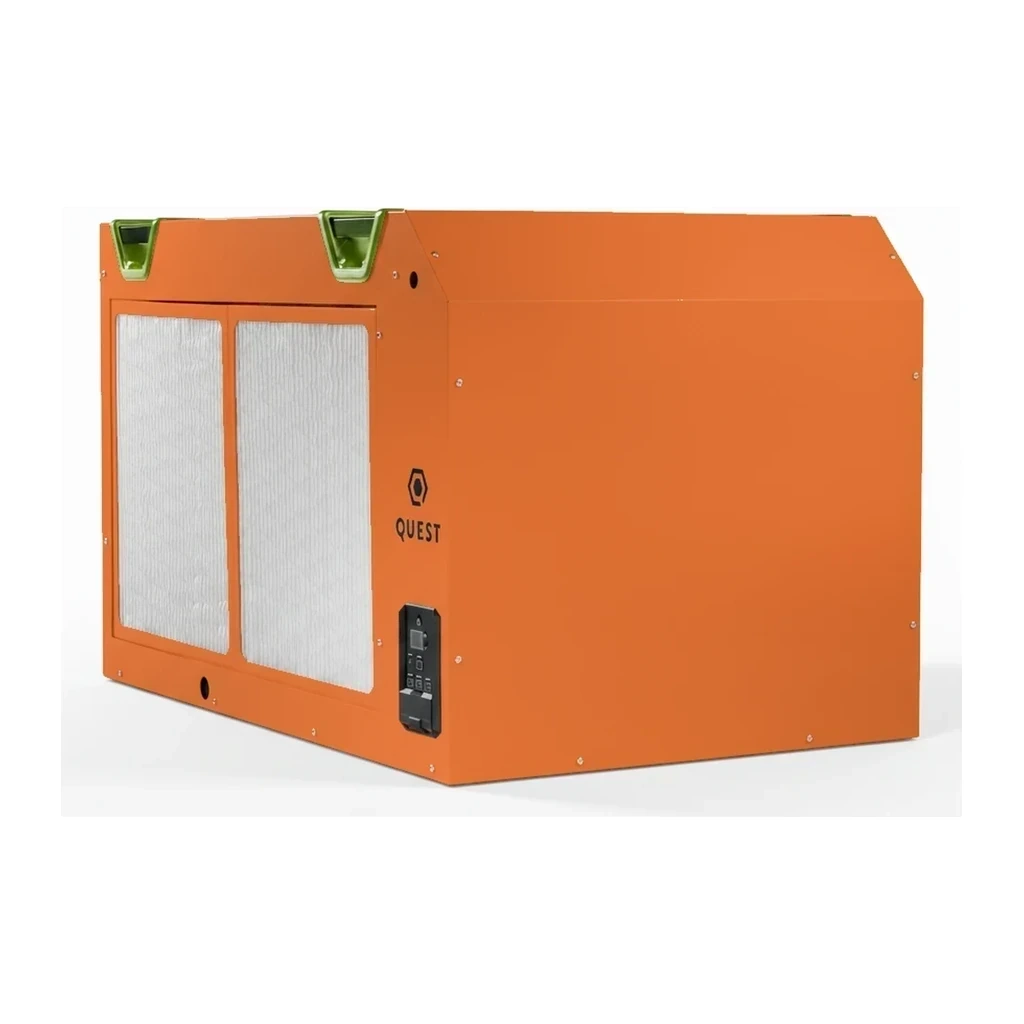
Fonctionnement
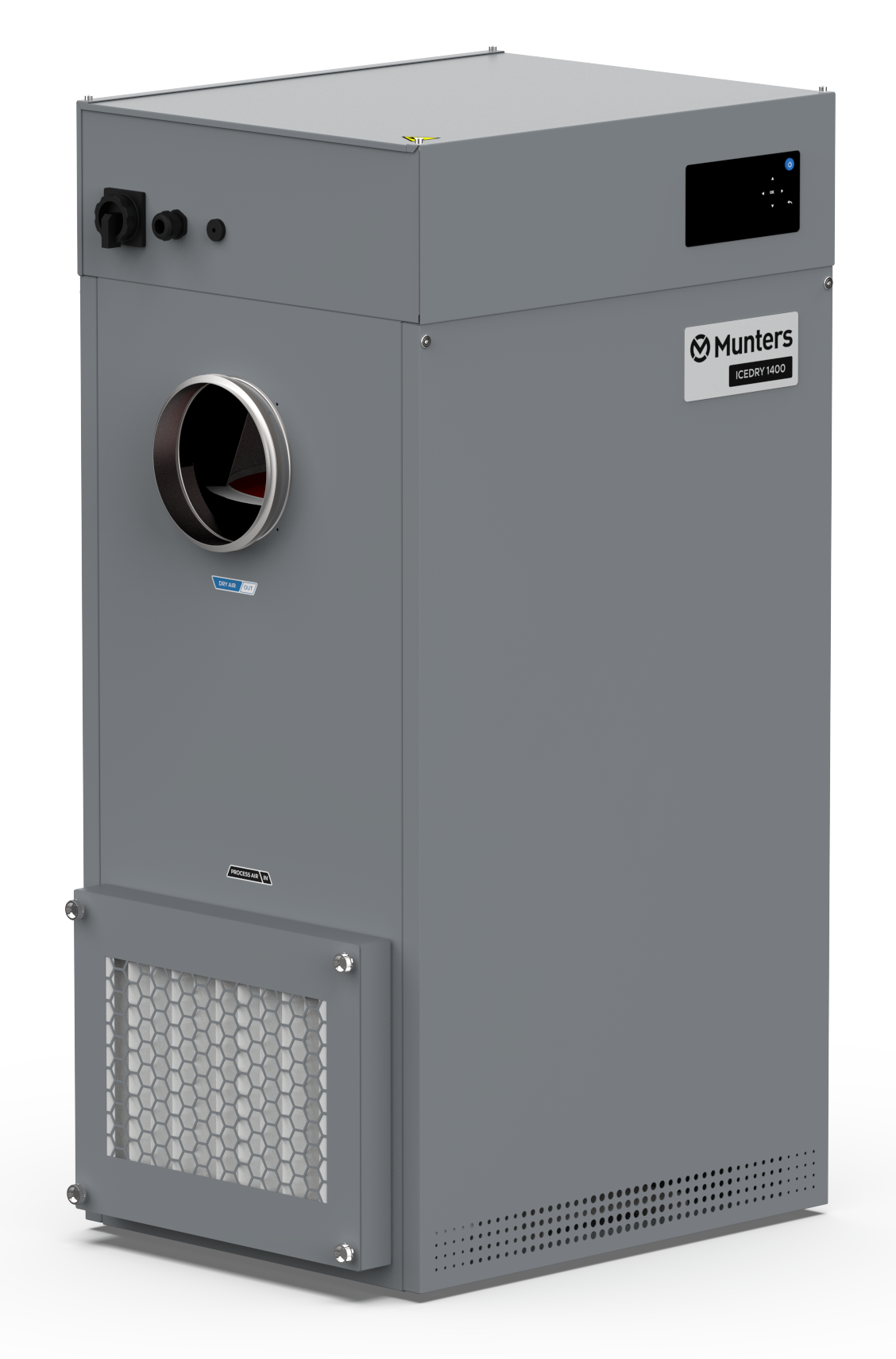
Process air passes through one sector of a desiccant rotor, which strips its moisture and delivers dry air. A separate heated reactivation airstream passes through the opposite sector, driving the collected moisture off the wheel and out a wet-air duct to the outdoors. The wheel turns continuously between the two streams. Because no condensation is involved, performance holds in cold spaces and at low humidity — the regimes where refrigerant units fade — at the cost of the reactivation heat energy.
Types et variantes
- Portable restoration desiccants
- Compact rotor units for structural drying alongside air movers.
- Large trailer and skid desiccants
- High-volume units ducted into buildings for major drying projects.
- Industrial process desiccants
- Fixed units holding low dewpoints for production and storage.
- Low-grain refrigerant hybrids
- Combined technologies balancing energy use across conditions.
Spécifications clés
| Spécification | Plage typique | Signification |
|---|---|---|
| Process airflow | Documented up to 3,531 cfm across listed models; the extreme low end of the range reflects accessory items | The volume of air dried per pass — the primary capacity figure. |
| Water removal rate | Documented per model listing | Moisture extracted per day at rating conditions. |
| Reactivation duct provision | Documented per model listing | The wet airstream must duct out of the dried space. |
| Power requirement | Documented per model listing | Reactivation heat makes desiccants power-hungrier than refrigerant units of similar airflow. |
Comment l'industrie le dimensionne
Desiccant dehumidifiers are sized by process airflow and water removal against the space volume, moisture load and target humidity. They are chosen over refrigerant units for cold spaces, deep-drying targets and dense materials; on large losses, trailer units duct dry air in and wet air out of the structure.
Applications
- Structural drying after major water losses
- Cold-space drying where refrigerant units stall
- Deep drying of hardwood, plaster and dense assemblies
- Industrial humidity control for production and storage
- Corrosion prevention during coatings and blasting work
Sécurité et opération
- Reactivation ducts run hot and must exhaust outdoors — venting wet air inside re-wets the building.
- Large units draw substantial power; circuits and connections are verified by qualified persons.
- Ducted deployments maintain clear egress and secured duct runs in occupied buildings.
- Electrical equipment in flooded structures waits for verified isolation before deployment.
Normes et certifications
- ANSI/IICRC · S500
- Standard for professional water damage restoration, governing drying practice.
- AHAM · DH-1
- Dehumidifier performance rating standard.
Questions fréquentes
Desiccant or refrigerant (LGR) — how is the choice made?
Why does a desiccant need two duct runs?
Do desiccants work in unheated buildings in winter?
Équipements connexes
Parcourir par fabricant
Sources
Chaque spécification est vérifiée par rapport aux données publiées par le fabricant, avec la source liée pour référence.
Tous les modèles
118 modèles · Page 3 sur 3 · Chaque spécification citée à la source