

Walk-Behind Mower
A walk-behind mower is a ground-following lawn mower guided by an operator walking behind the machine. These machines range from compact 21 in residential push models to wide-area commercial units exceeding 48 in, serving professional landscaping crews, municipal grounds maintenance, and property management operations.
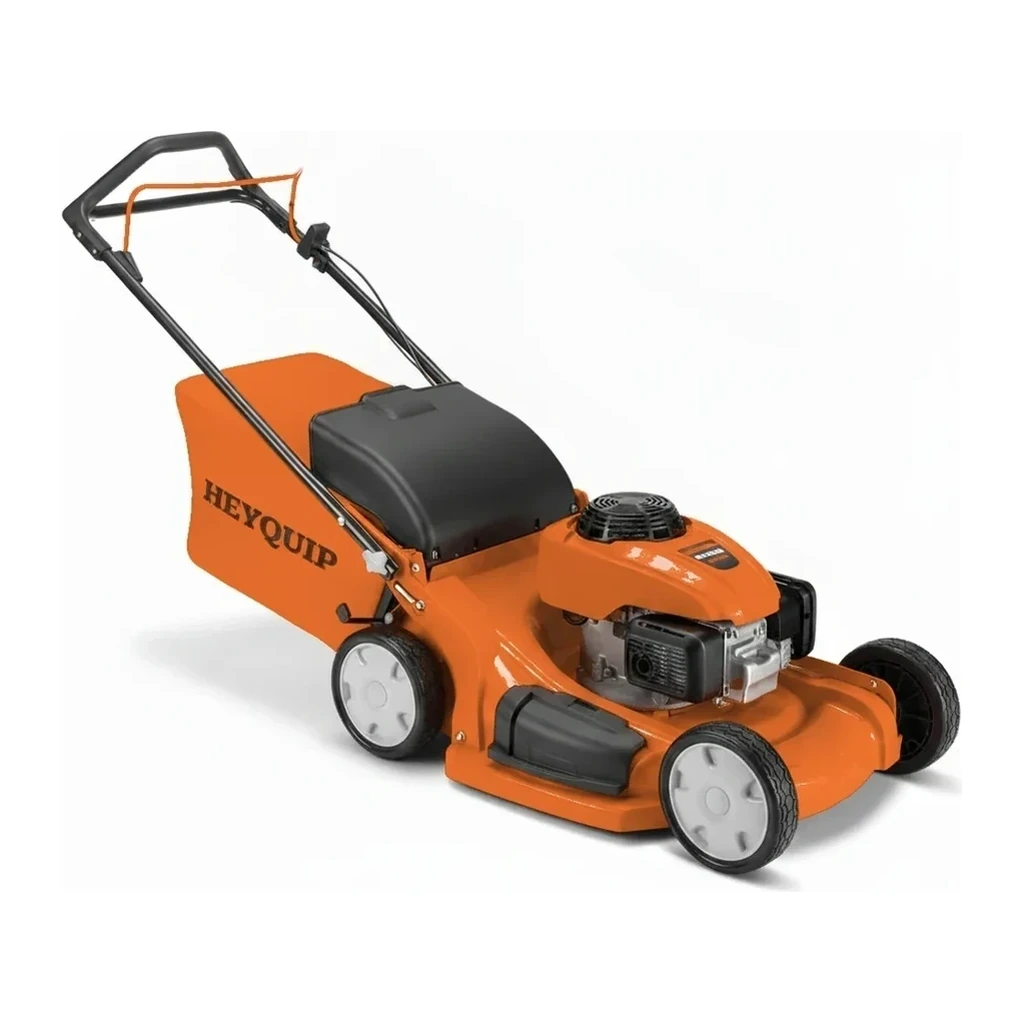
Cat classes
Choisissez une classe de taille — la capacité et la portée varient selon la gamme.
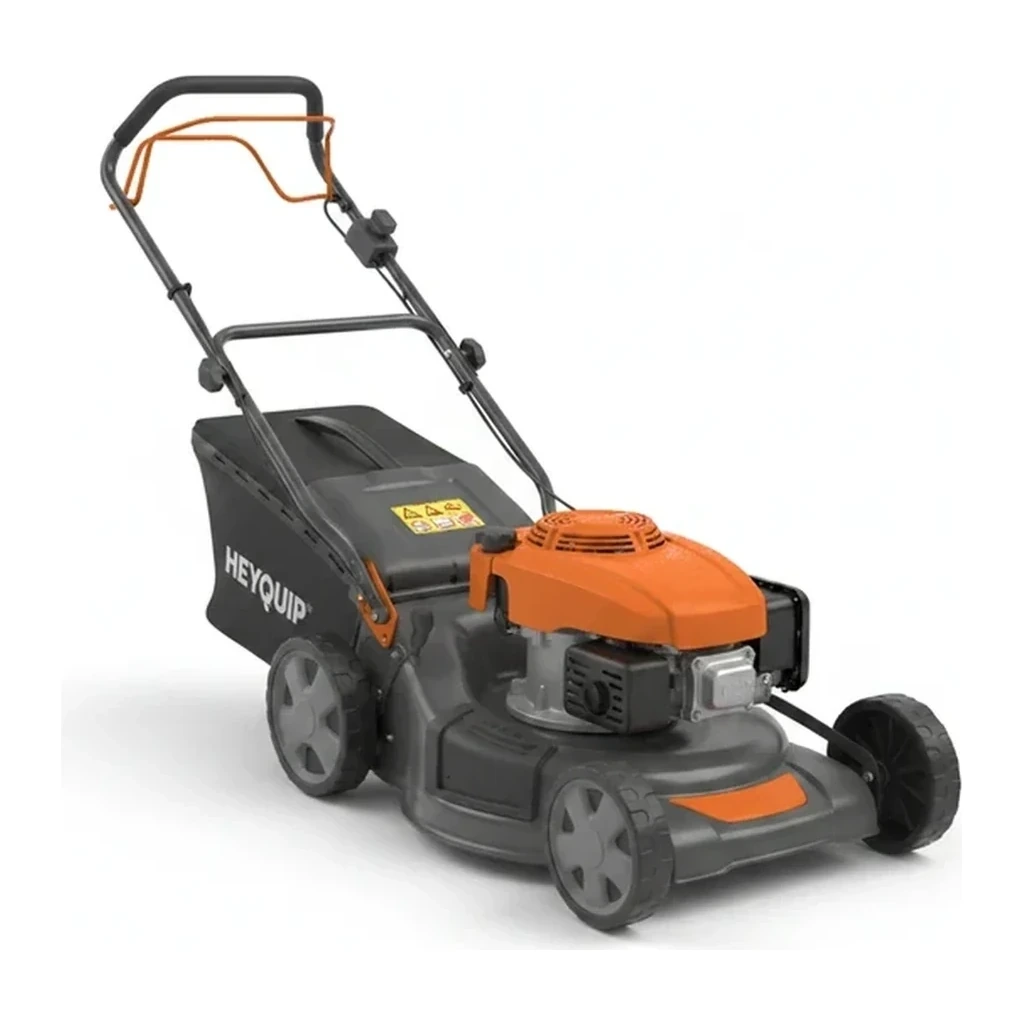
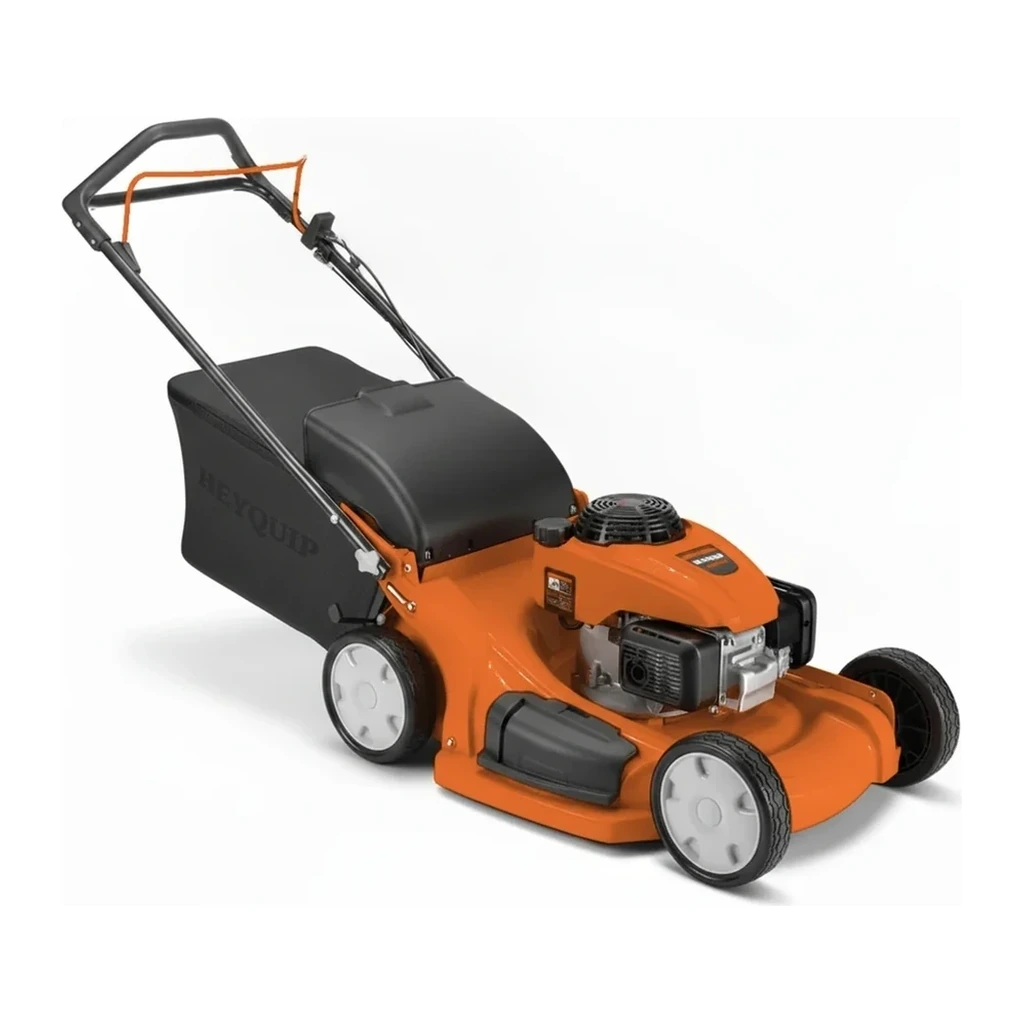
Fonctionnement
The engine or electric motor drives one or more horizontal rotating blades beneath a fabricated steel deck. Blade speeds typically operate between 2,700 and 3,200 rpm to create airflow that lifts grass into the cutting path and discharges clippings through side, rear, or mulching discharge systems. On self-propelled models, power is transmitted to the drive wheels through belt, gear, or hydrostatic systems controlled at the operator handle. Cutting height is adjusted via deck lift mechanisms, wheel position levers, or individual wheel spacers depending on model design. Hydrostatic models use variable-displacement pumps and wheel motors for infinite speed control and individual wheel drive on dual-hydro configurations, allowing zero-radius turns and enhanced slope control.
Types et variantes
- Push Mower
- Operator provides forward motion; lightest weight and simplest design, typically 21 in residential class.
- Self-Propelled Mower
- Belt or gear-driven transmission powers the wheels; available in single-speed, variable-speed, and hydrostatic configurations.
- Hydrostatic Walk-Behind
- Hydraulic drive system with infinite ground speed control; dual-hydro models offer independent wheel drive for commercial productivity.
- Wide-Area Mower
- Decks from 30 to 48+ in designed for commercial efficiency on large turf areas while maintaining gate access.
- Electric Walk-Behind
- Battery or corded electric power eliminates emissions for noise-sensitive or indoor applications like indoor sports facilities.
Spécifications clés
| Spécification | Plage typique | Signification |
|---|---|---|
| Cutting Width | 21 to 48 in (46 to 1,219 mm) | Primary sizing dimension; determines productivity and gate/access compatibility. |
| Engine Power | 12.7 to 23.3 hp | Higher horsepower supports wider decks, tougher grasses, and sustained commercial operation. |
| Operating Weight | 28 to 435 kg (62 to 959 lb) | Affects maneuverability, transport requirements, and slope stability. |
| Blade Speed | 2,700 to 3,200 rpm | Determines cut quality and discharge efficiency across turf conditions. |
Comment l'industrie le dimensionne
The industry sizes walk-behind mowers by cutting width measured in inches. The 21 in class represents residential and trim work around landscape beds and fences. Models from 22 to 32 in provide wide-area productivity while fitting through standard 36 in gates. The 32 to 48 in hydrostatic walk-behinds address large lawns, slopes, and banks where riding mowers cannot safely operate. Units above 48 in serve commercial crews mowing open turf and hillsides throughout the workday, offering maximum productivity within the walk-behind format.
Applications
- Residential lawn maintenance and property upkeep
- Commercial landscaping and grounds maintenance contracts
- Municipal park and athletic field perimeter mowing
- Slope and hillside mowing where riding equipment presents rollover risk
- Trim work around landscape beds, fences, and hardscape features
- Estate and large property maintenance requiring gate access
Sécurité et opération
- Blade brake clutch systems or engine kill switches stop blade rotation within seconds of operator handle release.
- Slope operation limits typically range from 15 to 20 degrees depending on model; exceed manufacturer specifications increases rollover and loss-of-control risk.
- Debris discharge can project objects at high velocity; maintain awareness of bystanders, windows, and parked vehicles in the discharge path.
- Hearing protection recommended for prolonged operation; gasoline models typically exceed 85 dBA at operator position.
- Refueling and blade maintenance require engine shutdown and spark plug disconnection to prevent accidental starts.
Normes et certifications
- ANSI · ANSI/OPEI B71.1
- Consumer turf care equipment safety standard covering blade brake performance and operator presence controls.
- ANSI · ANSI/OPEI B71.4
- Commercial turf care equipment safety requirements for professional-grade walk-behind mowers.
- EPA · Tier emissions standards
- Small off-road engines subject to EPA emissions certification; many commercial models meet CARB standards for California use.
- OSHA · 29 CFR 1910.266
- General industry standards apply to commercial operators including PPE, hearing conservation, and machine guarding.
Questions fréquentes
What distinguishes a commercial walk-behind from a residential model?
How does cutting width affect productivity?
What advantage does hydrostatic drive provide over belt drive?
What slope limits apply to walk-behind mowers?
Comparer les modèles populaires
Chercher par spécification →Normalisé aux mêmes unités. Un tiret signifie que la valeur n'a pas été publiée.
| Modèle | Puissance moteur | Poids en service | Capacité de carburant |
|---|---|---|---|
| Kubota GR2020G | 20 hp | 882 lb (400 kg) | - |
| Stihl RMA 448 V (Unit Only) | - | 66.1 lb (30 kg) | - |
| Stihl RMA 460 V Set | - | 61.7 lb (28 kg) | - |
| Kubota GR2120 | 17 hp | 959 lb (435 kg) | - |
| Stihl RMA 453 PV Set | - | 75.0 lb (34 kg) | - |
Équipements connexes
Parcourir par fabricant
Sources
Chaque spécification est vérifiée par rapport aux données publiées par le fabricant, avec la source liée pour référence.
Tous les modèles
68 modèles · Page 2 sur 2 · Chaque spécification citée à la source