

Chain Saw
A chain saw is a portable mechanical saw that cuts with a rotating chain driven around a guide bar, used extensively in forestry, arboriculture, landscaping, and land clearing. The saw chain features cutting teeth spaced along its length, powered by gasoline engines, electric motors, or battery systems. Chain saws are classified primarily by guide bar length and power source, with applications ranging from light pruning to large-diameter timber felling.
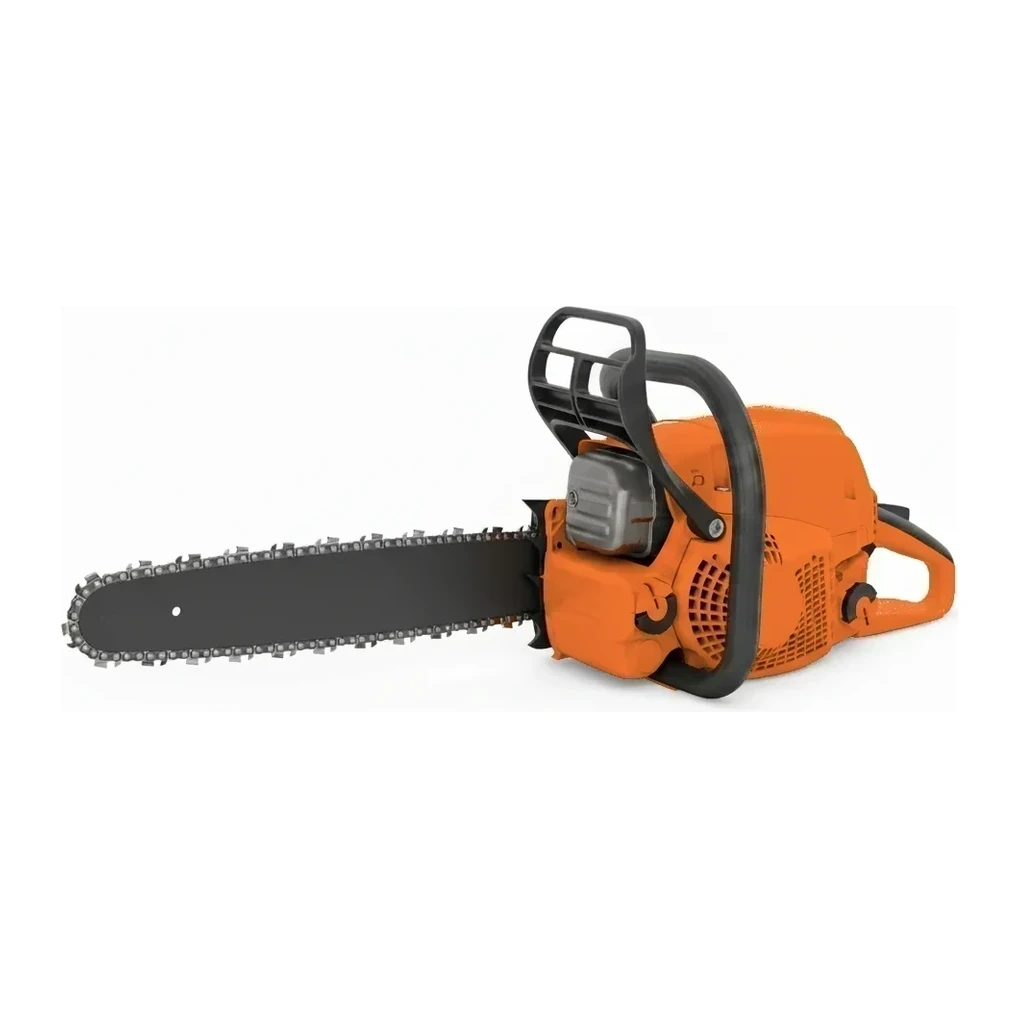
Cat classes
Choisissez une classe de taille : la capacité et la portée varient selon la gamme.
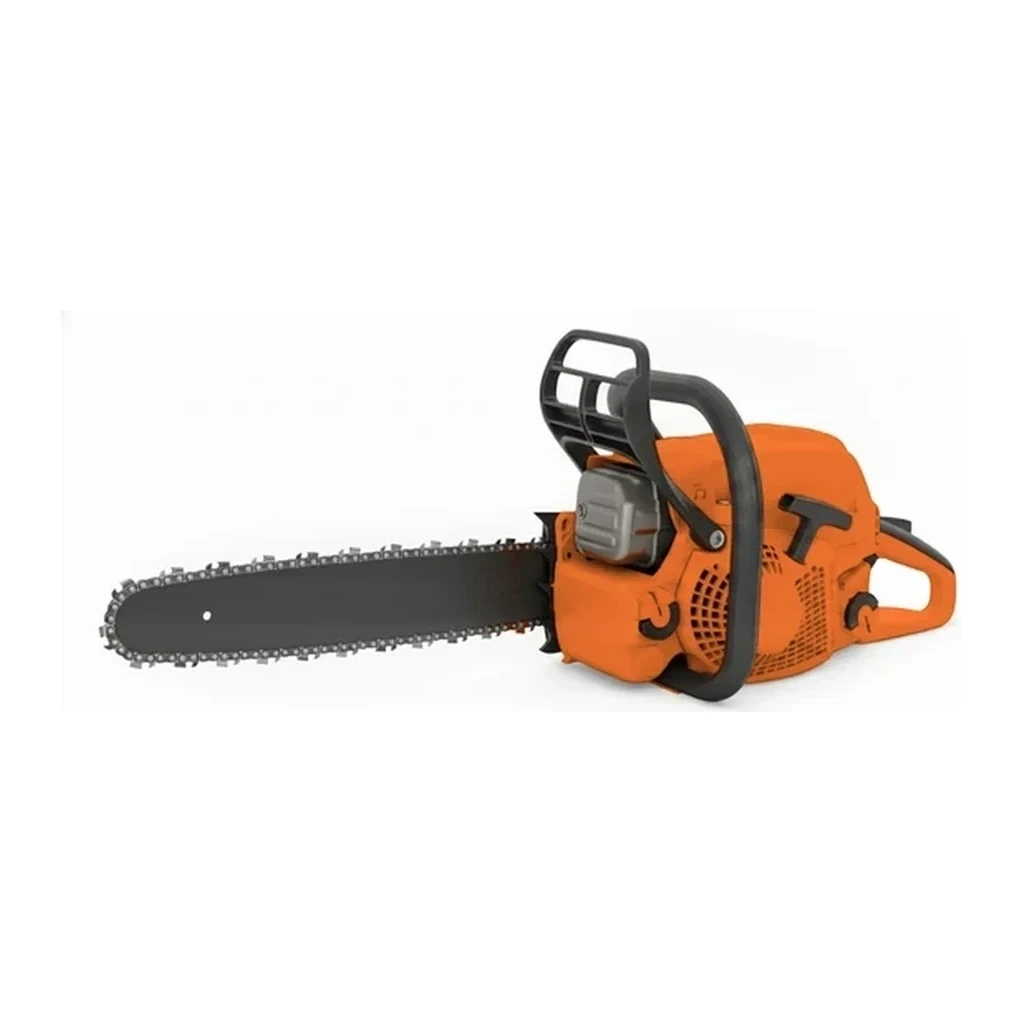
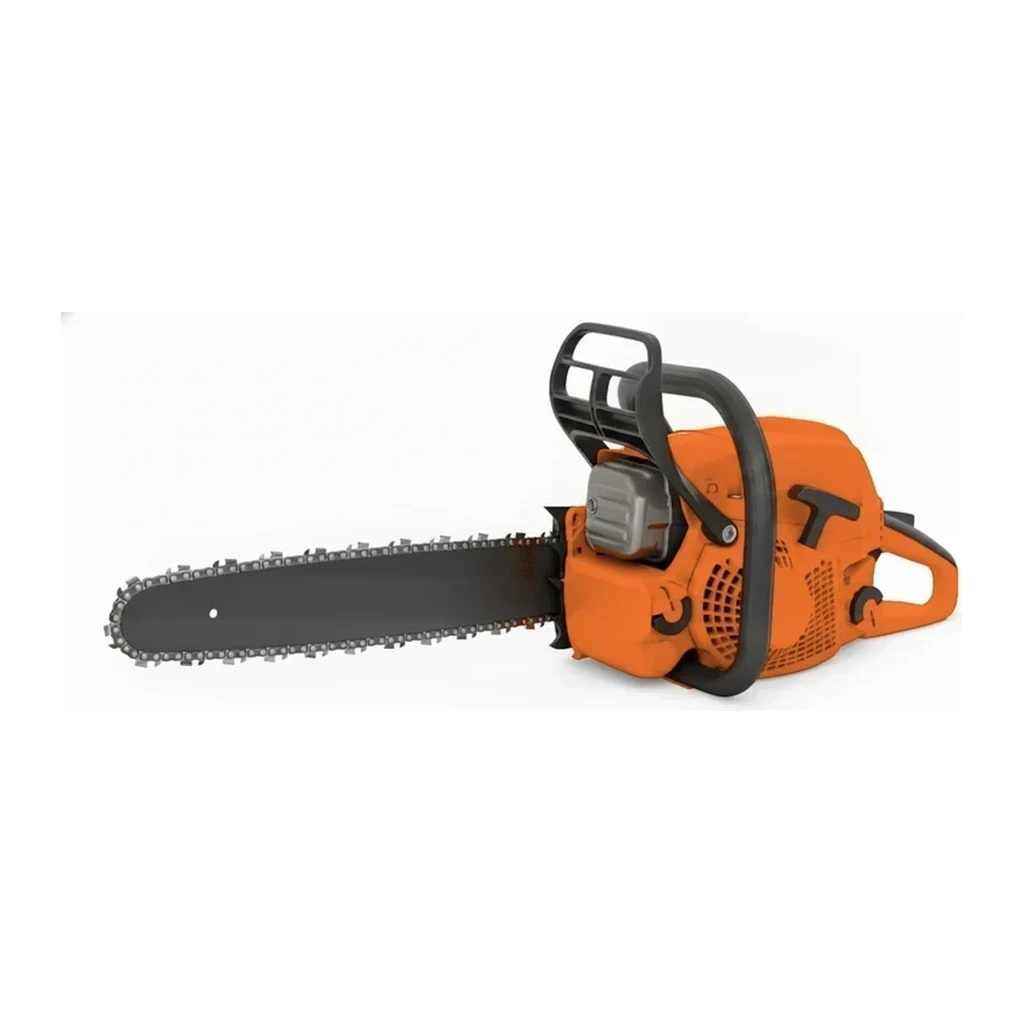
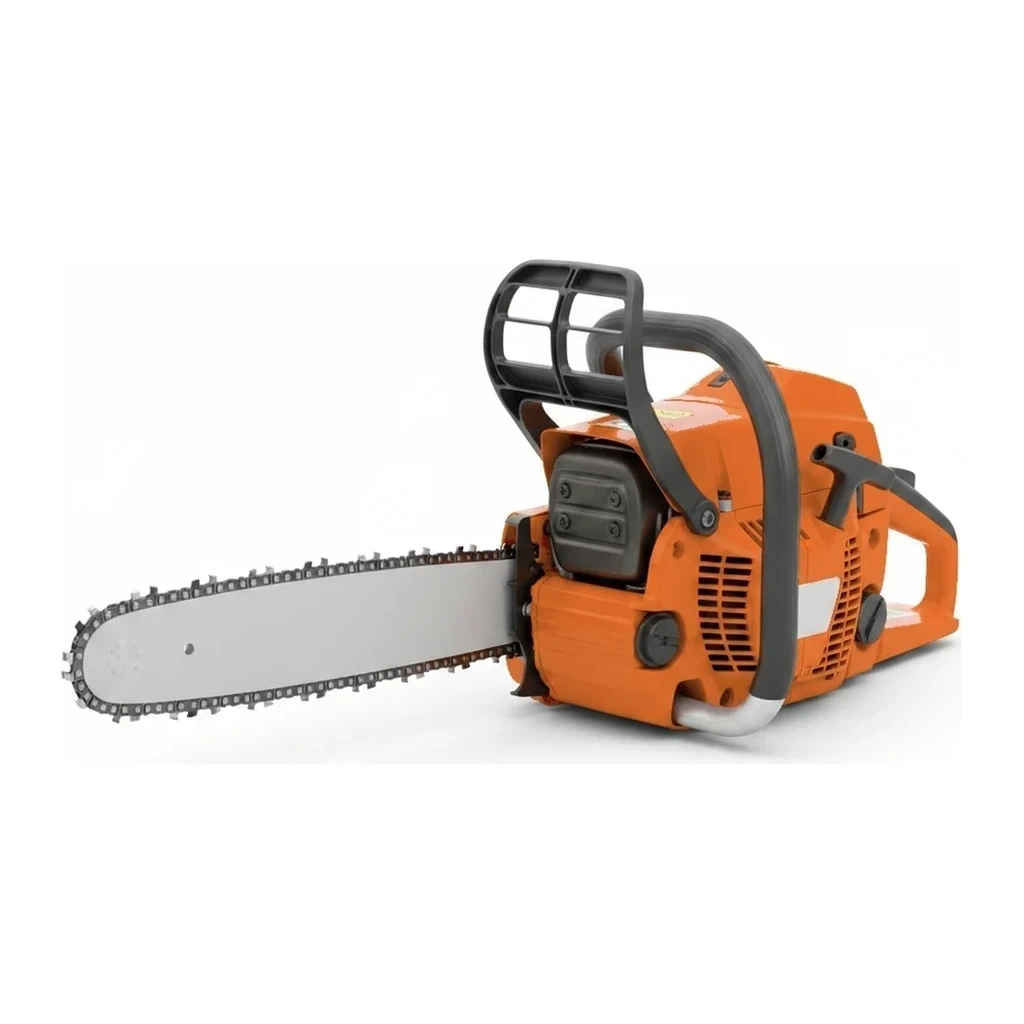
Fonctionnement
The engine or motor drives a centrifugal clutch that engages a sprocket, rotating a loop of saw chain around the guide bar at speeds between 8,900 and 14,000 rpm depending on the model. Each cutter link on the chain removes a small chip of wood as it passes through the kerf, with depth gauges (rakers) controlling how deeply each tooth bites. An automatic or manual oiling system continuously lubricates the bar and chain from an oil reservoir to reduce friction and heat. Gasoline models typically use a two-stroke engine with a 50:1 fuel-to-oil mix ratio and displacement ranging from 25.4 to 91.6 cc. The operator controls engine speed with a throttle trigger, while a chain brake, activated by the front hand guard or inertia, stops the chain instantly in kickback situations. Battery-powered models eliminate exhaust and starting procedures, drawing 5.0 to 15.0 amps at rated current.
Types et variantes
- Rear-handle gas chain saw
- The standard configuration for ground-based cutting, with horizontal handles for two-handed operation, available across all bar lengths and powered by two-stroke engines from 25 to 92 cc.
- Top-handle chain saw
- Compact saws with a handle on top of the engine housing for one-handed, in-tree work by arborists, typically under 14 in. bar length with smaller displacement engines.
- Battery-powered chain saw
- Electric models running on lithium-ion battery platforms, typically 14-18 in. bars, offering instant starting and zero exhaust for indoor, residential, or noise-sensitive environments.
- Professional felling saw
- Heavy-duty gas models with bars 18 in. and longer, high displacement (50-92 cc), and features like heated handles, full wrap handles, and bumper spikes for all-day timber felling.
- Pole saw attachment chain saw
- Small chain saw heads mounted on extension poles for overhead pruning and trimming without ladders, usually electric or small gas engines with 8-12 in. cutting heads.
Spécifications clés
| Spécification | Plage typique | Signification |
|---|---|---|
| Guide bar length | 0-14 in., 14-18 in., 18-24 in., 24+ in. | The primary sizing dimension; determines maximum cutting diameter and application suitability from pruning to felling. |
| Engine displacement | 25.4-91.6 cc | Cylinder volume on gas models; correlates directly with cutting power and determines appropriate bar length and sustained workload. |
| Operating weight | 8.8–20.1 lb (4–9.1 kg) | Powerhead weight without bar or chain; affects operator fatigue during extended use and maneuverability in the canopy. |
| Fuel tank capacity | 0.2-1.5 qt | Gasoline reservoir size on two-stroke models; determines run time between refueling, typically 20-60 minutes under load. |
| Maximum engine speed | 8,900-14,000 rpm | Peak crankshaft rotational speed; translates to chain speed and cutting aggressiveness, with professional models typically exceeding 12,000 rpm. |
| Oil tank capacity | 0.2-0.4 qt | Bar and chain lubrication reservoir; sized to empty at approximately the same rate as the fuel tank to ensure continuous lubrication. |
Comment l'industrie le dimensionne
The industry and sales industries size chain saws primarily by guide bar length, measured in inches from the front of the powerhead to the furthest cutting tip. Bars 0-14 in. suit limbing, pruning, and small firewood, including top-handle saws for in-tree and one-hand work. The 14-18 in. range represents the all-round saw for firewood, storm cleanup, and trees up to roughly 30 in. diameter. Bars from 18-24 in. handle felling and bucking mid-size timber all day without burying the bar. Models with 24 in. bars and longer serve large-diameter felling, slabbing, and milling applications, paired with the heaviest professional powerheads. Power source (gas, battery, or corded electric) and engine displacement further segment the class, with professional-grade saws distinguished by higher displacement, vibration dampening, magnesium housings, and duty-cycle ratings.
Applications
- Tree felling and forestry operations including directional felling, limbing, and bucking logs to length
- Firewood processing and splitting operations, cutting rounds and reducing cordwood to stove length
- Storm damage cleanup and emergency tree removal following wind events or ice storms
- Land clearing and right-of-way maintenance for utilities, pipelines, and roadside vegetation control
- Arboriculture and tree care services including crown reduction, deadwood removal, and aerial dismantling
- Lumber milling and slab cutting with specialized long-bar attachments for portable sawmill operations
Sécurité et opération
- Chainsaw kickback occurs when the upper quadrant of the bar nose contacts an object, causing rapid upward rotation; chain brakes, reduced-kickback chains, and proper hand position mitigate this hazard
- Personal protective equipment requirements include helmet with face screen, hearing protection, chainsaw chaps or trousers with cut-resistant material, steel-toe boots, and gloves
- Two-handed operation with secure footing and awareness of the bar tip location at all times reduces contact injuries and loss-of-control incidents
- Proper chain tension (snug against the bar but able to be pulled around by hand) prevents derailment while allowing adequate oil circulation
- Fuel handling protocols for gasoline models include outdoor refueling with the engine off and cool, along with proper storage and disposal of fuel-oil mixtures
Normes et certifications
- ANSI · B175.1
- Safety requirements for gasoline-powered chain saws including chain brake performance, throttle interlock, and hand guard specifications.
- OSHA · 1910.266
- Logging operations standard covering chain saw use in commercial forestry, operator training, personal protective equipment, and maintenance requirements.
- CSA · Z62.1/Z62.3
- Canadian standards for chain saw safety and qualifications for arborist and forestry workers using chain saws in professional settings.
Questions fréquentes
How is guide bar length matched to engine displacement?
What distinguishes professional-grade from consumer-grade models?
How do battery-powered chain saws compare in cutting performance?
What determines chain pitch and gauge selection?
Comparer les modèles populaires
Chercher par spécification →Normalisé aux mêmes unités. Un tiret signifie que la valeur n'a pas été publiée.
| Modèle | Puissance moteur | Poids en service | Capacité de carburant |
|---|---|---|---|
| Stihl MS 172 C-E | 2 hp | 11.0 lb (5 kg) | - |
| Stihl MS 251 WOOD BOSS | 3 hp | 11.0 lb (5 kg) | - |
| Stihl MS 271 FARM BOSS 20" | 4 hp | 13.2 lb (6 kg) | - |
| Stihl MS 362 | 5 hp | 13.2 lb (6 kg) | - |
| Stihl 420 | 3 hp | 19.8 lb (9 kg) | - |
| Stihl 660 | 7 hp | 17.6 lb (8 kg) | - |
Équipements connexes
Parcourir par fabricant
Sources
Chaque spécification est vérifiée par rapport aux données publiées par le fabricant, avec la source liée pour référence.