

Hedge Trimmer
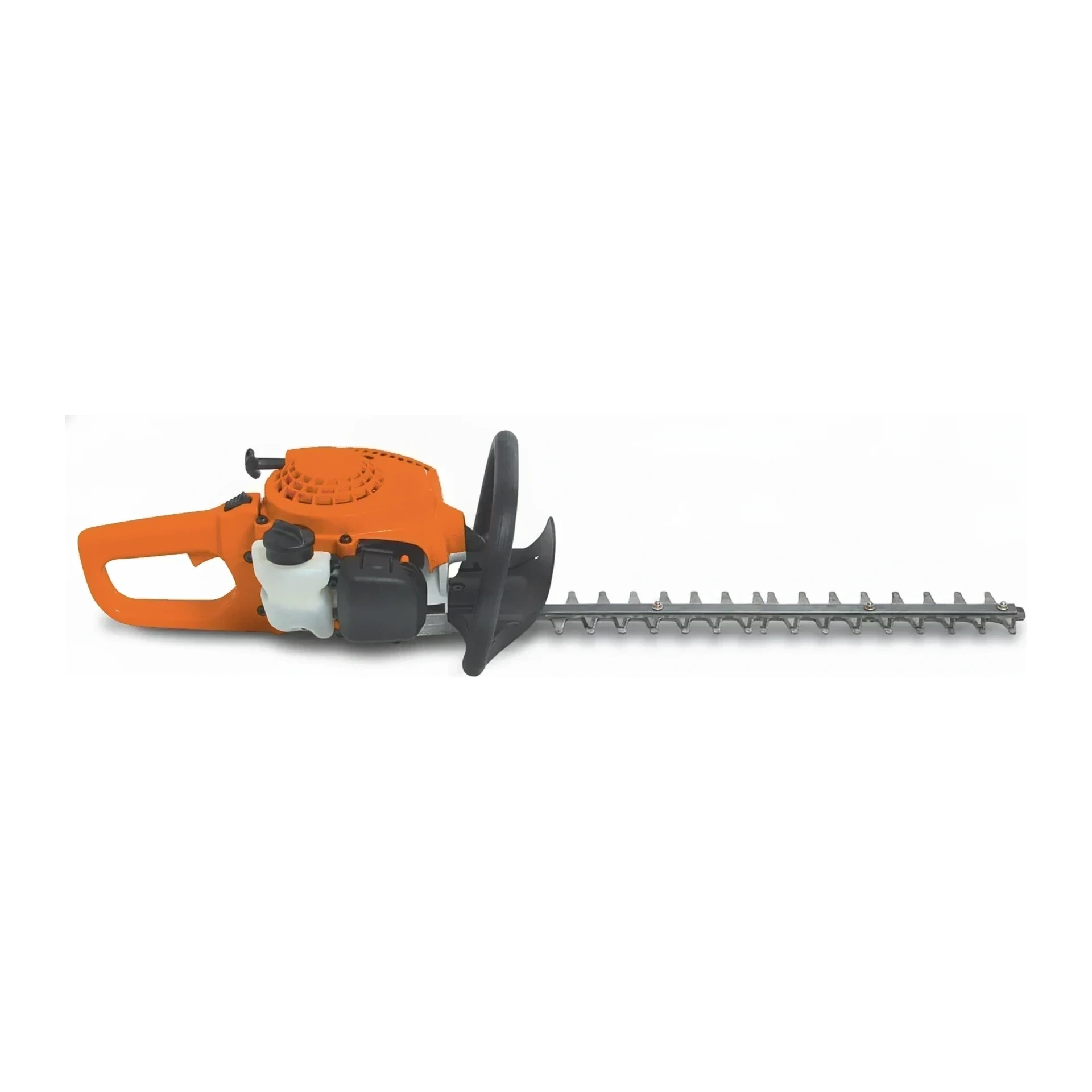
A hedge trimmer is a motorized cutting tool featuring dual reciprocating blades designed to shape, maintain, and prune hedges, shrubs, and ornamental vegetation. Available in gasoline, battery, and electric models, these tools are standard equipment in landscape maintenance operations ranging from residential property care to commercial grounds management. The equipment is sized by blade length, measured in inches, which determines cutting capacity and operational reach.
Cat classes
Choisissez une classe de taille — la capacité et la portée varient selon la gamme.
Fonctionnement
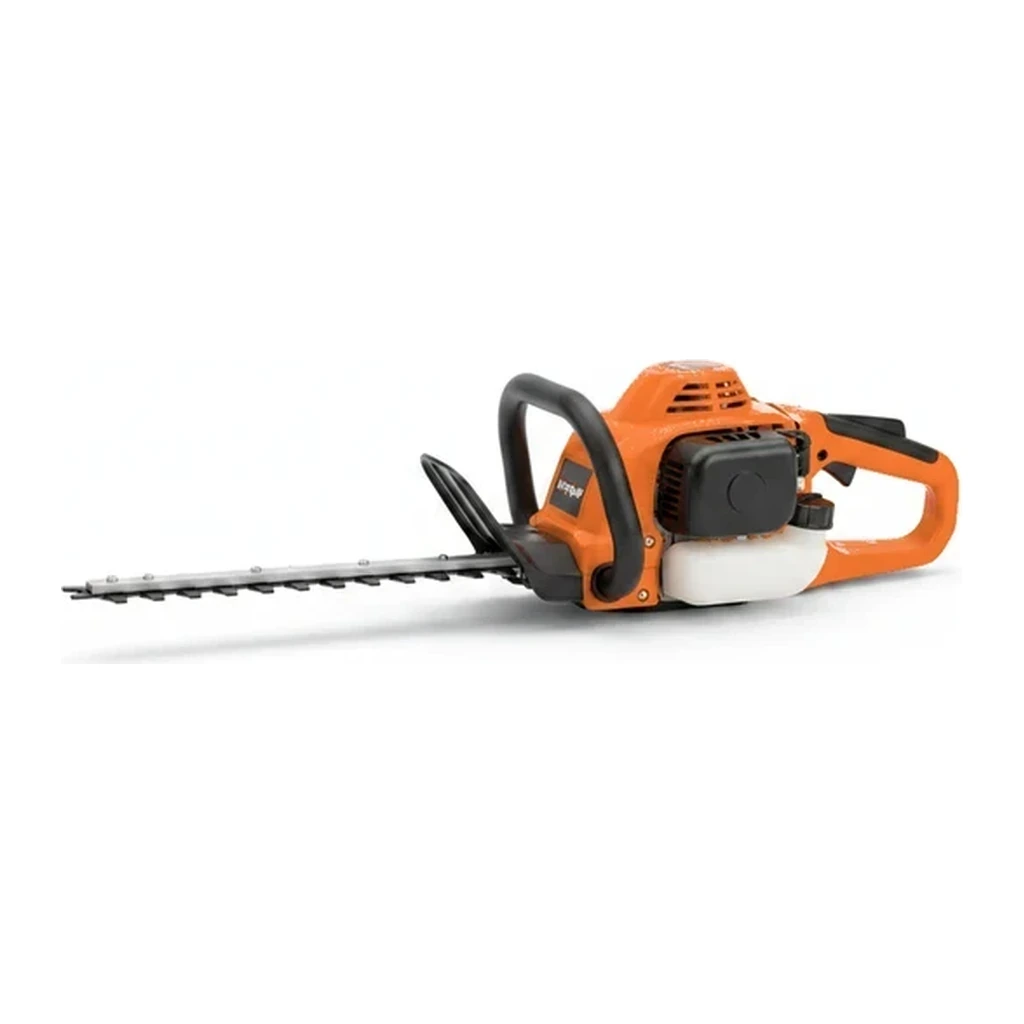
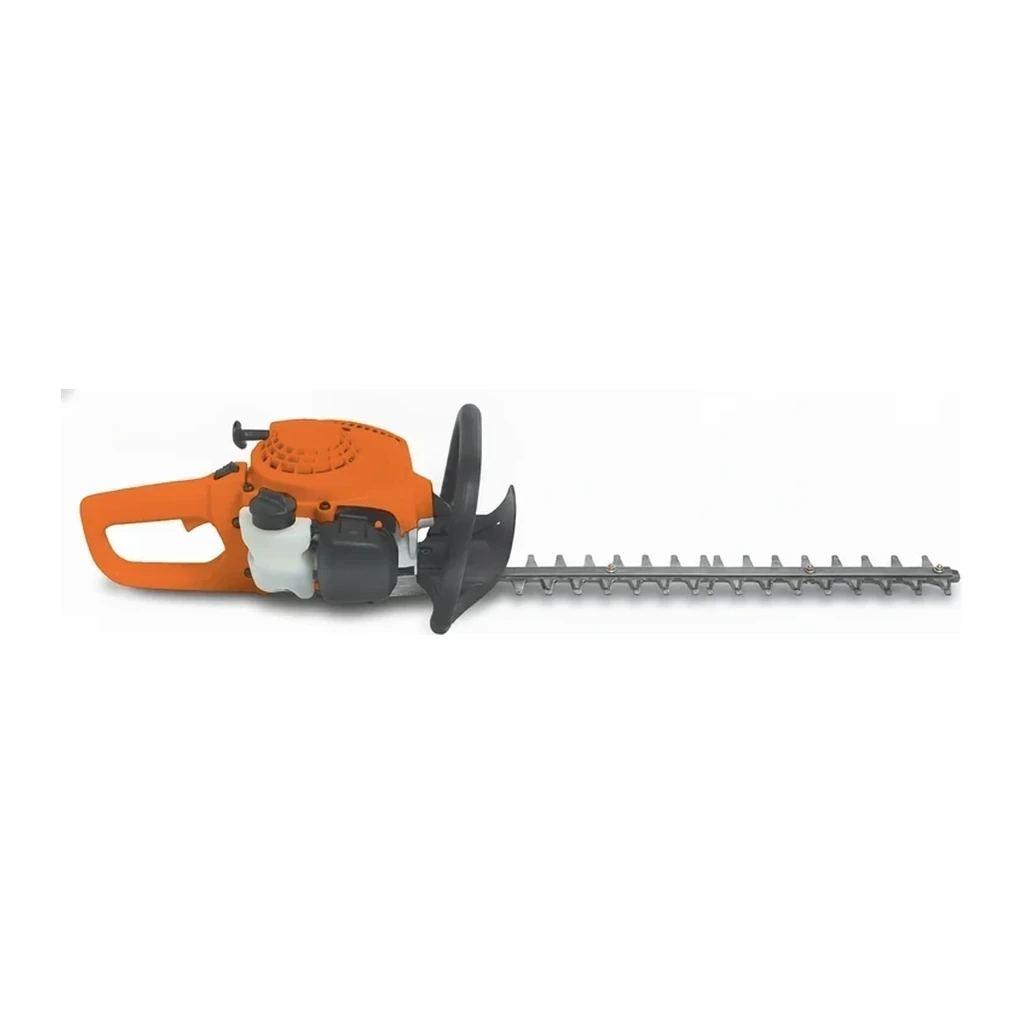
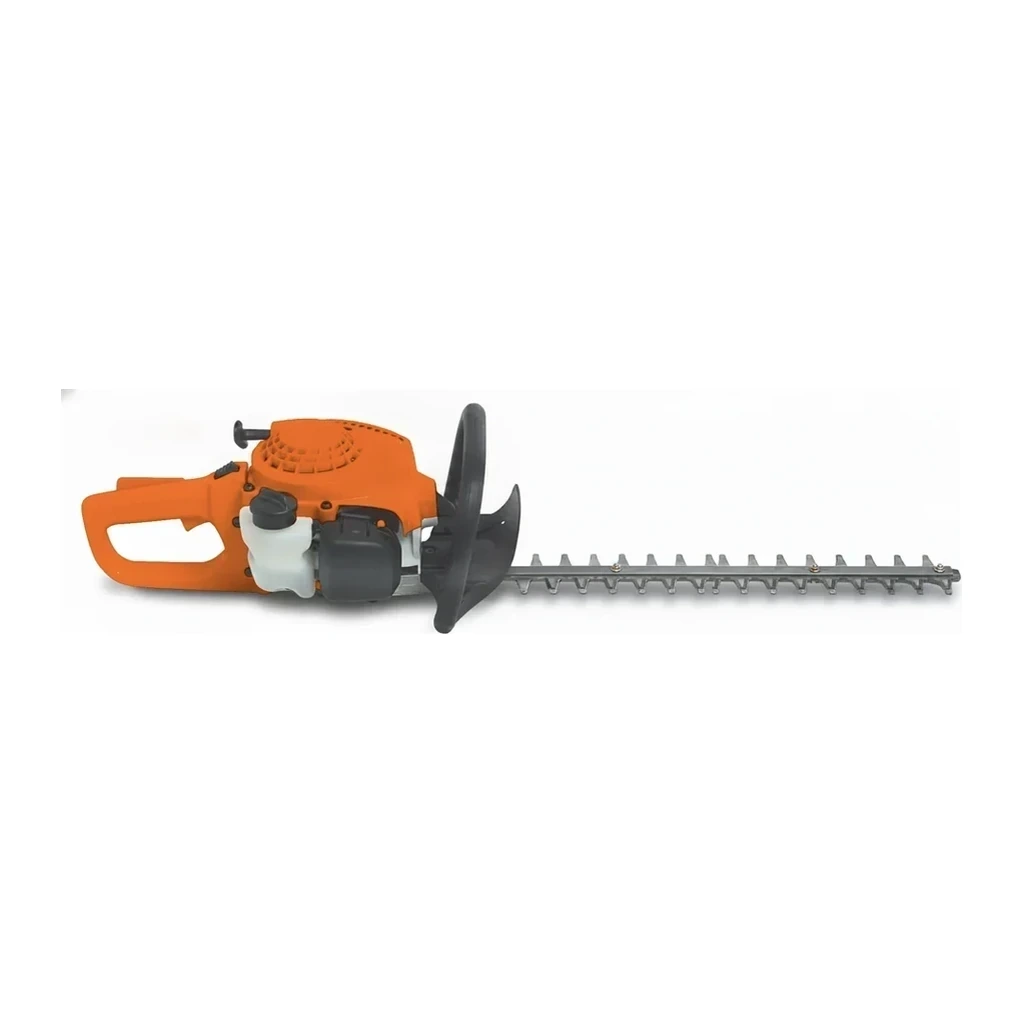
Hedge trimmers operate through a reciprocating blade mechanism in which two serrated cutting bars move rapidly back and forth in opposite directions. The dual-action blades shear through branches and foliage as they pass each other, with cutting capacity determined by the gap between teeth. Gasoline models use a small two-stroke or four-stroke engine to drive the blades, while electric and battery models employ direct motor drive. The operator guides the trimmer along the hedge profile using a two-handed grip, with the blade orientation controlling the cutting plane. Most models feature a front handle that rotates or pivots to accommodate vertical, horizontal, and angled cuts. Safety guards protect the operator's hands, and blade stops arrest movement when the trigger is released.
Types et variantes
- Gas-Powered Hedge Trimmer
- Two-stroke or four-stroke engine models offering maximum power and runtime for all-day professional use without power source dependency.
- Battery-Powered Hedge Trimmer
- Cordless lithium-ion models providing quiet operation and zero emissions, increasingly favored for residential and noise-sensitive commercial sites.
- Corded Electric Hedge Trimmer
- Mains-powered units offering consistent power for light-duty and residential applications within extension cord range.
- Double-Sided Hedge Trimmer
- The standard configuration with cutting teeth on both sides of the blade, enabling bidirectional cutting without repositioning.
- Single-Sided Hedge Trimmer
- Blades with teeth on one edge only, offering greater control and precision for detailed topiary and ornamental work.
- Pole Hedge Trimmer
- Extended-reach models with articulating heads mounted on poles, designed for tall hedges and overhead work without ladders.
Spécifications clés
| Spécification | Plage typique | Signification |
|---|---|---|
| Blade Length | 20–26 in (50.8–66.0 cm) | Primary sizing metric determining reach, cutting width, and suitability for hedge height and length. |
| Fuel Capacity | 12.5–20.6 oz | Gas tank volume affecting runtime between refueling on gasoline-powered models. |
| Tooth Spacing | 3/4–1 in | Gap between cutting teeth that determines maximum branch diameter the trimmer can cut. |
| Blade Speed | 2,800–4,400 strokes/min | Reciprocation rate affecting cutting speed and the smoothness of the finished cut surface. |
| Weight | 7–12 lb (3.2–5.4 kg) | Operating weight impacting operator fatigue during extended use and maneuverability on vertical cuts. |
Comment l'industrie le dimensionne
The industry and sales industries size hedge trimmers primarily by blade length measured in inches. Blades under 20 inches suit light hedges and shrubs around a house—one-hand reach, minutes at a time. The 20- to 26-inch range represents the commercial standard for most hedge lines and shrub beds on a maintenance route. Blades 26 inches and longer are deployed for tall formal hedges and long runs cut flat in far fewer passes. Power source (gas, battery, electric) and blade style (single- or double-sided) are secondary classification factors.
Applications
- Routine maintenance trimming of residential and commercial hedge lines
- Shaping and topiary work on ornamental shrubs and decorative plantings
- Property boundary hedge management for privacy screens and windbreaks
- Municipal and institutional grounds care including parks and campus landscapes
- Golf course landscaping and country club ornamental maintenance
- Restoration and rejuvenation pruning of overgrown or neglected hedges
Sécurité et opération
- Two-handed operation with both front and rear handles engaged to maintain control and keep hands away from the blade path
- Eye protection and hearing protection required for gas-powered models; gloves and long sleeves protect against debris and abrasions
- Blade guards and tip protectors reduce risk of accidental contact with fences, buildings, and the operator during repositioning
- Inspect hedges for hidden obstacles such as wire fencing, stakes, and debris before cutting to prevent blade damage and projectiles
- Maintain stable footing and avoid overreaching, especially on slopes or when using ladders with pole or extended-reach models
Normes et certifications
- ANSI · B175.4
- Safety standard for pedestrian-controlled walk-behind and hand-held outdoor power equipment including hedge trimmers.
- EPA · Small Engine Regulations
- Emissions standards governing two-stroke and four-stroke gasoline engines used in handheld outdoor power equipment.
Questions fréquentes
How is hedge trimmer blade length measured and what does it indicate?
What is the difference between single-sided and double-sided hedge trimmers?
What determines the maximum branch thickness a hedge trimmer can cut?
How do power sources compare for hedge trimmer applications?
Comparer les modèles populaires
Chercher par spécification →Normalisé aux mêmes unités. Un tiret signifie que la valeur n'a pas été publiée.
| Modèle | Puissance moteur | Poids en service | Capacité de carburant |
|---|---|---|---|
| Stihl HSA 26 | - | - | - |
| Echo HC-155 | - | - | 16.9 gal |
| Echo HC-2020 | - | - | 13.2 gal |
| Echo HC-2210 | - | - | 12.5 gal |
| Echo HC-2810 | - | - | 12.5 gal |
| Echo HCA-2620 | - | - | 20.6 gal |
Équipements connexes
Parcourir par fabricant
Sources
Chaque spécification est vérifiée par rapport aux données publiées par le fabricant, avec la source liée pour référence.
Tous les modèles
94 modèles · Page 1 sur 2 · Chaque spécification citée à la source