

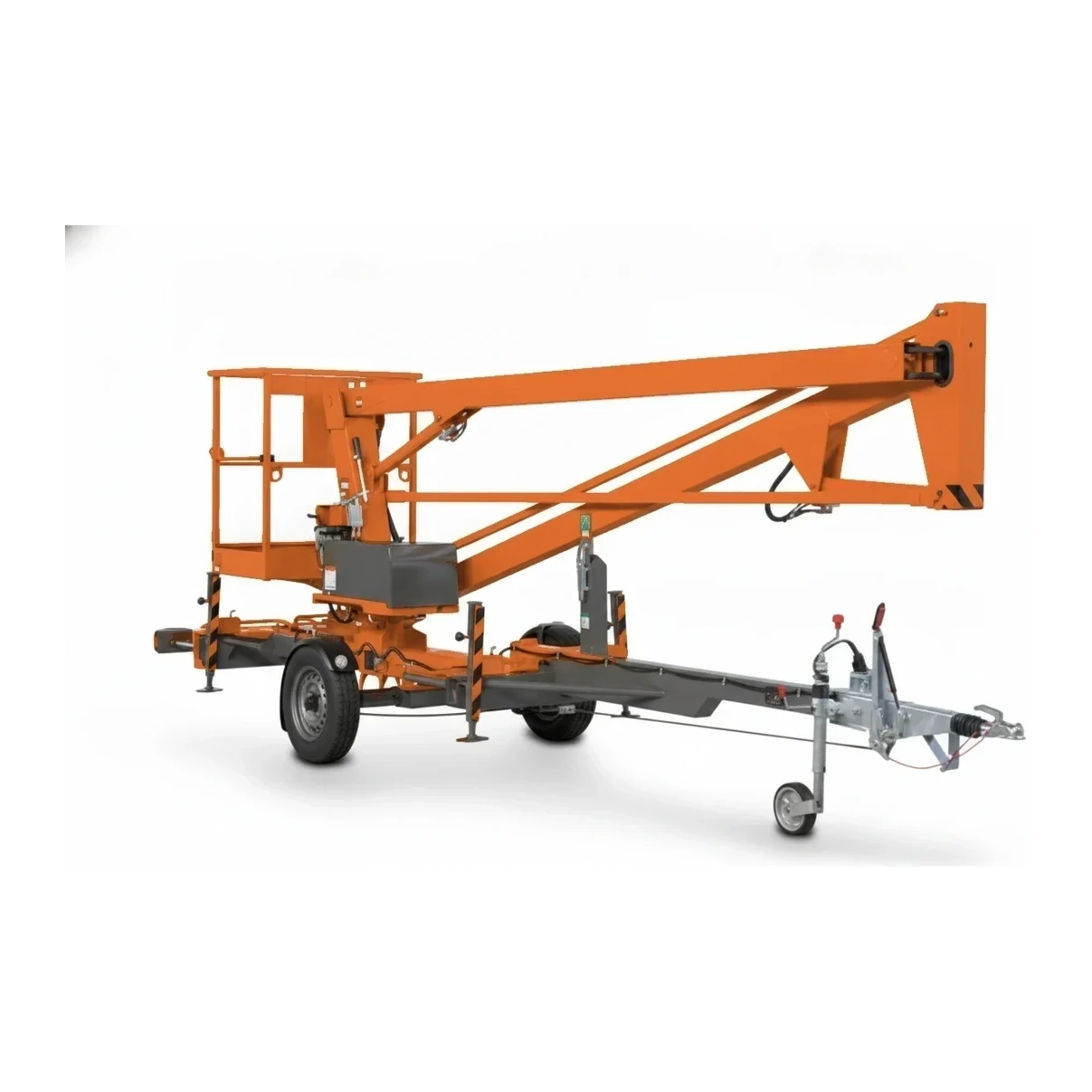
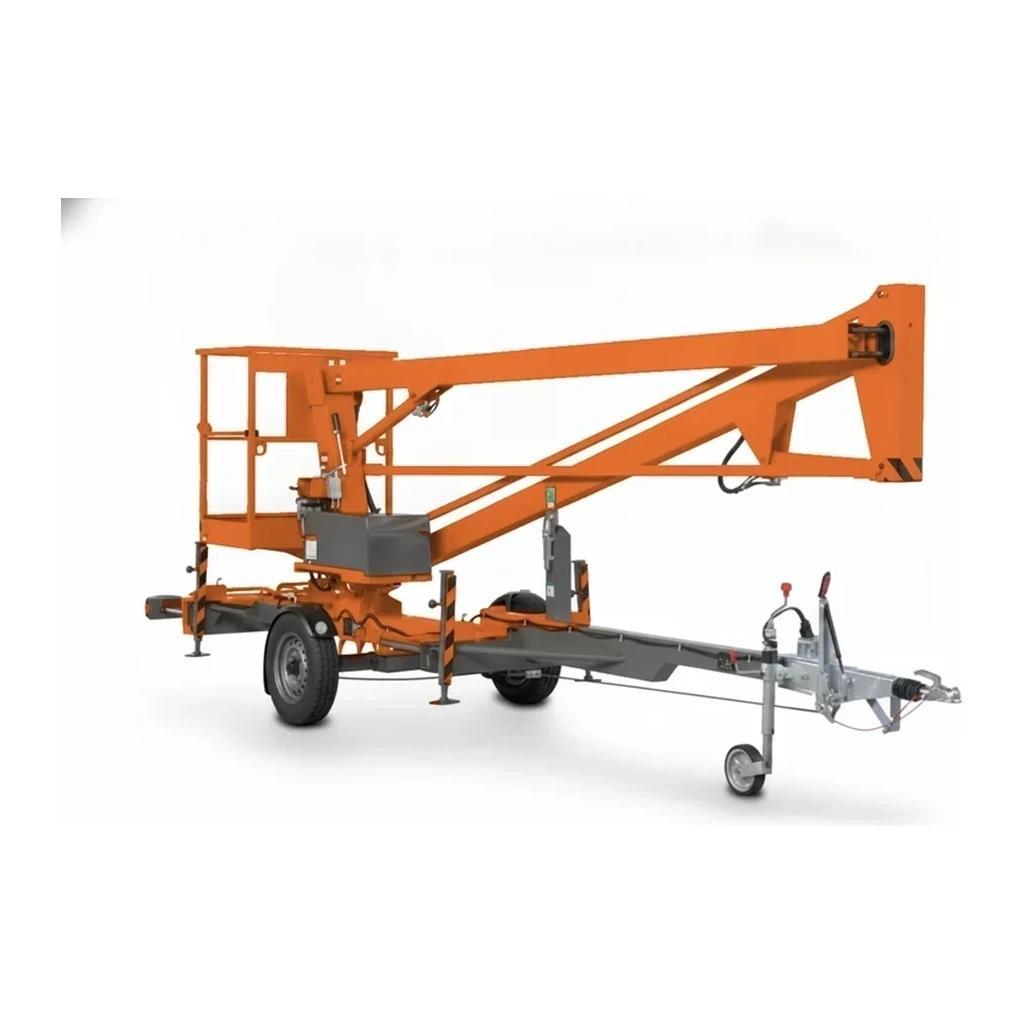
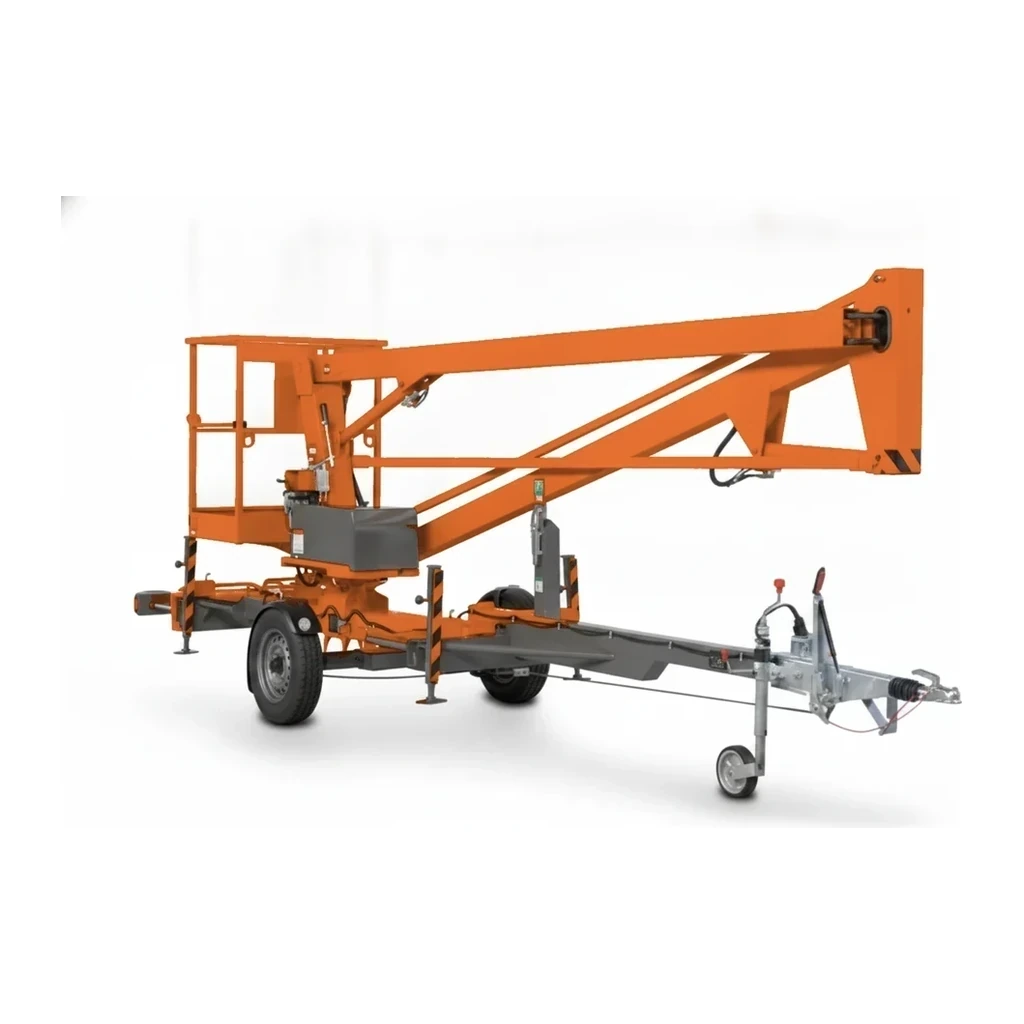
40-50 ft Towable Boom Lift
The 40-50 ft towable boom lift is the building-maintenance standard, designed to reach two-storey roofs and second-floor overhangs from driveway or parking-lot positions. This mid-range size bridges compact site access with meaningful reach, offering working heights to 41.8 ft and platform capacities of 200-227 lbs. It sits between lighter <40 ft units suited to single-storey façade work and 50+ ft models deployed for taller commercial buildings.
Cat classes
Choisissez une classe de taille : la capacité et la portée varient selon la gamme.
Spécifications clés
| Spécification | Plage typique | Signification |
|---|---|---|
| Working height | 12.4–41.8 ft (3.8–12.7 m) | Platform height plus standard guardrail reach; the 40-42 ft working height suits two-storey residential and low-rise commercial elevations |
| Lift capacity | 200–227 lbs (90.7–103 kg) | Maximum combined weight of operator, tools, and materials in the platform |
| Horizontal reach | 20–24 ft (6.1–7.3 m) | Outreach from base to platform center; allows operators to clear first-floor roof lines and overhangs without repositioning the trailer |
Comment choisir
The 40-50 ft band is appropriate when the task requires reaching second-storey eaves, roof edges, or building systems from ground-level staging areas with limited repositioning. For single-storey façade repairs, sign installation below 30 ft, or confined indoor work, the Up to 40 ft Towable Boom Lift offers easier maneuverability and lighter towing requirements. When the structure exceeds two storeys, when horizontal reach must clear deep setbacks, or when working heights approach 50 ft, the 50+ ft Towable Boom Lift becomes necessary despite its heavier trailer and larger footprint.
Ce que cette taille peut gérer
- Two-storey residential gutter cleaning and soffit repair from the driveway
- HVAC condenser service on low-rise commercial rooftops
- Exterior lighting fixture replacement on retail and office building façades
- Tree trimming near structures where bucket trucks cannot access
- Second-floor window washing and caulking on multi-family housing
- Signage installation and maintenance on storefronts and small warehouses
Sécurité et opération
- Outriggers or stabilizers required before operation; ground conditions must support point loads without settling
- Wind-speed limits typically 28-30 mph at platform height; operators monitor conditions and lower platform when gusts approach manufacturer thresholds
- Fall-arrest systems mandatory; operators wear full-body harnesses anchored to designated platform tie-off points
- Grade limits typically ±5° for setup; inclinometers or leveling indicators confirm safe operating plane before lift actuation
Transport et logistique
- Towable via standard passenger vehicle or light truck with Class III or IV hitch (typically 5,000-7,500 lb capacity)
- Gross trailer weight typically 3,000-4,500 lbs; operators confirm tow-vehicle rating and trailer brake requirements per jurisdiction
- Compact enough for residential driveways and parking structures; trailer width typically 5-6 ft when stowed
Alimentation
- Dual-fuel configurations common: gasoline or propane engine for outdoor operation, with some models offering electric-only or hybrid modes
- Gasoline engines typically 20-30 HP; propane cylinders allow extended runtime in noise-sensitive or emissions-restricted zones
- Electric variants operate from onboard battery systems, recharged via standard 110V outlets between shifts
Questions fréquentes
What distinguishes a 40-50 ft towable from larger boom lifts?
How much horizontal clearance is needed to position a 40-50 ft towable?
Can this size class operate on sloped surfaces?
Comparer les modèles populaires
Chercher par spécification →Normalisé aux mêmes unités. Un tiret signifie que la valeur n'a pas été publiée.
| Modèle | Hauteur de travail | Capacité de plateforme |
|---|---|---|
| Haulotte HTA13 P | - | 500 lb (227 kg) |
| Haulotte HTT13 | - | 500 lb (227 kg) |
| Genie TZ-34/20 | 40.6 ft (12.4 m) | - |
Équipements connexes
Parcourir par fabricant
Sources
Chaque spécification est vérifiée par rapport aux données publiées par le fabricant, avec la source liée pour référence.
40-50 ft Towable Boom Lift
3 modèles · Chaque spécification citée à la source