

Pump Jack System
A pump jack system is an adjustable scaffolding platform that mounts on vertical poles and allows workers to raise or lower the working surface using a foot-operated pumping mechanism. Primarily used for siding installation, painting, and other exterior building work, this equipment provides a mobile, adjustable work platform along vertical surfaces. The system consists of jacks that clamp onto poles, supporting a platform that can be repositioned to different heights as work progresses.
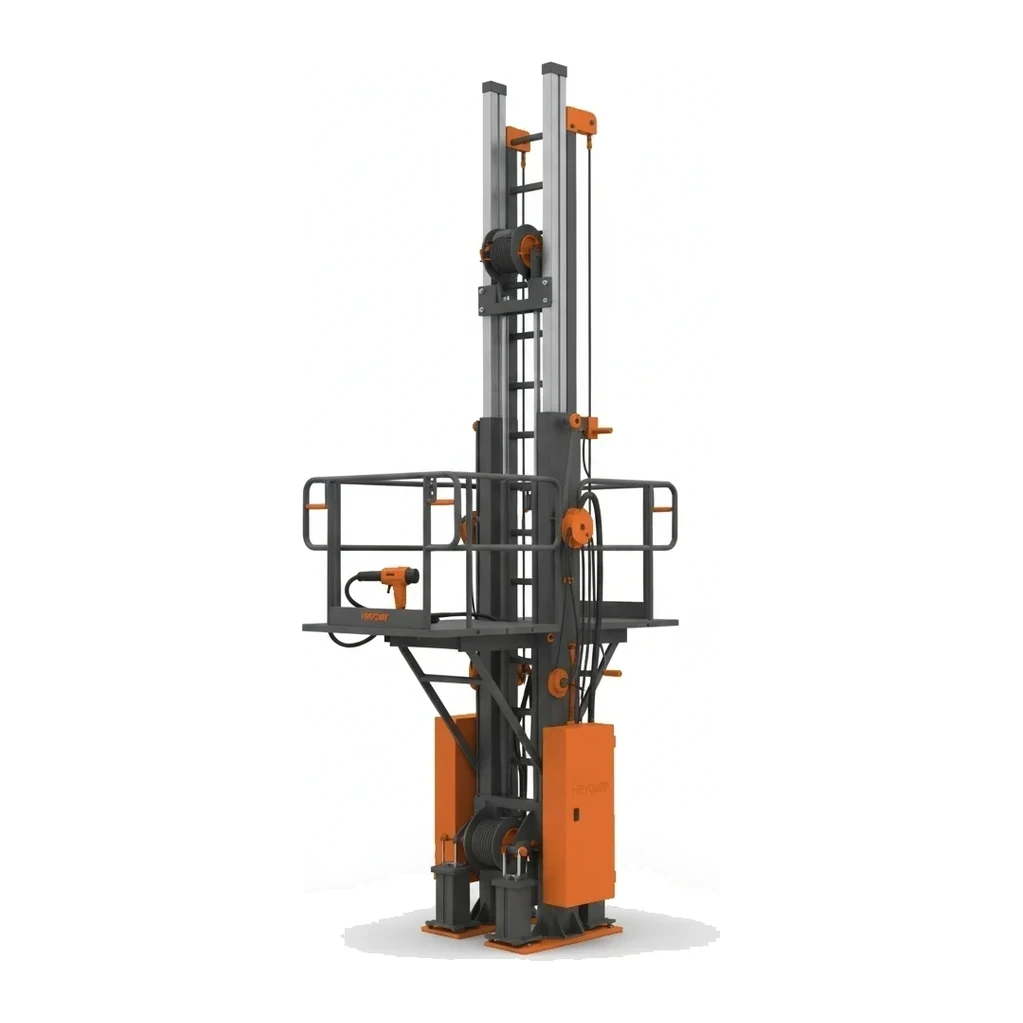
Fonctionnement
The pump jack mechanism uses a foot pedal and ratcheting system that grips a wooden or aluminum pole. By pumping the foot pedal, the operator incrementally raises the jack and attached platform along the pole. A release lever allows controlled lowering of the platform. Each jack clamps securely to the pole at the desired height, supporting one end of a working plank or platform. Typical installations use two or more jacks positioned along a wall, with scaffold planks spanning between them to create the work surface. The poles are braced to the structure for stability, and the jacks can be repositioned vertically without disassembling the entire system, allowing efficient height adjustments as work progresses along a wall face.
Types et variantes
- Standard Pump Jack
- Basic foot-operated jack designed for use with 4x4 wood poles, featuring manual pumping action and release mechanism for vertical adjustment
- Aluminum Pole Pump Jack
- Jack designed specifically for aluminum pole systems, offering lighter weight setup and often including integrated pole mounting hardware
- Heavy-Duty Pump Jack
- Reinforced design with higher load capacity for demanding applications or extended platform spans between jacks
- Quick-Release Pump Jack
- Features enhanced release mechanisms for faster lowering and repositioning, improving efficiency on projects requiring frequent height changes
Spécifications clés
| Spécification | Plage typique | Signification |
|---|---|---|
| Load Capacity | Varies by model | Maximum weight each jack can support, including workers, tools, and materials on the platform |
| Pole Compatibility | 4x4 wood or aluminum | Standard pole dimensions the jack is designed to grip and operate on |
| Maximum Height | Varies by pole length | Practical maximum working height based on pole length and structural stability requirements |
| Platform Width | Varies by plank selection | Typical span of scaffold planks or platforms supported between jacks |
| Jack Weight | Varies by model | Weight of individual jack unit, affecting portability and ease of setup |
Comment l'industrie le dimensionne
Pump jack systems are not sized by category bands, as the functional capabilities remain consistent across models. The industry standard centers on compatibility with pole dimensions (typically 4x4 lumber or aluminum poles) and load capacity. Selection is based on project requirements such as working height, platform span, and load demands rather than distinct size classifications. Complete systems are configured by combining the appropriate number of jacks, poles, braces, and planks for the specific application.
Applications
- Residential and commercial siding installation on vertical wall surfaces
- Exterior painting and staining of multi-story buildings
- Window installation and trim work on building facades
- Soffit and fascia repair or replacement
- Masonry repair and tuckpointing on exterior walls
- General exterior building maintenance and restoration work
Sécurité et opération
- Poles must be properly braced to the structure at recommended intervals to prevent tipping or displacement during use
- Load capacity limits must be observed, accounting for combined weight of workers, tools, and materials on the platform
- Jacks should be inspected for proper engagement with poles and functioning release mechanisms before each use
- Working platforms must be fully planked and secured, with fall protection required at heights above regulatory thresholds
- Weather conditions including wind speeds must be monitored, as pump jack systems have exposure limitations on elevated work platforms
Normes et certifications
- OSHA · 29 CFR 1926.452
- Federal regulations governing pump jack scaffold construction, capacity, and safe use in construction
- ANSI · A10.8
- American National Standard for Scaffolding Safety Requirements covering pump jack scaffold systems
- OSHA · 29 CFR 1926.501
- Fall protection requirements applicable to workers on elevated pump jack platforms
Questions fréquentes
What is the difference between a pump jack and traditional frame scaffolding?
Can pump jack systems be used with any type of pole?
How is working height determined for pump jack installations?
What are common industry aliases for pump jack systems?
Équipements connexes
Parcourir par fabricant
Sources
Chaque spécification est vérifiée par rapport aux données publiées par le fabricant, avec la source liée pour référence.
Tous les modèles
1 modèles · Chaque spécification citée à la source