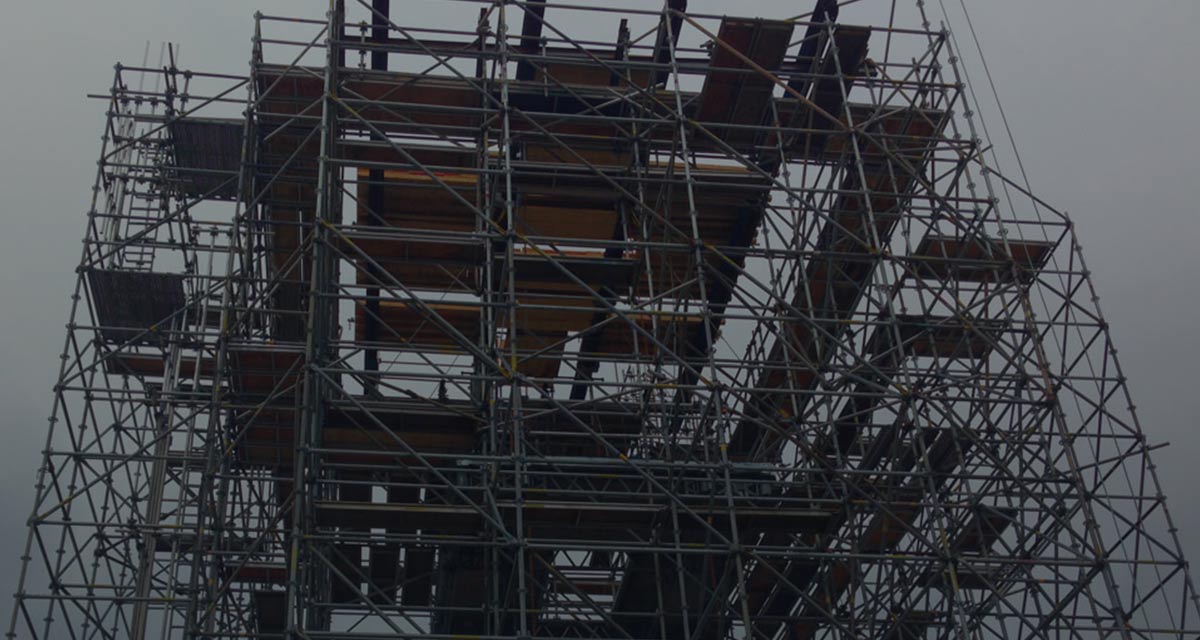

System (Ring-Lock) Scaffold
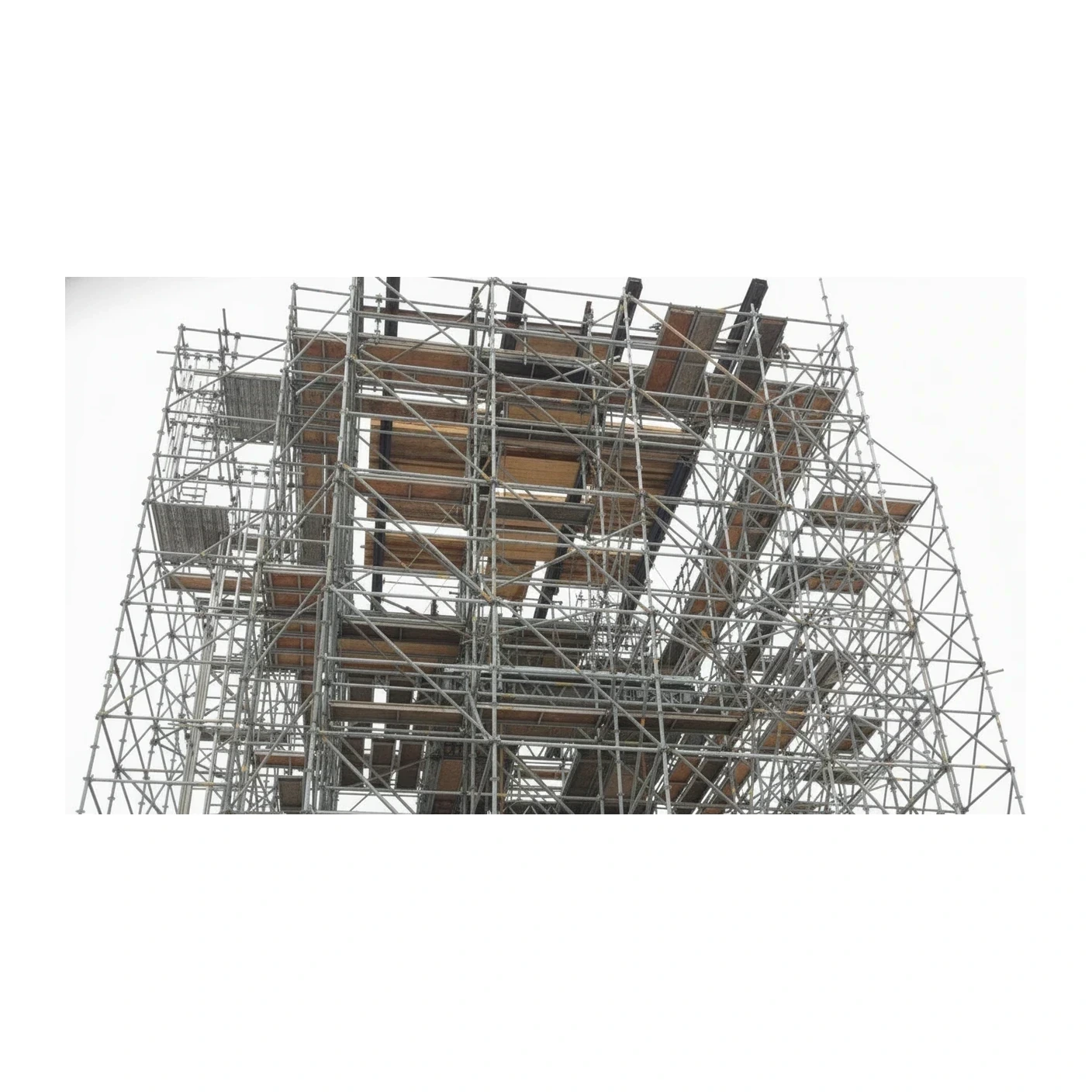
System (Ring-Lock) Scaffold is a modular scaffolding system that uses verticals with welded rosettes (connection discs) at regular intervals, into which horizontal and diagonal components lock with a wedge mechanism. Also known as ringlock, cuplock, rosette scaffold, or modular scaffold, this equipment class provides versatile geometric configurations for industrial access and building enclosure. The ring-lock connection allows multidirectional assembly without loose fittings, making it adaptable to complex shapes and heavy-duty applications.
Fonctionnement
Vertical standards feature rosettes welded at consistent vertical spacing (typically 500mm or 19.7 inches). Ledgers, transoms, diagonals, and other horizontal components terminate in wedge heads that insert into the rosette openings and lock by driving the wedge downward with a hammer. Each rosette typically accommodates four to eight connections radiating in different directions, enabling rectangular, circular, or irregular plan geometries. The system builds upward in lifts, with standards stacking via spigot connections. Platforms rest on ledgers, and diagonal bracing provides structural stability. Because components interlock without separate couplers or loose pins, assembly and disassembly proceed more quickly than traditional tube-and-clamp scaffold, and the modular nature permits engineered configurations for heavy loads and complex access requirements.
Types et variantes
- Standard Ring-Lock
- Uses rosette connection points welded to verticals at regular intervals; most common configuration for general access and industrial work.
- Cup-Lock (Cuplock)
- Variant using upper and lower cups on verticals; components lock with a cup-and-blade mechanism, common in certain markets and legacy systems.
- Heavy-Duty Industrial System
- Engineered for higher load capacities with reinforced components and closer rosette spacing for refinery, petrochemical, and high-load applications.
- Stair Tower / Access Tower
- Preconfigured stair modules and vertical access assemblies designed specifically for personnel ingress and egress on large projects.
- Bridging / Cantilevered System
- Incorporates cantilevered ledgers and bridging beams to span obstructions or provide working platforms without ground support below.
Spécifications clés
| Spécification | Plage typique | Signification |
|---|---|---|
| Rosette Spacing | 500 mm (19.7 in) vertical centers | Vertical interval between connection rosettes on standards, determining lift height and connection flexibility. |
| Standard Length | 1.0-3.0 m (3.3-9.8 ft) | Height of individual vertical components; stacked to achieve total scaffold height. |
| Bay Length | 1.57-3.07 m (5.2-10.1 ft) | Horizontal span between vertical standards, determined by available ledger lengths. |
| Load Class | Class 3-6 per EN 12811 (2-6 kN/m²) | Working load capacity of platforms; varies by system design and component selection. |
| Platform Width | 0.61-1.09 m (2.0-3.6 ft) | Deck width between ledgers, affecting working space and load distribution. |
Comment l'industrie le dimensionne
Ring-lock scaffold is sized by the total height and area of the erected structure, typically measured in linear feet or square feet of coverage. Small installations (0-20 ft height) address non-rectangular or tight industrial spaces where frame scaffold cannot conform. Mid-range projects (20-60 ft) provide multi-level industrial access for tanks, vessels, and plant maintenance. Large installations (60+ ft and above) encompass full building enclosures, refinery turnarounds, and engineered structures requiring extensive tie-ins and load-bearing analysis. Sizing also considers bay configuration, load class, and specialized components such as stair towers or cantilevered sections.
Applications
- Industrial plant maintenance and turnaround access around vessels, tanks, and piping
- Building facade work and masonry support on commercial and high-rise construction
- Refinery and petrochemical maintenance scaffolding requiring heavy loads and complex geometry
- Bridge access and inspection platforms conforming to curved or irregular structures
- Circular or polygonal enclosures for silos, cooling towers, and cylindrical equipment
- Temporary grandstands, event structures, and shoring applications where modular assembly is advantageous
Sécurité et opération
- All components must be inspected for damage, corrosion, and missing wedges before assembly; damaged parts taken out of service immediately.
- Wedges must be fully seated and struck with appropriate force; loose connections compromise structural integrity and load capacity.
- Scaffold structures exceeding manufacturer or engineering limits require professional design and stamped drawings per local codes.
- Guardrails, toeboards, and adequate decking installed at all working levels to prevent falls and falling object hazards.
- Tie-ins to permanent structures required at intervals specified by design; free-standing height limits strictly observed to prevent overturning.
Normes et certifications
- OSHA · 29 CFR 1926 Subpart L
- General scaffolding safety requirements including capacity, guardrails, access, and fall protection in the United States.
- ANSI · A10.8
- Scaffolding safety requirements for construction, demolition, and maintenance operations.
- EN 12811 · Parts 1-3
- European standard for temporary works equipment; defines load classes, performance requirements, and design of scaffold systems.
- CSA · CAN/CSA-Z797
- Canadian code of practice for access scaffold, covering design, erection, and inspection in Canada.
Questions fréquentes
What distinguishes ring-lock from frame scaffold?
How does ring-lock compare to tube-and-clamp scaffold?
Are ring-lock and cup-lock the same system?
What engineering is required for large ring-lock structures?
Équipements connexes
Parcourir par fabricant
Sources
Chaque spécification est vérifiée par rapport aux données publiées par le fabricant, avec la source liée pour référence.
Tous les modèles
4 modèles · Chaque spécification citée à la source