

Trailer-Mounted Concrete Line Pump
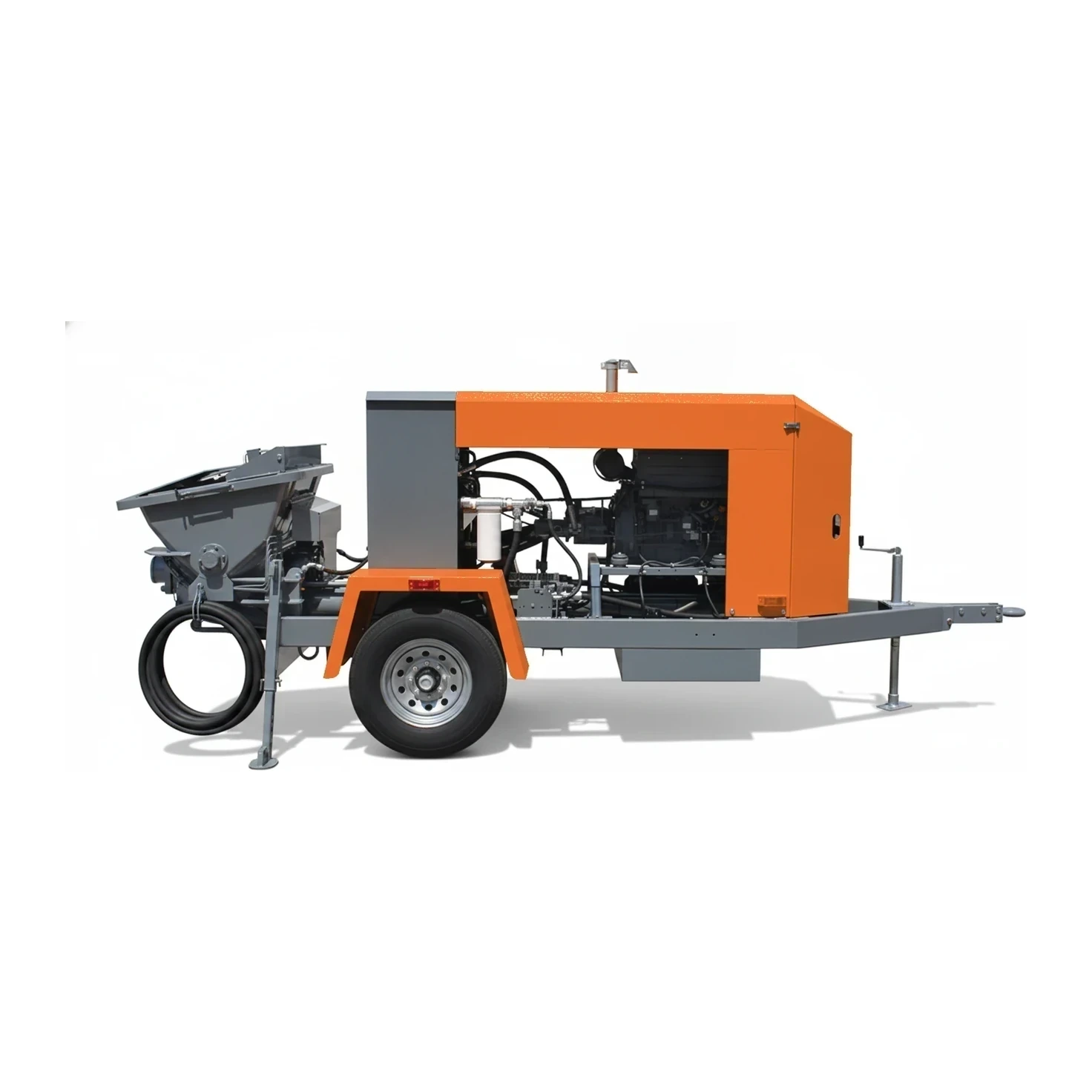
A trailer-mounted concrete line pump is a towable hydraulic pumping unit that pushes concrete through flexible or rigid pipelines to placements inaccessible to truck mixers. These machines use reciprocating piston or ball valve systems to generate pressure that moves concrete horizontally, vertically, or through confined spaces. Line pumps are the primary solution for concrete placement on residential, light commercial, and infrastructure projects where truck chutes cannot reach.
How it works
Trailer-mounted line pumps receive ready-mix concrete from a truck mixer into a receiving hopper. A hydraulic system drives pistons or a ball valve assembly that creates positive pressure, forcing concrete through steel or rubber delivery hoses ranging from 2 to 5 inches in diameter. The operator controls pumping speed and pressure via remote or panel-mounted controls, adjusting flow to match placement needs. The pump is towed to the jobsite, positioned near the delivery area, and connected to sections of pipeline or flexible hose that route concrete to forms, slabs, or walls. Continuous agitation in the hopper and periodic reverse strokes prevent material segregation and maintain consistent flow throughout the pour.
Types & variants
- Piston Line Pump
- Uses two hydraulic pistons alternating in a cylinder to push concrete; delivers consistent pressure and handles aggregate up to 1.5 inches.
- Ball Valve Pump
- Employs a rotating ball valve mechanism for smoother flow and reduced material degradation; common on smaller-output units.
- Grout/Specialty Pump
- Low-output units optimized for thin grout, block fill, and shotcrete applications; typically under 30 cu yd/hr.
- High-Output Line Pump
- Units rated above 60 cu yd/hr for large slabs, tilt-up panels, and long horizontal pours requiring sustained high flow.
- Electric-Powered Line Pump
- Diesel-electric or site-power models for indoor or noise-sensitive environments; reduce emissions and sound levels.
Key specifications
| Specification | Typical range | What it means |
|---|---|---|
| Output Capacity | Varies by model; units span grout-only to 100+ cu yd/hr | Volumetric flow rate in cubic yards per hour; determines suitability for project scale and pour speed. |
| Maximum Pressure | Varies by model and displacement | Hydraulic concrete pressure; higher ratings support longer horizontal runs and vertical lifts. |
| Hose Diameter | 2–5 inches | Internal diameter of delivery line; smaller lines for grout and thin mixes, larger for high-slump structural concrete. |
| Hopper Capacity | Varies by model | Volume of the receiving hopper; larger hoppers reduce surge and allow smoother truck changeovers. |
| Towing Weight | Varies by frame and pump size | Dry weight of trailer and pump; determines towing vehicle requirements and site mobility. |
How the industry sizes it
The industry sizes trailer-mounted concrete line pumps by output capacity in cubic yards per hour. Units under 30 cu yd/hr serve grout, block fill, and small slabs pushed through 2–3 inch lines. The 30–60 cu yd/hr range represents everyday line pumps for slabs, footings, and basement walls where truck access is limited. High-output models above 60 cu yd/hr handle large slabs, tilt-up construction, and long horizontal runs requiring sustained throughput. Maximum pressure, hose diameter, and aggregate size compatibility further refine selection for specific mixes and placement distances.
Applications
- Residential foundation walls, slabs, and footings beyond truck chute reach
- Commercial slab-on-grade and elevated deck placements
- Tilt-up panel casting and large flatwork requiring high-volume continuous pours
- Grout injection for masonry, post-tensioning ducts, and structural voids
- Basement and crawl space placements with limited access
- Swimming pool shells, landscaping features, and custom architectural concrete
Safety & operation
- Maintain clear communication between pump operator and placement crew; hand signals or radios prevent overpressure and line failures
- Secure all hose and pipeline couplings with pins or clamps; unsecured lines under pressure can whip and cause serious injury
- Wear eye protection and gloves when connecting, disconnecting, or cleaning lines; residual concrete and high-pH materials are caustic
- Keep personnel clear of the discharge end during startup and shutdown; air pockets and surges can expel concrete unexpectedly
- Flush pumps and lines thoroughly with water or sponge balls immediately after use; hardened concrete inside the system requires costly repairs and downtime
Standards & certifications
- OSHA · 29 CFR 1926 Subpart Q
- Covers concrete and masonry construction safety, including equipment operation and hazard mitigation.
- ACI · ACI 304.2R
- American Concrete Institute guide for placing concrete by pumping methods; addresses equipment selection and procedures.
- EPA · Tier 4
- Emission standards for diesel engines; newer line pumps comply with Tier 4 Final or interim regulations.
Frequently asked
How is a trailer-mounted line pump different from a boom pump?
What maximum distance and height can a line pump achieve?
Can line pumps handle fiber-reinforced or self-consolidating concrete?
What maintenance is required after each use?
Compare popular models
Find by spec →Normalised to the same units. A dash means the figure was not published.
| Model | Engine power | Operating weight |
|---|---|---|
| Multiquip LS400 | - | - |
| Multiquip LS500 | - | - |
Related equipment
Browse by manufacturer
Sources
Every specification is verified against the manufacturer's published data, with the source linked for reference.
All models
33 models · Every spec cited to source