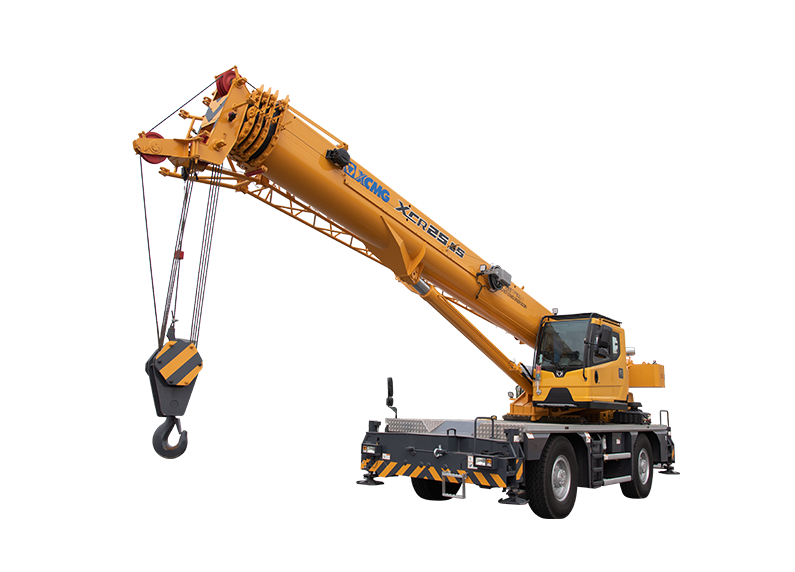
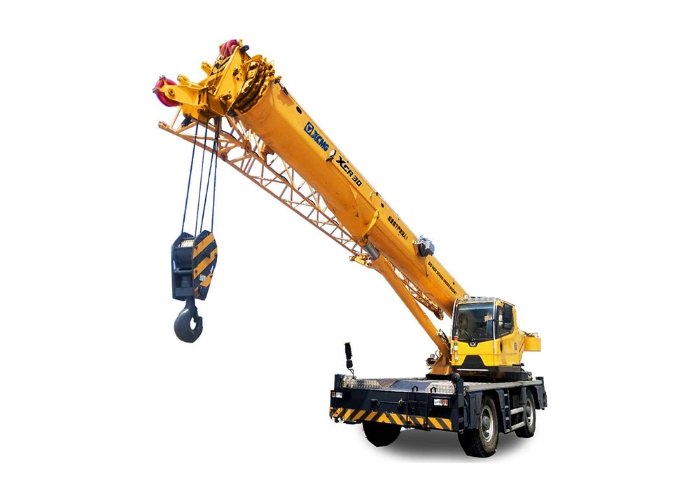
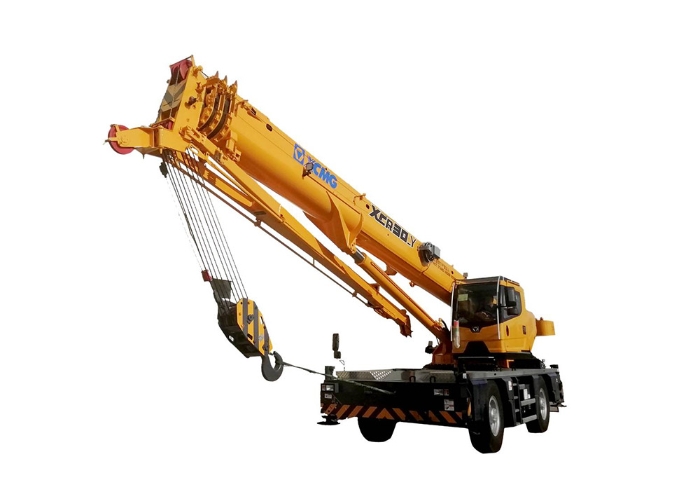
Up to 35 ton Rough Terrain Crane
Up to 35 ton rough terrain cranes are the most compact machines in the rough terrain category, designed for maneuverability on congested job sites where larger cranes cannot operate. This entry-level band handles HVAC units, precast concrete panels, structural steel, and light equipment placement on small commercial and industrial projects. For heavier picks or longer reach requirements, the 35-60 ton Rough Terrain Crane class offers greater capacity and boom length.
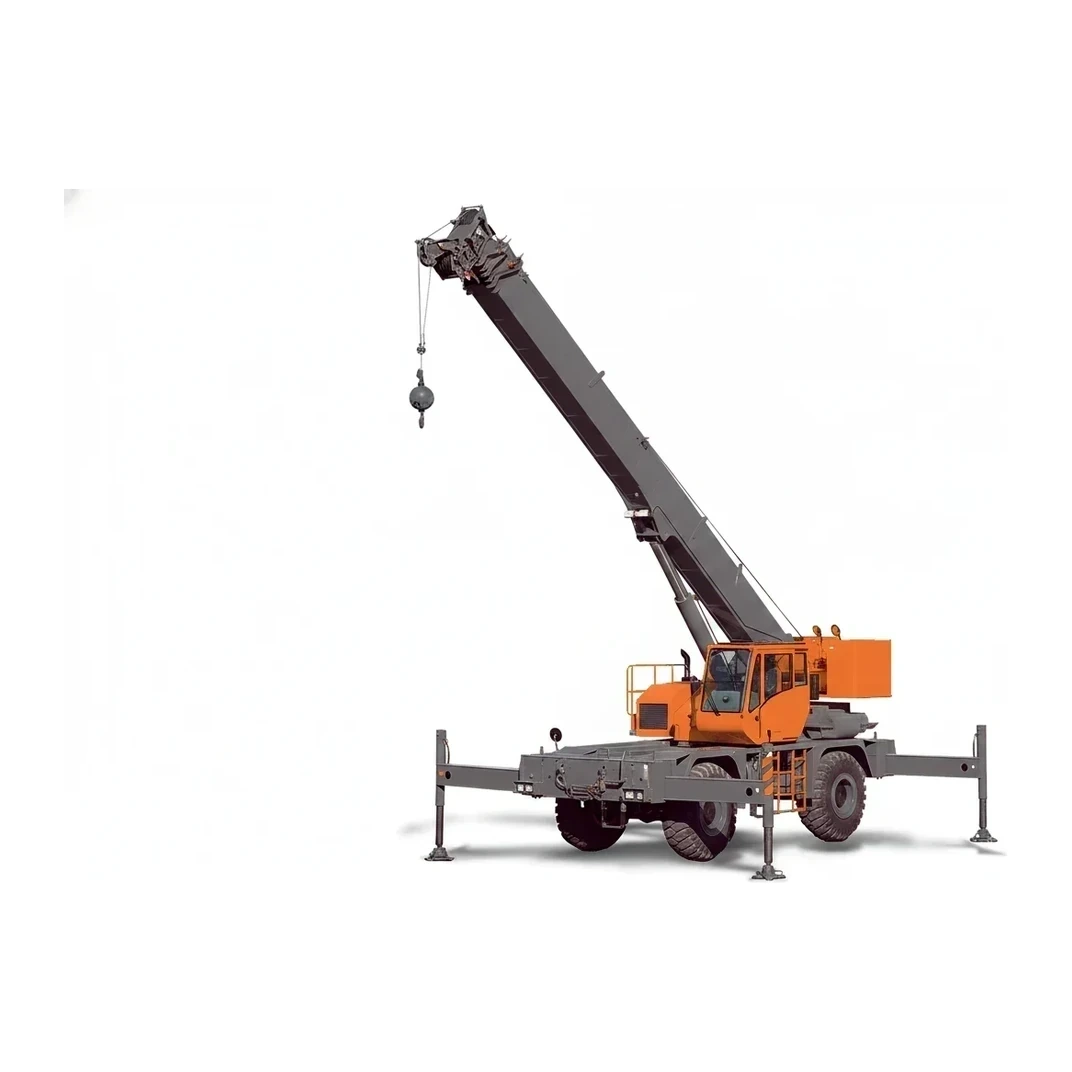
Cat classes
Pick a size class: capacity and reach differ across the range.
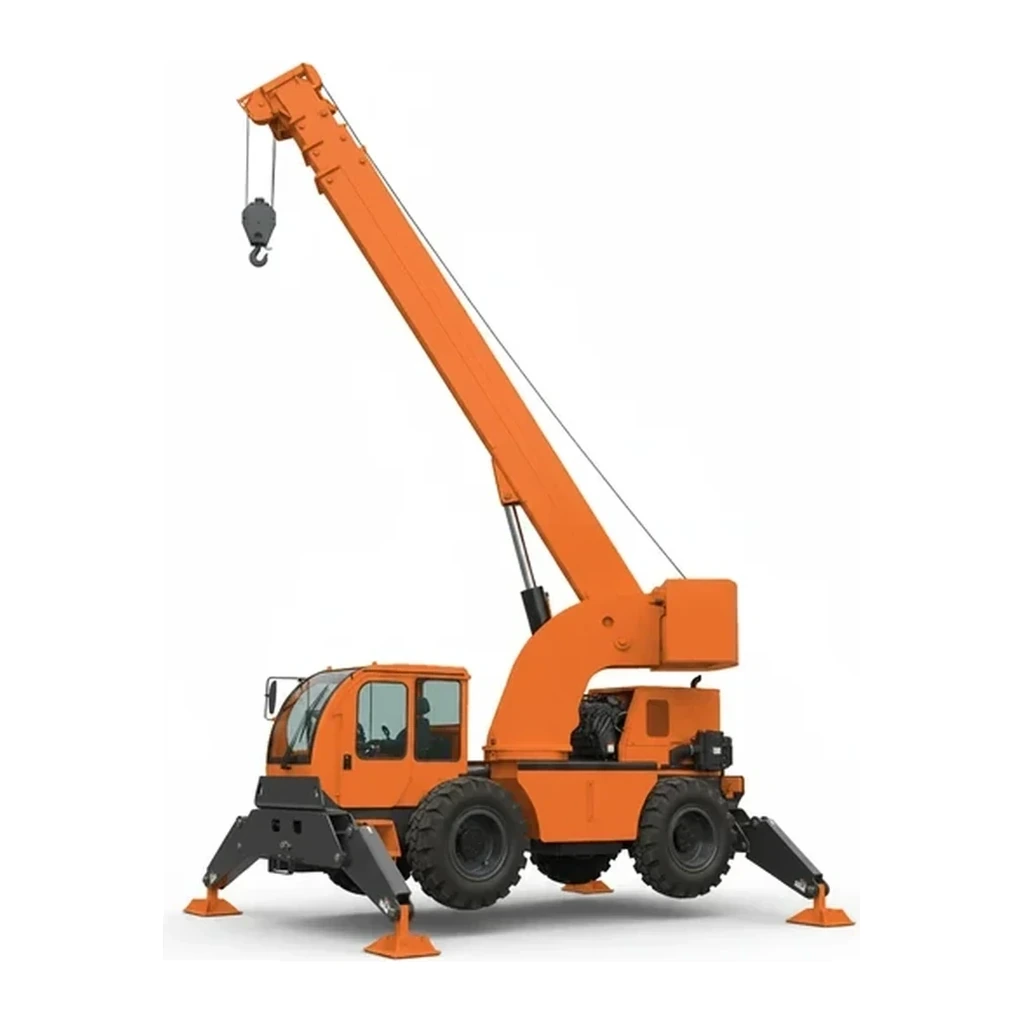
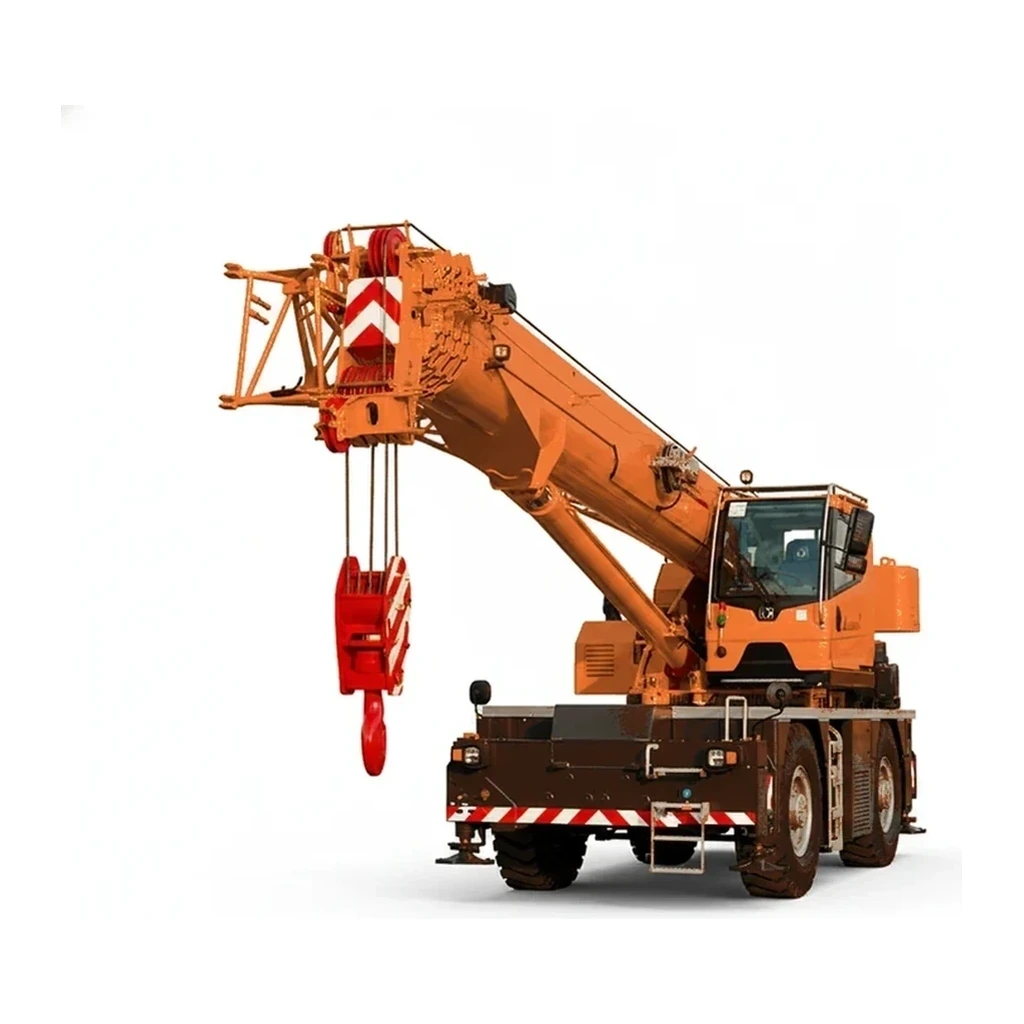
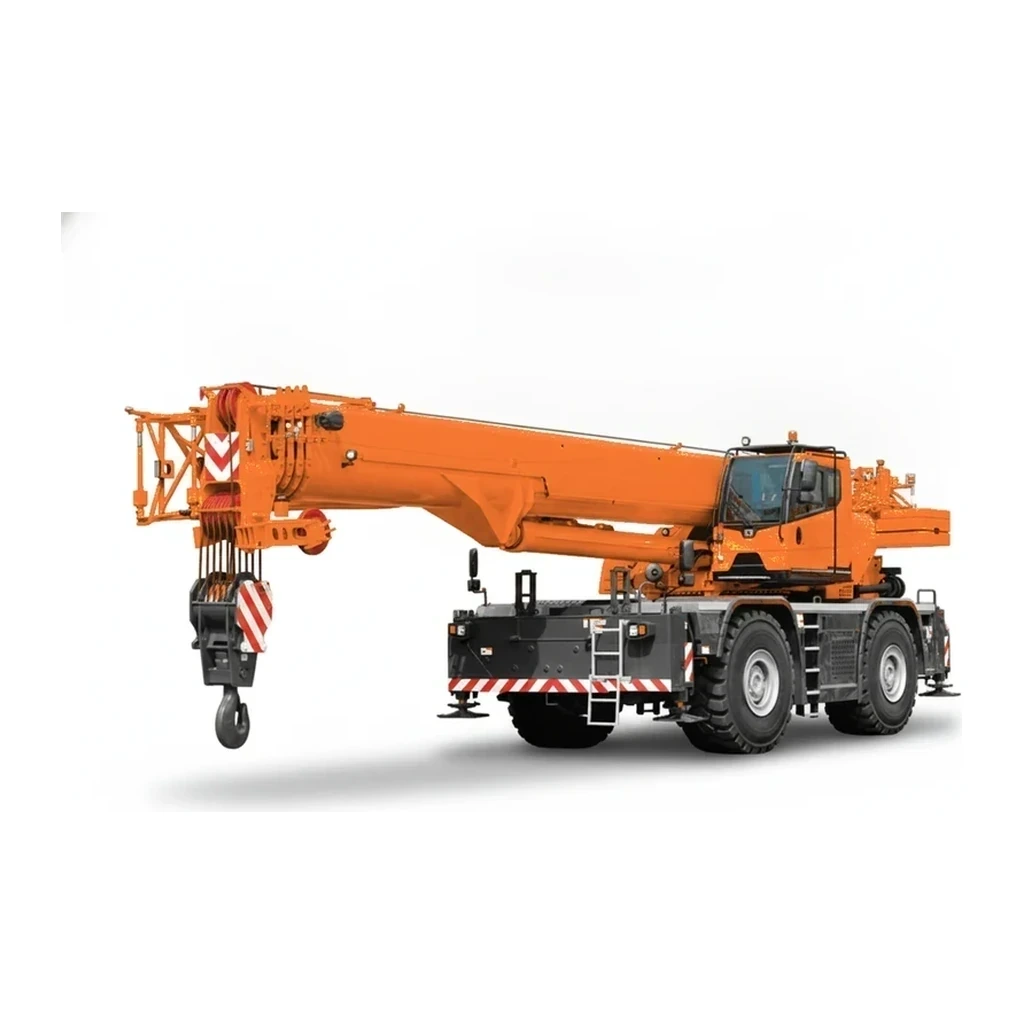
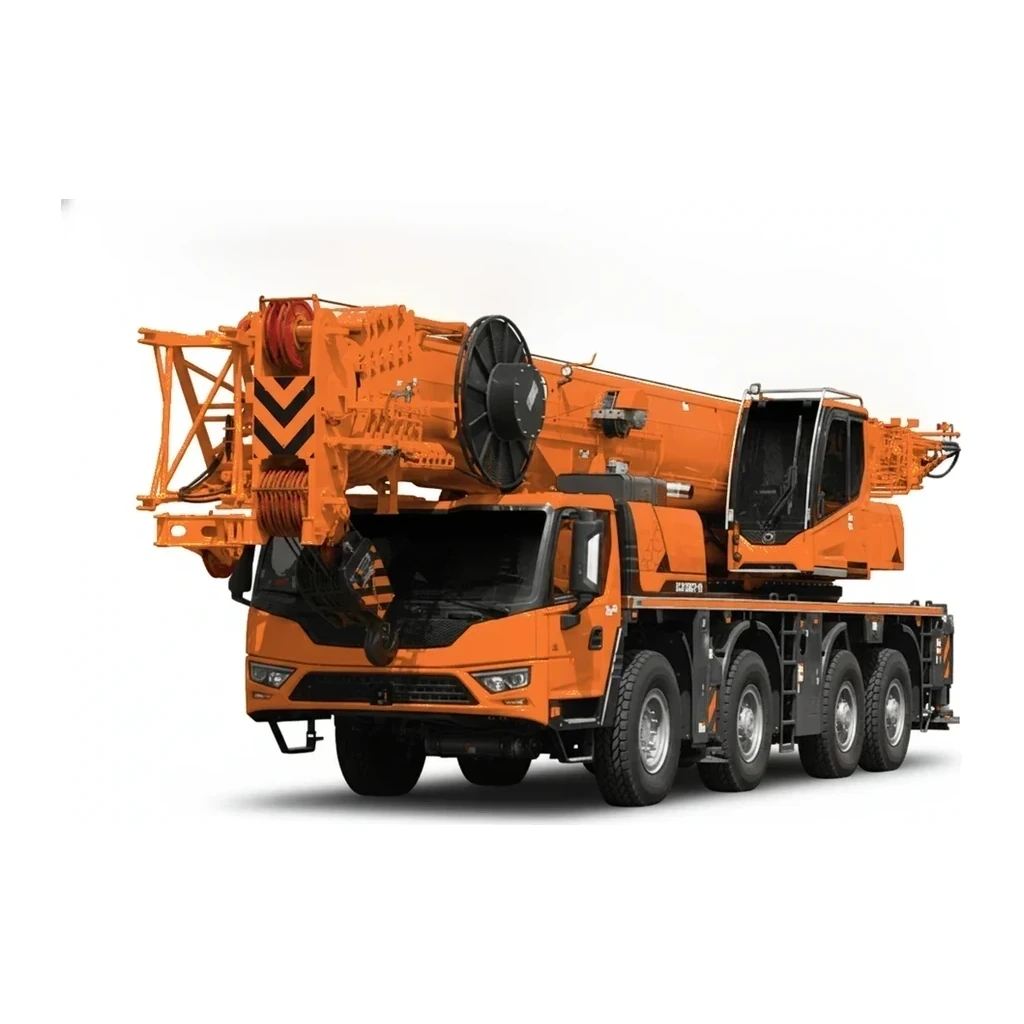
Key specifications
| Specification | Typical range | What it means |
|---|---|---|
| Lifting capacity | 11,023–66,139 lb (5–30 t) | Maximum rated load at minimum radius; capacity decreases as boom extends or load moves outward. |
| Boom length | 30–90 ft (9.1–27.4 m) | Telescoping boom provides variable reach; compact models favor shorter bases for tight-site access. |
| Transport width | 7–8 ft (2.1–2.4 m) | Narrow profile permits passage through standard gate openings and confined construction areas. |
| Operating weight | 15,000–50,000 lbs (6,804–22,680 kg) | Lighter machines improve ground pressure compatibility on sensitive surfaces and parking structures. |
How to choose
This size class is appropriate for small commercial construction sites with limited access, low-rise buildings, and pick weights consistently under 20 tons at typical working radii. The compact footprint and maneuverability justify the capacity trade-off on congested urban sites, tight industrial facilities, and projects where larger cranes cannot position. When lift weights approach the upper end of this band or boom reach exceeds 80 feet regularly, the 35-60 ton Rough Terrain Crane delivers greater stability, longer boom options, and higher chart capacities without requiring all-terrain or crawler mobilization.
What this size handles
- Rooftop HVAC unit placement on 2–4 story commercial buildings
- Precast concrete panel erection for tilt-up warehouse construction
- Structural steel setting for small industrial facilities and retail buildings
- Equipment placement in confined industrial plants and manufacturing facilities
- Glass and façade panel installation on low-rise commercial projects
- Utility pole and transformer setting in urban environments with restricted access
Safety & operation
- Load charts must account for ground conditions; rough terrain cranes rely on outriggers fully extended and properly cribbed on solid, level surfaces
- Compact size does not eliminate swing radius hazards; tail swing and counterweight clearance require zone control even on tight sites
- Operator certification to NCCCO Mobile Crane Operator standards is required; rough terrain cranes fall under the Telescopic Boom Crane—Swing Cab category
- Ground bearing pressure calculations are critical on sensitive surfaces; lighter machines in this band still exert significant point loads through outrigger pads
Transport & logistics
- Most models within this band transport on flatbed or stepdeck trailers without requiring special permits for width or weight
- Lighter units (under 30,000 lbs) may be towed on heavy-duty tag or gooseneck trailers; heavier machines require lowboy transport
- Self-propelled mobility allows cranes to travel short distances between picks on the same site, reducing repositioning time
Power & supply
- Diesel engines power both propulsion and crane functions; typical fuel consumption ranges from 2–5 gallons per hour under moderate operation
- No external electrical supply required; all hydraulic and control systems operate from onboard engine and batteries
- Daily refueling from standard diesel fuel storage on site; smaller tanks (20–40 gallons) require more frequent servicing than larger cranes
Frequently asked
What distinguishes rough terrain cranes from all-terrain or truck-mounted cranes in this capacity range?
How does lifting capacity change with boom extension and radius on these cranes?
Can rough terrain cranes in this size class operate on finished surfaces or inside buildings?
Compare popular models
Find by spec →Normalised to the same units. A dash means the figure was not published.
| Model | Lifting capacity | Max reach |
|---|---|---|
| Broderson RT-400 | 39,683 lb (18 t) | 68 ft (20.7 m) |
| Sany SRA350A | 63,934 lb (29 t) | - |
Related equipment
Browse by manufacturer
Sources
Every specification is verified against the manufacturer's published data, with the source linked for reference.
Up to 35 ton Rough Terrain Crane
8 models · Every spec cited to source