

Ride-On Floor Scraper
A ride-on floor scraper is a self-propelled machine designed to remove flooring materials such as tile, vinyl composition tile (VCT), carpet, and adhesive residues from concrete substrates. The operator stands or sits on the machine while controlling forward movement and blade engagement, enabling efficient removal across large floor areas. These machines are primarily used in commercial and industrial settings where manual scraping would be impractical due to scale.
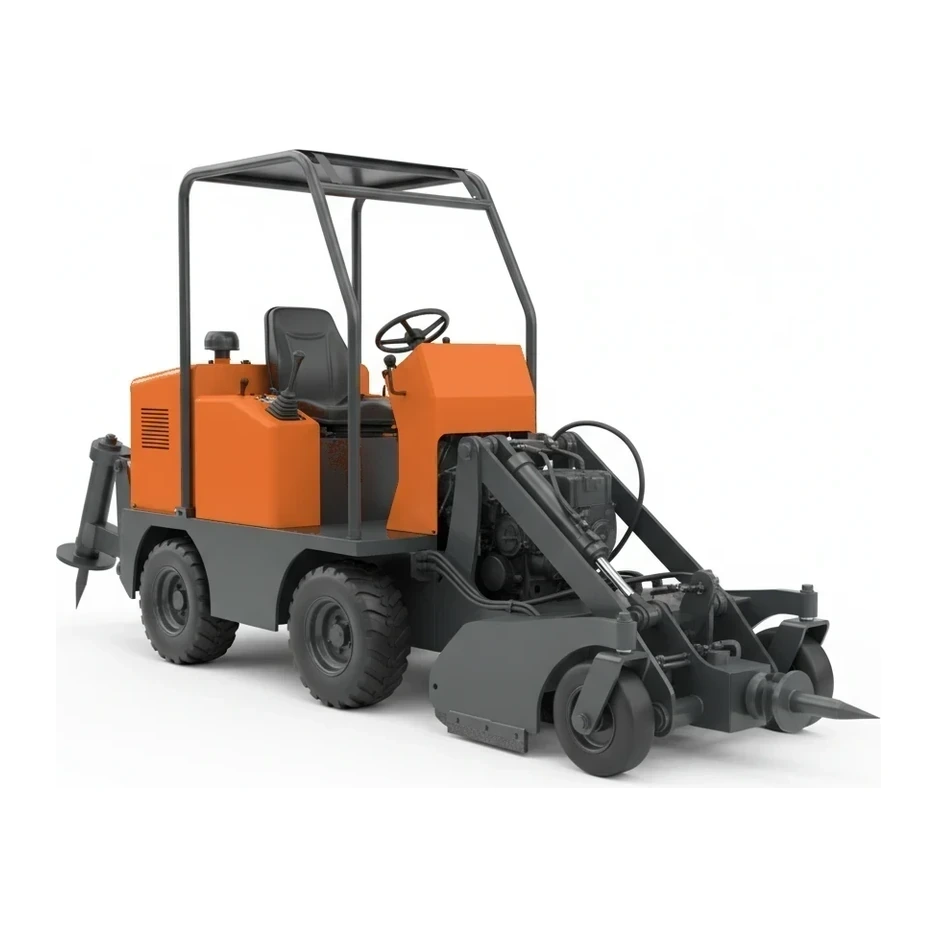
How it works
The machine consists of a weighted platform with a forward-mounted blade assembly, drive system, and operator controls. As the operator drives the unit forward, hydraulic or electric actuators force the blade beneath the flooring material at an adjustable angle, shearing it from the substrate. Many models use oscillating or vibrating blade action to break the bond between flooring and adhesive more effectively than static pressure alone. Weight transfer to the blade edge, combined with forward momentum, generates the mechanical force needed to fracture adhesive bonds and lift materials. Operators control travel speed, blade angle, and downward pressure to match different flooring types and adhesive systems. Debris is typically pushed forward and must be collected separately, though some operations involve a following crew for material handling.
Types & variants
- Standard Blade
- Fixed or oscillating blades in widths from 12 to 24 inches for general-purpose tile, VCT, and thin-set removal in commercial spaces.
- Wide Blade
- Blade assemblies 24 inches and wider designed for production-rate removal in large-format facilities such as warehouses, big-box stores, and hospitals.
- Oscillating Head
- Blade assemblies that vibrate or oscillate at high frequency to reduce chipping and substrate damage, particularly on brittle tile or sensitive concrete.
- Self-Propelled Stand-On
- Operator stands on a platform, controlling the machine with handlebars or levers; most common configuration for maneuverability and visibility.
- Self-Propelled Sit-On
- Operator sits on a seat with foot or hand controls, reducing fatigue during extended shifts on very large projects.
Key specifications
| Specification | Typical range | What it means |
|---|---|---|
| Blade Width | 12–32 in (30.5–81.3 cm) | Determines coverage rate per pass; wider blades increase productivity but reduce maneuverability in confined areas. |
| Machine Weight | 500–1,200 lb (227–544 kg) | Provides downforce for blade penetration; heavier machines generate more cutting force but are harder to transport. |
| Power Source | Electric (110-240V) or propane | Electric models suited for indoor use with no emissions; propane offers portability without electrical infrastructure. |
| Travel Speed | 0-50 ft/min variable | Adjustable forward speed allows operators to match machine pace to material hardness and adhesive type. |
How the industry sizes it
The industry sizes ride-on floor scrapers primarily by blade width, measured in inches. Machines with blades under 24 inches are considered mid-size units suitable for typical commercial rooms, hallways, and spaces with columns or fixtures requiring tighter maneuvering. Units with blades 24 inches and wider are classified as wide or production models, deployed on large open floors in warehouses, retail superstores, hospitals, and industrial facilities where maximizing square footage per hour is critical. Some specifications reference machine weight or horsepower, but blade width remains the dominant sizing metric as it directly correlates to coverage rate and project scale.
Applications
- Removal of vinyl composition tile (VCT) and sheet vinyl from commercial and institutional floors prior to replacement
- Demolition of ceramic and porcelain tile installations in retail, hospitality, and healthcare renovation projects
- Stripping carpet and carpet pad adhesive from concrete slabs in office buildings and schools
- Preparation of warehouse and manufacturing floors by removing epoxy coatings, thin-set mortar, and mastic residues
- Large-scale flooring replacement in big-box retail stores, airports, and convention centers requiring high daily production
- Adhesive and underlayment removal during concrete surface preparation ahead of polishing or overlay systems
Safety & operation
- Operators should wear steel-toed boots, hearing protection, and safety glasses to guard against blade noise and ejected debris.
- Machines must be operated on stable, level surfaces; substrate integrity should be assessed to prevent blade catch or tip-over on uneven concrete.
- Blade guards and emergency stop controls should be verified before operation to prevent contact with moving components.
- Dust suppression or ventilation is necessary when removing flooring materials that may contain asbestos, lead paint, or other hazardous substances.
- Electrical models require proper grounding and GFCI protection; propane units need adequate ventilation to prevent carbon monoxide accumulation indoors.
Standards & certifications
- OSHA · 29 CFR 1926.441
- Electrical safety standards for grounding and ground-fault protection on jobsites apply to electric-powered models.
- ANSI · B11.27
- Covers safety requirements for machinery with moving blades and operator platforms, including guards and emergency stops.
- EPA · NESHAP 40 CFR 61
- National Emission Standards for Hazardous Air Pollutants govern work practices when removing flooring that may contain asbestos.
- CSA · C22.2 No. 68
- Canadian electrical safety standard for motor-operated appliances applicable to electric floor scrapers used in Canada.
Frequently asked
How does blade width affect productivity on floor removal projects?
What is the difference between oscillating and fixed-blade ride-on scrapers?
Can ride-on floor scrapers be used on raised access floors or wood substrates?
What daily production rates are typical for ride-on floor scrapers?
Related equipment
Browse by manufacturer
Sources
Every specification is verified against the manufacturer's published data, with the source linked for reference.
All models
3 models · Every spec cited to source