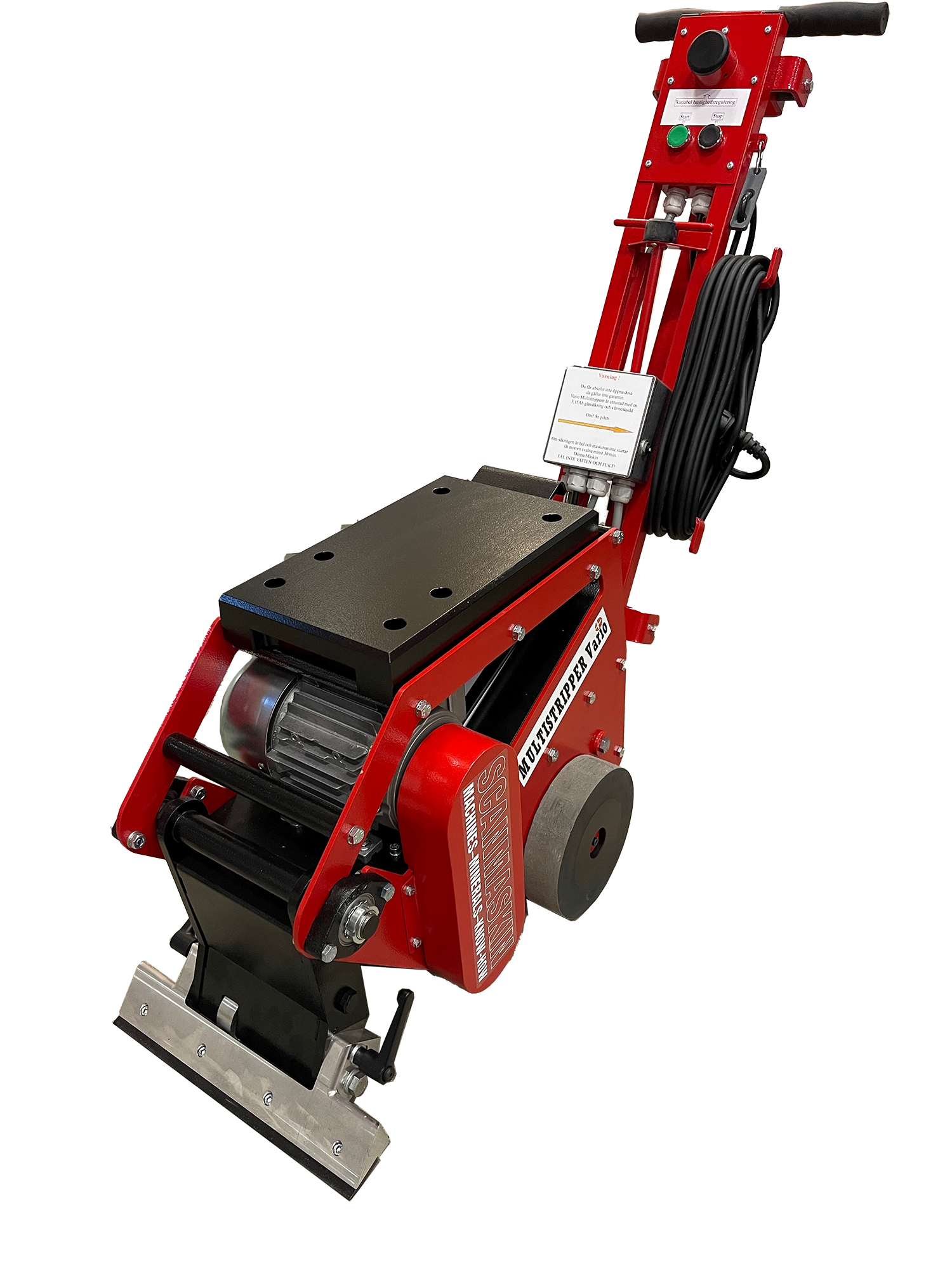

Walk-Behind Floor Scraper
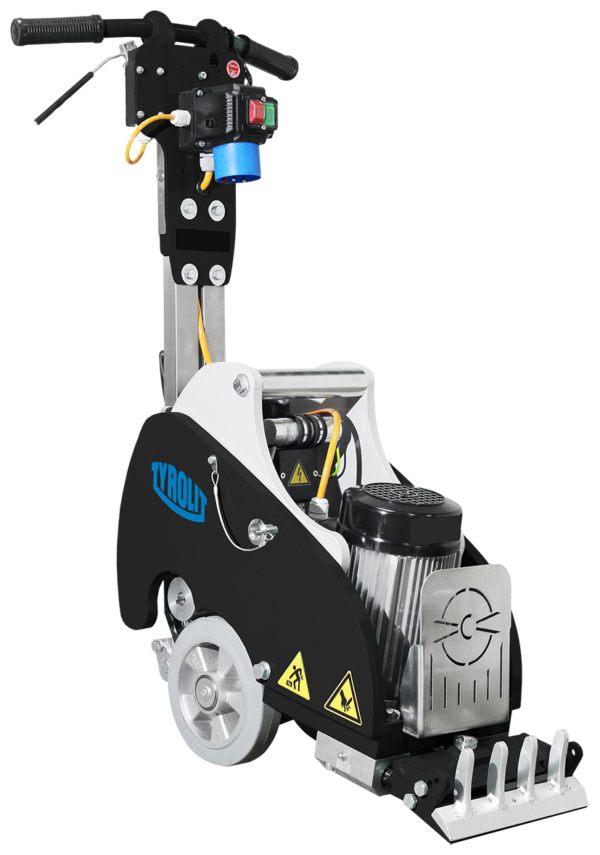
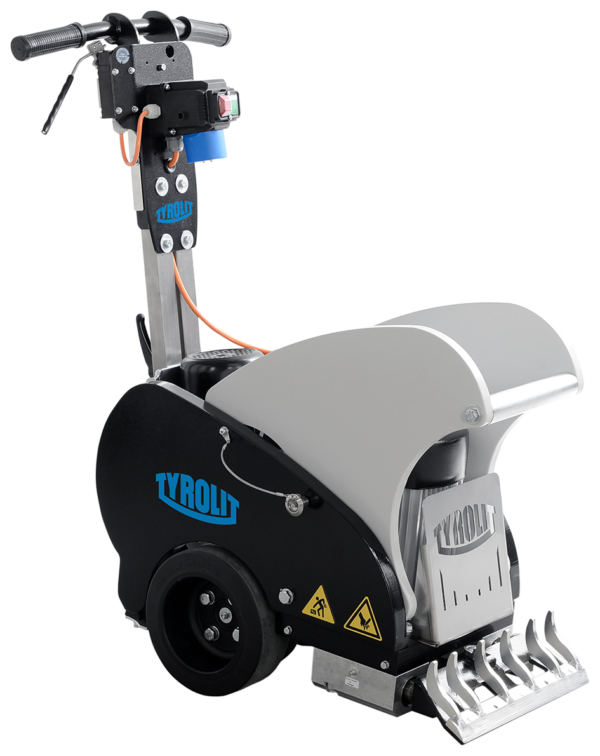
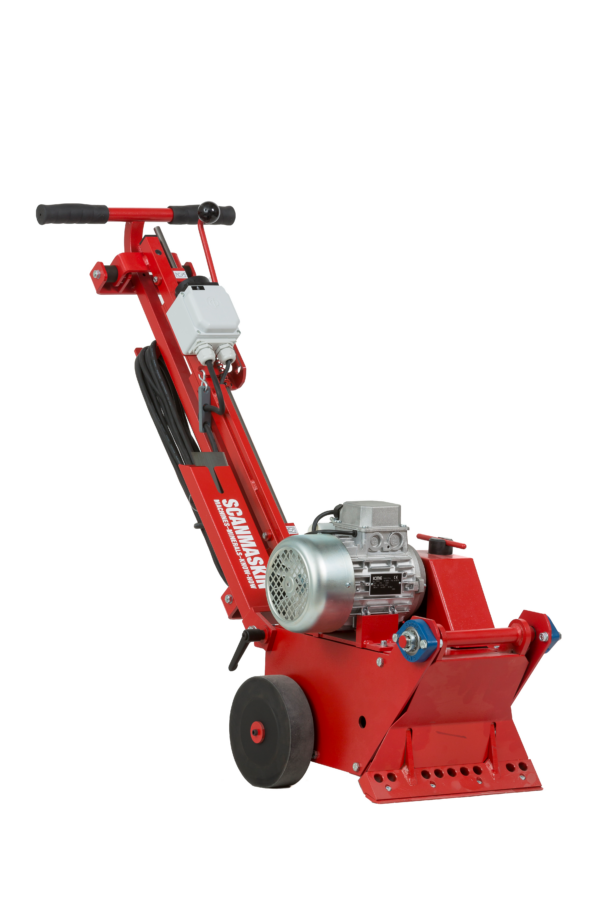
A walk-behind floor scraper drives an angled blade under glued floor coverings, carpet, vinyl, VCT, ceramic tile, wood, shearing them off the concrete along with their adhesives. It replaces hand scraping on any floor bigger than a closet. The catalog lists 44 models from brands including National Flooring Equipment, Blastrac, Bartell Morrison, Husqvarna and General Equipment, spanning machine weights from 100 to 2,900 lb.
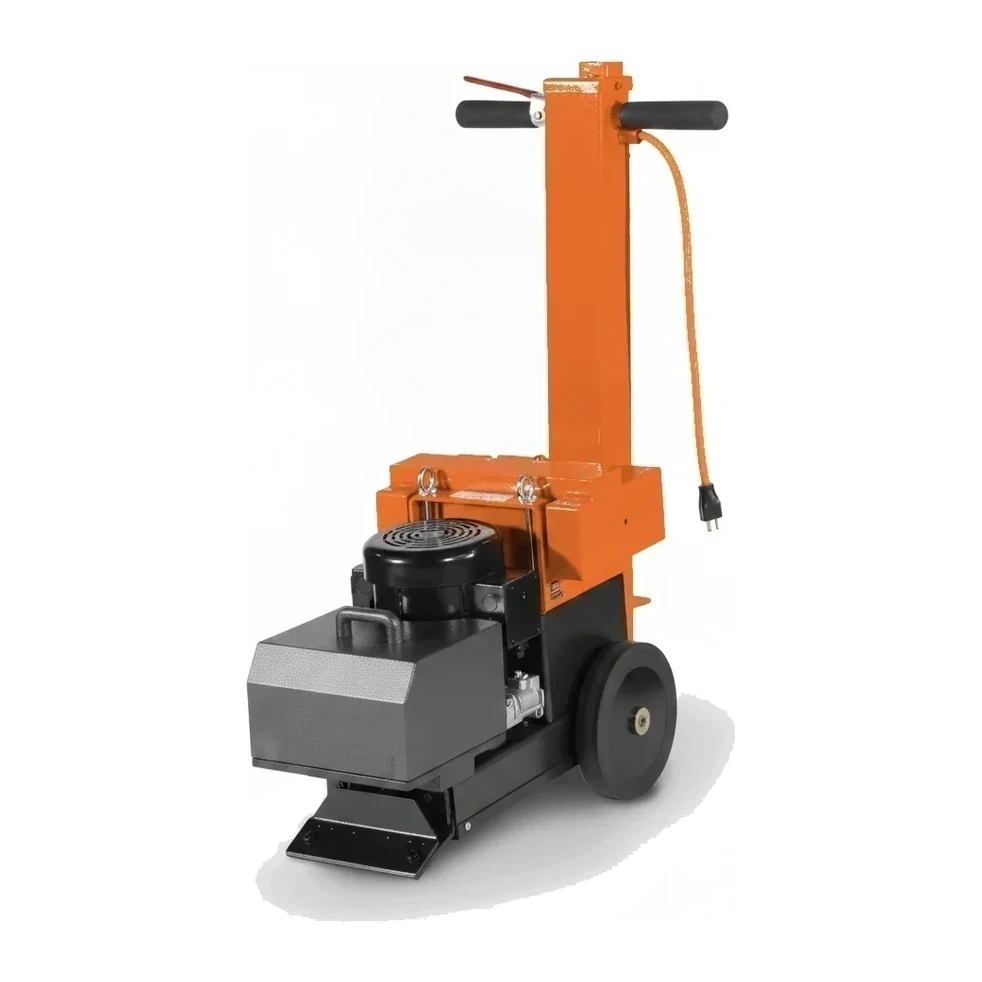
How it works
The machine pushes a replaceable blade at a controlled angle into the bond line between covering and slab. Machine weight is the working force: heavier units hold the blade in the cut through stubborn adhesives without riding up. Self-propelled models drive the blade forward; lighter units rely on operator push assisted by vibration on some designs. Blade width, shape and angle are swapped to match the covering: wide and shallow for carpet, narrow and steep for ceramic and thin-set.
Types & variants
- Manual walk-behind scrapers
- Light push machines for carpet, sheet vinyl and small rooms.
- Self-propelled scrapers
- Powered drive keeps the blade loaded through tough adhesives on larger floors.
- Heavy walk-behind scrapers
- The top of the weight class, holding the cut in ceramic, hardwood and cured epoxies.
- Battery-powered scrapers
- Cord-free operation for occupied buildings and night work.
Key specifications
| Specification | Typical range | What it means |
|---|---|---|
| Machine weight | 100 to 2,900 lb across the catalog size classes | Weight is the force holding the blade in the bond line: the primary sizing figure. |
| Blade width | Documented per model listing | Wider blades clear soft coverings faster; narrow blades concentrate force for hard materials. |
| Drive type | Documented per model listing | Manual push versus self-propelled decides operator effort and production rate. |
| Power source | Documented per model listing | Electric and battery models govern where the machine can run in occupied buildings. |
How the industry sizes it
Floor scrapers are sized by machine weight; the catalog groups them into 100-400, 400-600 and 600-2,900 lb classes. Soft coverings and small rooms suit the light class, general commercial stripping the middle, and bonded ceramic, hardwood and cured coatings the heavy class: with doorway width and floor loading checked as machines get heavier.
Applications
- Stripping glue-down carpet and pad before new flooring
- Removing VCT, sheet vinyl and their adhesives
- Taking up ceramic and quarry tile with thin-set
- Removing glue-down hardwood and engineered flooring
- Clearing mastic and adhesive residue ahead of surface prep
Safety & operation
- Blades are genuinely sharp and changed under lockout with cut-resistant gloves.
- Older resilient flooring and mastics can contain asbestos; OSHA 1926.1101 and local regulations require assessment before removal of suspect materials.
- Self-propelled machines are operated with clear escape paths: the drive does not stop for feet.
- Ramp loading of heavier classes uses winches or ramps rated for the machine weight.
Standards & certifications
- OSHA · 29 CFR 1926.1101
- Asbestos in construction: governs removal of suspect resilient flooring and mastics.
- EPA · 40 CFR Part 61, Subpart M
- Asbestos NESHAP requirements for regulated flooring removal.
- OSHA · 29 CFR 1926.1153
- Silica rule applicable when scraping transitions into grinding residue off concrete.
Frequently asked
What does machine weight actually do?
Can one machine remove every covering?
What about asbestos in old flooring?
Related equipment
Browse by manufacturer
Sources
Every specification is verified against the manufacturer's published data, with the source linked for reference.
All models
41 models · Every spec cited to source