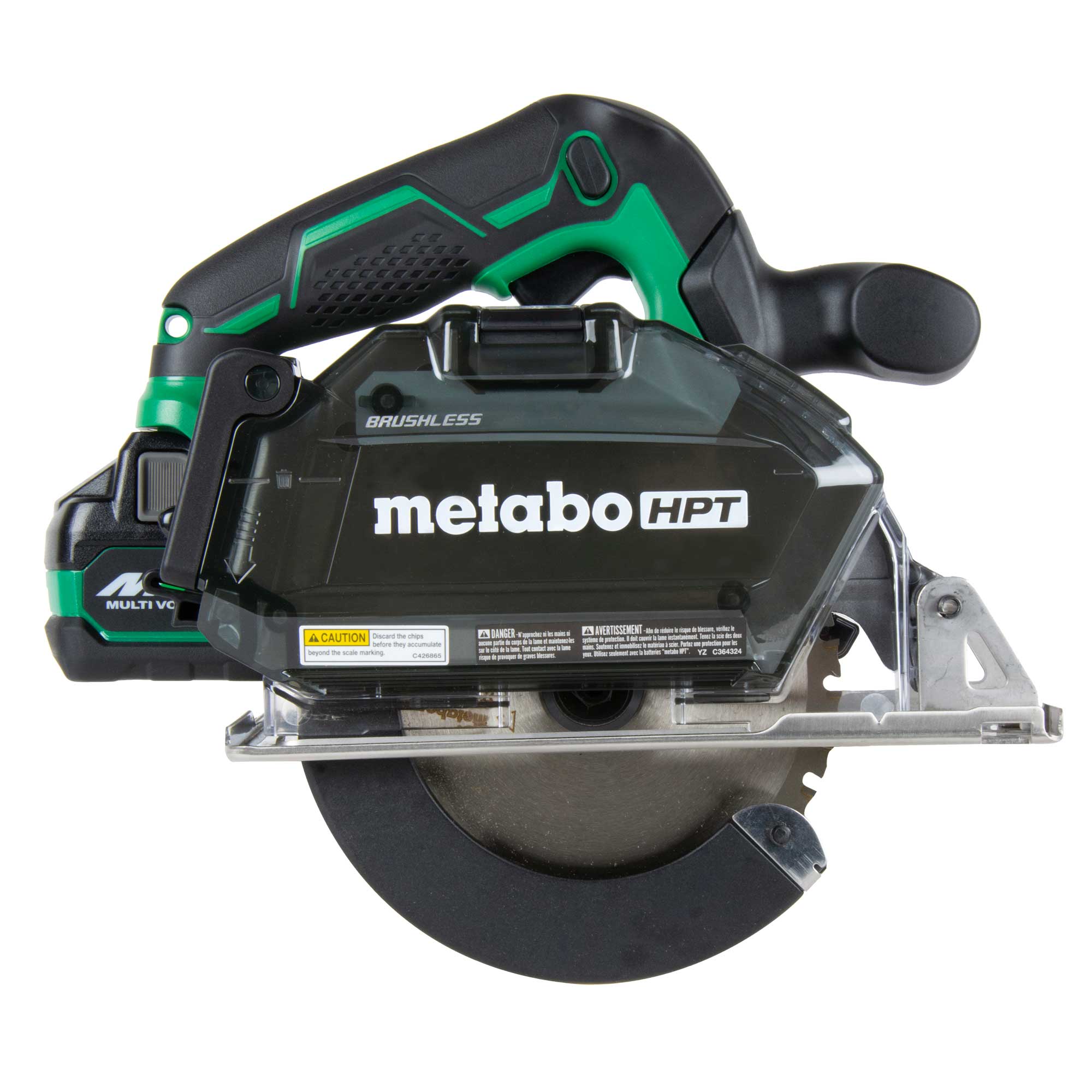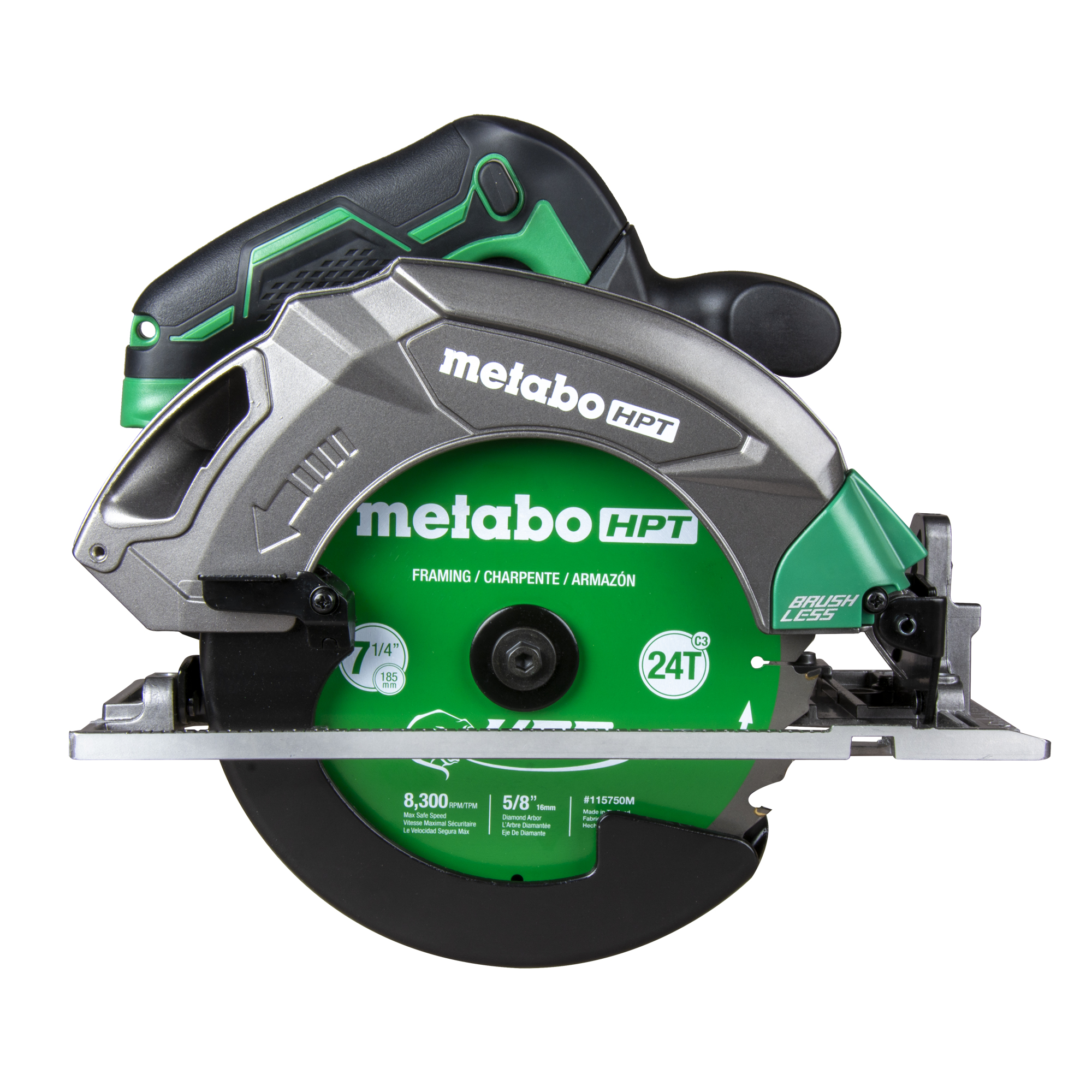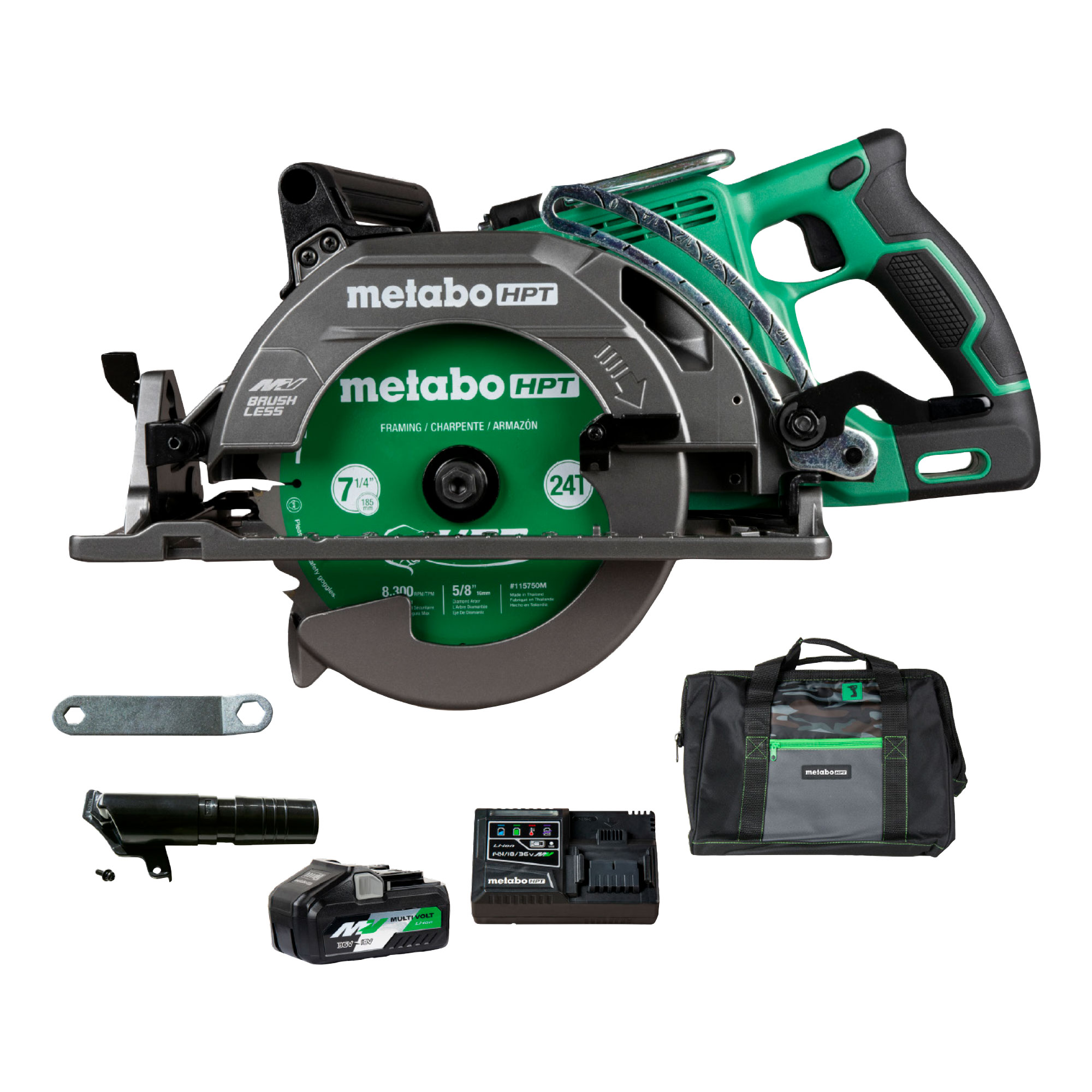

Circular Saw
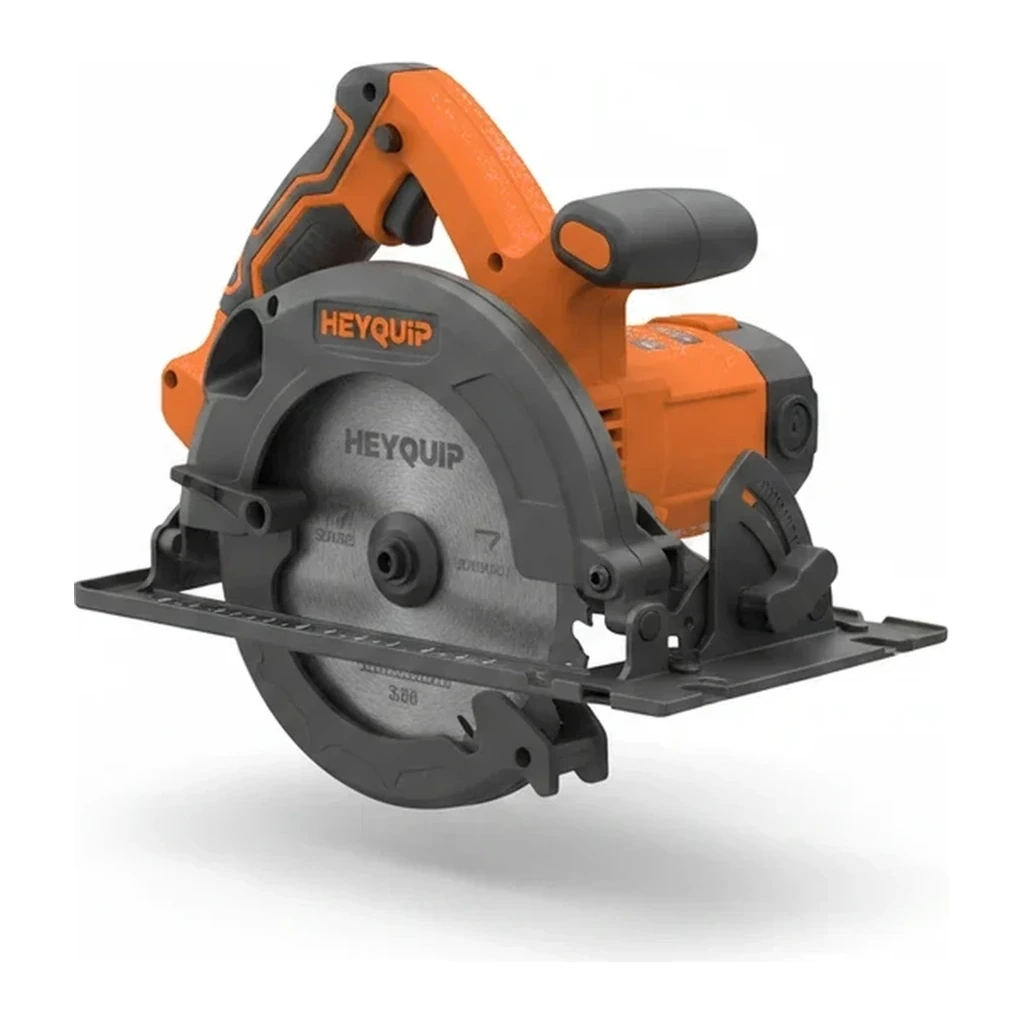
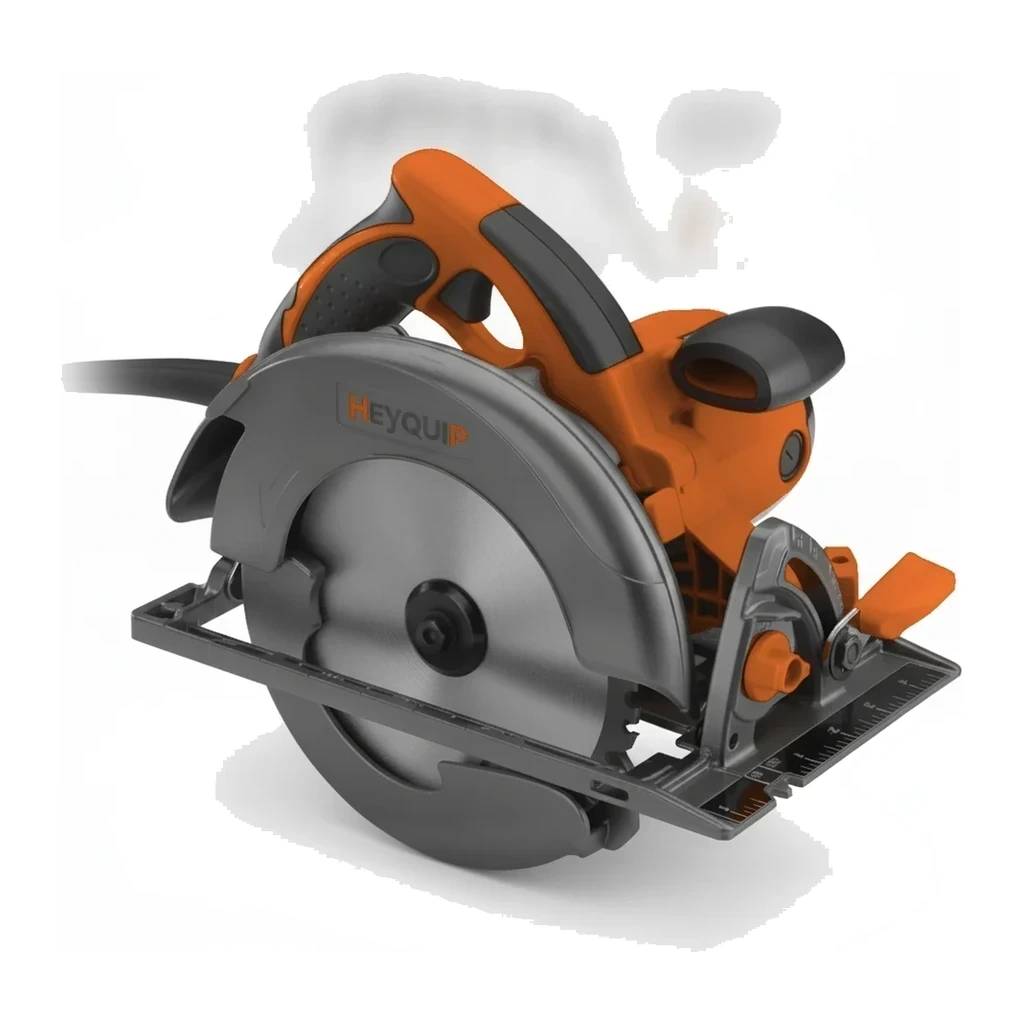
A circular saw is a hand-held power saw that drives a round toothed blade through lumber and sheet goods. It is the primary cutting tool for framing and general carpentry on site.
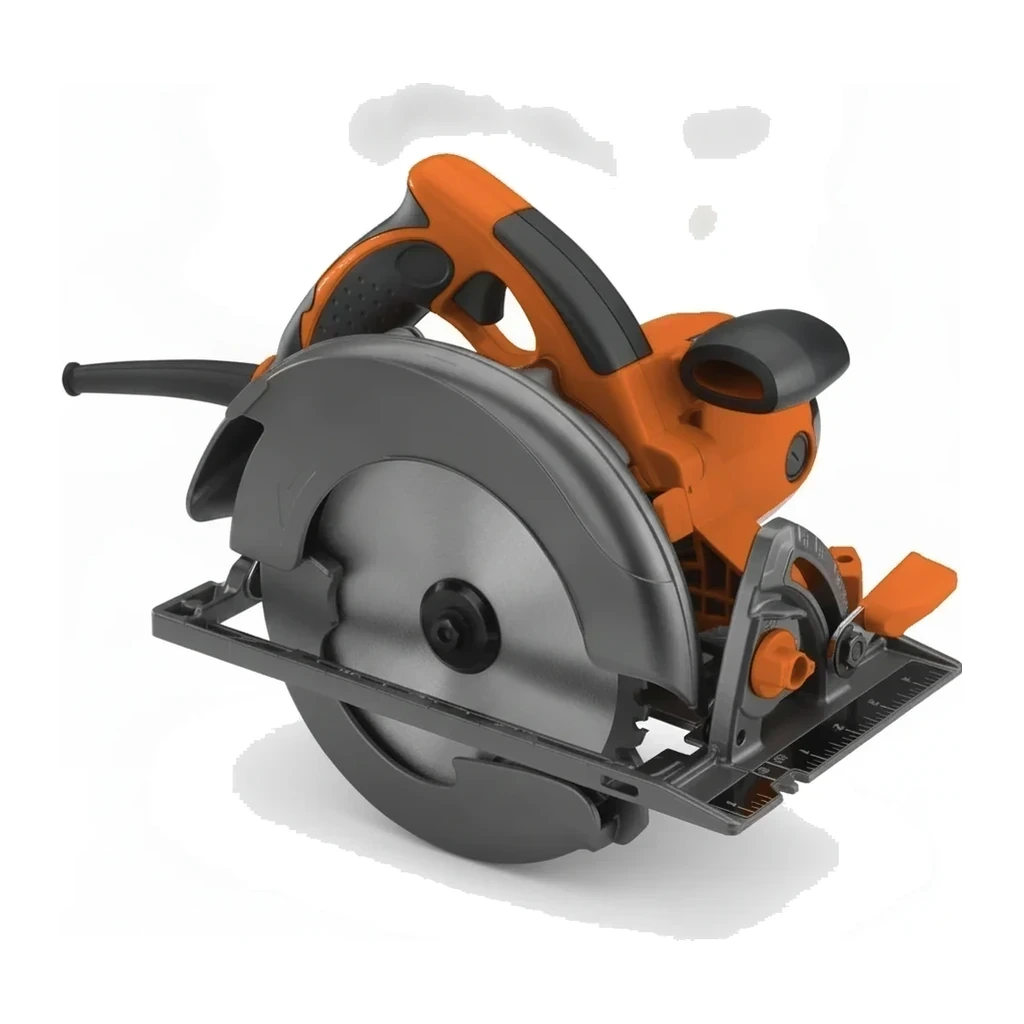
Cat classes
Pick a size class — capacity and reach differ across the range.
How it works
The motor spins the blade, and a spring-loaded lower guard retracts as the shoe rides the workpiece and covers the blade again after the cut. Depth and bevel adjustments on the shoe set how much blade is exposed and at what angle. Sidewinder models place the motor beside the blade; worm-drive models put it behind for more torque and a longer body.
Types & variants
- Sidewinder saws
- The common inline-motor layout, light and compact.
- Worm-drive saws
- Gear-driven saws with high torque, favored for heavy framing.
- Compact cordless saws
- Small-blade battery saws for sheet goods and light framing.
- Metal-cutting saws
- Lower-RPM saws with carbide blades and chip containment for steel.
Key specifications
| Specification | Typical range | What it means |
|---|---|---|
| Blade diameter | 3.3–8.3 in (85–210 mm) | Sets depth of cut; the full-size 7-1/4 in class cuts nominal two-by lumber at any bevel. |
| Weight | 2.6–11.7 lb (1.2–5.3 kg) | Compact saws reduce fatigue on repetitive sheet cuts; heavier saws track better in thick stock. |
| Bevel capacity | Varies by model | Allows angled cuts for rafters and roof work without a second tool. |
How the industry sizes it
Models are differentiated by blade diameter and drive layout. Compact saws with blades under 165 mm excel at panel processing and battery work, while full-size saws remain the framing default. The recorded no-load speed range for this class includes implausible high values and should not be relied on.
Applications
- Framing cuts in dimensional lumber
- Breaking down plywood, OSB, and other sheet goods
- Deck, fence, and formwork cutting
- Rafter and stair stringer bevel cuts
Safety & operation
- Kickback from a pinched blade is the main hazard; supporting the work so the kerf opens, and never removing the lower guard, are the core controls.
- Set blade depth so teeth clear the stock by about a quarter inch, reducing exposed blade.
- Wait for the blade to stop before setting the saw down, and keep the cord clear of the cut line.
Standards & certifications
- OSHA · 29 CFR 1926.304
- Woodworking tools: guarding and operating rules for hand-fed circular saws.
- UL · UL 62841
- Safety standard for hand-held motor-operated electric tools.
Frequently asked
What blade size is standard?
Sidewinder or worm drive?
Why does the saw kick back?
Related equipment
Browse by manufacturer
Sources
Every specification is verified against the manufacturer's published data, with the source linked for reference.
All models
98 models · Page 1 of 3 · Every spec cited to source