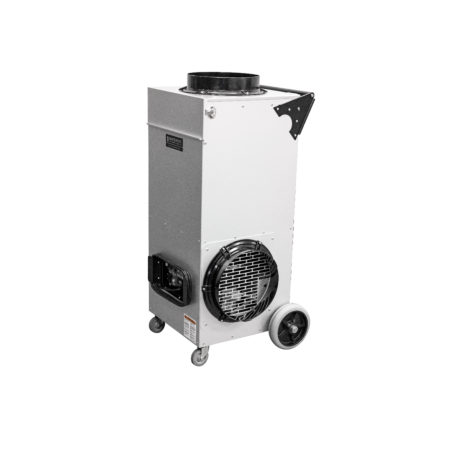
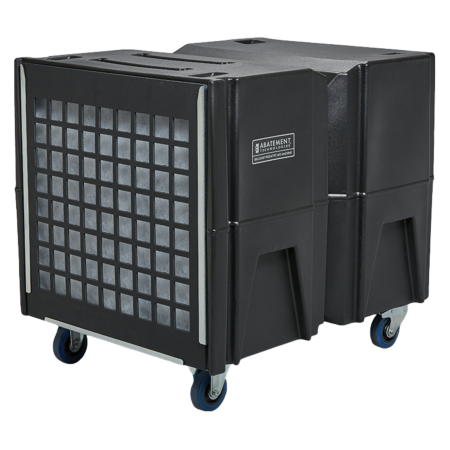
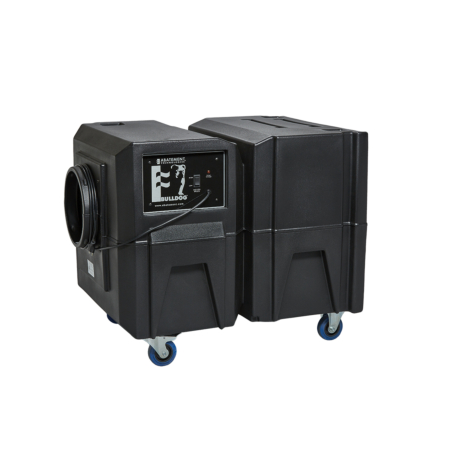
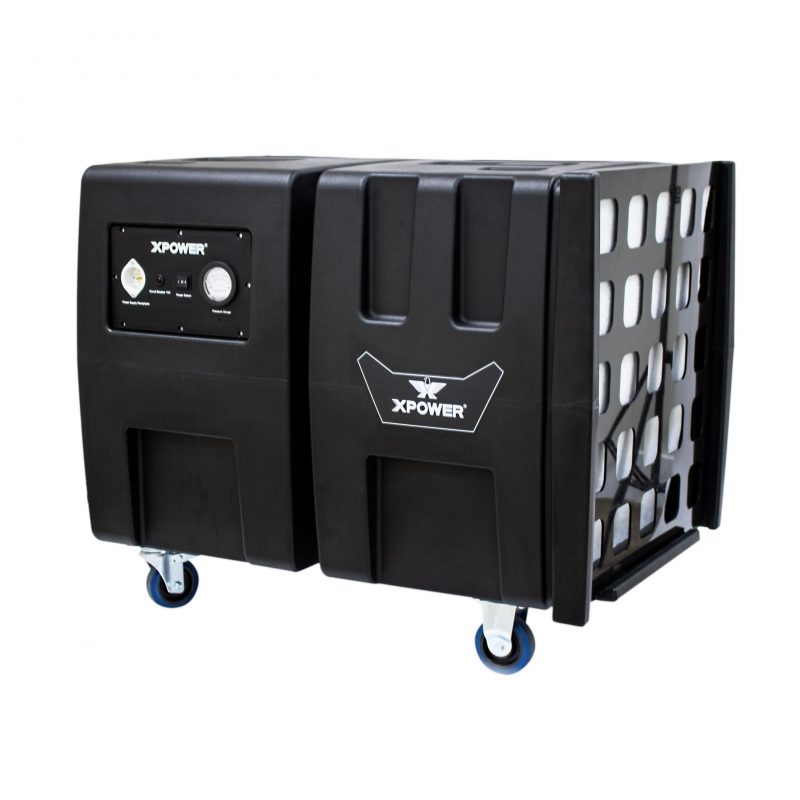
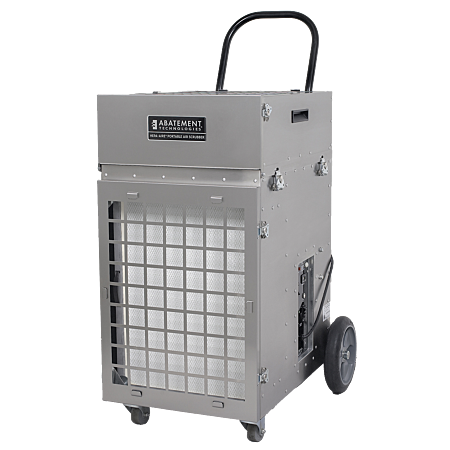
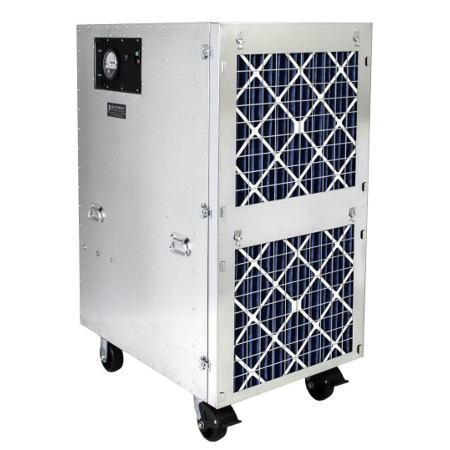
1,200+ cfm Air Scrubber / Negative Air Machine
The 1,200+ cfm air scrubber / negative air machine is the high-capacity class designed for large containments and industrial work, delivering airflow from 1,650 to 4,000 cfm. These machines provide the air changes that previously required multiple mid-size units, streamlining labor-intensive setups on major abatement and remediation projects. This size represents the top rung of the air scrubber ladder, above the 600–1,200 cfm Air Scrubber / Negative Air Machine.
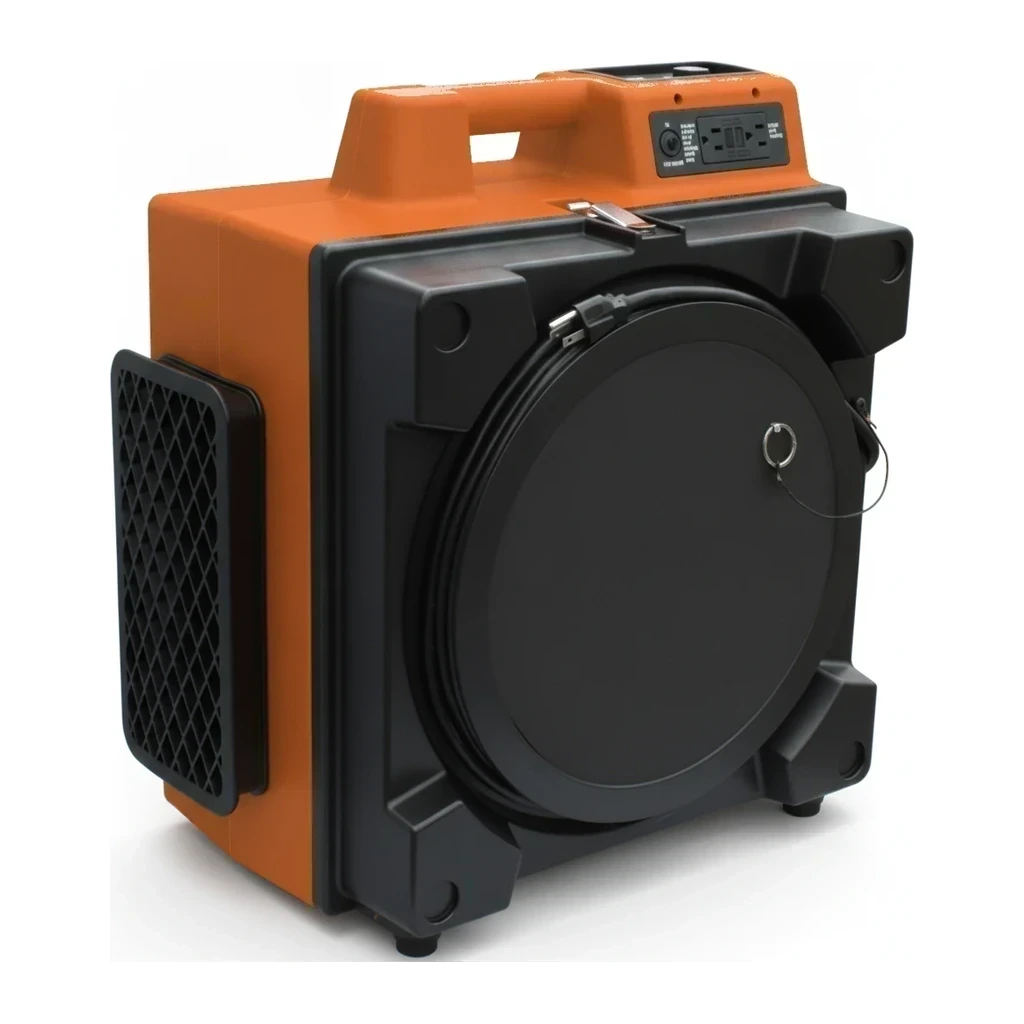
Cat classes
Pick a size class: capacity and reach differ across the range.
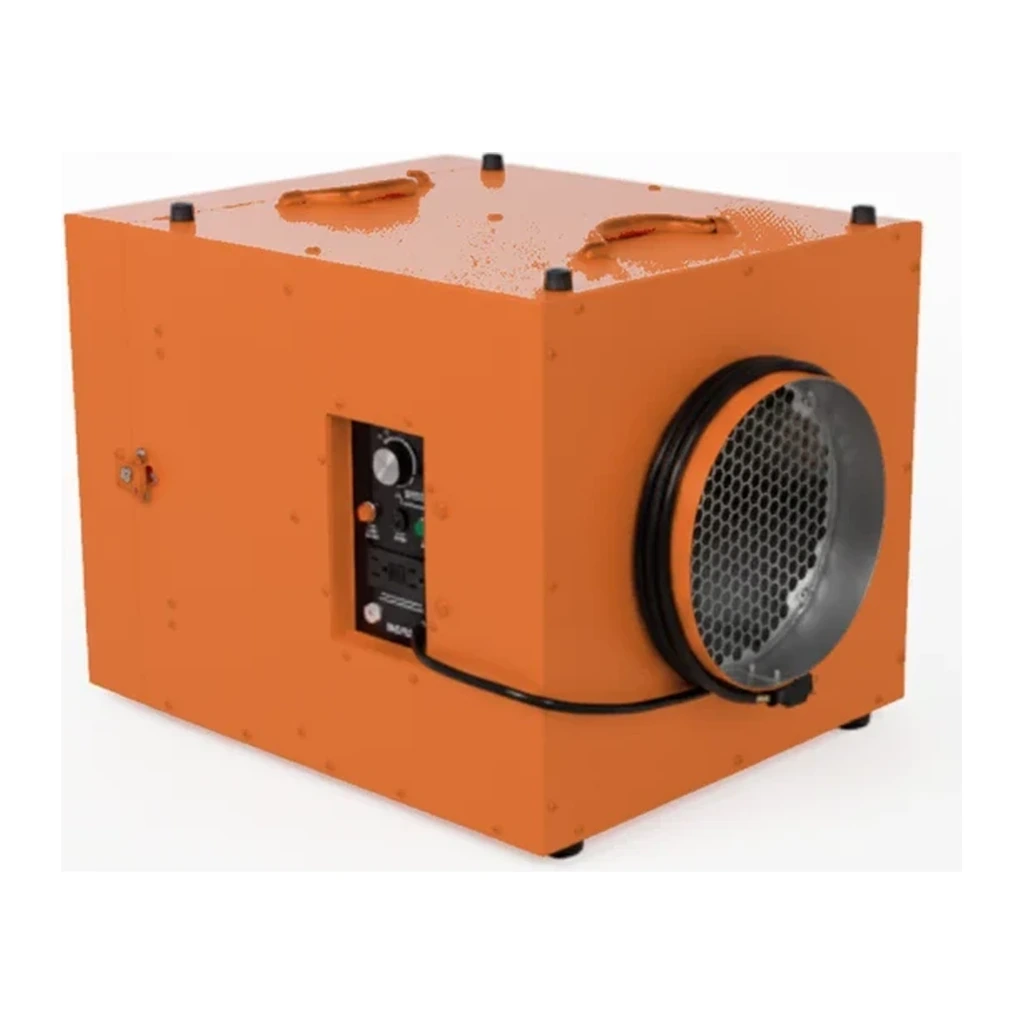
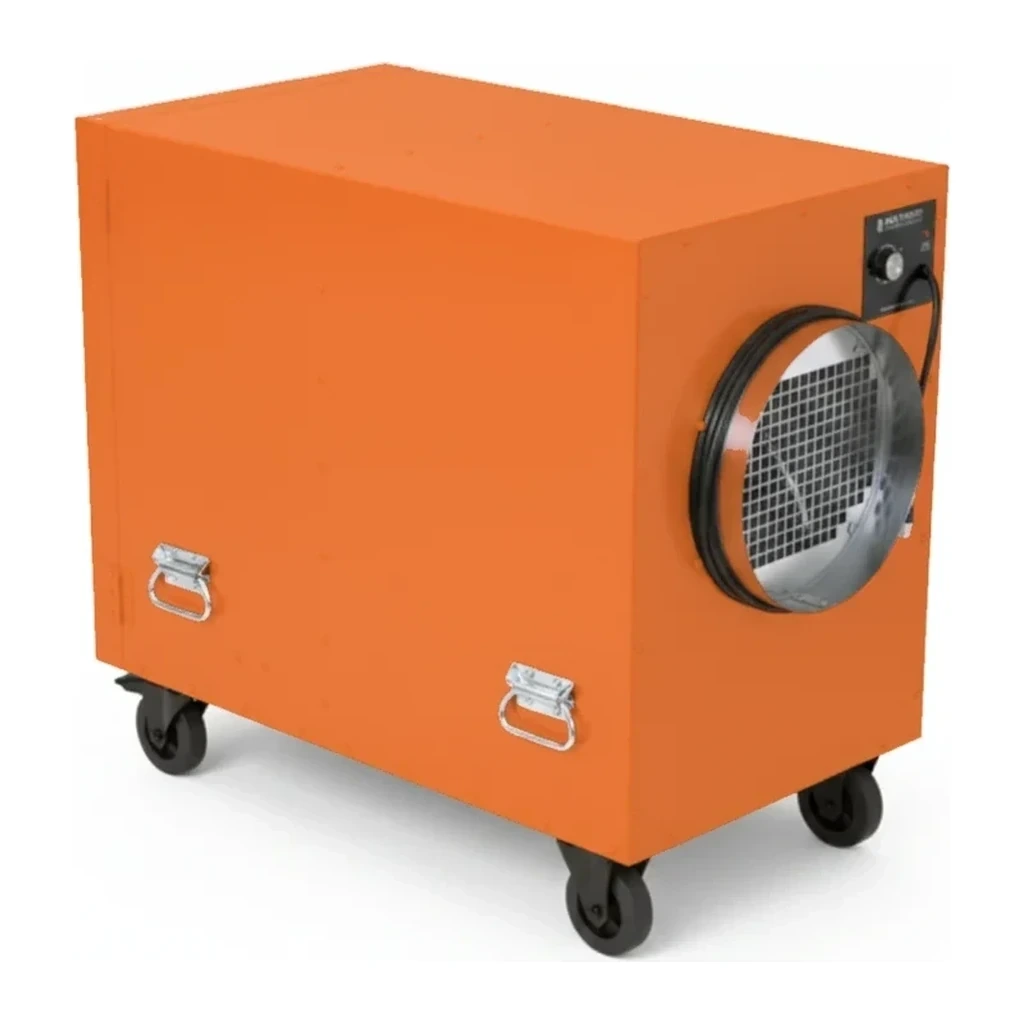
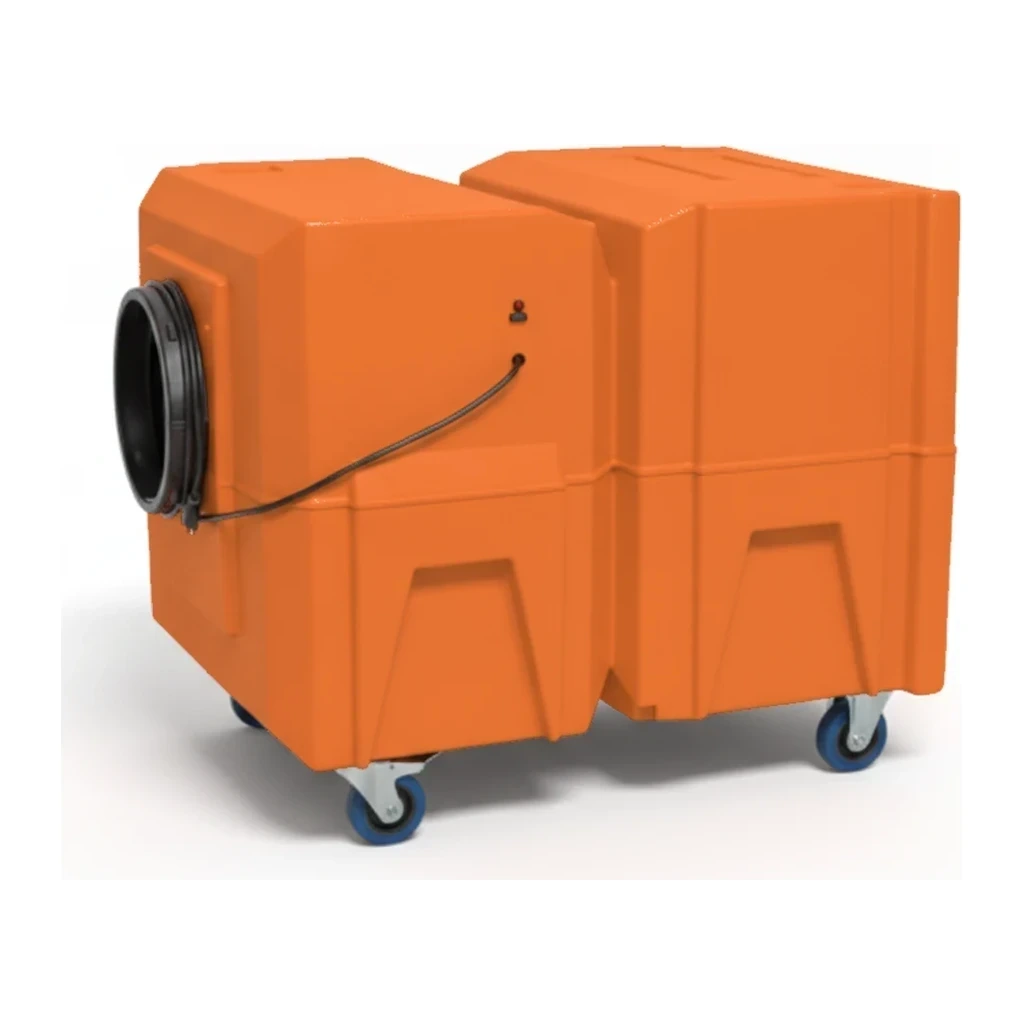
Key specifications
| Specification | Typical range | What it means |
|---|---|---|
| Airflow | 1,650–4,000 cfm | Cubic feet per minute; determines containment volume and air-change rate capability |
| Filtration stages | 3–4 stages (pre-filter, HEPA, optional carbon) | Sequential filtration captures progressively smaller particulate and odors |
| Motor configuration | Dual or variable-speed blowers | Multiple motors or variable drives allow precise pressure control in large spaces |
| Static pressure | Up to 4.0 in. w.g. | Inches of water gauge; ability to maintain negative pressure through ductwork and filters |
How to choose
This size class is appropriate when containment volume, air-change requirements, or static pressure demands exceed what the 600–1,200 cfm Air Scrubber / Negative Air Machine can sustain—typically on multi-story industrial abatement, large hospital wings, or remediation zones covering thousands of square feet. For smaller containments, mold jobs in residential or light-commercial settings, or projects where portability and reduced power draw are priorities, the 600–1,200 cfm Air Scrubber / Negative Air Machine is the better choice. When a single machine must serve an entire floor or maintain negative pressure through extensive duct runs, the 1,200+ cfm class consolidates equipment and simplifies monitoring.
What this size handles
- Asbestos abatement in multi-story hospital wings or manufacturing facilities
- Remediation of warehouse fire or water damage spanning 10,000+ sq ft
- Lead paint removal containments in large institutional buildings
- Industrial mold remediation requiring multiple air changes per hour across several zones
- Negative-pressure isolation during demolition of contaminated process areas
- High-rise construction dust and particulate control on occupied floors
Safety & operation
- HEPA filters must be sealed and tested to maintain containment integrity; bypass negates negative pressure
- Pressure monitoring (manometers or alarms) required to verify continuous negative differential
- Pre-filters require frequent inspection and changeout to prevent blower overload and airflow loss
- Machines drawing high amperage should be locked out and tagged during filter service to prevent accidental startup
Transport & logistics
- Machines typically weigh 150–300 lb and require pallet jack, appliance dolly, or two-person carry
- Most units fit through standard doorways on carts; larger models may need freight elevator or exterior hoist for upper floors
- Pickup truck bed or enclosed trailer sufficient; rigging and securing necessary for machines above 200 lb
Power & supply
- 208–240 V single-phase or three-phase circuits common; amperage ranges 10–20 A depending on motor configuration
- Dual-motor units may require dedicated 20 A circuits or temporary distribution to avoid nuisance tripping
- Generator compatibility requires clean sine-wave output and sufficient surge capacity for blower startup
Frequently asked
How many air changes per hour does a 1,200+ cfm machine provide?
Can one high-capacity unit replace multiple smaller machines?
What filtration efficiency is standard at this size?
Related equipment
Browse by manufacturer
Sources
Every specification is verified against the manufacturer's published data, with the source linked for reference.
1,200+ cfm Air Scrubber / Negative Air Machine
10 models · Every spec cited to source