

High-Velocity Drum Fan
A high-velocity drum fan is a portable, barrel-shaped axial fan designed to produce concentrated, high-speed airflow for industrial and commercial ventilation. These fans feature a cylindrical housing with a direct-drive or belt-driven axial impeller that moves large volumes of air in a focused stream. They are widely used across construction, manufacturing, and warehouse environments to cool workers, improve air circulation, and assist with drying or ventilation tasks.
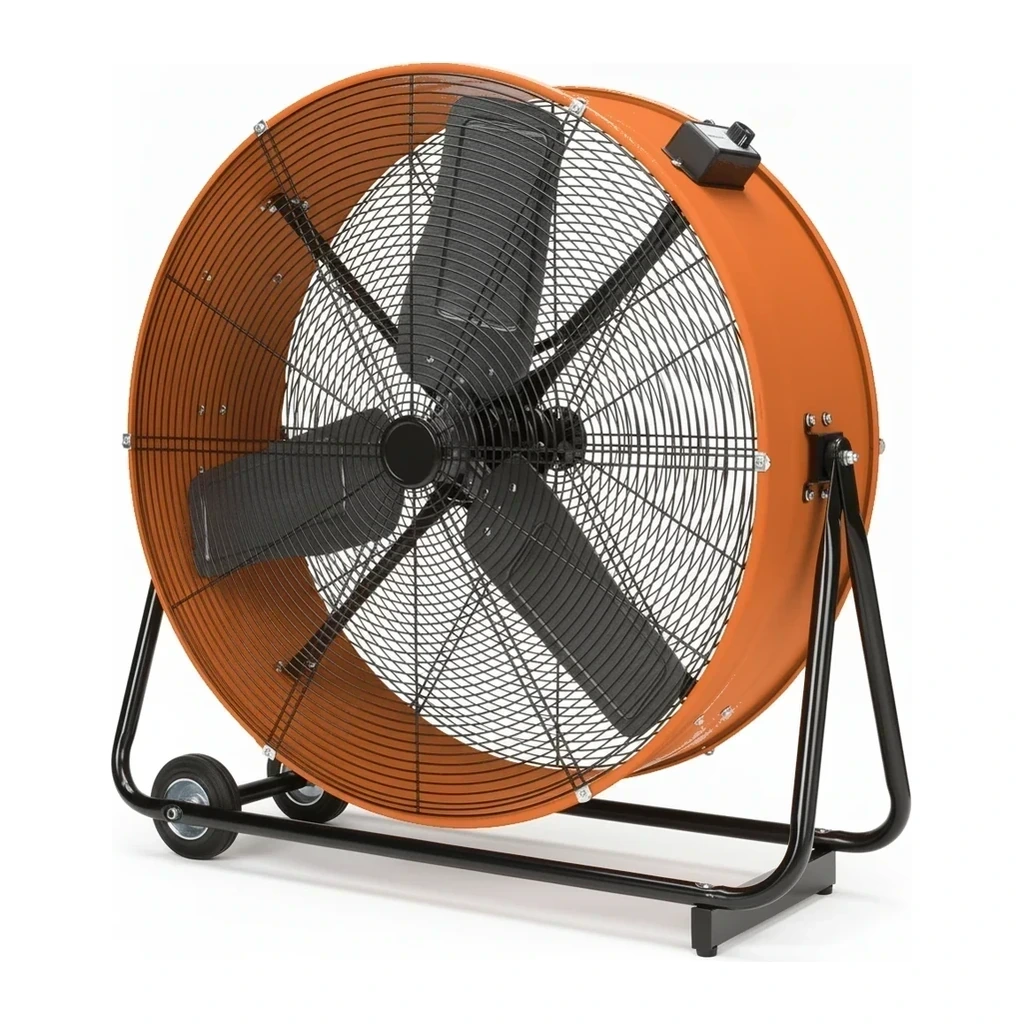
Cat classes
Pick a size class: capacity and reach differ across the range.
How it works
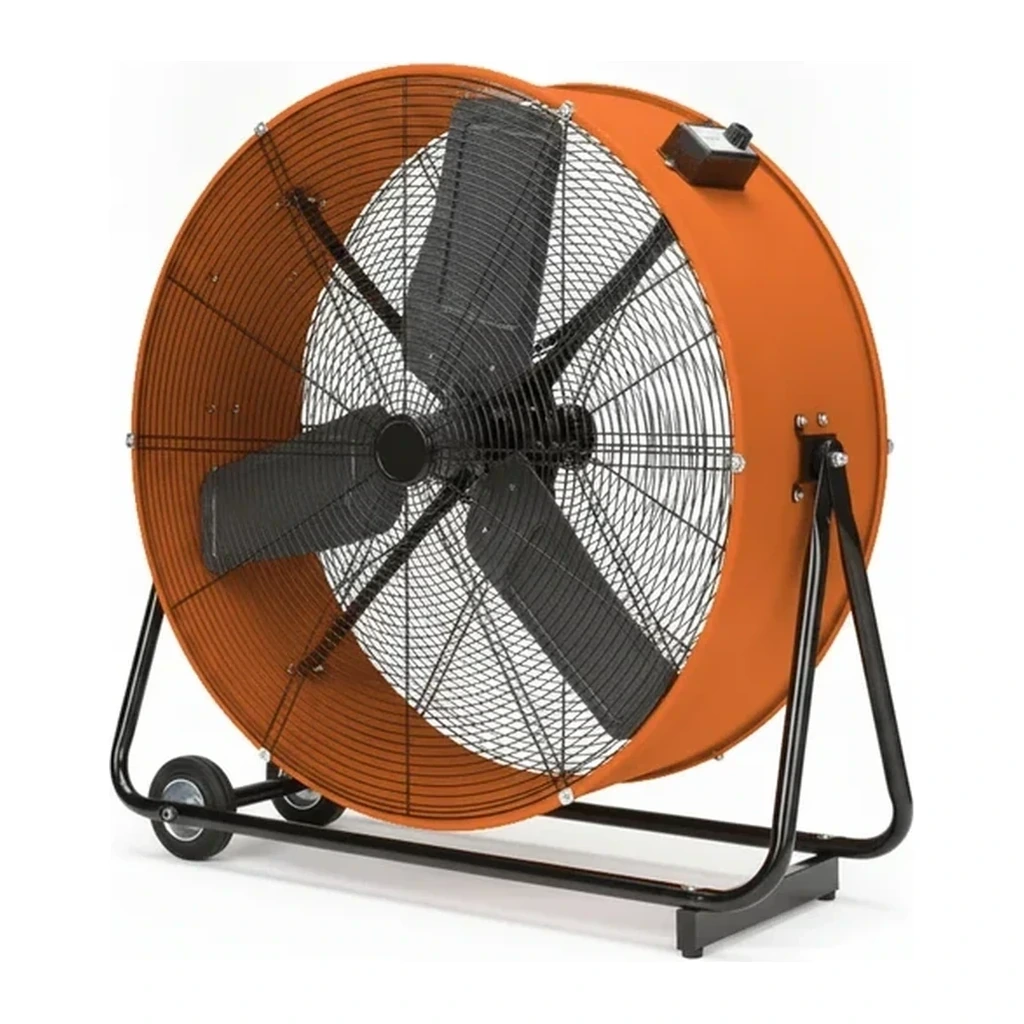
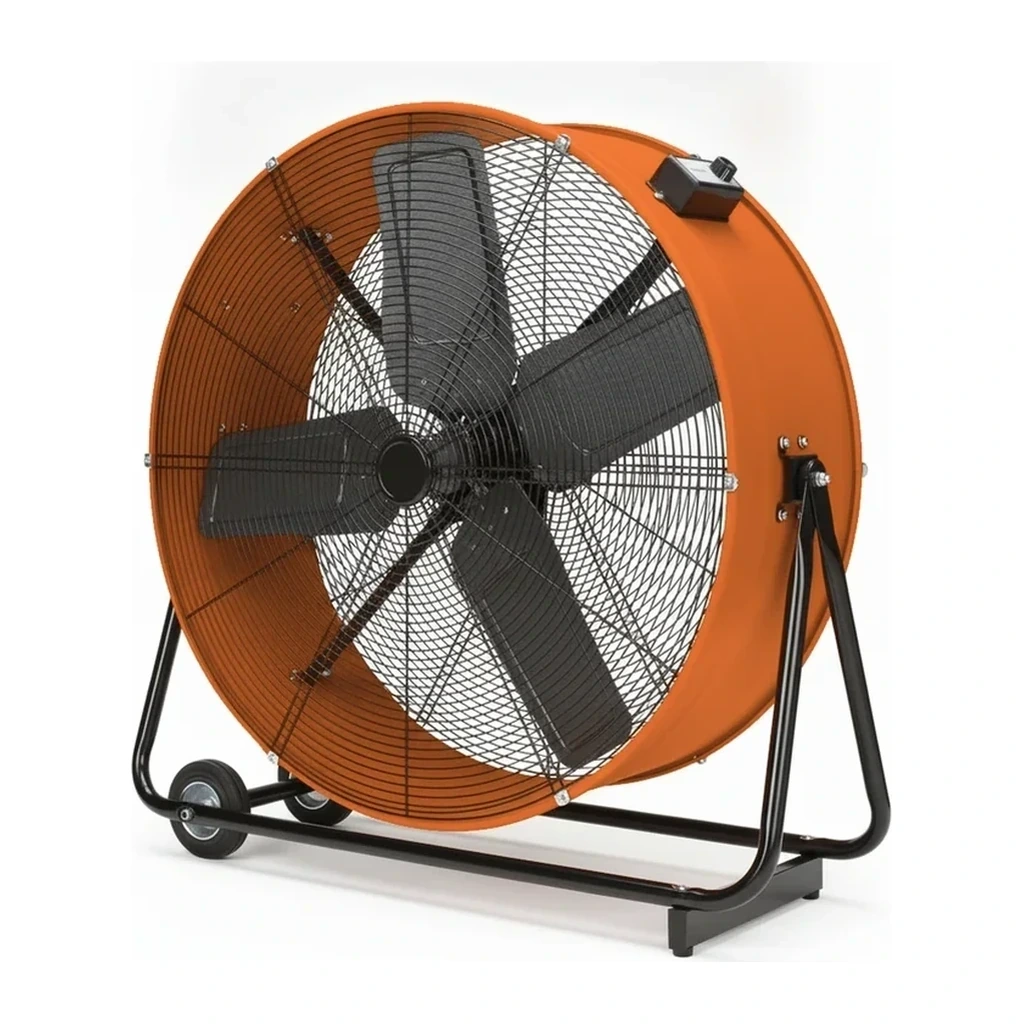
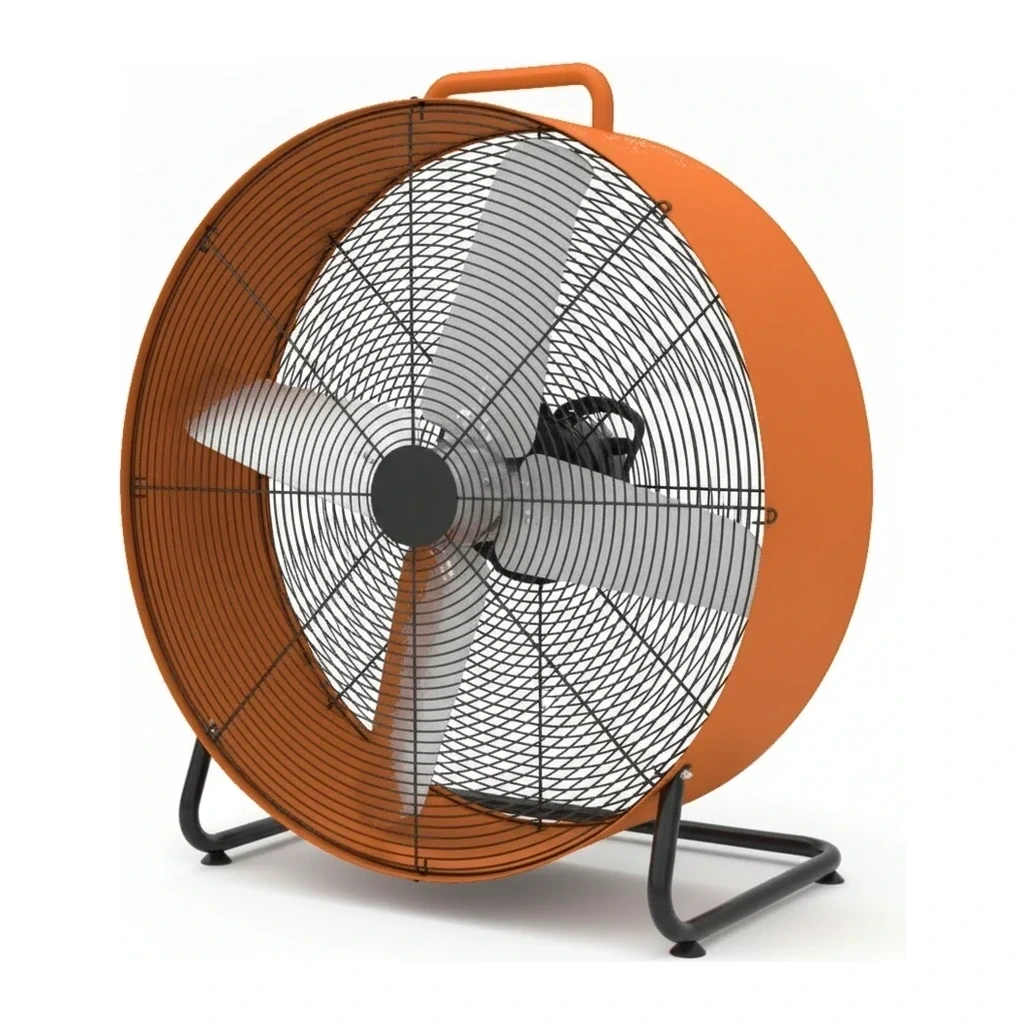
High-velocity drum fans operate by drawing air axially through the rear of the cylindrical housing and accelerating it through the impeller blades, then expelling it in a concentrated column at high velocity. The drum or barrel design provides structural support and helps direct the airflow in a targeted direction, while the open-frame construction allows for portability and stability on flat surfaces or integrated stands. Most models feature direct-drive motors for simplicity and reliability, though larger industrial units may use belt-driven systems for higher airflow. Variable speed controls allow adjustment of airflow and noise levels, while tilt mechanisms enable precise aiming of the air stream. The fans typically run on standard 120V or 240V power, with larger models requiring higher amperage or three-phase connections.
Types & variants
- Direct-Drive Drum Fan
- Motor mounted directly to the impeller hub for simple, low-maintenance operation; common in smaller to mid-size units.
- Belt-Drive Drum Fan
- Motor connected via belt and pulley system, allowing for higher CFM output and easier motor replacement in heavy-duty applications.
- Pedestal Drum Fan
- Drum fan mounted on an adjustable-height pedestal or stand, providing elevated airflow and improved coverage over obstacles.
- Explosion-Proof Drum Fan
- Sealed, sparkless motor and construction rated for hazardous locations with flammable vapors or combustible dust.
- Multi-Speed Drum Fan
- Features two or more speed settings for flexible airflow control and noise management in varied environments.
Key specifications
| Specification | Typical range | What it means |
|---|---|---|
| Drum Diameter | Sized in inches | The diameter of the cylindrical housing, which determines the swept area of the impeller and correlates with airflow capacity. |
| Airflow | 15.6-3,850 cfm | Volume of air moved per minute at maximum speed; larger drum diameters and higher motor power produce greater CFM. |
| Motor Power | Varies by size | Electrical power of the drive motor; higher horsepower enables greater airflow and higher static pressure capability. |
| Voltage | 120V or 240V | Electrical supply requirement; larger fans often require 240V or three-phase power for adequate motor performance. |
| Number of Speeds | 1-3 speeds | Adjustable speed settings allow balancing of airflow, noise, and power consumption for the application. |
How the industry sizes it
The industry sizes high-velocity drum fans primarily by drum diameter in inches, which directly correlates with airflow capacity measured in CFM. Fans from 0 to 24 inches cool one worker or a small work area: the 18 to 20 in barrel fan. Mid-size fans from 24 to 42 inches move air across a room, a bay, or a shop floor: the 24 to 36 in fan. Large fans 42 inches and larger move air across a hangar, a tent, or a warehouse aisle. Selection depends on the area to be ventilated, required air changes per hour, and whether the application prioritizes spot cooling or general circulation.
Applications
- Worker cooling in hot manufacturing facilities, foundries, and outdoor construction sites
- Air circulation and ventilation in warehouses, distribution centers, and aircraft hangars
- Drying and moisture removal after water damage, concrete pours, or coating applications
- Heat dissipation in mechanical rooms, power generation facilities, and equipment enclosures
- Temporary ventilation during confined space work or in areas with inadequate HVAC
- Air movement in agricultural facilities, livestock barns, and greenhouse ventilation systems
Safety & operation
- Ensure the fan is positioned on stable, level ground to prevent tipping during operation, especially at high speeds or in high-traffic areas.
- Maintain clearance around intake and discharge openings to prevent debris ingestion and ensure unobstructed airflow.
- Verify that electrical connections match the fan's voltage and amperage requirements and that circuits are properly grounded and protected.
- Use guarded or screened models in environments where workers or materials may come into contact with rotating impeller blades.
- In hazardous locations with flammable vapors or combustible dust, use only explosion-proof or intrinsically safe fan models rated for the environment.
Standards & certifications
- AMCA · AMCA 210
- Air Movement and Control Association standard for laboratory methods of testing fans for aerodynamic performance rating.
- UL · UL 507
- Safety standard for electric fans covering construction, performance, and electrical safety requirements.
- NEC · NFPA 70, Article 500-505
- National Electrical Code requirements for electrical equipment in hazardous (classified) locations, applicable to explosion-proof fans.
Frequently asked
What is the difference between a drum fan and a pedestal fan?
How is airflow capacity determined for high-velocity drum fans?
When is an explosion-proof drum fan required?
What maintenance do high-velocity drum fans typically require?
Compare popular models
Find by spec →Normalised to the same units. A dash means the figure was not published.
| Model | Airflow | Fuel capacity |
|---|---|---|
| Schaefer VKM36-B-O | 25 cfm | - |
| Schaefer F5-24 | 16 cfm | - |
| Schaefer 24CFO-HE | 3,850 cfm | - |
| Schaefer BD72-208460-3 | 35 cfm | - |
| Schaefer VAF3000P | - | - |
Related equipment
Browse by manufacturer
Sources
Every specification is verified against the manufacturer's published data, with the source linked for reference.