Wellpoint Pump
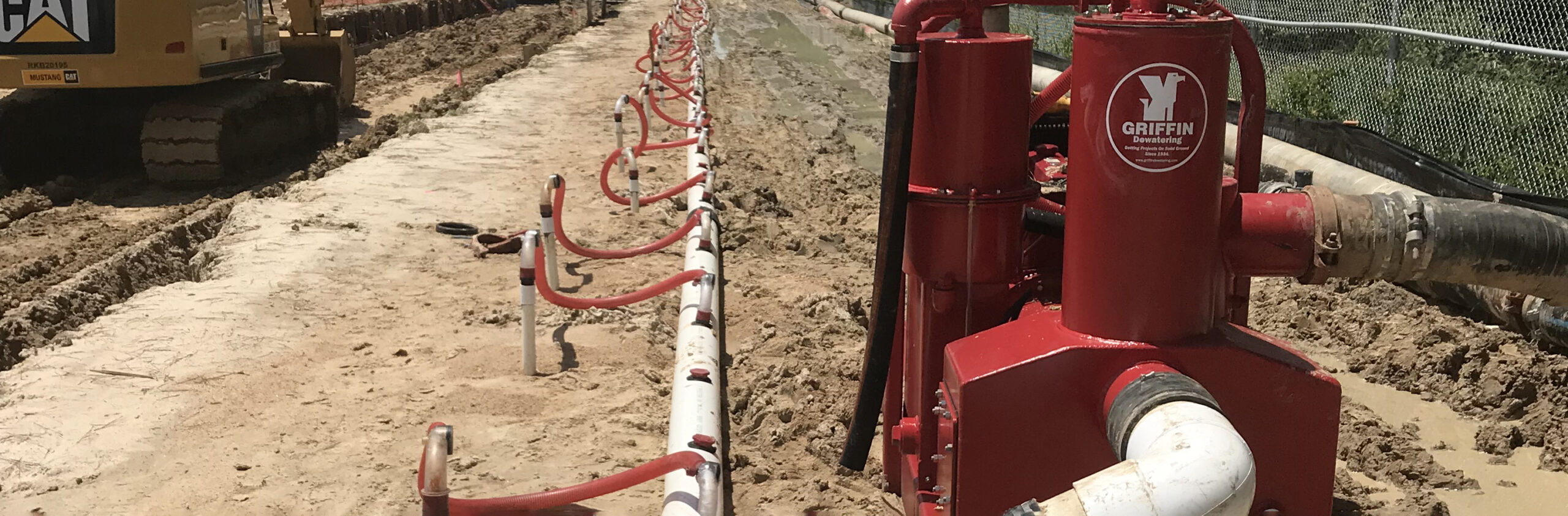
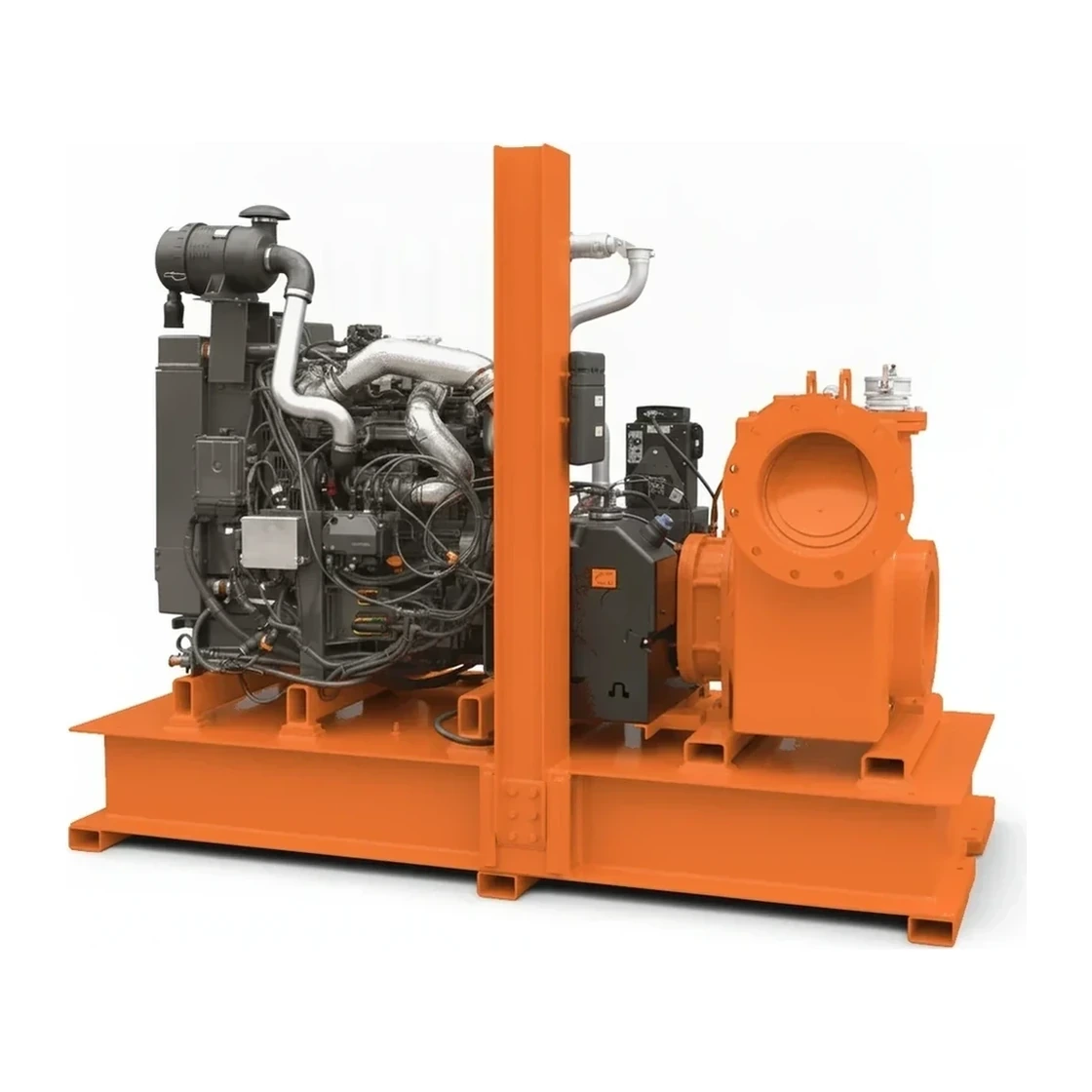
A wellpoint pump is a self-priming centrifugal pump designed to draw groundwater from a network of wellpoints installed around an excavation site. These pumps create vacuum suction through a header pipe connected to multiple shallow wellpoints, lowering the water table to enable dry working conditions. Wellpoint pumps are fundamental to shallow dewatering systems on construction sites where groundwater control is required.
How it works
The pump connects to a header pipe running along the perimeter of an excavation, with individual wellpoints spaced at intervals and driven into the ground. When the pump operates, it creates a vacuum that draws groundwater up through the wellpoints and into the header, then discharges the water away from the work area. The self-priming capability allows the pump to evacuate air from the system and maintain suction even when handling water with entrained air and sediment. Most wellpoint pumps use a vacuum-assisted priming system with a secondary vacuum pump or eductor to establish initial prime. Once primed, the centrifugal pump continuously moves water from the wellpoint system, maintaining a lowered water table as long as the system operates. Flow capacity and head pressure determine how many wellpoints the pump can support and how deep the drawdown can reach.
Types & variants
- Single-Stage Wellpoint Pump
- Standard configuration for shallow dewatering to depths of 15-20 feet below grade, handling typical wellpoint arrays with moderate head requirements.
- Multi-Stage Wellpoint Pump
- Higher head capacity pumps for deeper drawdown or multi-tier wellpoint systems, capable of handling greater vertical lift and larger wellpoint networks.
- Engine-Driven Wellpoint Pump
- Diesel or gasoline-powered units for remote sites without electrical service, offering portability and independence from grid power.
- Electric Wellpoint Pump
- Motor-driven pumps for sites with available electrical infrastructure, providing quieter operation and lower emissions in urban or enclosed environments.
- Trailer-Mounted Wellpoint Pump
- Mobile units mounted on trailers for easy transport and repositioning between job sites or along extended excavation runs.
Key specifications
| Specification | Typical range | What it means |
|---|---|---|
| Discharge Size | 6–8 in (15.2–20.3 cm) | Diameter of the outlet connection, indicating pump capacity and header compatibility. |
| Flow Rate | 400-3100 gpm | Volume of water the pump can move per minute, determining how many wellpoints can be supported. |
| Maximum Head | 60–180 ft (18.3–54.9 m) | Vertical lift capability, dictating the depth of drawdown and discharge elevation the pump can achieve. |
| Vacuum Capacity | 20-28 in Hg | Suction strength available to draw water up through wellpoints and establish prime in the header system. |
| Header Diameter | 6–8 in (15.2–20.3 cm) | Size of the wellpoint manifold pipe the pump connects to, matched to discharge size for system compatibility. |
How the industry sizes it
Wellpoint pumps are sized primarily by discharge diameter in inches, with 6 in and 8 in being the standard industry sizes. A 6 in pump typically handles smaller wellpoint headers for trenches and footings, while 8 in pumps serve standard wellpoint systems on larger excavations. Selection depends on the number of wellpoints in the system, required drawdown depth, soil permeability, and groundwater recharge rate. Flow rate (400-3100 gpm) and maximum head (60-180 ft) further define capacity within each size class, with higher-flow, higher-head units supporting more extensive wellpoint arrays or deeper drawdowns.
Applications
- Excavation dewatering for building foundations, basements, and underground structures
- Trench dewatering for utility installations, pipelines, and underground conduits
- Groundwater control on highway and roadway construction projects
- Site dewatering for parking structure excavations and subsurface work
- Temporary water table lowering for soil stabilization and improved bearing capacity
- Multi-stage wellpoint systems for deep excavations requiring sequential drawdown levels
Safety & operation
- Ensure adequate vacuum system operation and header integrity before starting to prevent air leaks that compromise priming and drawdown effectiveness
- Monitor discharge lines for proper routing away from excavations to prevent erosion, undermining, or water return to the work area
- Maintain clearances around engine-driven pumps for ventilation and heat dissipation, keeping flammable materials away from hot surfaces and exhaust
- Verify soil stability during dewatering as groundwater removal can cause settlement or collapse of adjacent structures and excavation walls
- Check local regulations regarding discharge water quality and destination, as pumped groundwater may require treatment or permitted discharge points
Standards & certifications
- OSHA · 29 CFR 1926 Subpart P
- Excavation and trenching standards governing dewatering systems and groundwater control on construction sites.
- EPA · Tier 4
- Emissions standards for diesel engines on newer wellpoint pump models, controlling NOx and particulate matter.
- Hydraulic Institute · ANSI/HI 9.6.2
- Pump standards covering self-priming centrifugal pumps, including design and performance criteria applicable to wellpoint pumps.
- NFPA · NFPA 70
- National Electrical Code requirements for electric motor-driven wellpoint pumps and associated wiring on construction sites.
Frequently asked
What is the difference between a wellpoint pump and a standard trash pump?
How many wellpoints can a single pump typically support?
What depth of dewatering can a single-stage wellpoint system achieve?
How is wellpoint pump size matched to header pipe diameter?
Compare popular models
Find by spec →Normalised to the same units. A dash means the figure was not published.
| Model | Flow rate | Max head | Engine power |
|---|---|---|---|
| Godwin CD100MV | 860 gpm | 115 ft (35.1 m) | - |
| Godwin CD150MV | 1,750 gpm | 140 ft (42.7 m) | - |
| Godwin CD225MV | 3,100 gpm | 180 ft (54.9 m) | - |
| Griffin Dewatering 4WPRD | 500 gpm | 60 ft (18.3 m) | - |
| Griffin Dewatering 6WPRD | 1,500 gpm | 145 ft (44.2 m) | - |
| Griffin Dewatering 8WPRD | 2,000 gpm | 145 ft (44.2 m) | - |
Related equipment
Browse by manufacturer
Sources
Every specification is verified against the manufacturer's published data, with the source linked for reference.
All models
13 models · Every spec cited to source