

Multi-Position Ladder
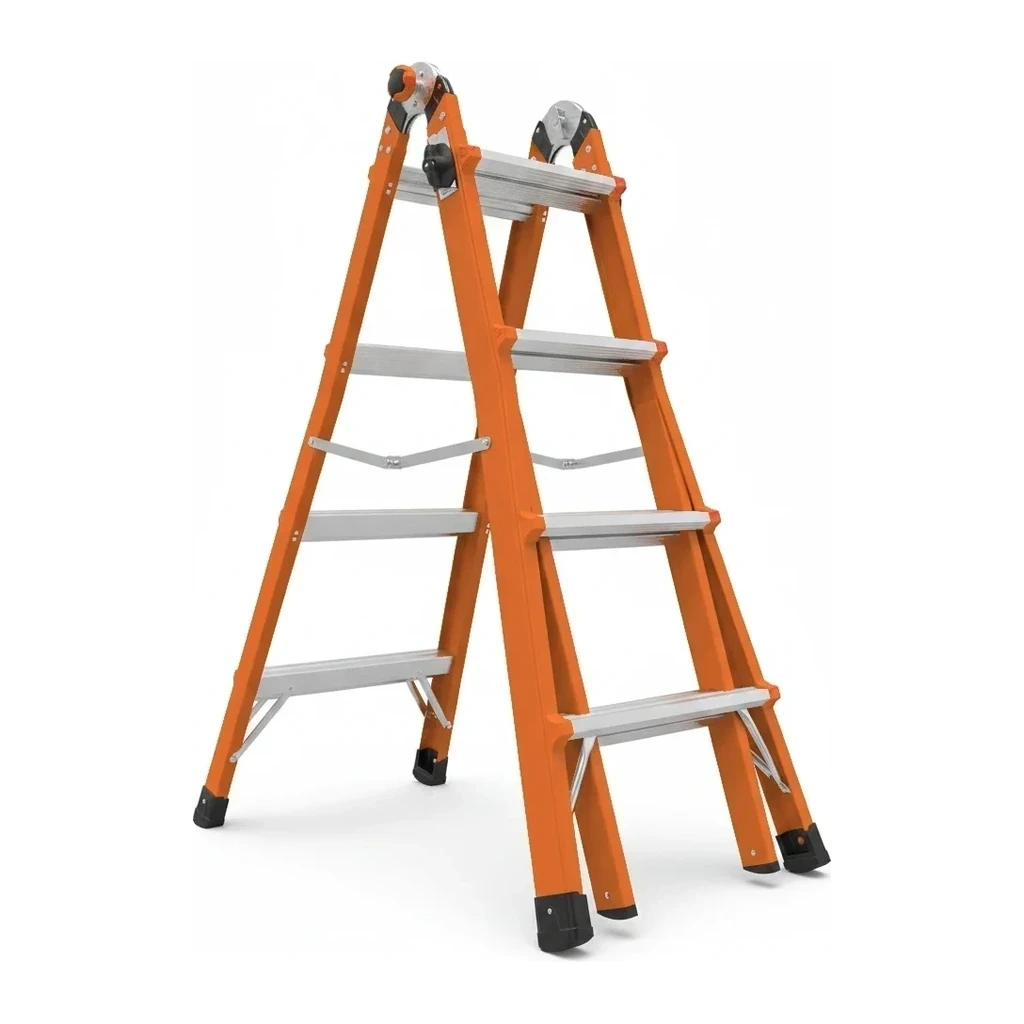
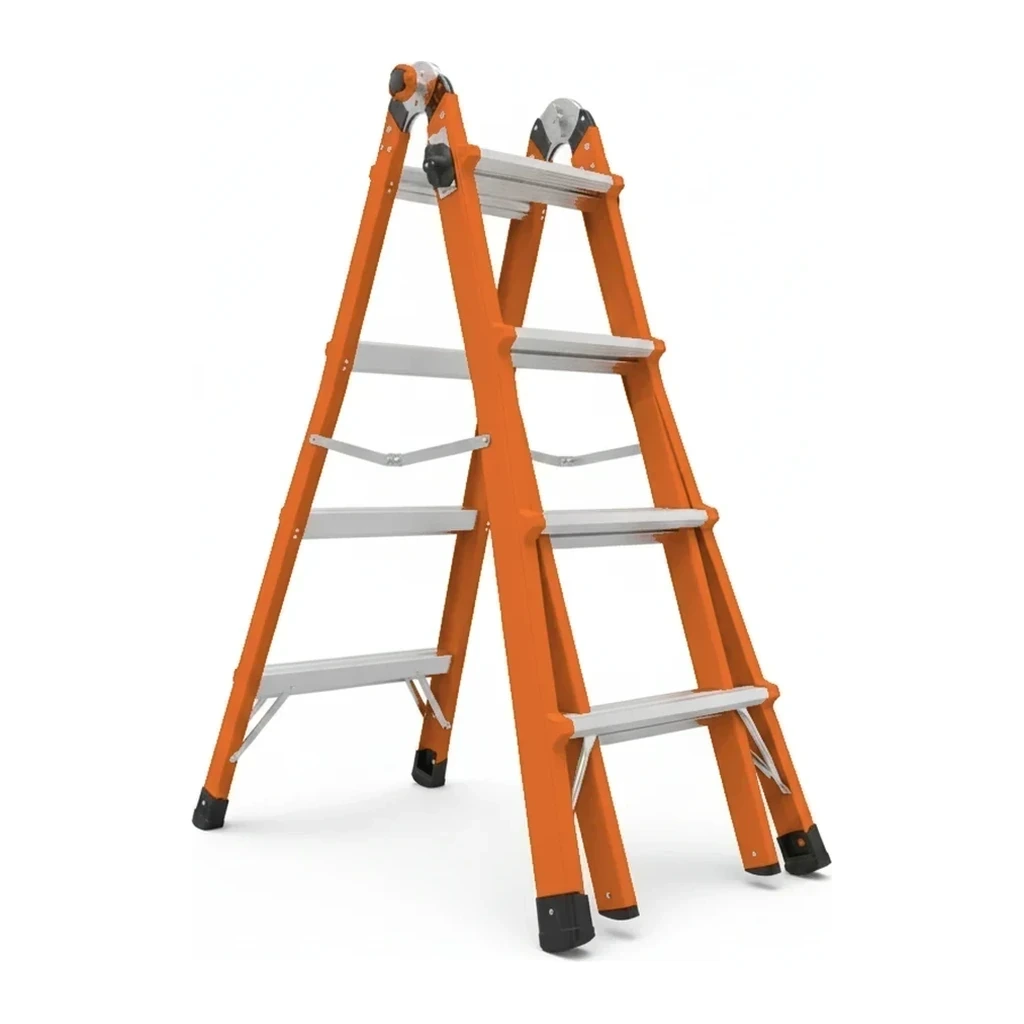
A multi-position ladder is an articulating ladder system with lockable hinges that allow it to be configured into multiple positions including stepladder (A-frame), extension ladder, stairwell ladder, and scaffold base. These convertible ladders consolidate the function of several traditional ladder types into a single unit. The design typically features four sections connected by locking hinge mechanisms that secure each configuration.
Cat classes
Pick a size class: capacity and reach differ across the range.
How it works
The ladder features articulating hinges at multiple points along its frame, typically with mechanical locks or pins that engage when the ladder is positioned into one of its preset configurations. Each hinge locks into specific angles to create the desired ladder geometry: 90 degrees for stepladder mode, 180 degrees for extension mode, or asymmetric angles for stairwell and scaffold positions. The hinges are unlocked, the ladder sections repositioned, and the locks re-engaged before climbing. Most designs incorporate safety features such as dual-pin hinge locks, non-slip feet that adjust for each configuration, and spreader bars or stabilizers that deploy automatically in stepladder mode. The sections telescope or unfold to provide varying working heights within each configuration, with locking mechanisms preventing unintended collapse during use.
Types & variants
- Four-Section Articulating
- The most common design with four independently hinged sections, offering the widest range of configurations including twin stepladder, extension, stairwell, and 90-degree positions.
- Two-Section Folding
- Simpler design with a single central hinge, converting primarily between stepladder and extension configurations with limited intermediate positions.
- Telescoping Multi-Position
- Combines articulating hinges with telescoping sections within each leg, providing fine height adjustment in addition to configuration changes.
- Heavy-Duty Industrial
- Reinforced construction with Type IA or IAA load ratings (300 kg capacity), wider steps, and additional bracing for industrial applications.
- Compact Utility
- Shorter models designed for residential and light commercial use in confined spaces, stairwells, and vehicles.
Key specifications
| Specification | Typical range | What it means |
|---|---|---|
| Maximum Height | 3–91 ft (0.9–27.7 m) | The tallest working height achievable across all configurations; most contractor models range 13-22 ft in extension mode. |
| Load Capacity | 500–661 lb (227–300 kg) | Maximum weight the ladder supports including user and tools; corresponds to ANSI Type I (227 kg) through Type IAA (300 kg) ratings. |
| Number of Configurations | 4-12 positions | How many distinct locked positions the hinge system provides, from basic stepladder/extension to specialized stairwell and scaffold setups. |
| Closed Length | 3–7 ft (0.9–2.1 m) | The folded dimension for transport and storage; critical for vehicle storage and job site mobility. |
| Hinge Type | Dual-pin or quad-lock | The locking mechanism securing each configuration; dual-pin and quad-lock systems are industry standard for safety compliance. |
How the industry sizes it
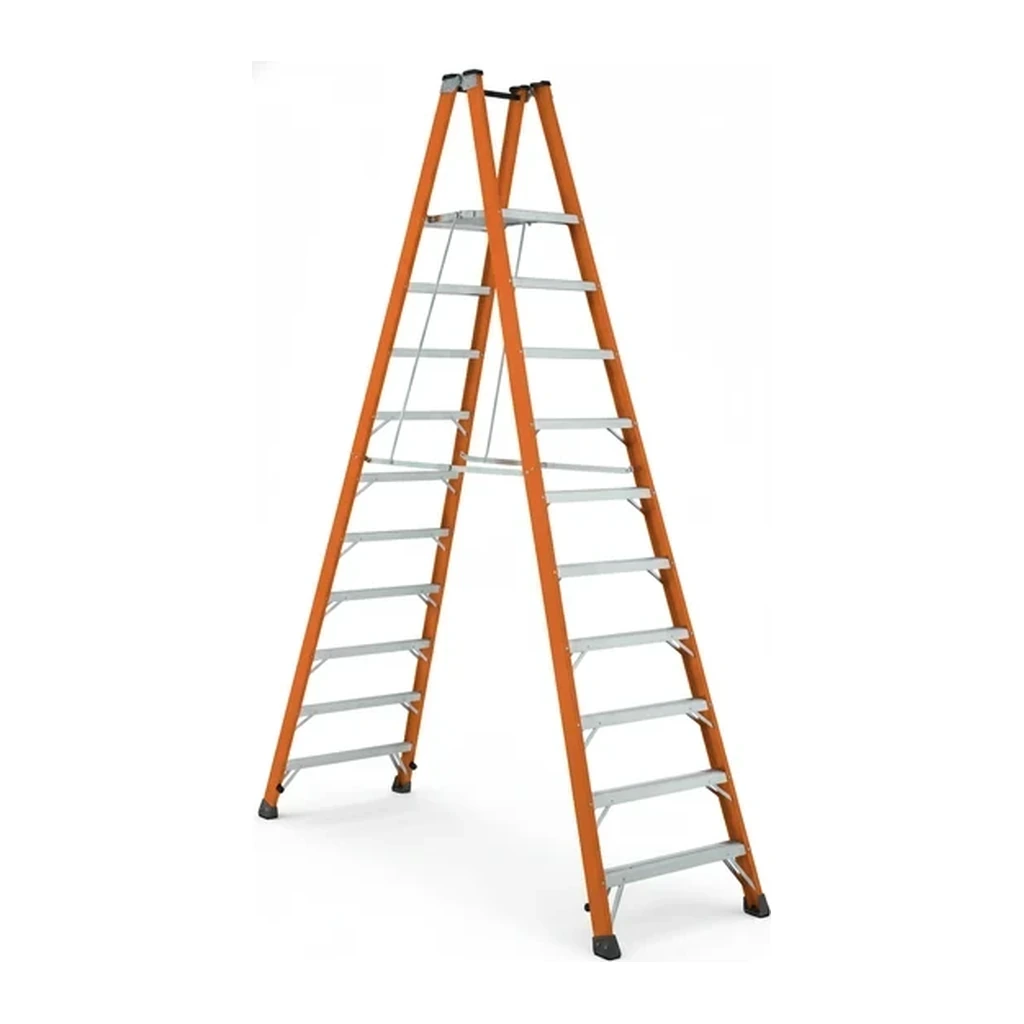
The industry sizes multi-position ladders by maximum extended length in feet, measured as the longest configuration (typically extension mode). Models up to 13 ft serve stairwells, tight rooms, and low outside work. The 13-22 ft range represents the standard contractor size, with a 22 ft extension or a 9 ft twin step from the same ladder. The largest articulating ladders, 22 ft and up, address situations where a straight ladder cannot be safely positioned.
Applications
- Stairwell maintenance and installation work where unequal leg heights are required
- Residential and commercial painting, HVAC, and electrical work requiring multiple ladder configurations
- Interior finish work in rooms with varying ceiling heights and access constraints
- Exterior building maintenance on uneven terrain where traditional extension ladders cannot be safely positioned
- Scaffold base and work platform setup for two-person tasks at moderate heights
- Vehicle and equipment maintenance where a single convertible ladder serves multiple access needs
Safety & operation
- All hinge locks must be fully engaged and visually confirmed before climbing; partially locked hinges are a leading cause of multi-position ladder failures
- Each configuration changes the ladder's center of gravity and stability profile; the ladder must be re-evaluated for levelness and angle when switching positions
- Load capacity may vary by configuration; stepladder mode typically supports full rated capacity while some scaffold positions may have reduced ratings
- Stairwell configurations require special attention to equal loading and secure foot placement on both upper and lower steps
- Hinges and locking mechanisms require regular inspection for wear, corrosion, and proper function; damaged locks must be repaired before use
Standards & certifications
- ANSI · ASC A14.2
- American National Standard for Ladders - Portable Metal - Safety Requirements, covering duty ratings and design requirements for metal multi-position ladders.
- OSHA · 29 CFR 1926.1053
- Construction industry ladder safety standards including requirements for structural integrity, load capacity, and proper usage of portable ladders.
- ANSI · ASC A14.5
- Requirements for portable reinforced plastic ladders, applicable to fiberglass multi-position models used in electrical work.
Frequently asked
What does the size measurement represent on a multi-position ladder?
How do duty ratings apply across different configurations?
What distinguishes an articulating ladder from a standard folding ladder?
Why are multi-position ladders particularly suited to stairwell work?
Compare popular models
Find by spec →Normalised to the same units. A dash means the figure was not published.
| Model | Max height | Load capacity |
|---|---|---|
| Louisville Ladder LP-2921-09A | 9 ft (2.7 m) | 551 lb (250 kg) |
| Louisville Ladder AMP1010 | 10 ft (3.0 m) | 661 lb (300 kg) |
| Vestil COL-4-36-33 | 3.3 ft (1.0 m) | 500 lb (227 kg) |
| Vestil COL-6-56-44 | 5 ft (1.5 m) | 500 lb (227 kg) |
Related equipment
Browse by manufacturer
Sources
Every specification is verified against the manufacturer's published data, with the source linked for reference.