

Trestle / A-Frame Ladder
A trestle or A-frame ladder is a self-supporting ladder that stands on its own without a wall to lean on, historically paired in trestle form to carry planks between two units. Models in this class run 2 to 32 ft, and listed duty ratings are 300 lb. The catalog lists 10 models from Werner, Louisville Ladder and Michigan Ladder.
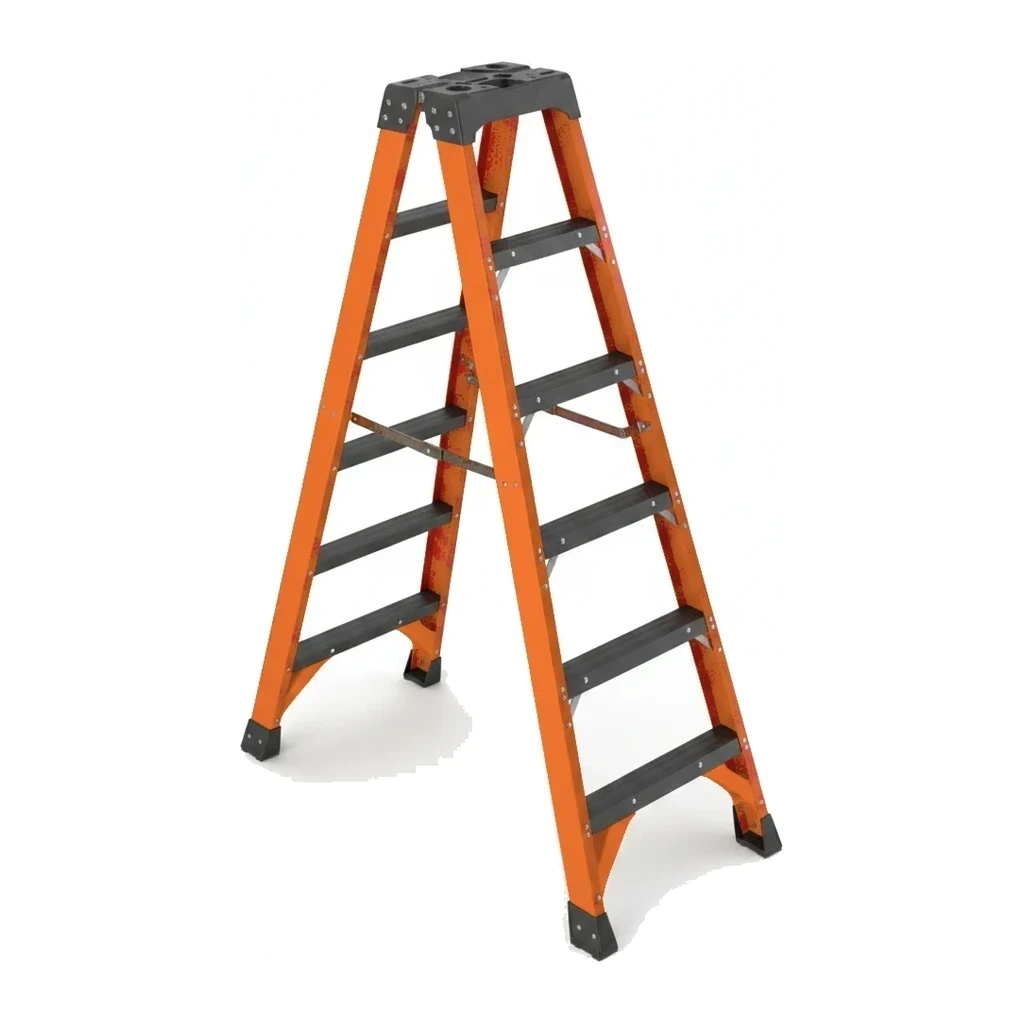
Cat classes
Pick a size class: capacity and reach differ across the range.
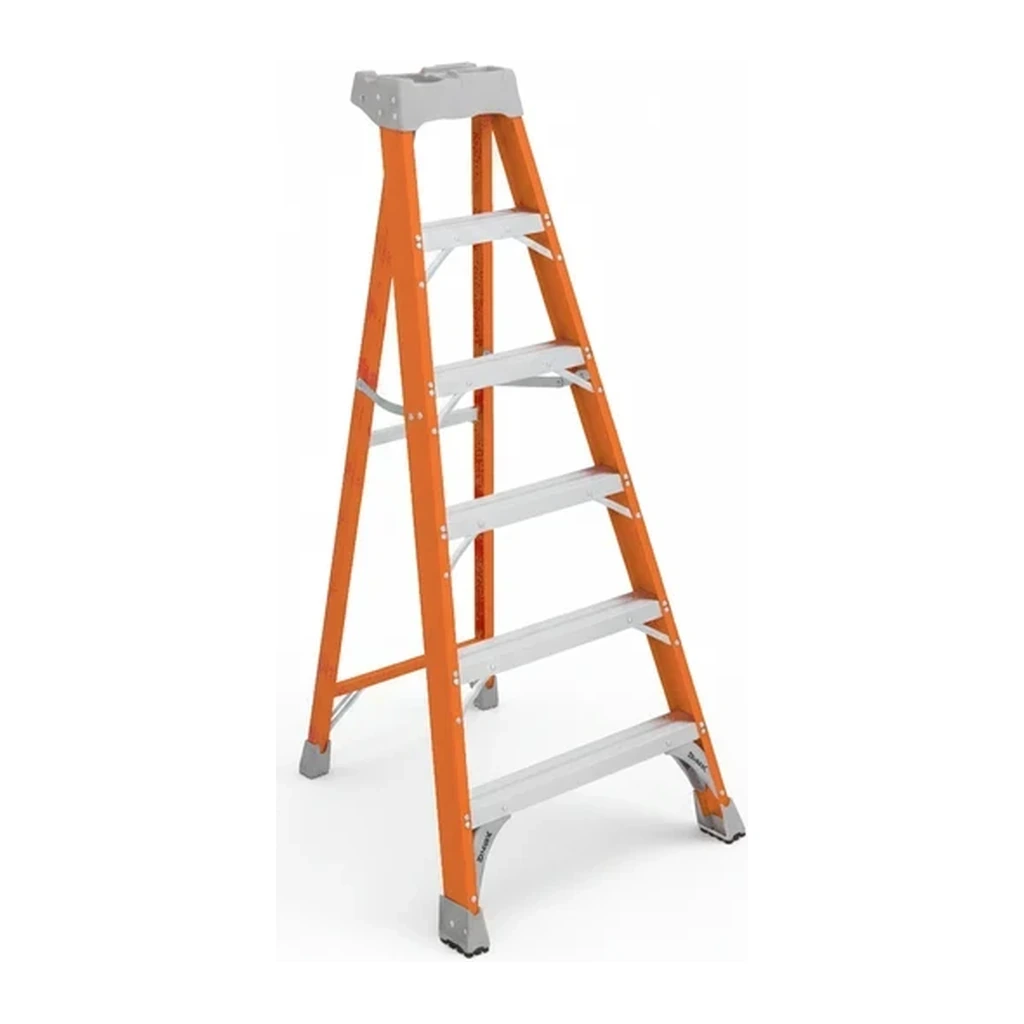
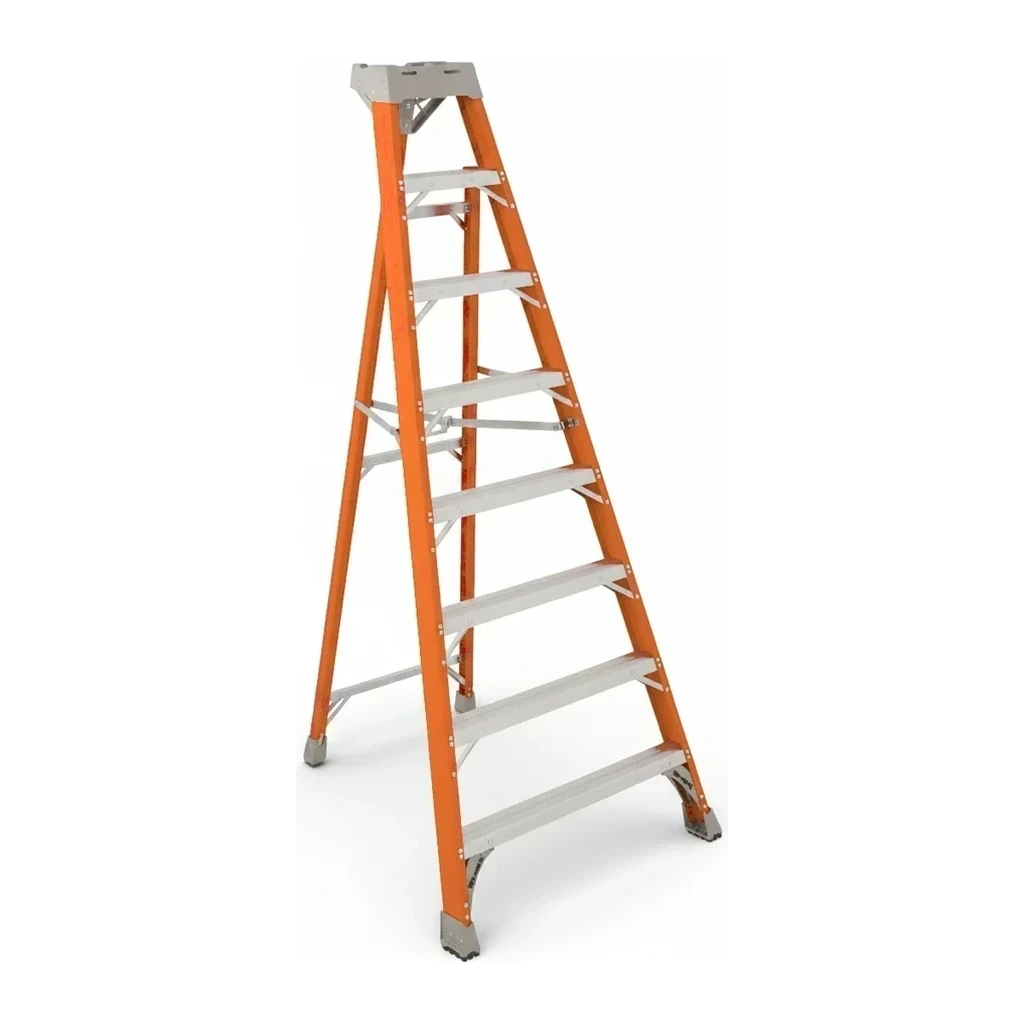
How it works
Two hinged sections lock into a stable A geometry, with rungs on both faces on true trestle designs so two workers can climb opposite sides or a plank can span between paired units. Extension-trestle variants add a sliding center section that raises working height beyond the base frame. The tall end of the class serves warehouses, churches, gyms and other high open interiors where nothing exists to lean a ladder against.
Types & variants
- Standard A-frame trestles
- Double-front ladders climbable from both faces.
- Extension trestle ladders
- A sliding vertical section between the frames extends working height.
- Tall-interior models
- The 20-32 ft end of the class for high open ceilings and stairwell volumes.
Key specifications
| Specification | Typical range | What it means |
|---|---|---|
| Size (ladder height) | 2–32 ft (0.6–9.8 m) | The class spans small utility frames up to models for the tallest self-supported interior access. |
| Duty rating / load capacity | 300 lbs (136 kg) | Every listed model carries a 300 lb heavy-duty rating. |
| Brands | Werner, Louisville Ladder, Michigan Ladder | The manufacturers represented in the class listings. |
How the industry sizes it
Trestle ladders are sized by frame height, with catalog bands at 2-8, 8-12, 20-32 and 32 ft. Extension-trestle designs are specified by base plus extended height. Selection is driven by ceiling height in self-supported settings: the determining question is the tallest interior the ladder must serve, since every listed model shares the same 300 lb duty rating.
Applications
- High-ceiling interior maintenance in warehouses and gyms
- Lighting and fixture work in churches and halls
- Two-worker tasks from opposite ladder faces
- Plank-and-trestle platforms for wall lines
- Stairwell and atrium access
Safety & operation
- Hinge locks and (on extension trestles) section locks are verified engaged before climbing.
- Tall self-supporting ladders are sensitive to level footing: the 20-32 ft class demands flat, hard floors and a footing check every move.
- The 300 lb duty rating covers worker plus tools; plank-and-trestle setups follow scaffold plank ratings as well.
- Three points of contact and no side-reach apply exactly as on stepladders: height only raises the stakes.
Standards & certifications
- ANSI ASC · A14.2
- Portable metal ladder standard covering trestle and extension-trestle designs.
- OSHA · 29 CFR 1926.1053
- Construction ladder requirements for self-supporting ladders.
Frequently asked
What distinguishes a trestle ladder from a step ladder?
How tall do trestle ladders go?
What is the load rating?
Compare popular models
Find by spec →Normalised to the same units. A dash means the figure was not published.
| Model | Max height | Load capacity |
|---|---|---|
| Louisville Ladder FT1506 | 6 ft (1.8 m) | 661 lb (300 kg) |
| Louisville Ladder FT1508 | 8 ft (2.4 m) | 661 lb (300 kg) |
| Louisville Ladder FT1510 | 10 ft (3.0 m) | 661 lb (300 kg) |
Related equipment
Browse by manufacturer
Sources
Every specification is verified against the manufacturer's published data, with the source linked for reference.