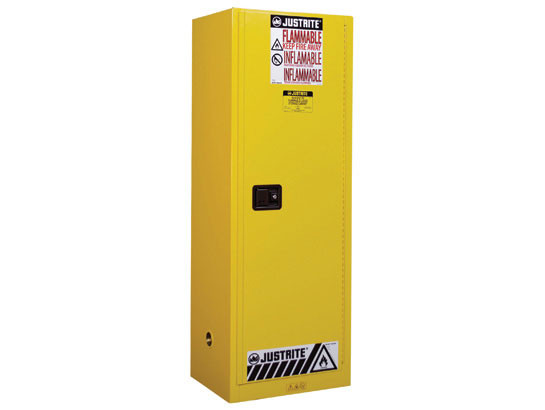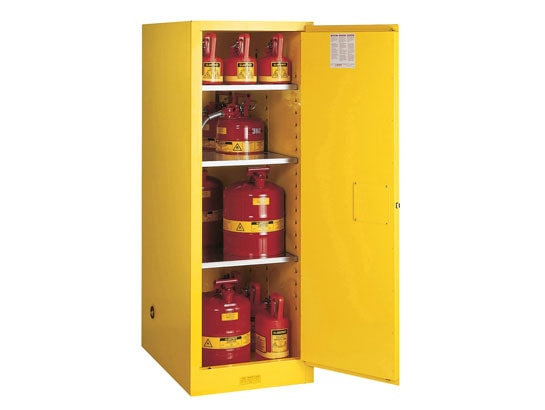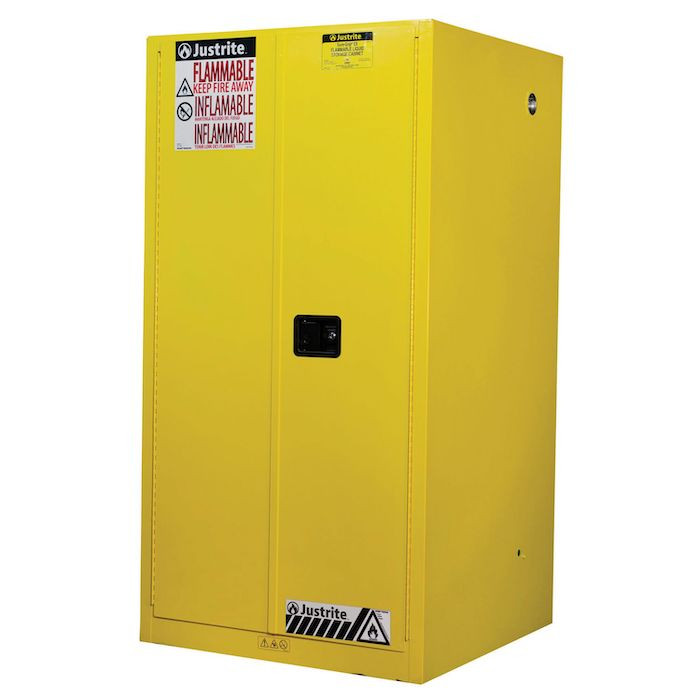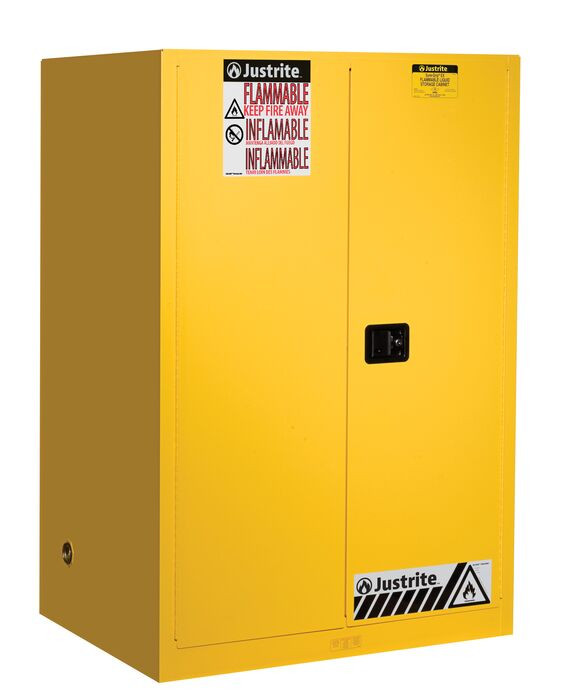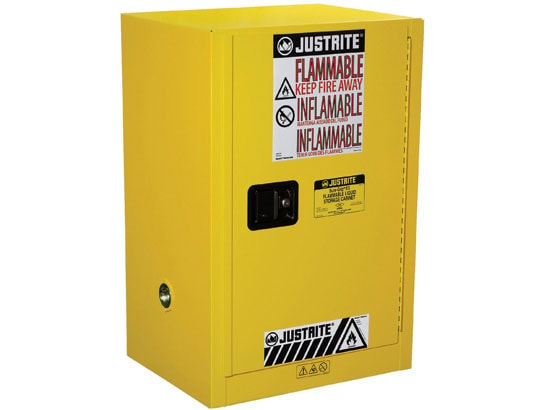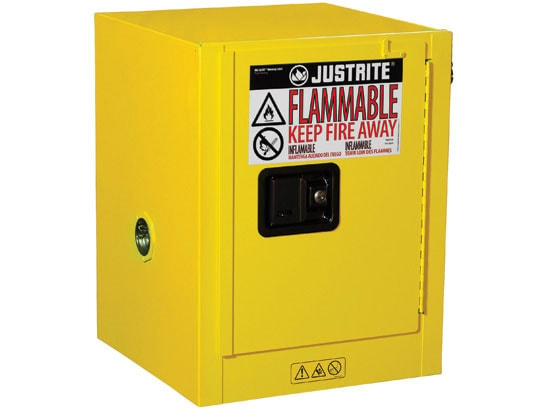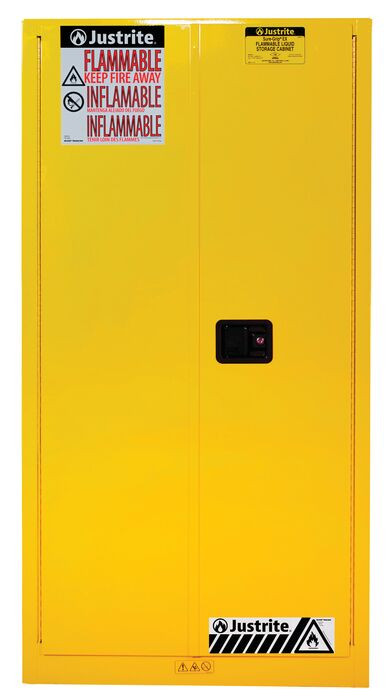

Hazmat and Flammable Storage Locker
Hazmat and flammable storage lockers are fire-rated enclosures designed to safely contain hazardous materials, flammable liquids, and chemicals in compliance with fire and environmental codes. These specialized storage units provide secondary containment, ventilation, and fire resistance to protect jobsites, facilities, and personnel from spills, fires, and regulatory violations. The rental industry supplies these lockers in configurations ranging from compact 2-drum units to walk-in buildings accommodating 16 or more drums.
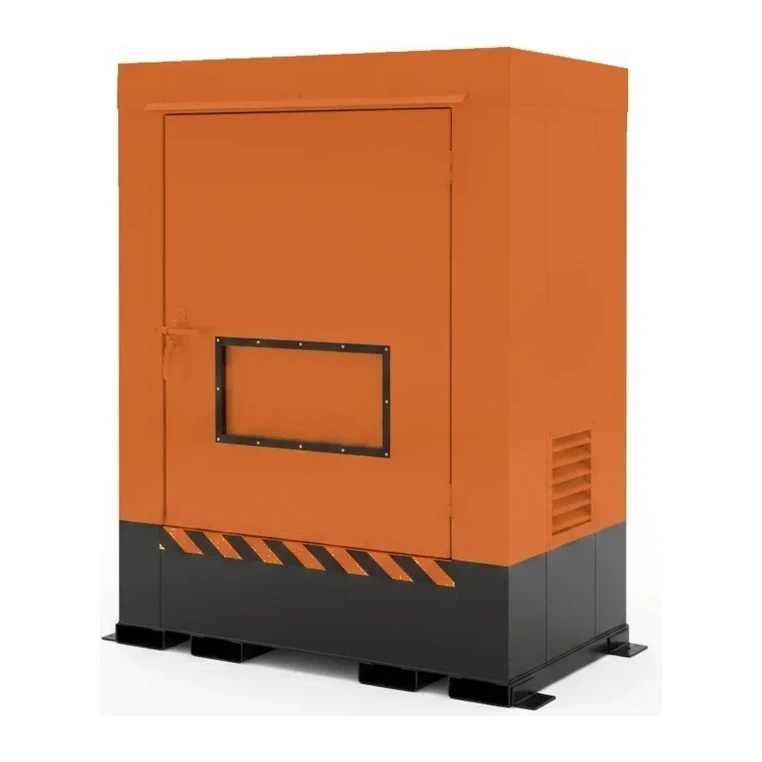
How it works
These lockers utilize fire-rated steel construction with specialized coatings and insulation to contain fires and prevent external flame spread for rated time periods, typically 2 to 4 hours. Integrated sump containment systems capture spills and leaks, while passive or forced ventilation systems manage vapor buildup. Compliant door hardware, grounding provisions, and labeling ensure safe access and regulatory adherence. Larger walk-in models function as standalone buildings with reinforced floors, fire-suppression readiness, and environmental controls. All units maintain separation between incompatible materials through internal compartmentalization and provide lockable access to prevent unauthorized entry and meet OSHA and fire marshal requirements.
Types & variants
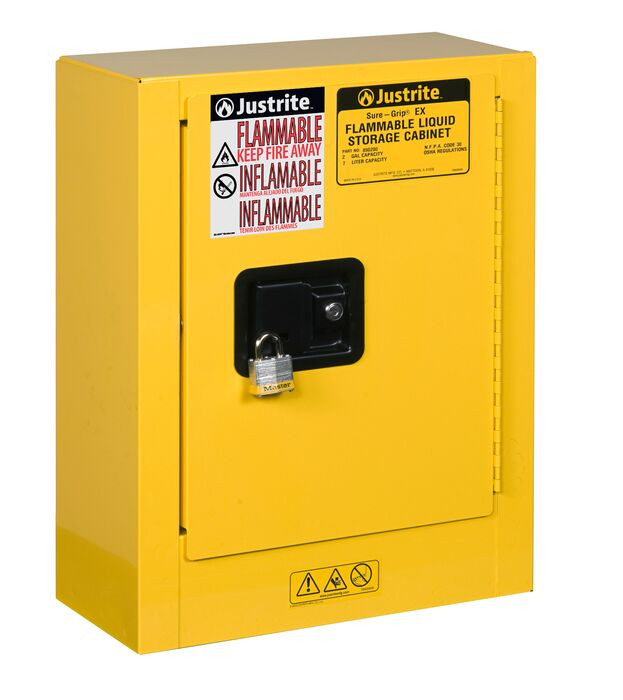
- Compact Drum Locker
- 2- to 4-drum capacity units for small-scale storage of solvents, fuels, and paints at construction sites
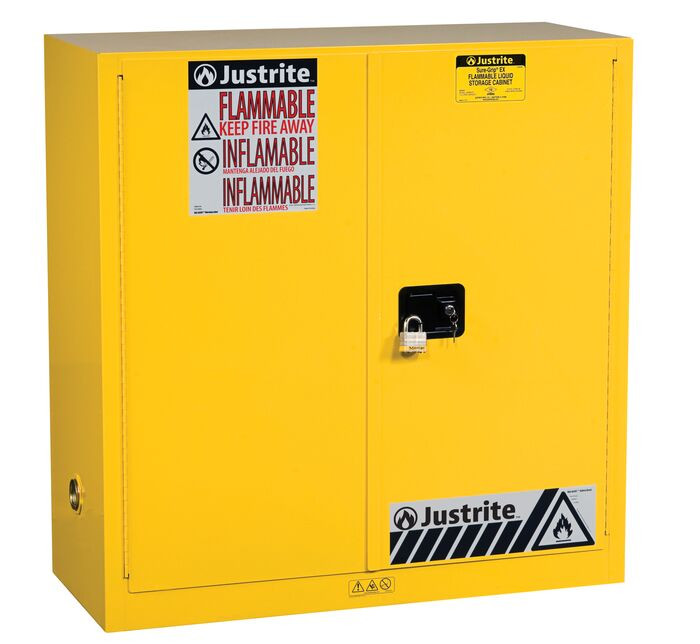
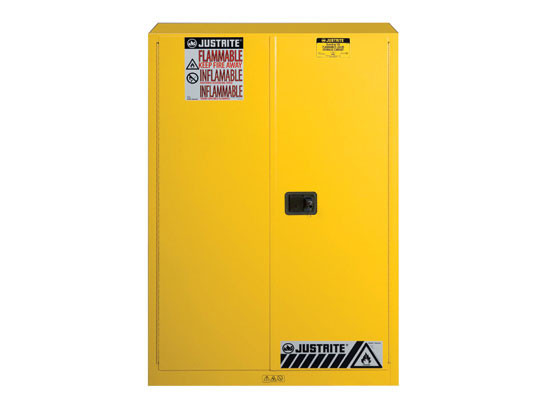
- Standard Flammable Storage Cabinet
- 4- to 8-drum fire-rated lockers with integrated sump and manual or passive ventilation for daily operations
- Walk-In Hazmat Building
- 16+ drum capacity structures with forced ventilation, climate control, and full spill containment for industrial facilities
- Mobile Hazmat Container
- 15- to 44-foot transportable storage containers with ISO compatibility and integrated containment systems
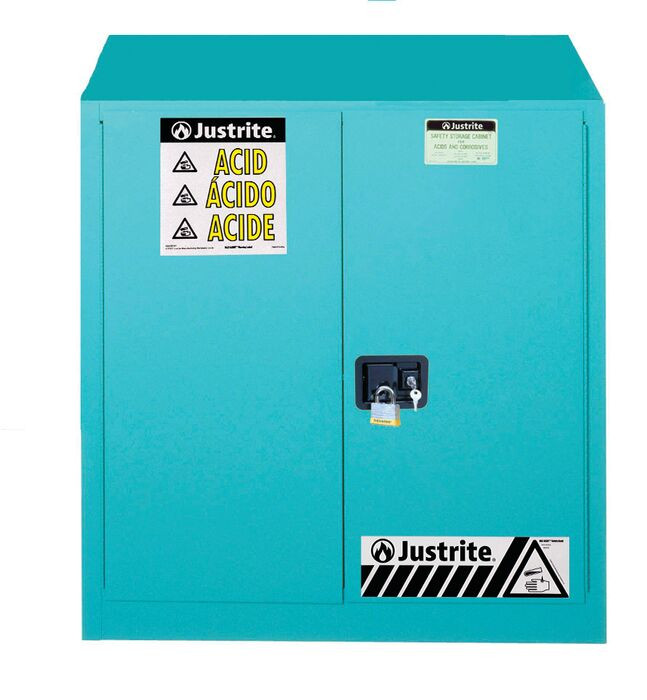
- Corrosive Storage Locker
- Specialized units with corrosion-resistant coatings and separate compartments for acids, bases, and reactive materials
Key specifications
| Specification | Typical range | What it means |
|---|---|---|
| Drum Capacity | 2 to 16+ drums | Primary sizing metric determining storage volume and regulatory classification thresholds |
| Fire Rating | 2 to 4 hours | Duration the enclosure resists fire penetration and maintains structural integrity under standard test conditions |
| Sump Containment Volume | 110% to 125% of largest container | Secondary containment capacity required to capture full spill volume plus precipitation per EPA regulations |
| Container Length | 15 to 44 ft | Footprint dimension for mobile and modular hazmat storage containers |
| Load Capacity | 350 kg per compartment | Maximum weight rating for stored materials and containers per storage bay or shelf system |
How the industry sizes it
The rental industry sizes hazmat and flammable storage lockers primarily by drum capacity, with common configurations at 2, 4, 8, and 16 drums. Smaller units (2-4 drums) serve site-level needs for daily-use flammables, while mid-range lockers (4-8 drums) provide full trade inventory storage with enhanced ventilation and containment. Walk-in buildings (16+ drums) address bulk storage for remediation projects, plants, and large facilities. Mobile modular containers are alternatively sized by length (15-28 ft and 28-44 ft) and follow ISO shipping container standards for transportability and multi-site deployment.
Applications
- Construction site storage of fuels, solvents, adhesives, and coatings in compliance with fire codes
- Environmental remediation projects requiring segregated storage of contaminated materials and treatment chemicals
- Industrial maintenance facilities storing lubricants, degreasers, and process chemicals near production areas
- Pipeline and oil field operations managing flammable liquids and hazardous drilling fluids at remote locations
- Emergency response staging areas providing compliant temporary storage during spill cleanup and disaster recovery
- Manufacturing plants maintaining separated storage for incompatible reactive materials and production feedstocks
Safety & operation
- Verify locker fire rating, ventilation type, and containment volume match the specific hazard class and quantity of stored materials
- Maintain proper segregation of incompatible chemicals using separate compartments or dedicated lockers per SDS requirements
- Ensure grounding and bonding provisions are connected during flammable liquid transfer to prevent static ignition
- Inspect sump containment systems regularly for leaks, corrosion, and drainage valve function to maintain spill readiness
- Position lockers on level, stable ground at minimum required distances from ignition sources, structures, and property lines per NFPA spacing tables
Standards & certifications
- NFPA · NFPA 30
- Flammable and Combustible Liquids Code governing storage cabinet construction, ventilation, and siting requirements
- OSHA · 29 CFR 1910.106
- Occupational safety standards for flammable liquid storage including design, capacity limits, and labeling
- EPA · 40 CFR 264/265
- Hazardous waste containment and secondary containment system requirements for storage facilities
- FM Global · FM 6050
- Approval standard for flammable liquid storage cabinets testing fire endurance and construction methods
Frequently asked
What determines the required drum capacity for a jobsite?
How does fire rating affect locker selection?
What is the difference between passive and forced ventilation?
Can different chemical types be stored in the same locker?
Related equipment
Browse by manufacturer
Sources
Every specification is verified against the manufacturer's published data, with the source linked for reference.
All models
15 models · Every spec cited to source