

Temporary Fence Panel
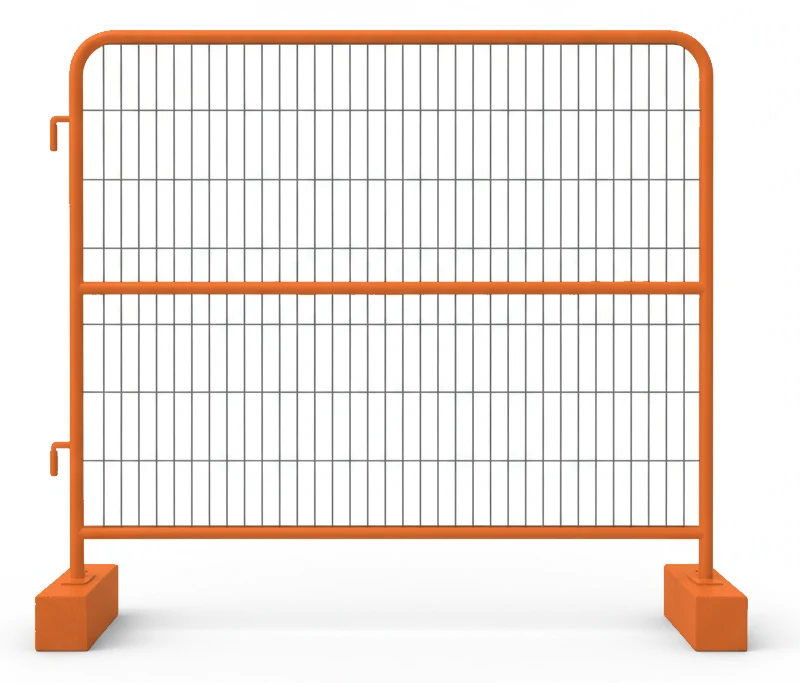
A temporary fence panel is a portable, freestanding barrier system used to secure construction sites, control access, and delineate work zones. These panels typically consist of chain link fabric mounted in a steel or aluminum frame, designed for rapid installation and relocation without permanent foundation work. The equipment serves as the primary perimeter security solution in construction, events, and temporary site management.
How it works
Temporary fence panels function as interlocking modular units that connect via integral coupling pins, lugs, or clamps along vertical frame members. Each panel stands independently when braced with stabilizing feet or concrete blocks, or connects to adjacent panels to form continuous barrier runs of any desired length. The chain link mesh provides visibility while preventing unauthorized entry, and the framework includes top and bottom horizontal rails that maintain panel rigidity. Installation involves positioning panels end-to-end along the desired perimeter, securing connections between adjacent units, and adding stabilization through ground supports or weighted bases. Gates can be integrated into the fence line using specially designed swing or slide gate panels. Panels disassemble quickly for relocation or storage, with the modular design allowing configurations to adapt to site changes throughout project duration.
Types & variants
- Chain Link Panel
- Standard galvanized steel frame with woven chain link fabric, the most common temporary fence configuration for construction sites and general perimeter security
- Privacy Screen Panel
- Fence panels fitted with opaque mesh or fabric screening to block visual access while maintaining wind permeability, used where work concealment is required
- Barricade Panel
- Heavy-duty construction with reinforced frames and smaller mesh openings, designed for high-security applications or areas requiring enhanced containment
- Crowd Control Barrier
- Lower-height interlocking panels with flat or tube frame design, specifically configured for pedestrian management at events and public gatherings
- Windscreen Fence
- Panels with integrated wind-reducing fabric or screening to provide debris containment and environmental protection on exposed sites
Key specifications
| Specification | Typical range | What it means |
|---|---|---|
| Panel Height | Varies by model | Vertical dimension from ground to top rail, with common configurations including 4 ft, 6 ft, and 8 ft heights |
| Panel Width | Varies by model | Horizontal span of individual panel sections, affecting coverage rate and configuration flexibility |
| Frame Material | Galvanized steel or aluminum | Primary structural material determining weight, corrosion resistance, and durability in outdoor conditions |
| Mesh Type | Chain link, 2 in or 2.25 in diamond | Wire fabric configuration providing visibility and security while resisting climbing and cutting |
| Panel Weight | Varies by model | Unit mass affecting handling requirements and stability, varying with frame material and mesh gauge |
How the industry sizes it
The temporary fence panel class is not subdivided into formal size bands, as panels are manufactured in standardized dimensions that remain consistent across most applications. Industry specification focuses on panel height and width, with these dimensions adequate for the full range of site security, access control, and perimeter delineation tasks. Selection is based on linear footage requirements and site configuration rather than equipment capacity tiers, with all standard panels performing the same fundamental barrier function regardless of specific dimensions.
Applications
- Construction site perimeter security and access control to prevent unauthorized entry and protect public safety
- Event crowd management and flow control for festivals, concerts, races, and public gatherings
- Utility work zone delineation around excavations, overhead work, and hazardous areas on roadways or urban sites
- Demolition site containment to restrict access and control debris zones during structure removal
- Property boundary marking for temporary land use, parking areas, or restricted zones during site transitions
- Equipment and material storage area protection on active construction or industrial sites
Safety & operation
- Stabilization through approved base supports, sandbags, or concrete blocks prevents panel tipping in wind or from impact
- Regular inspection of coupling connections and frame integrity ensures barrier continuity and prevents gaps
- Ground anchoring or additional bracing may be required in high-wind conditions or on uneven terrain to maintain stability
- Visibility markers or reflective elements should be considered on panels adjacent to vehicle traffic or low-light areas
- Panel placement must maintain adequate clearance from overhead power lines and underground utilities
Standards & certifications
- OSHA · 29 CFR 1926 Subpart G
- Signs, signals, and barricades requirements for construction sites, including perimeter control and access restriction
- ASTM · F2611
- Standard specification for temporary chain link fence framework covering material, design, and performance requirements
Frequently asked
How are temporary fence panels stabilized without ground anchors?
What distinguishes temporary fence panels from permanent chain link fencing?
How is linear footage calculated for temporary fence panel installations?
What factors affect temporary fence panel stability in outdoor conditions?
Related equipment
Browse by manufacturer
Sources
Every specification is verified against the manufacturer's published data, with the source linked for reference.
All models
1 models · Every spec cited to source