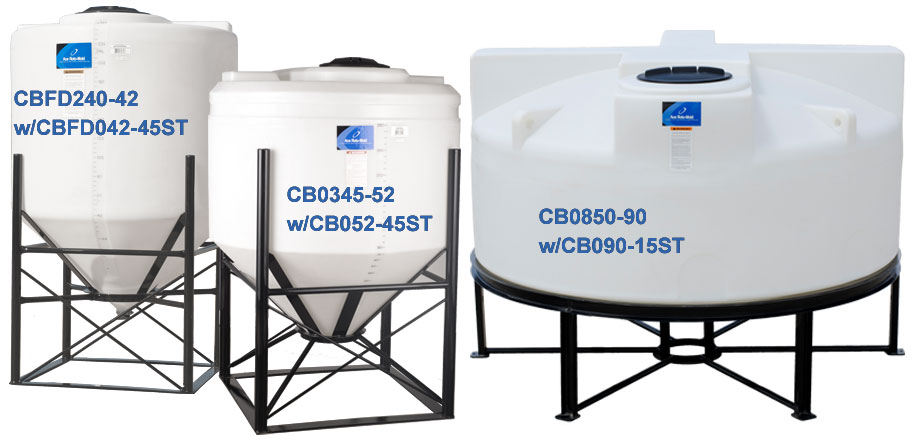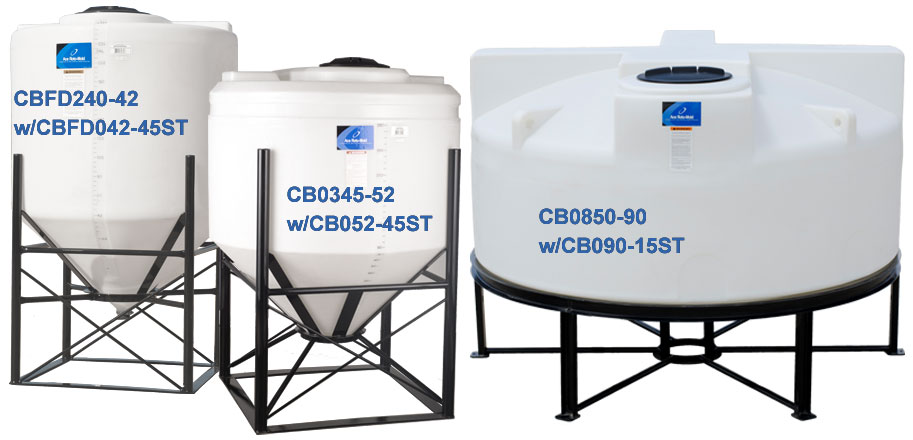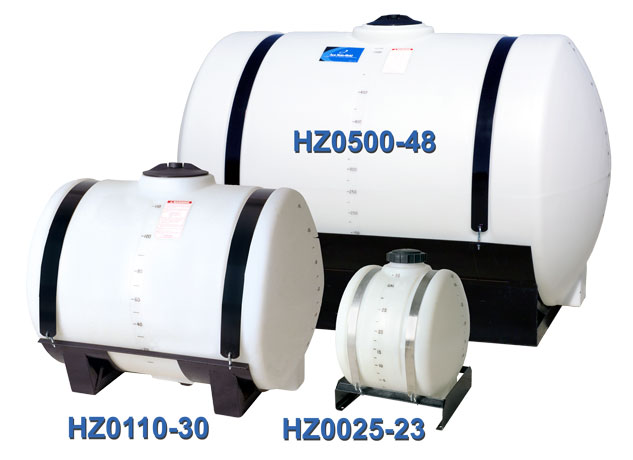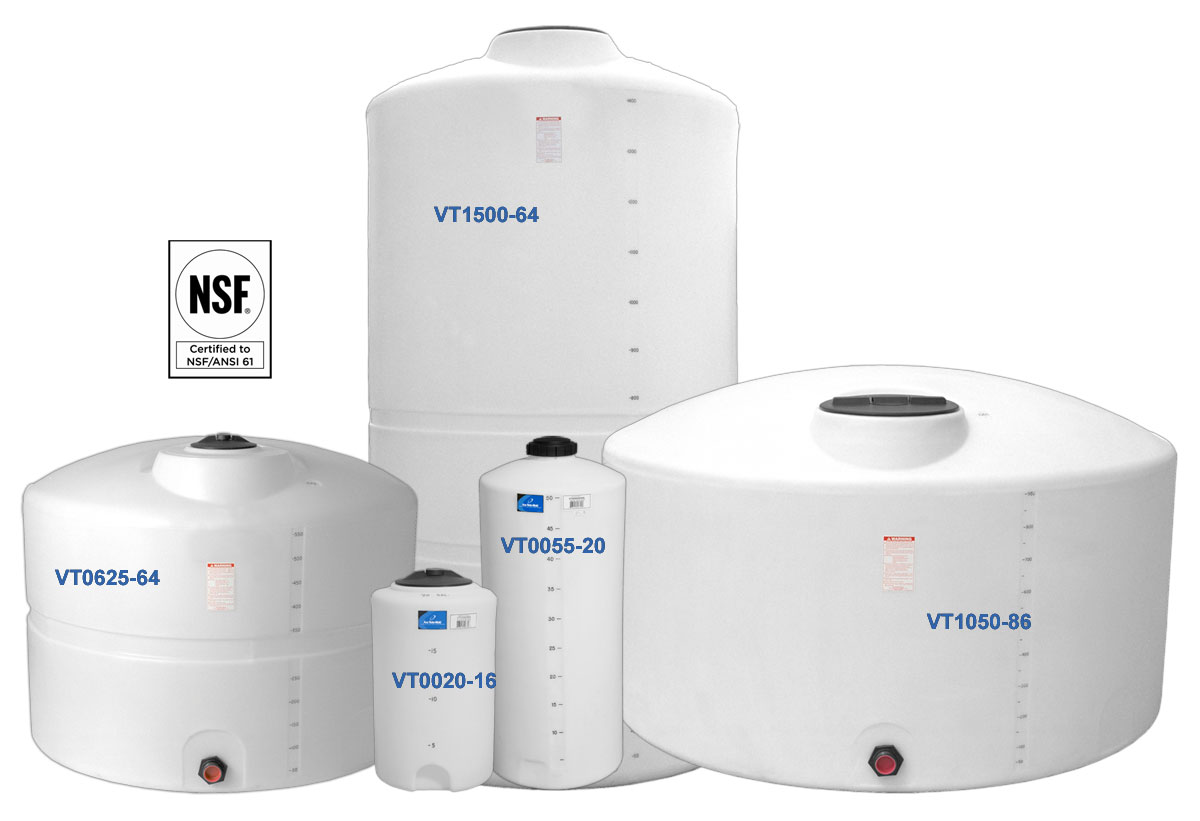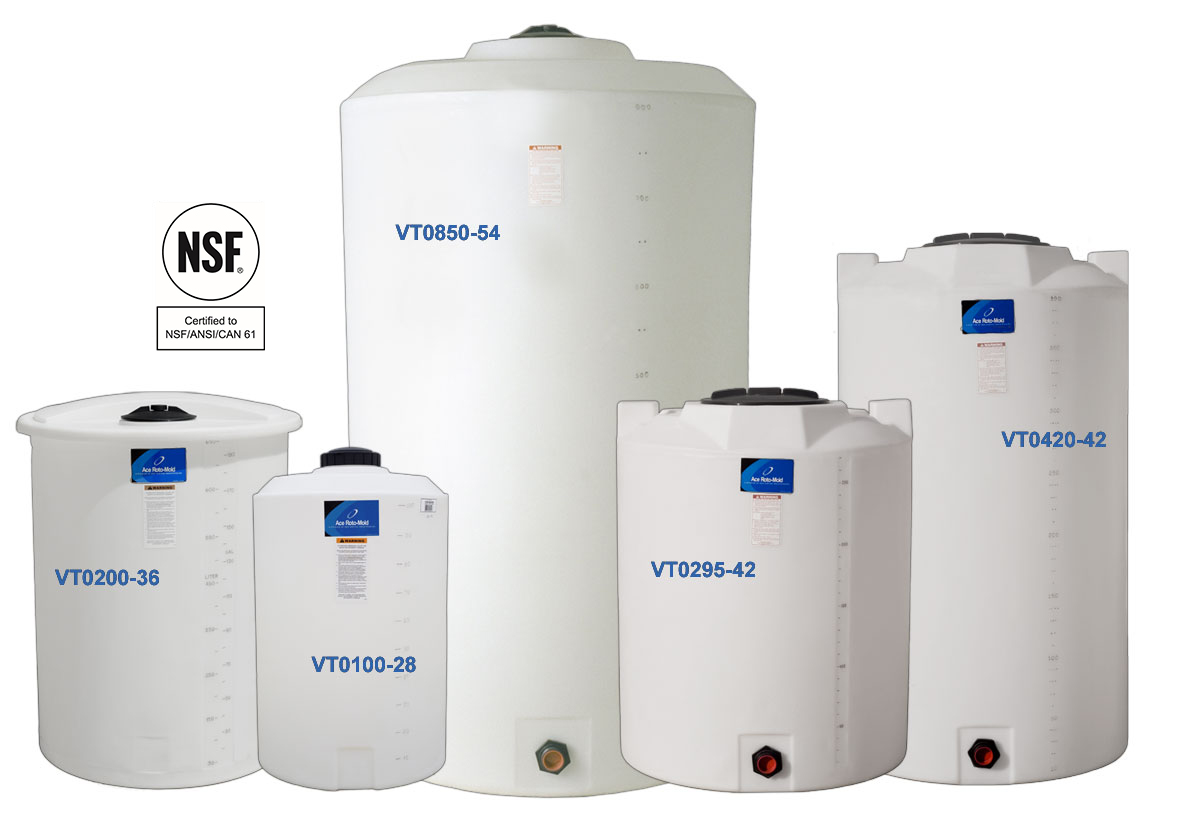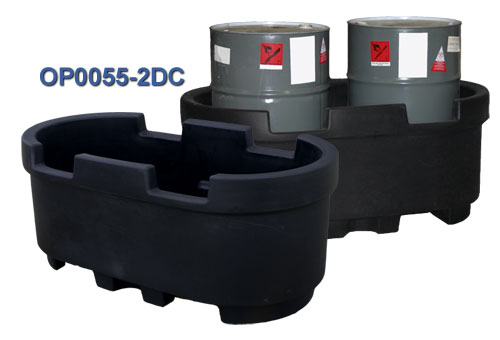

Up to 500 gal Water Tank
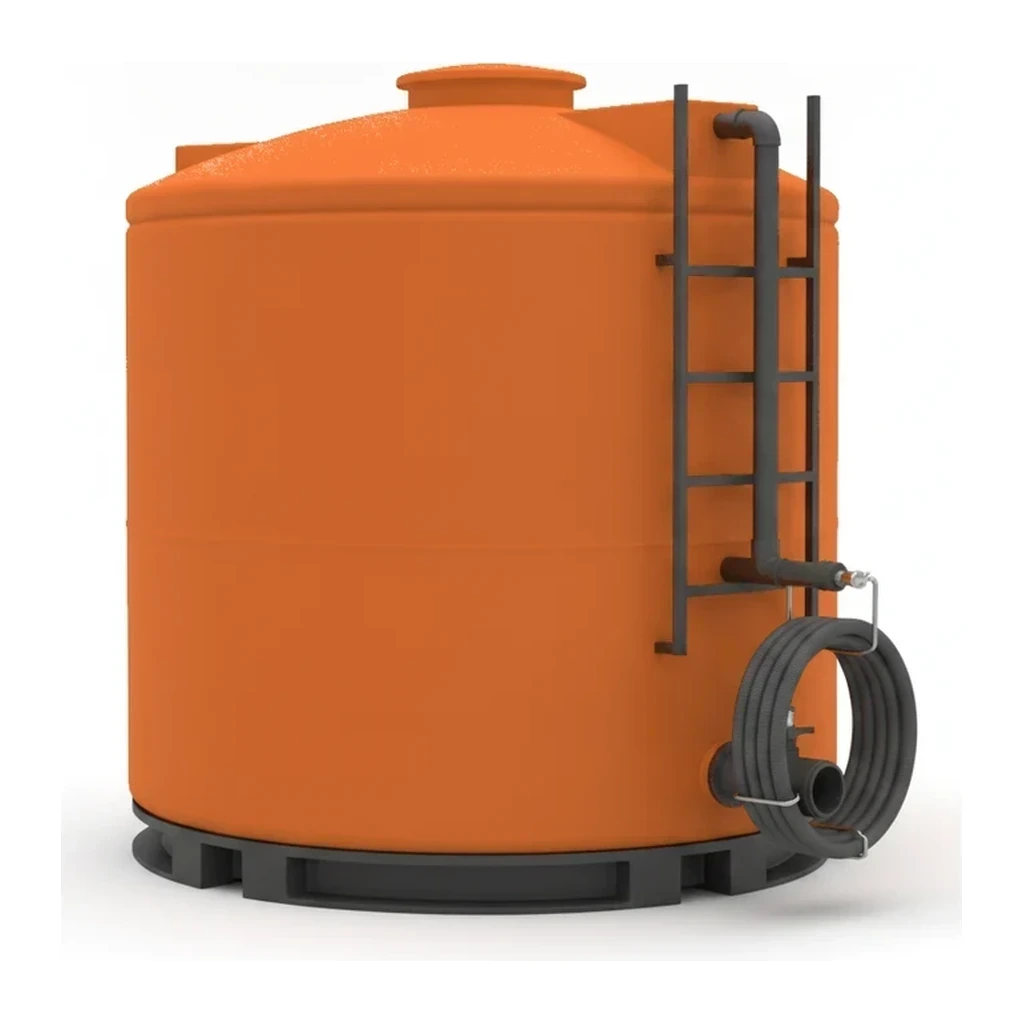
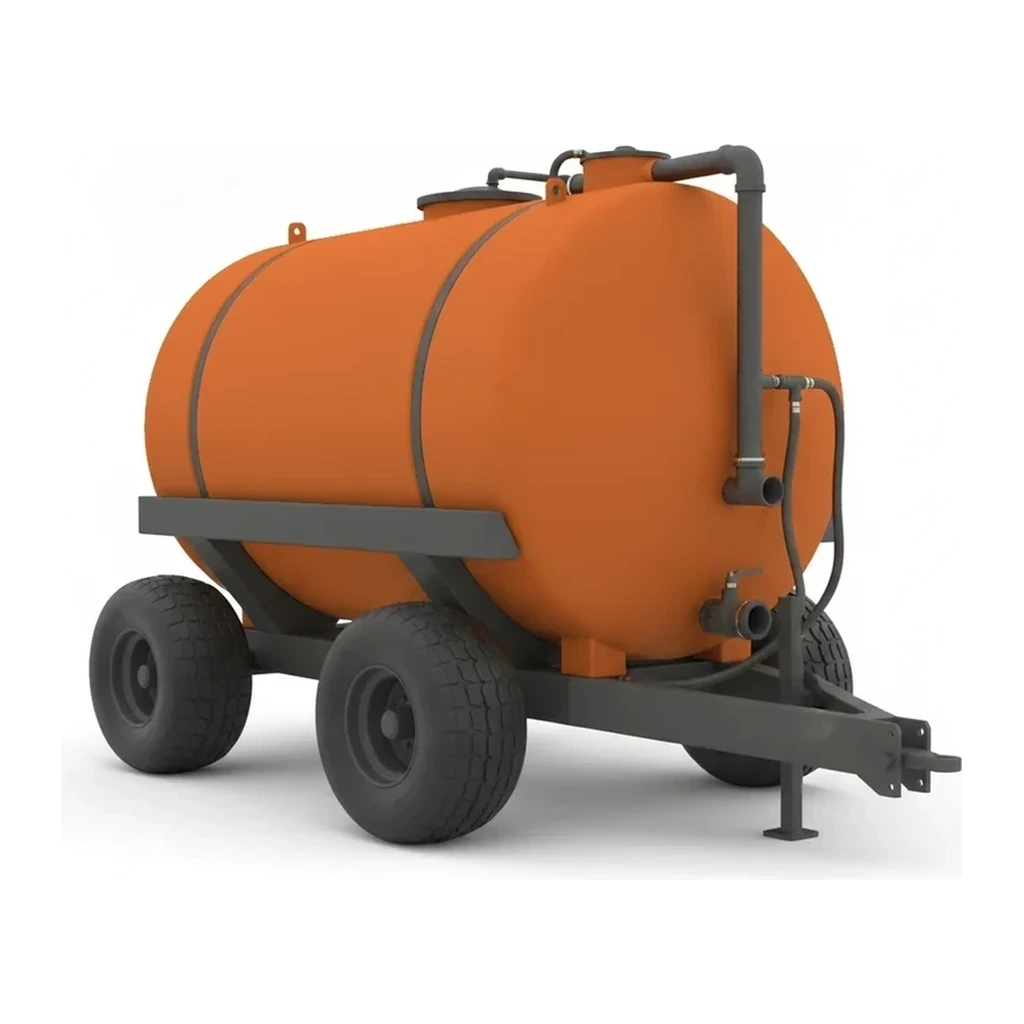
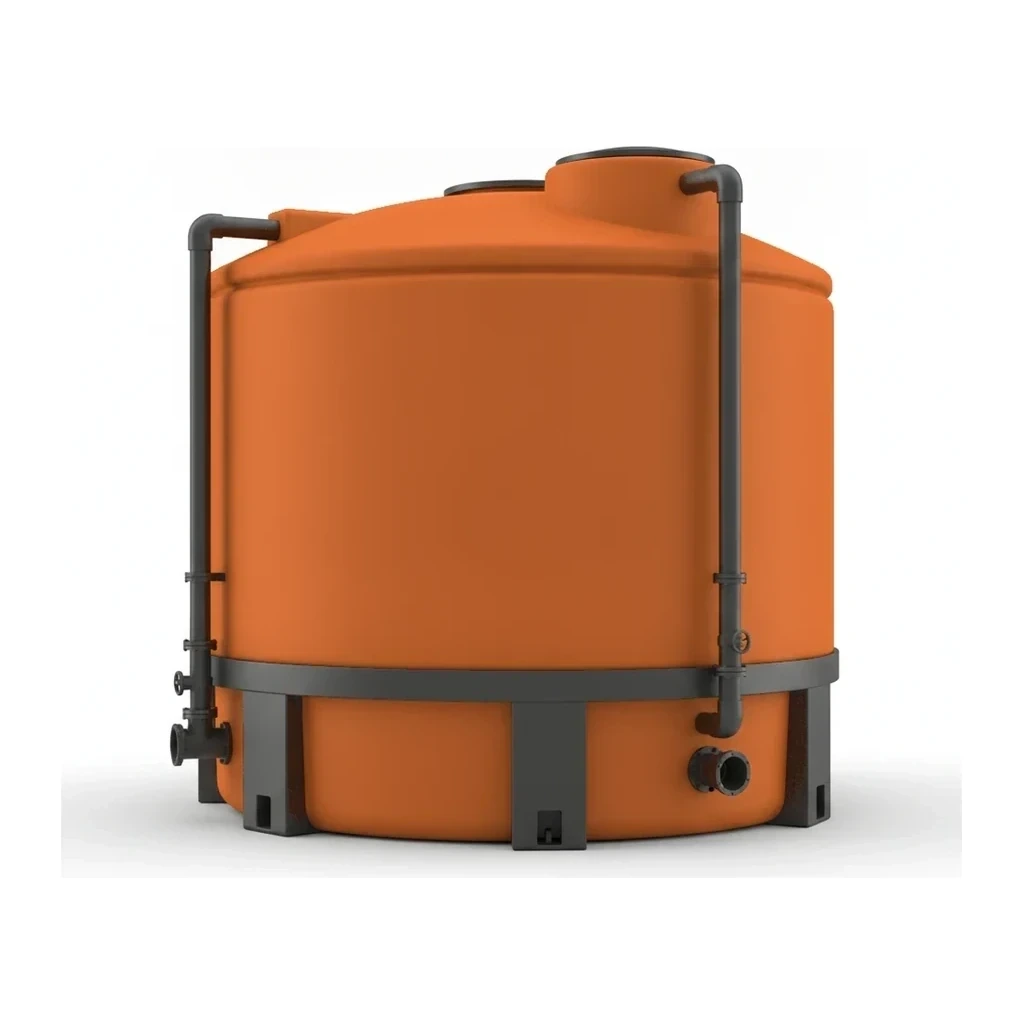
Water tanks up to 500 gallons provide portable on-site water supply for dust suppression, equipment washdown, and hand-washing stations where crews work beyond permanent infrastructure. This smallest size class in the water tank ladder emphasizes portability: most units remain light enough for forklift repositioning without dedicated trailer transport. For higher-volume dust control or multi-crew operations, the 500-2,000 gal Water Tank class offers extended capacity at the cost of specialized hauling.
Cat classes
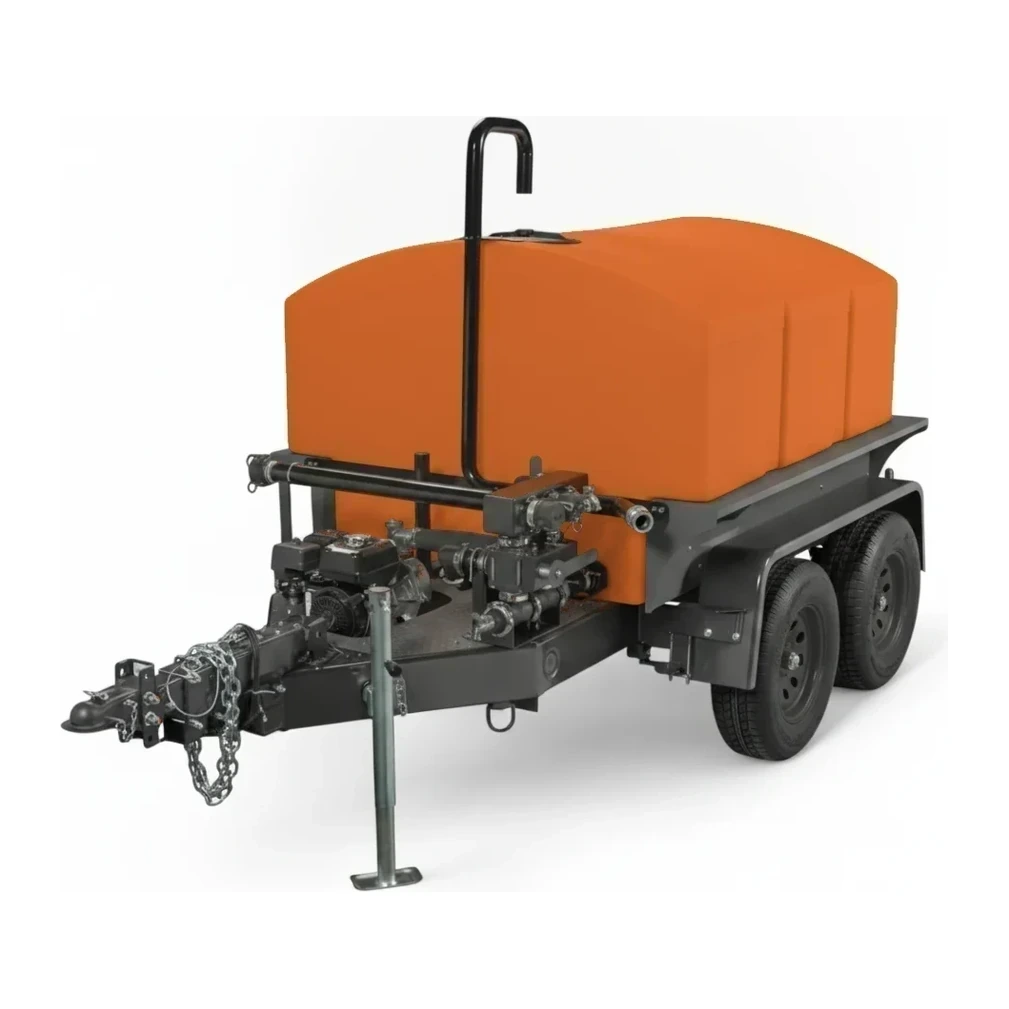
Pick a size class: capacity and reach differ across the range.
Key specifications
| Specification | Typical range | What it means |
|---|---|---|
| Capacity | 200-500 gal | Total water volume; fills support half-day to full-day dust control for a single zone or crew. |
| Load capacity | 441–992 lb (200–450 kg) | Weight rating for forklift or pallet-jack handling; corresponds to structural design and base footprint. |
| Max height | 4–37 ft (1.2–11.3 m) | Installed height range spans low-profile horizontal leg tanks to tall vertical towers for gravity feed. |
How to choose
Tanks up to 500 gallons suit single-crew dust control, small concrete pours, and temporary wash stations where water demand remains intermittent and forklift access permits on-site repositioning. The format choice, horizontal leg tanks versus vertical towers, depends on available footprint and whether gravity pressure or pump delivery is preferred. When daily water consumption exceeds 400 gallons, or when multiple spray bars operate simultaneously, the 500-2,000 gal Water Tank class reduces refill frequency and supports distributed manifold systems. Projects confined to pedestrian access or rooftop placement may require this smaller class despite higher volume needs.
What this size handles
- Dust suppression for a single saw-cutting crew on a roadway shoulder
- Hand-wash station supply for a 10-person demolition crew over a weekend
- Concrete-curing water for slab pours under 1,000 sq ft
- Equipment washdown at a small excavation staging area
- Temporary potable water backup during utility service interruption
- Spray-bar feed for a compact street-sweeper or small excavator attachment
Safety & operation
- Verify load capacity of forks, pallets, and ground surface before positioning filled tanks; water weight approaches 4,000 lb at 500-gallon capacity.
- Secure vertical tanks with straps or tie-downs on uneven terrain to prevent tip-over during filling or high winds.
- Inspect polyethylene and fiberglass shells for UV degradation and stress cracks before each fill cycle, especially on aged units.
- Use potable-rated tanks and hoses exclusively for drinking water; industrial tanks may leach chemicals unsuitable for human consumption.
Transport & logistics
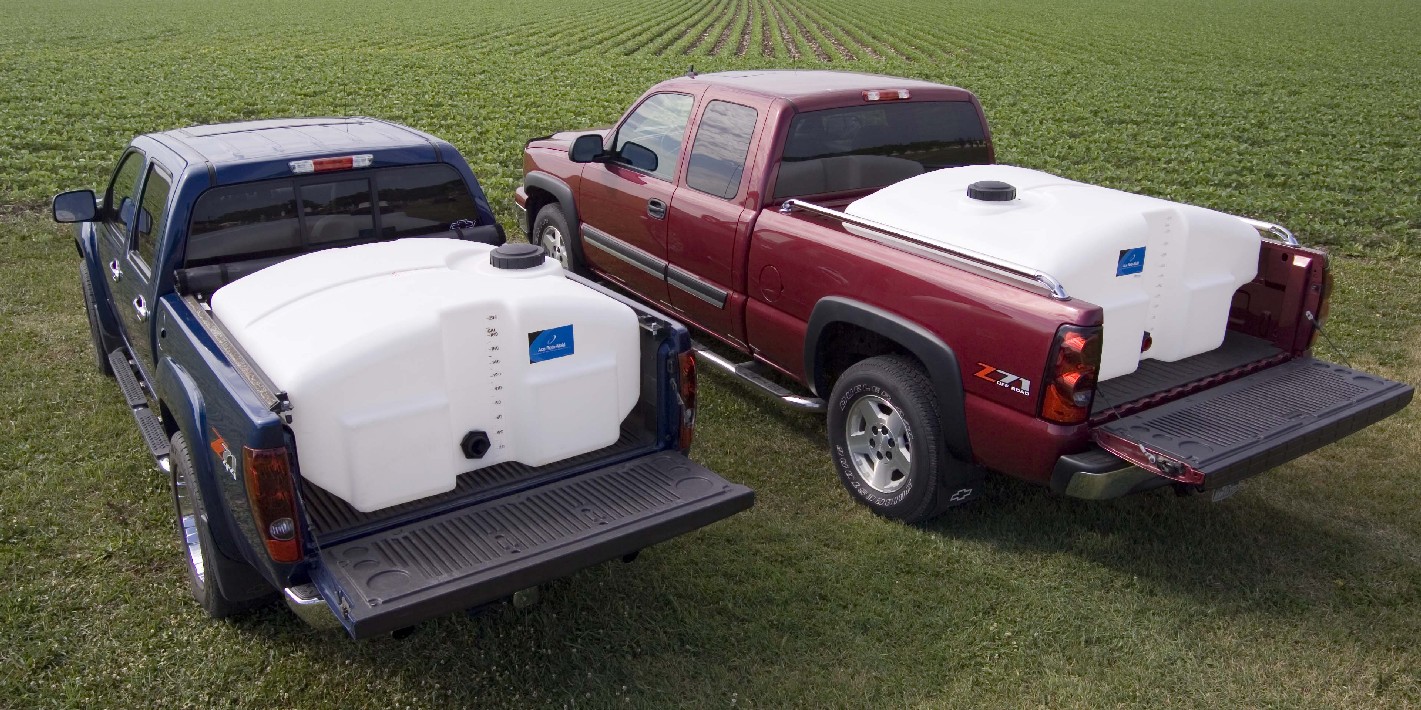
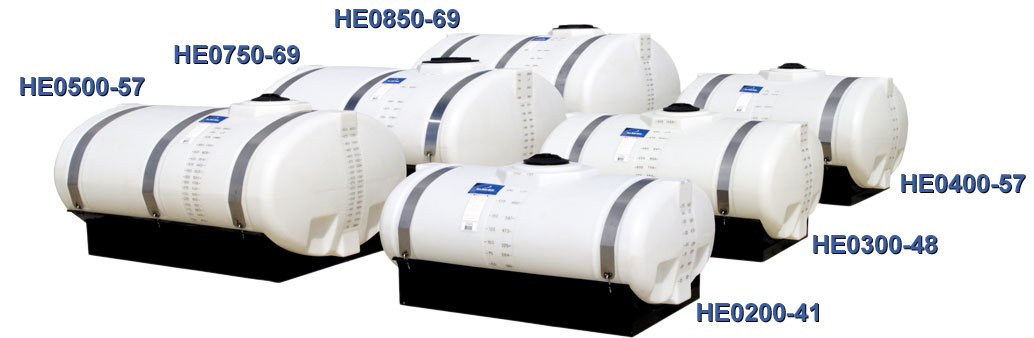
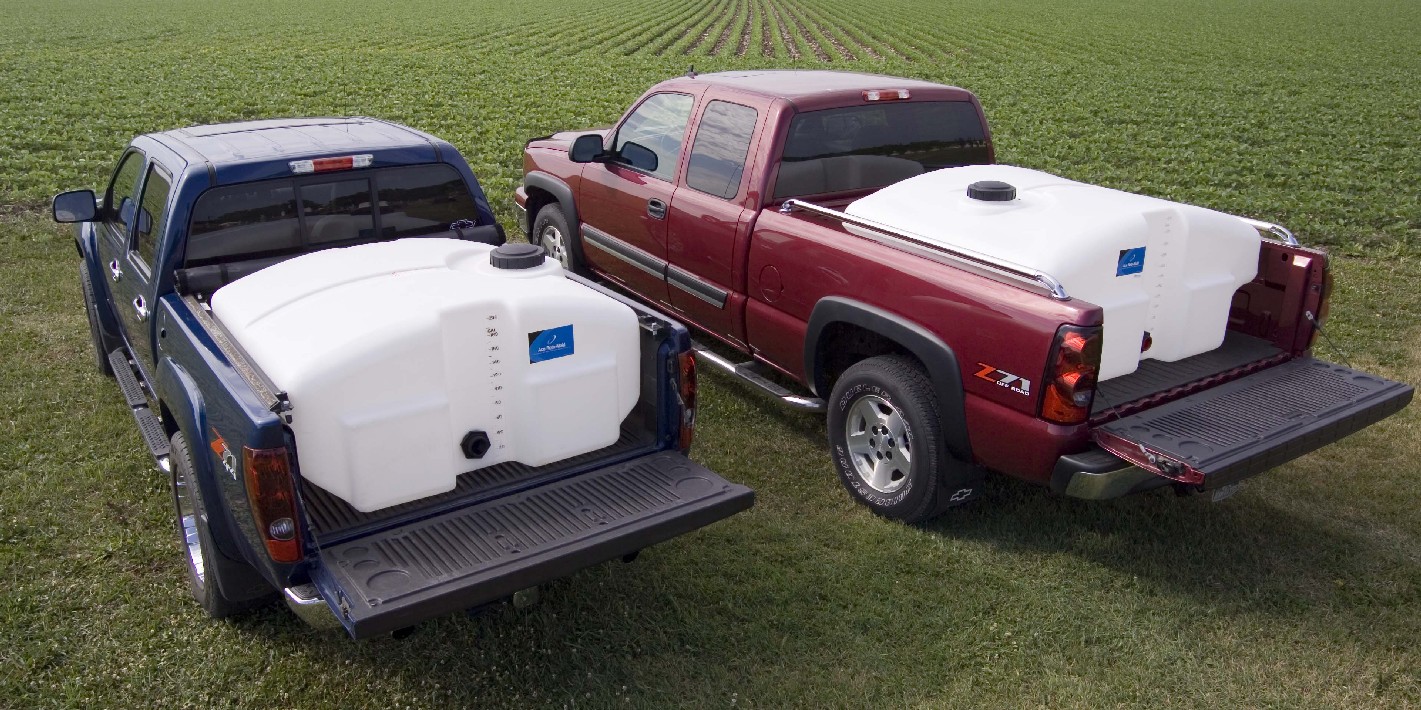
- Horizontal leg tanks (200-300 gal) typically load onto pickup beds or utility trailers without special tie-downs.
- Vertical tanks to 500 gallons fit standard flatbed trailers; taller models require clearance checks for overhead wires and bridges.
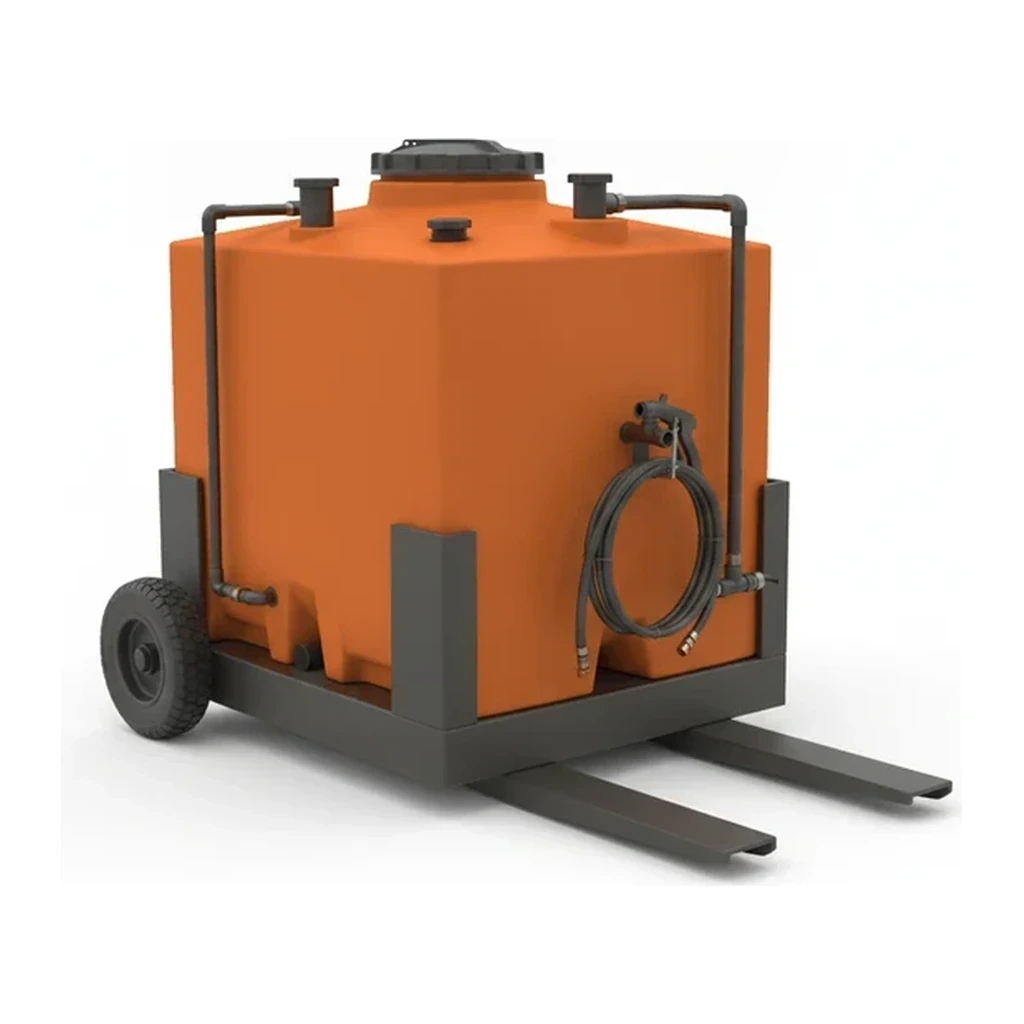
- Forklift delivery common for leg tanks; operator positions forks under molded channels or reinforced base rails.
Power & supply
- Gravity-fed systems require no power when tank elevation provides adequate head pressure for spray nozzles or hose bibs.
- Electric transfer pumps (120 V, 5-10 A) common for filling from hydrants or for pressurized distribution to remote points.
- Diesel- or gas-powered pumps used when filling from ponds, streams, or water-truck tankers without electrical hookup.
Frequently asked
What distinguishes a leg tank from a vertical tower in this size class?
How many refills per day does a 500-gallon tank require for typical dust control?
Can tanks in this size class supply pressure washers directly?
Compare popular models
Find by spec →Normalised to the same units. A dash means the figure was not published.
| Model | Load capacity | Max height |
|---|---|---|
| Baker Tank Mix Tank System | 420 gal | 37 ft (11.3 m) |
| Baker Tank Double Wall Tank | 420 gal | 37 ft (11.3 m) |
| Chem-Tainer TC3845LC: 200 Gallon Round Horizontal Bulk Storage Tank | 200 gal | 3.8 ft (1.2 m) |
| Chem-Tainer N-44800-100 Gallon Norwesco Free Standing Water Tank | 100 gal | 3.8 ft (1.2 m) |
| Den Hartog HZ0055-23 | 55 gal | 3.2 ft (1.0 m) |
| Den Hartog HZ0070-23 | 70 gal | 3.7 ft (1.1 m) |
Related equipment
Browse by manufacturer
Sources
Every specification is verified against the manufacturer's published data, with the source linked for reference.
Up to 500 gal Water Tank
157 models · Page 4 of 4 · Every spec cited to source