

Semi Tractor Truck
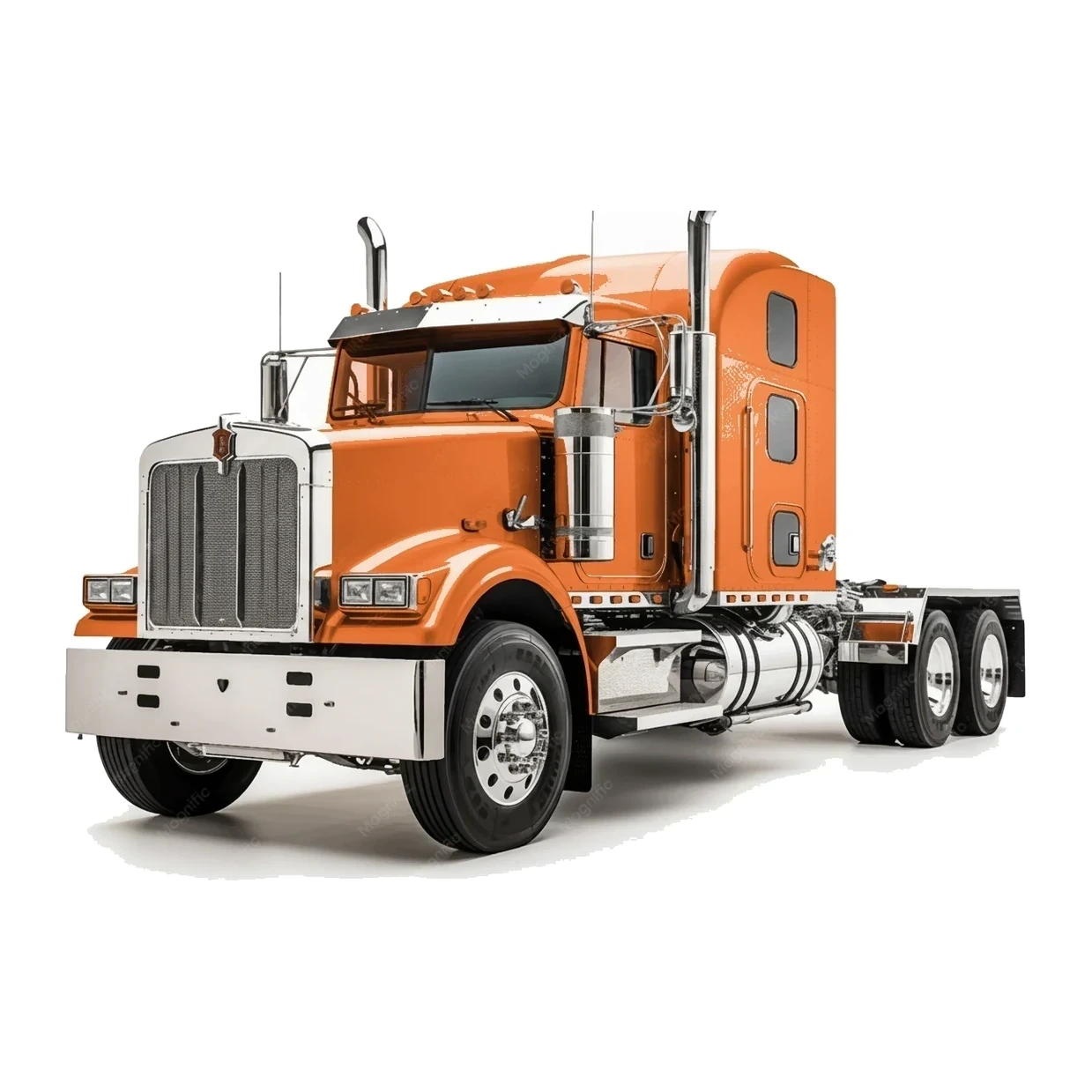
A semi tractor truck is a heavy-duty highway vehicle designed exclusively to pull semi-trailers by coupling to their kingpin via a fifth wheel hitch. Also known as road tractors, tractor units, or 18-wheelers, these vehicles provide the motive power for articulated trucking operations. Semi tractors are distinguished from straight trucks by their lack of integrated cargo space, functioning solely as the powered front unit of a tractor-trailer combination.
How it works
The semi tractor couples to a semi-trailer through a fifth wheel mounting plate installed above the drive axles, which locks onto the trailer's kingpin to form an articulated joint. Power from the diesel engine is transmitted through the drivetrain to tandem or triple rear axles, while the tractor's electrical and pneumatic systems connect to the trailer via glad hand fittings and electrical connectors to operate brakes, lights, and auxiliary functions. The driver controls the combined vehicle from the tractor cab, which may be configured as a day cab for local operations or a sleeper cab for long-haul applications. Air brake systems provide stopping power for both tractor and trailer, while the articulated connection allows the combination to negotiate turns with the trailer tracking behind the tractor's path.
Types & variants
- Day Cab Tractor
- Short-wheelbase configuration without sleeping compartment, optimized for local and regional hauling with daily driver return
- Sleeper Tractor
- Extended cab with integrated sleeping berth for long-haul operations requiring overnight driver rest periods
- Highway Tractor
- Road-optimized configuration with aerodynamic fairings and efficient powertrains for over-the-road freight operations
- Yard Spotter
- Specialized short-wheelbase tractor for trailer switching and positioning in freight yards and distribution centers
- Heavy Haul Tractor
- Reinforced configuration with additional axles and increased GCWR ratings for overweight and oversized loads
Key specifications
| Specification | Typical range | What it means |
|---|---|---|
| Gross Combined Weight Rating (GCWR) | Data not provided | Maximum allowable combined weight of tractor, trailer, and cargo the unit is designed to handle |
| Engine Power | Data not provided | Horsepower output of the diesel engine, determining hauling capacity and grade performance |
| Fifth Wheel Height | Data not provided | Height of the coupling plate from ground level, which must match trailer kingpin height specifications |
| Wheelbase | Data not provided | Distance between front steer axle and rear drive axle centerline, affecting maneuverability and weight distribution |
How the industry sizes it
The semi tractor truck class is not sized by distinct bands or capacity ranges because one tractor configuration serves its designated purpose regardless of dimensional variation. Industry classification focuses on cab type (day cab versus sleeper), application (highway, regional, vocational), and axle configuration rather than graduated size categories. Model selection depends on matching GCWR to anticipated trailer loads, cab configuration to route requirements, and powertrain specifications to terrain and duty cycle rather than progressive sizing steps.
Applications
- Over-the-road freight hauling with dry van and refrigerated trailers on interstate highway networks
- Regional distribution operations with daily or multi-day routes serving warehouses and distribution centers
- Flatbed and stepdeck hauling of construction materials, machinery, and dimensional cargo
- Heavy haul transport of oversize and overweight loads requiring specialized permitting
- Intermodal container transport between rail terminals, ports, and inland destinations
- Yard spotting and trailer positioning within freight terminals and manufacturing facilities
Safety & operation
- Commercial Driver's License (CDL) Class A required for operators of tractor-trailer combinations
- Pre-trip inspections of fifth wheel coupling, brake systems, and trailer connections mandatory before operation
- Air brake system checks including glad hand connections and trailer emergency brake functionality required
- Wide turning radius necessitates awareness of trailer offtracking and rear swing clearances
- Hours of Service (HOS) regulations govern maximum driving time and mandatory rest periods for operators
Standards & certifications
- FMCSA · 49 CFR Parts 390-399
- Federal Motor Carrier Safety Administration regulations governing commercial motor vehicle operation, maintenance, and driver qualification
- DOT · FMVSS
- Federal Motor Vehicle Safety Standards establishing equipment requirements for braking, lighting, and structural integrity
- SAE · J560
- Society of Automotive Engineers standard for electrical connector configurations between tractors and trailers
- EPA · Heavy-Duty Engine Standards
- Environmental Protection Agency emissions requirements for on-highway diesel engines by model year
Frequently asked
What distinguishes a semi tractor from a straight truck?
Why are both day cab and sleeper configurations available?
What license class is required to operate a semi tractor?
How does axle configuration affect tractor capability?
Related equipment
Browse by manufacturer
All models
5 models · Every spec cited to source