Gas Utility Vehicle (UTV)
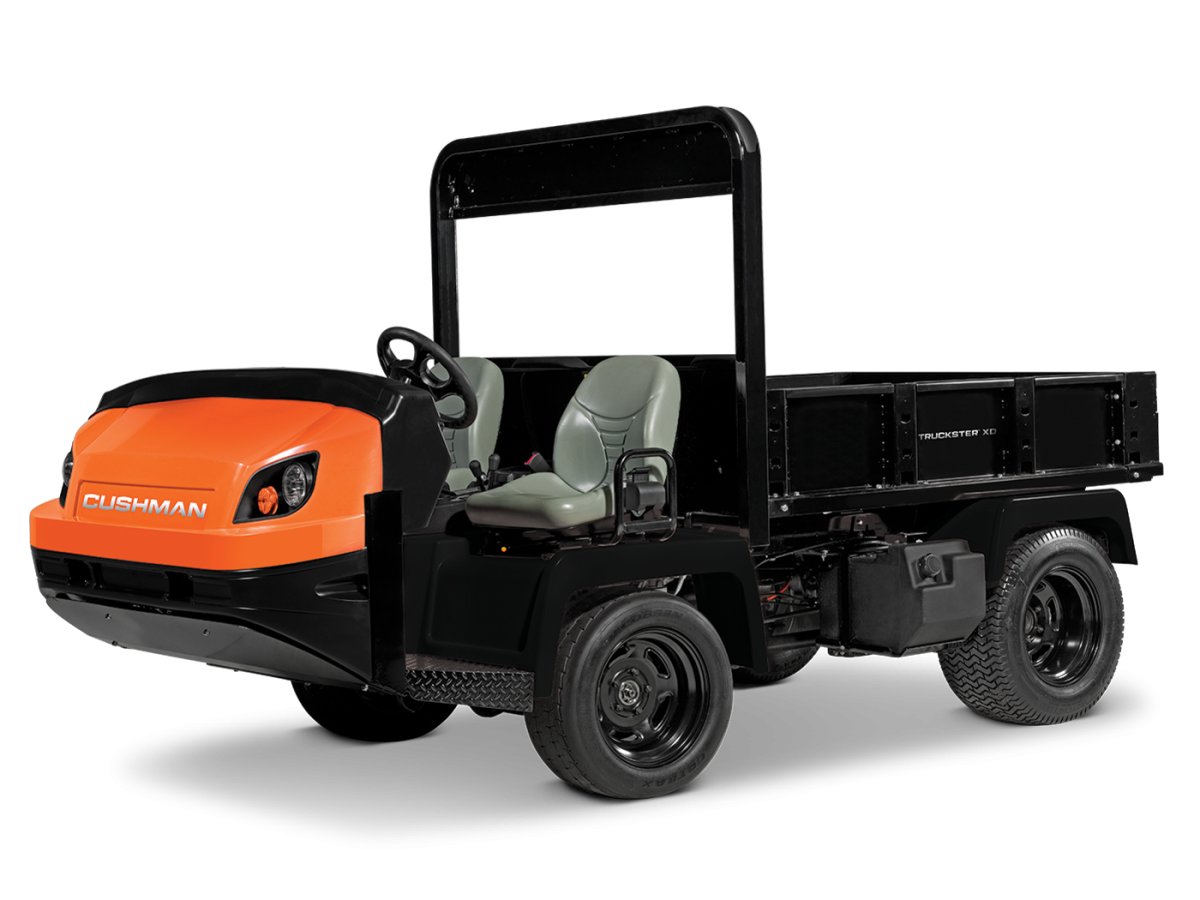
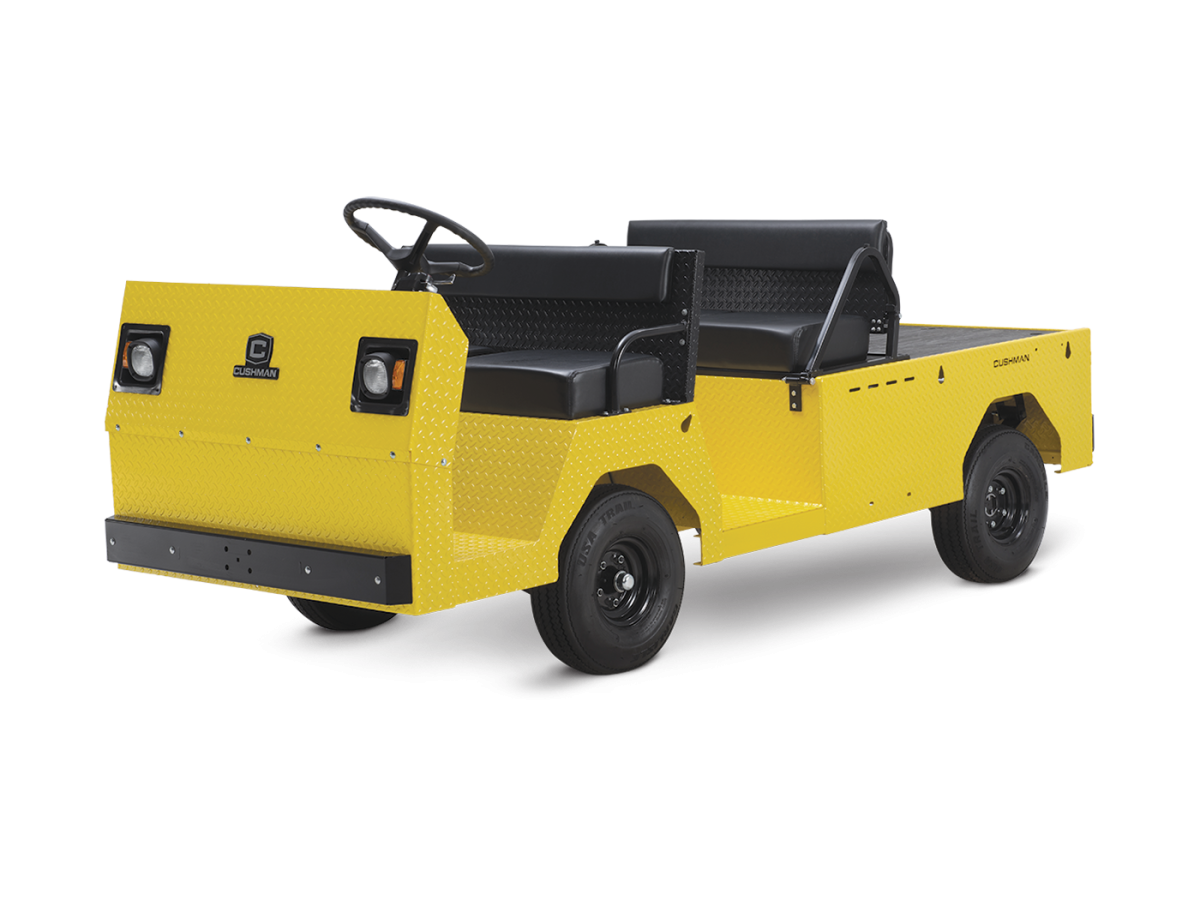
A gas utility vehicle (UTV) is an engine-powered side-by-side machine with bench or bucket seating, a cargo bed, and off-pavement running gear. On job sites it moves people, tools, and material faster than walking and lighter than a truck. The catalog lists 164 models from brands including Yamaha, Club Car, Cushman, Can-Am, John Deere, and Kawasaki.
How it works
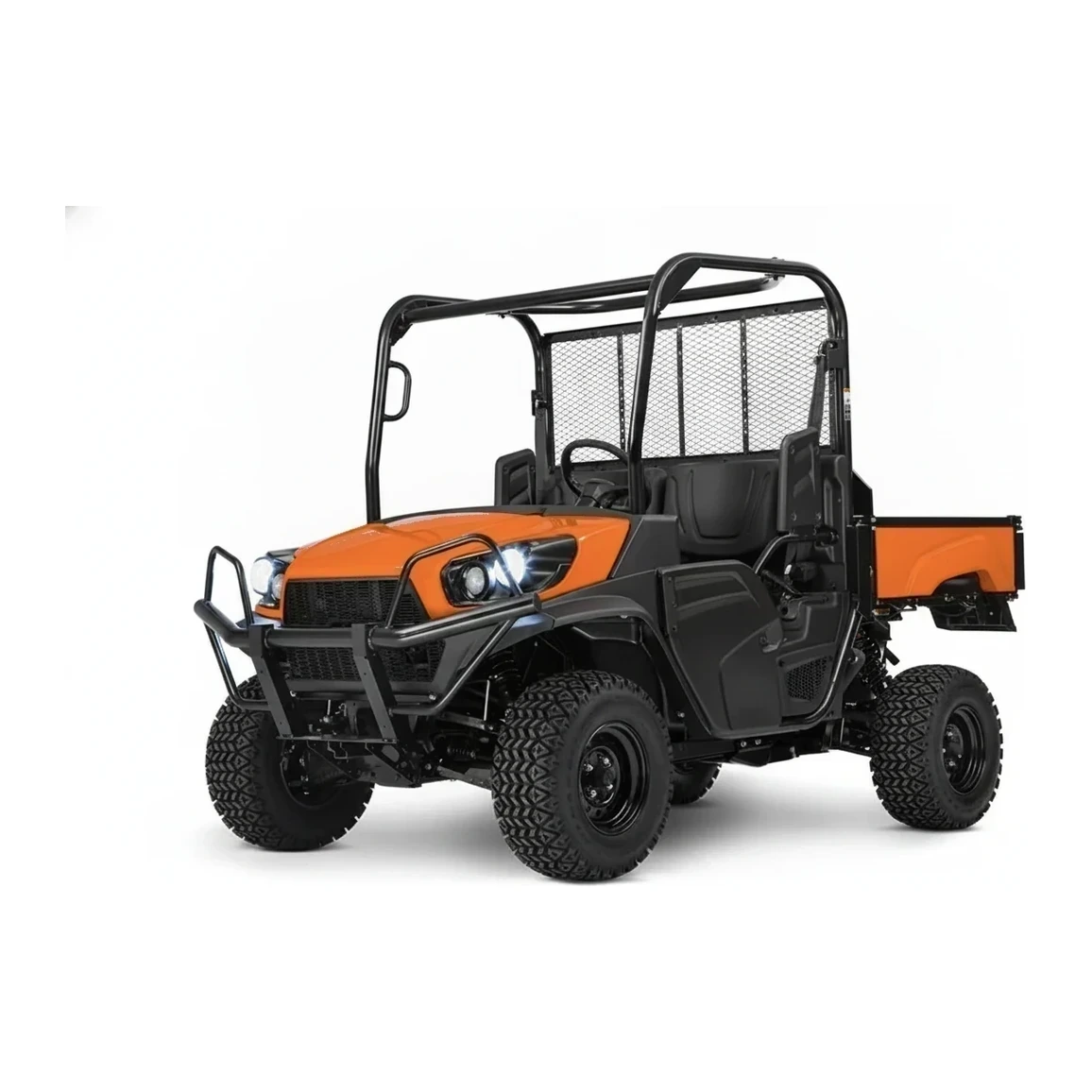
A gasoline engine drives the wheels through a CVT or geared transmission, with selectable two- or four-wheel drive on most work models. The operator steers with a wheel from a side-by-side cockpit protected by a roll structure, and a rear cargo bed — often with manual or hydraulic dump — carries the load. Work-oriented models emphasize payload and towing over speed, with governed drivetrains, upfit lighting, and cab enclosures for weather. Occupant protective structures and seat belts are integral to the machine's safety case.
Types & variants
- Work utility models
- Payload-focused machines with dump beds and towing packages.
- Crew models
- Two-row seating moves four to six workers with gear.
- Performance and crossover models
- Higher-power machines at the top of the class's power range.
- Turf and grounds units
- Low-impact tires and governed speeds for maintained surfaces.
Key specifications
| Specification | Typical range | What it means |
|---|---|---|
| Engine power (hp) | About 13 to 240 hp across cataloged models | Work models cluster at the lower end; the top of the range is performance-oriented. |
| Payload capacity | About 425 to 734 kg (937 to 1,618 lb) on cataloged models with published ratings | Bed plus occupant capacity for tools and material. |
| Drive configuration | Selectable 2WD/4WD on most work models | Traction for mud, grades, and unimproved ground. |
How the industry sizes it
UTVs are sized by seats, payload, and terrain: a two-seat work model with a dump bed covers most site support, crew models move larger teams, and rough or steep ground justifies stronger four-wheel-drive machines. Where loads exceed roughly the class payload ceiling, the job belongs to a compact truck or tracked carrier.
Applications
- Moving crews and tools across large sites
- Material shuttling with dump beds
- Grounds and facility maintenance routes
- Security and inspection patrols
- Towing small utility trailers within machine ratings
Safety & operation
- Occupants belted, doors or nets closed, and hands inside — rollover protection only works with restraints used.
- Respect terrain limits; side slopes roll UTVs at angles that feel deceptively mild.
- Load beds within rated payload and keep heavy loads low and centered.
- Most UTVs are not street-legal; public-road use is limited to jurisdictions that permit it.
Standards & certifications
- ANSI/OPEI · B71.9
- The consensus standard for multipurpose off-highway utility vehicles: stability, controls, and protective structures.
- ROHVA · ANSI/ROHVA 1
- Recreational off-highway vehicle standard covering occupant retention and dynamic stability for ROV-class machines.
- OSHA · 29 CFR 1926.601
- Motor vehicle requirements — seat belts, brakes, audible reverse warning — applied to site vehicles.
Frequently asked
What distinguishes a UTV from a golf cart or ATV?
How much can a work UTV carry?
Are UTVs street-legal?
Compare popular models
Find by spec →Normalised to the same units. A dash means the figure was not published.
| Model | Load capacity | Engine power |
|---|---|---|
| Kubota RTV-X CREW | 1,814 lb (823 kg) | 17 hp |
| Kubota SIDEKICK | - | 54 hp |
| Kubota RTV520 | - | 13 hp |
| Bosch T1757 | - | - |
| Bosch XL-CART | - | - |
| Can-Am Outlander 6x6 | 1,001 lb (454 kg) | 101 hp |
Browse by manufacturer
Sources
Every specification is verified against the manufacturer's published data, with the source linked for reference.
All models
161 models · Page 2 of 4 · Every spec cited to source