

Pressure Washers
How it works
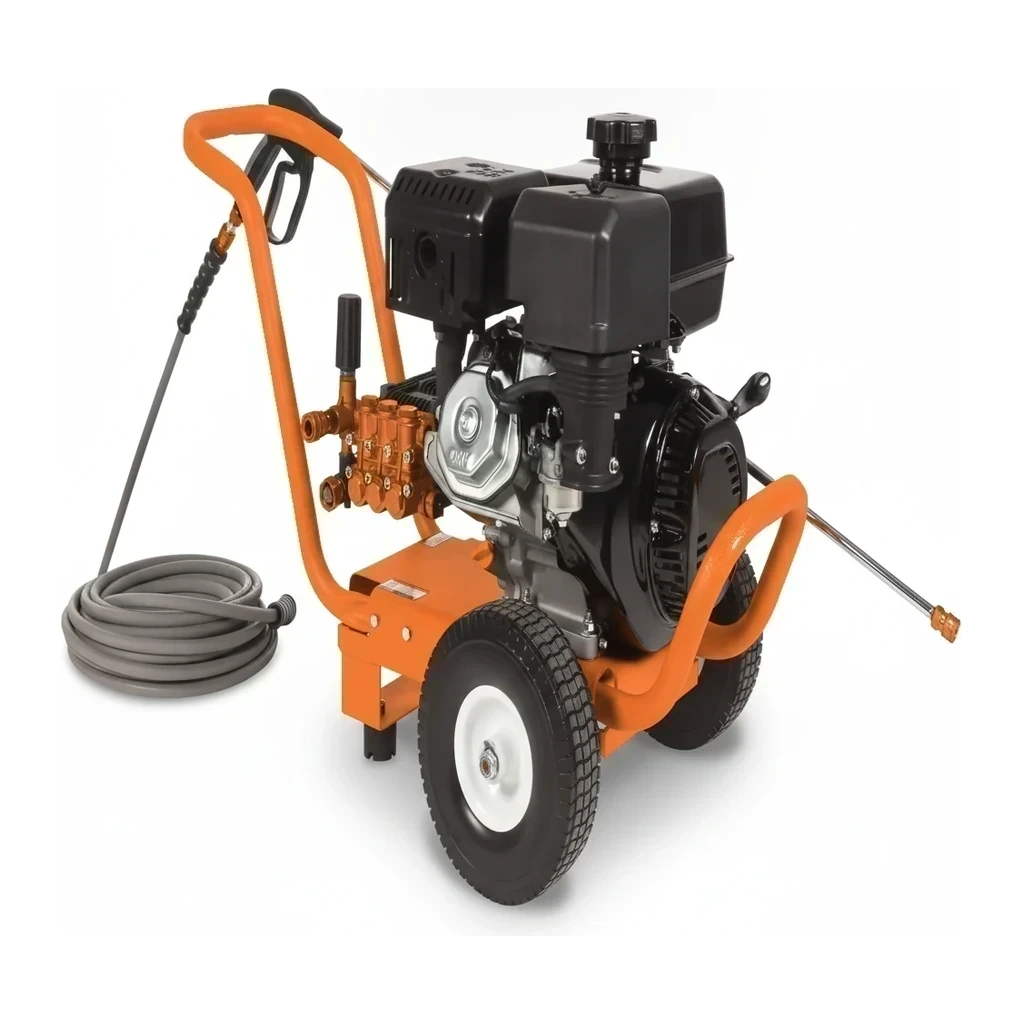
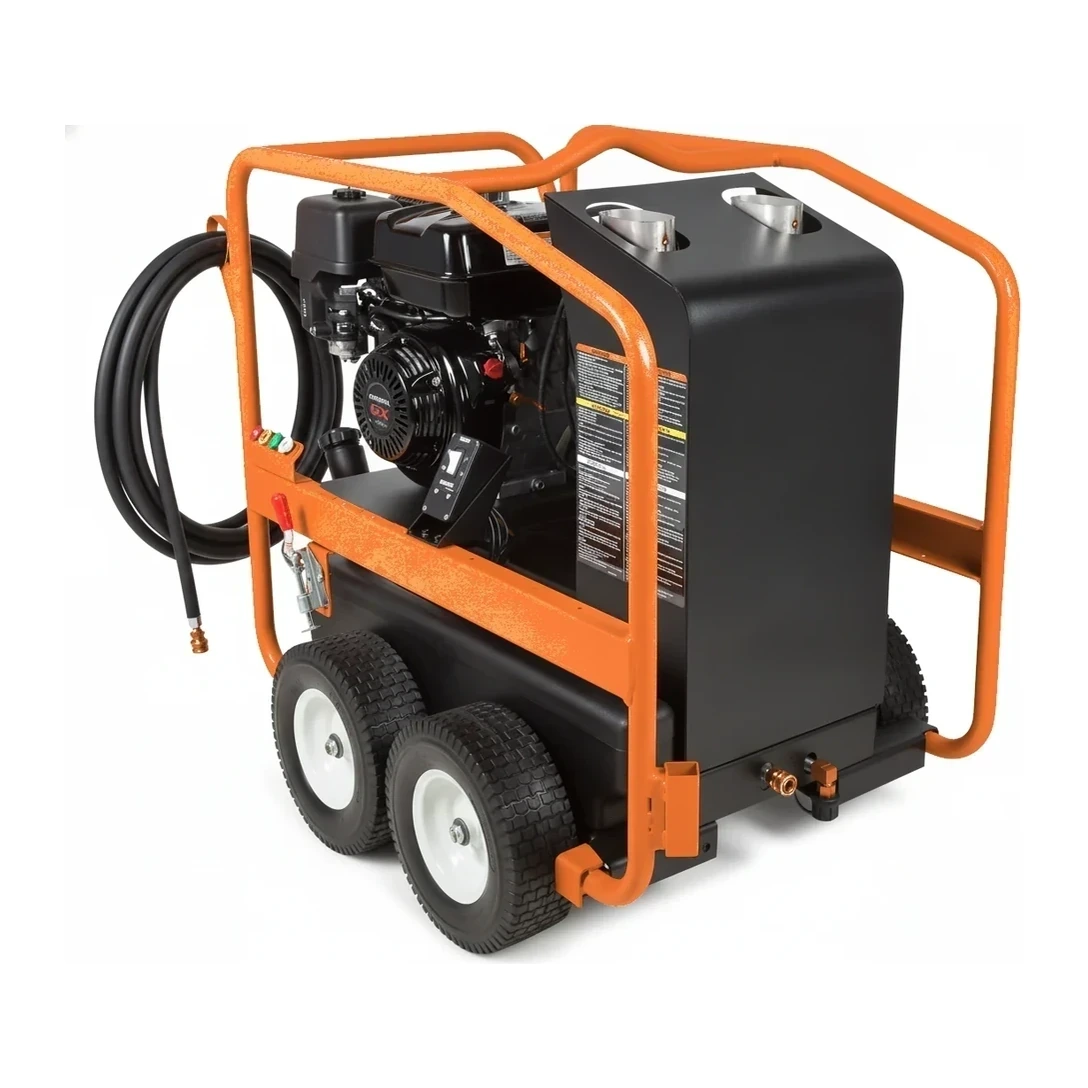
Pressure washers use a motorized pump to accelerate water from a supply source, creating a concentrated high-pressure stream delivered through a hose and wand assembly. The pump, powered by gasoline engines or electric motors, increases water pressure from typical supply levels of 40-60 PSI to operational pressures ranging from 1,000 to over 4,000 PSI. Nozzles with varying spray patterns control water dispersion, while hot water models incorporate heating elements or burners to raise water temperature for enhanced cleaning effectiveness on oil, grease, and heavy contamination.
Types & variants
- Cold Water Pressure Washer
- Standard pressure washers delivering ambient-temperature water at high pressure, suitable for general cleaning of surfaces, equipment, and structures where heat is not required
- Hot Water Pressure Washer
- Pressure washers equipped with heating systems that raise water temperature to 140-200°F or higher, providing superior cleaning power for oil, grease, and organic material removal
- Other
- Specialty pressure washing equipment including trailer-mounted units, steam cleaners, surface cleaners, and application-specific configurations not covered by standard cold or hot water classifications
Standards & certifications
- PWNA · Power Washers of North America
- Industry association providing operational guidelines, best practices, and technical standards for pressure washing equipment and applications
- ANSI/ISANTA · ANSI/ISANTA APS-1
- American National Standard for pressure washer safety covering design, construction, and operational safety requirements
- OSHA · 29 CFR 1910.242(b)
- Federal regulations addressing safe operation and maintenance of portable power-driven tools including pressure washers
Frequently asked
What is the difference between PSI and GPM ratings?
PSI (pounds per square inch) measures water pressure or force, while GPM (gallons per minute) measures water flow rate or volume. The combination of both determines cleaning power, calculated as cleaning units (PSI × GPM). Higher PSI provides impact for breaking loose contaminants, while higher GPM provides flushing action to remove debris.
When is hot water preferred over cold water pressure washing?
Hot water pressure washers are preferred for applications involving oil, grease, heavy organic buildup, or sanitation requirements. Elevated temperature breaks down oils and dissolves residues more effectively than cold water alone, often reducing cleaning time and chemical usage. Cold water units are generally sufficient for dirt, mud, loose paint, and general debris removal.
How are pressure washers sized for different applications?
Pressure washers are sized by PSI rating, GPM flow rate, and power source. Light-duty applications typically use 1,300-2,000 PSI at 1.5-2 GPM, medium-duty applications require 2,000-3,000 PSI at 2-3 GPM, and heavy-duty industrial applications utilize 3,000-4,000+ PSI at 3-5+ GPM. Electric models suit indoor or noise-sensitive environments, while gasoline-powered units provide portability for field operations.
What nozzle patterns are standard for pressure washers?
Pressure washers typically use color-coded nozzles with varying spray angles: red (0°) for concentrated spot cleaning, yellow (15°) for stripping and heavy cleaning, green (25°) for general purpose cleaning, white (40°) for wider coverage on delicate surfaces, and black for low-pressure detergent application. The narrower the angle, the higher the impact force on the surface.