

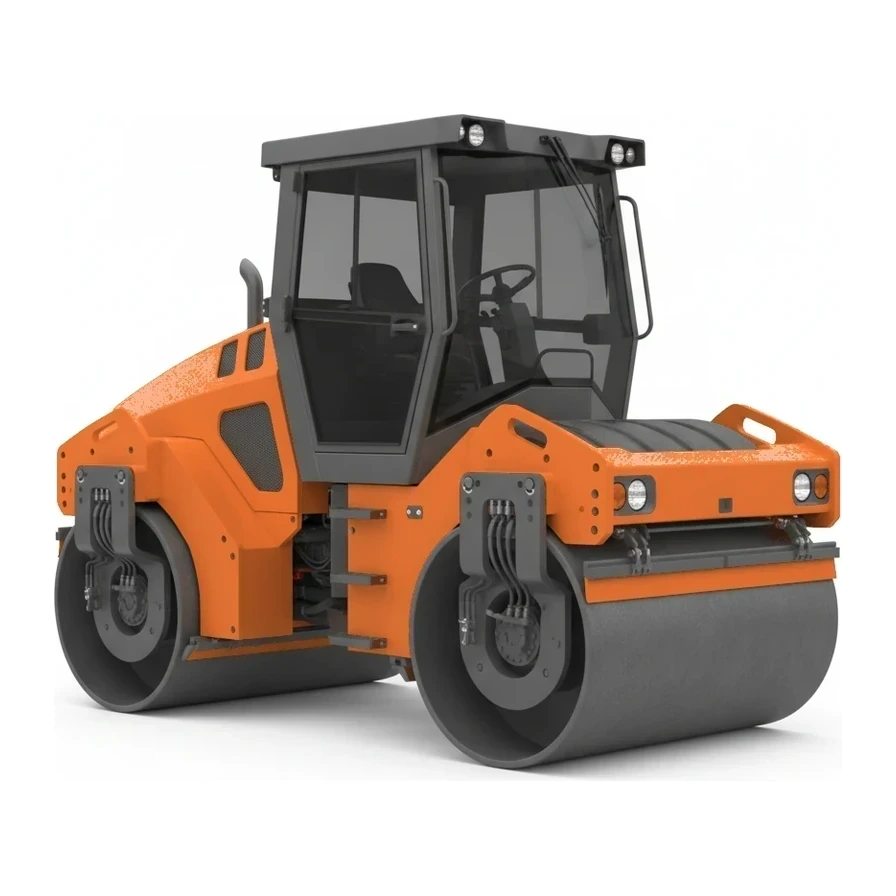
Up to 20,000 lb Pneumatic Tire Roller
Pneumatic tire rollers up to 20,000 lb—roughly 3,000 to 9,000 kg operating weight—are designed to seat and seal asphalt surfaces behind the initial breakdown roller on parking lots, city streets, and municipal paving projects. These ride-on machines use multiple rubber tires to apply uniform pressure, kneading the mat to achieve density and a smooth finish. This is currently the only size class documented in the pneumatic tire roller category.
Especificaciones clave
| Especificación | Rango típico | Qué significa |
|---|---|---|
| Operating weight | 3,000–8,850 kg (6,600–19,500 lb) | Determines compaction force and the depth of asphalt layer the machine can effectively seal |
| Tire configuration | Multiple pneumatic rubber tires | Rubber tires provide kneading action and eliminate aggregate fracture common with steel drums |
| Compaction method | Static weight plus tire flex | Relies on dead weight and tire deformation rather than vibration to achieve density |
Cómo elegir
This size class serves as the finish roller in most municipal and commercial asphalt applications, following behind vibratory or static steel-drum breakdown rollers. Machines in the lighter end of the range (around 3,000 kg) suit residential streets and thin-lift overlays, while units approaching 8,850 kg handle thicker mats on collector roads and large parking facilities. Since no smaller or larger pneumatic tire roller classes are currently cataloged, operators needing lighter finishing work typically turn to smaller steel-drum rollers, while heavier compaction demands may require vibratory breakdown rollers or ballasted pneumatic units outside this classification.
Lo que maneja este tamaño
- Sealing fresh asphalt mat on municipal street resurfacing projects
- Finish rolling parking lot paving behind breakdown compaction
- Kneading intermediate lifts on multi-layer commercial paving
- Compacting asphalt patches and utility cuts on city streets
- Finish pass on roadway shoulders and turn lanes
- Sealing joints and seams in asphalt overlay work
Seguridad y operación
- Operator platforms require ROPS/FOPS protection and clear sightlines to tire edges and rear zones
- Hot asphalt surfaces demand awareness of mat temperature to prevent tire pickup or surface tearing
- Backing maneuvers and turns require spotter assistance or mirrors due to limited rear visibility on pneumatic rollers
- Water spray systems, where fitted, reduce asphalt adhesion to tires and require periodic tank refilling
Transporte y logística
- Machines at the lower weight range transport on tandem-axle flatbed or equipment trailers rated for 10,000+ lb loads
- Heavier units approaching 8,850 kg require gooseneck or tag trailers with appropriate capacity and ramp systems
- Most models within this class load via ramps or low-angle approaches; walk-on trailer decks simplify loading
Alimentación
- Diesel engines power all documented models, with onboard fuel tanks supporting half-day to full-day operation
- No external power or fuel supply required on site; refueling performed with portable diesel containers or fuel service trucks
- Engine size scales with operating weight to maintain travel speed and compaction productivity
Preguntas frecuentes
What is the difference between a pneumatic tire roller and a steel-drum roller?
How does operating weight affect compaction performance?
Why are pneumatic tire rollers used as finish rollers?
Explorar por fabricante
Fuentes
Cada especificación se verifica con los datos publicados por el fabricante, con la fuente enlazada como referencia.
Up to 20,000 lb Pneumatic Tire Roller
3 modelos · Cada especificación citada a la fuente