

Compact Track Loader
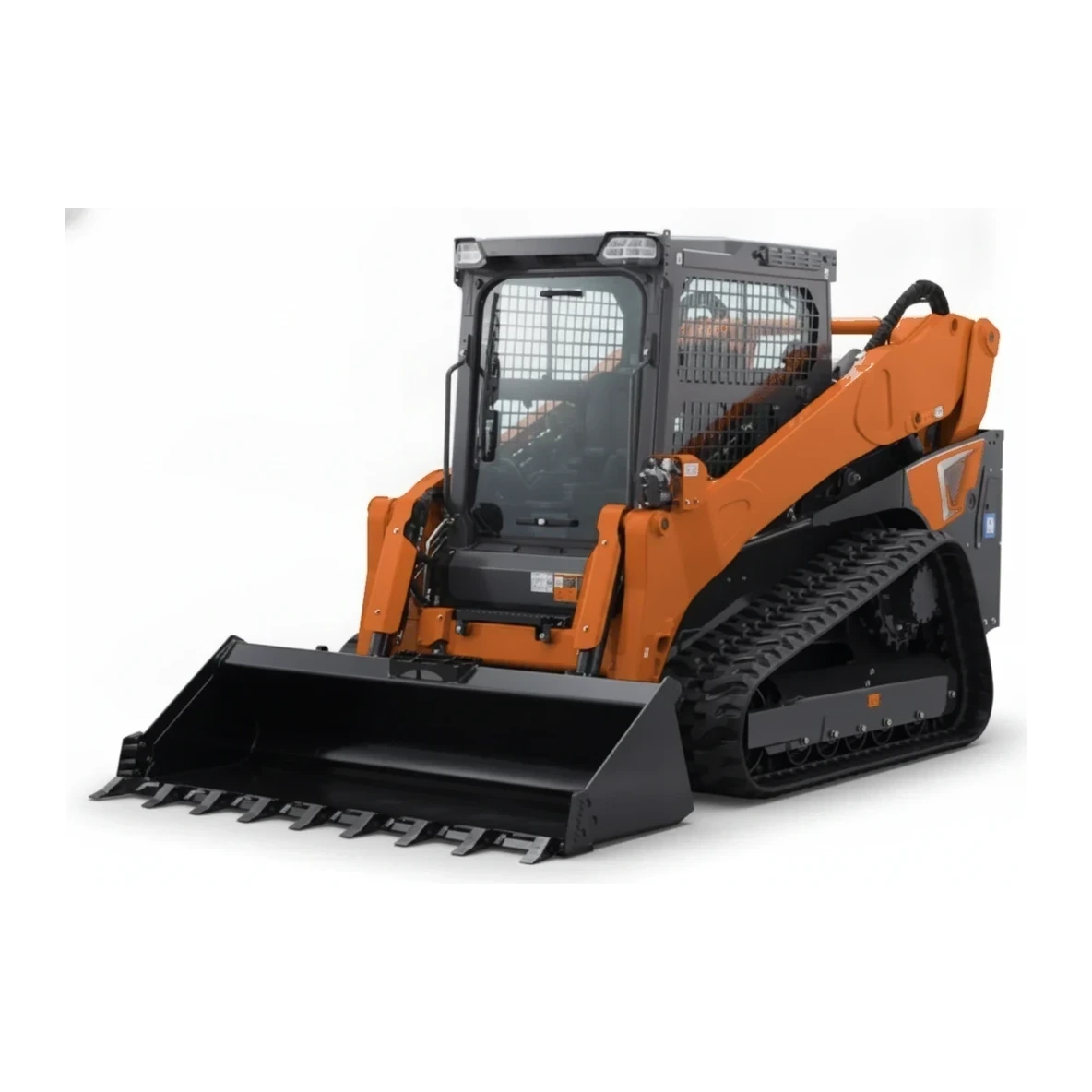
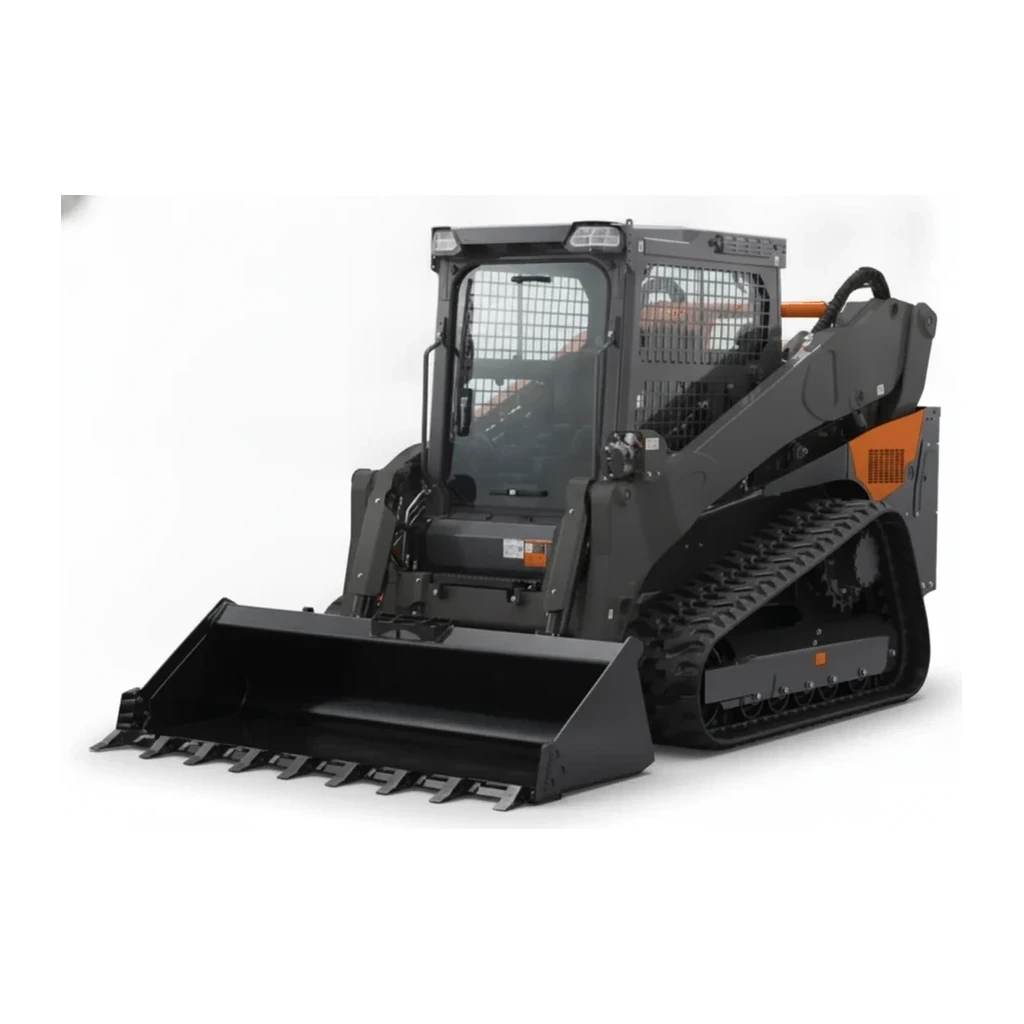
A compact track loader (CTL) is a small rigid-frame loader carried on rubber tracks instead of wheels, controlled by differential track speed like a skid steer. The track footprint gives it low ground pressure and traction on soft, wet or graded surfaces, which has made it the dominant compact loader configuration for dirt-work and landscaping.
Cat classes
Elija una clase de tamaño: la capacidad y el alcance varían en la gama.
Cómo funciona
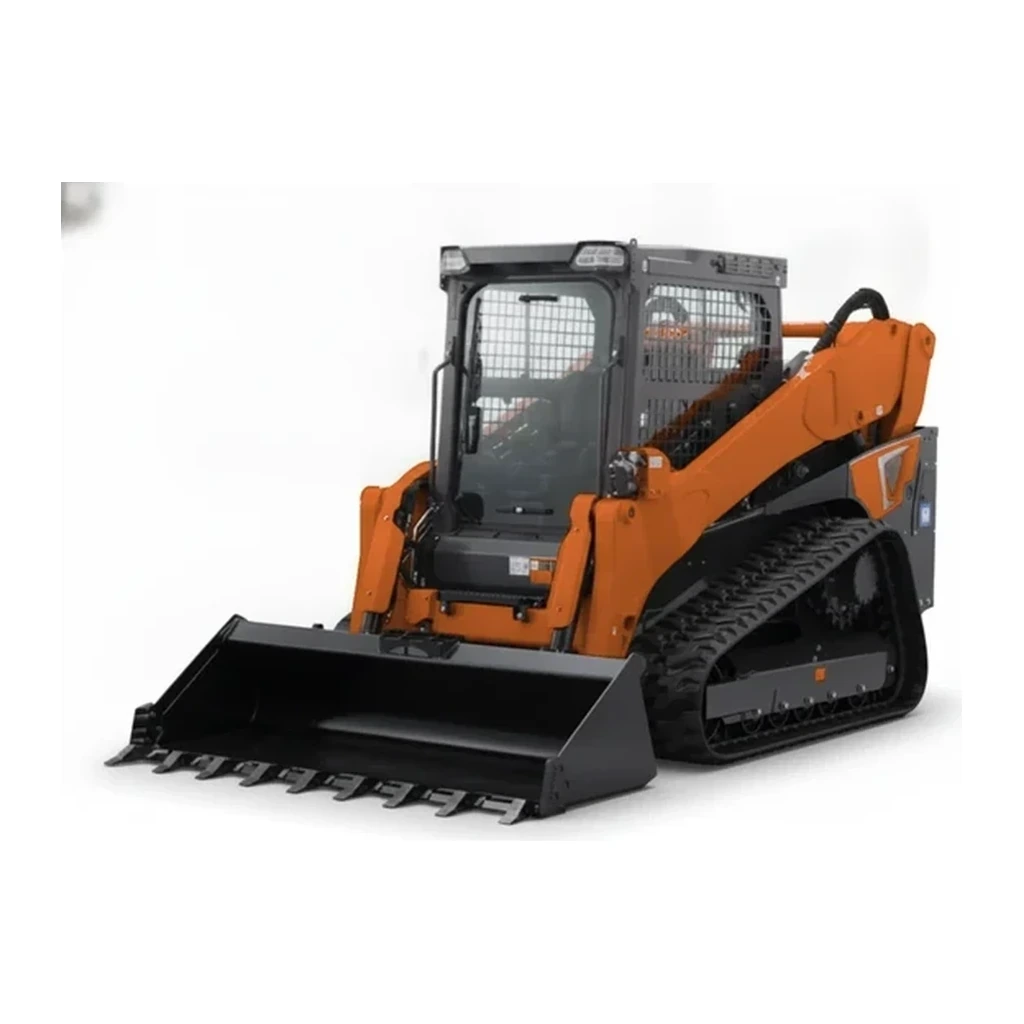
A diesel engine drives hydrostatic pumps feeding two track-drive motors and the lift/tilt circuit. Steering is by differential track speed—the machine skids through turns—while the loader arms raise along either a radial or vertical path and auxiliary hydraulic couplers power attachments at standard or high flow. The rubber track undercarriage, running on bogies and idlers, spreads machine weight to a fraction of a wheeled machine's ground pressure—catalog figures run 26.2–42.2 kPa—letting the machine work mud, sand and finished subgrade with minimal rutting. The same footprint provides the pushing traction that defines the class in grading and dozing duty.
Tipos y variantes
- Stand-on / walk-behind compact units
- Platform or walk-behind mini loaders for gate-access landscape work.
- Radial-lift machines
- Arms swing in an arc—best breakout and mid-height reach, favored for dirt work and grading.
- Vertical-lift machines
- Linkage keeps the load path vertical for higher lift and reach at full height, favored for truck loading and pallet work.
- Large-frame high-flow machines
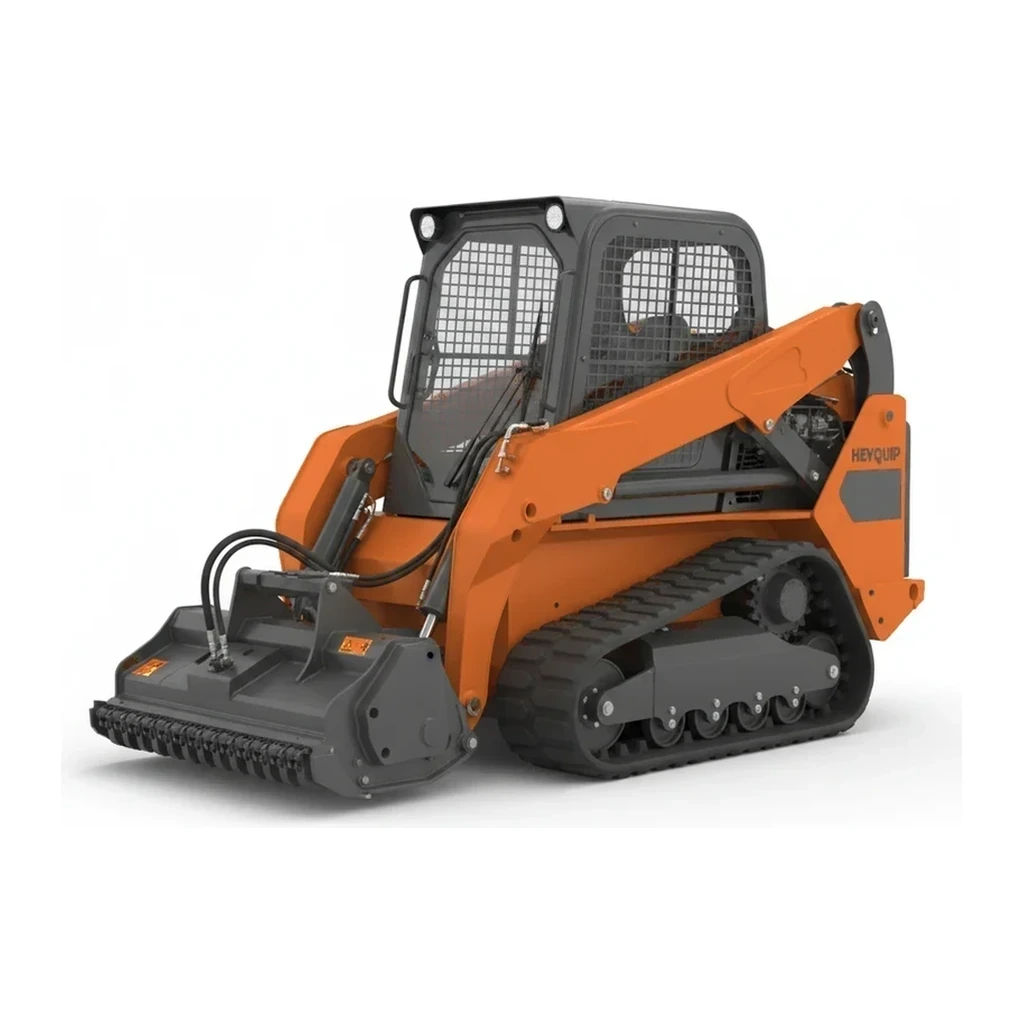
- High-flow auxiliary circuits for mulchers, cold planers and trenchers.
- Forestry-spec machines
- Guarded, high-flow variants dedicated to mulching and vegetation management.
Especificaciones clave
| Especificación | Rango típico | Qué significa |
|---|---|---|
| Operating weight | 1,296–363,216 lb (588–164,752 kg) | The industry bands the class at up to 1,500 lb, 1,500–2,200 lb, 2,200–3,000 lb and 3,000+ lb, from stand-on units to large-frame machines. |
| Engine power | 24.7–1,050 hp | High-flow attachment work concentrates at the upper end. |
| Rated operating capacity | 2,593–4,971 lb (1,176–2,255 kg) | Working load limit, conventionally 50% of tipping load for tracked machines. |
| Ground pressure | 26.2–42.2 kPa | The class's defining advantage—low enough to work soft and finished ground that wheeled loaders would rut. |
| Track width | 12.6–17.7 in (320–450 mm) | Wider tracks lower ground pressure; narrower tracks improve maneuvering and reduce width for access. |
| Fuel tank capacity | 29.3–166.2 L | Scales with frame size, from stand-on units to full-day large-frame machines. |
Cómo la industria lo dimensiona
Compact track loaders are sized by operating weight and by rated operating capacity (ROC), which for tracked machines is conventionally set at 50% of tipping load. The industry's bands—up to 1,500 lb, 1,500–2,200 lb, 2,200–3,000 lb and 3,000+ lb—separate the stand-on/walk-behind landscape units from the cab-equipped skid-steer-frame machines that make up the largest band. Within the top band, the industry further distinguishes small-, mid- and large-frame machines by ROC and auxiliary flow.
Aplicaciones
- Grading, back-dragging and finish dirt work on building pads and lawns
- Material handling of soil, gravel, mulch and pallets across soft ground
- Attachment work: augers, trenchers, mulchers, cold planers, snow equipment
- Landscape construction through gate-width access with the compact bands
- Land clearing and vegetation management with forestry packages
- Winter services on surfaces where tire chains would damage pavement
Seguridad y operación
- Load, travel and turn with the bucket low; the short wheelbase makes raised-load travel the class's dominant tip-over mode.
- Enter and exit only through the front—over the attachment—with arms down or supported on the arm stops.
- Keep ground personnel out of the work area; visibility to the rear and sides is limited on all frames.
- Respect ROC (50% of tipping load) when handling attachments, whose own weight subtracts from usable capacity.
- On stand-on units, operate from the platform with both controls—never walk beside a moving machine.
Normas y certificaciones
- ISO · ISO 14397-1
- Rated operating capacity determination for loaders—the basis of ROC figures.
- ISO · ISO 3471 / ISO 3449
- ROPS and FOPS performance requirements for the operator station.
- EPA · Tier 4 Final (40 CFR Part 1039)
- Emissions certification for current nonroad diesel engines.
Preguntas frecuentes
What is the difference between a compact track loader and a skid steer?
What does rated operating capacity mean for a CTL?
What are the smallest machines (up to 1,500 lb) for?
What is high flow and when is it needed?
Comparar modelos populares
Buscar por especificación →Normalizado a las mismas unidades. Un guion significa que el valor no fue publicado.
| Modelo | Peso operativo | Profundidad de excavación máx | Alcance máx | Potencia del motor |
|---|---|---|---|---|
| Bobcat T550 | - | - | - | 25 hp |
| Bobcat T630 | - | - | - | 74 hp |
| Bobcat T740 | - | - | - | 74 hp |
| Case TV370B | - | - | - | 74 hp |
| Case TV620B | - | - | - | 114 hp |
| Caterpillar 259D3 | 8,986 lb (4,076 kg) | - | - | 72 hp |
Equipos relacionados
Explorar por fabricante
Fuentes
Cada especificación se verifica con los datos publicados por el fabricante, con la fuente enlazada como referencia.