

Glass and Glazing Manipulator
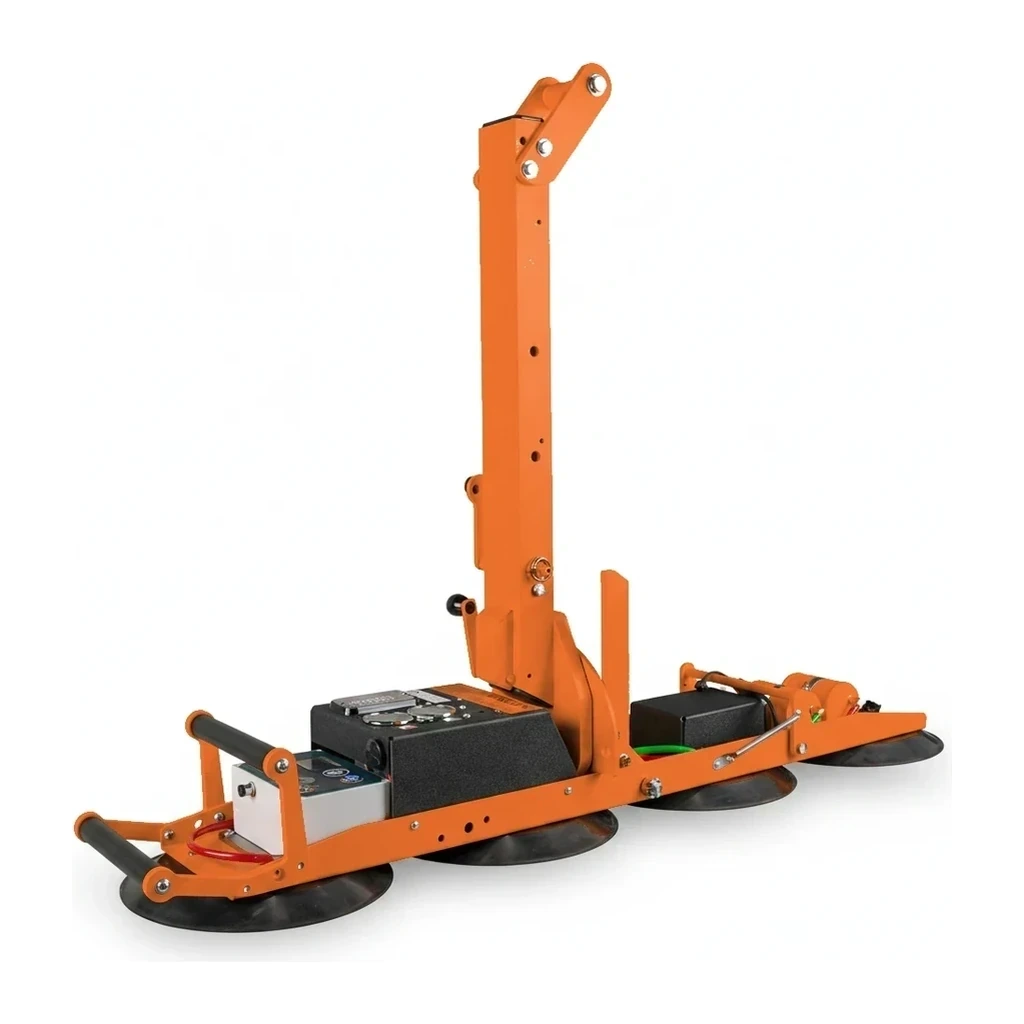
A glass and glazing manipulator is a specialized lifting device equipped with vacuum suction pads designed to safely handle, rotate, and position large glass panels, curtain walls, and architectural glazing materials. These machines enable precise placement of fragile sheet materials that would be impractical or unsafe to install manually. Common in commercial construction and façade work, they reduce breakage and labor risk during glazing installation.
Cat classes
Elija una clase de tamaño: la capacidad y el alcance varían en la gama.
Cómo funciona
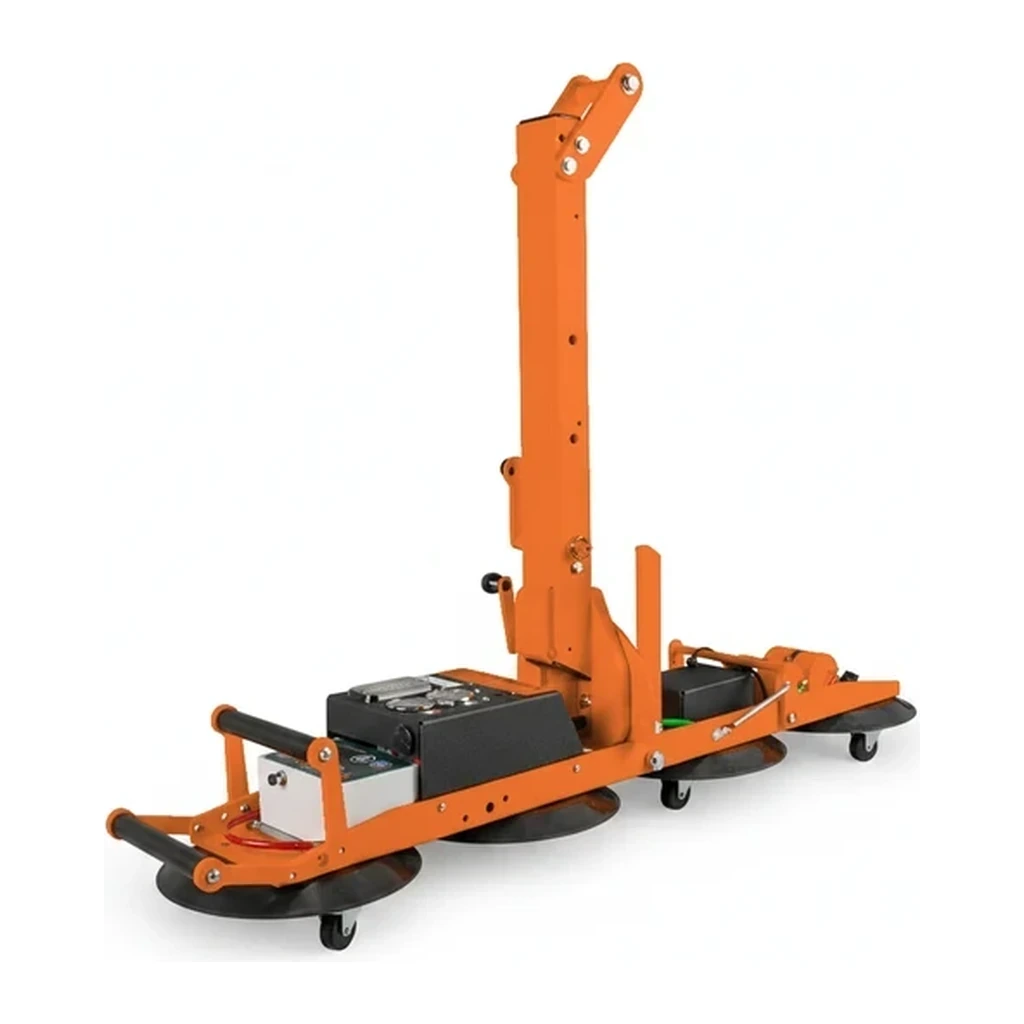
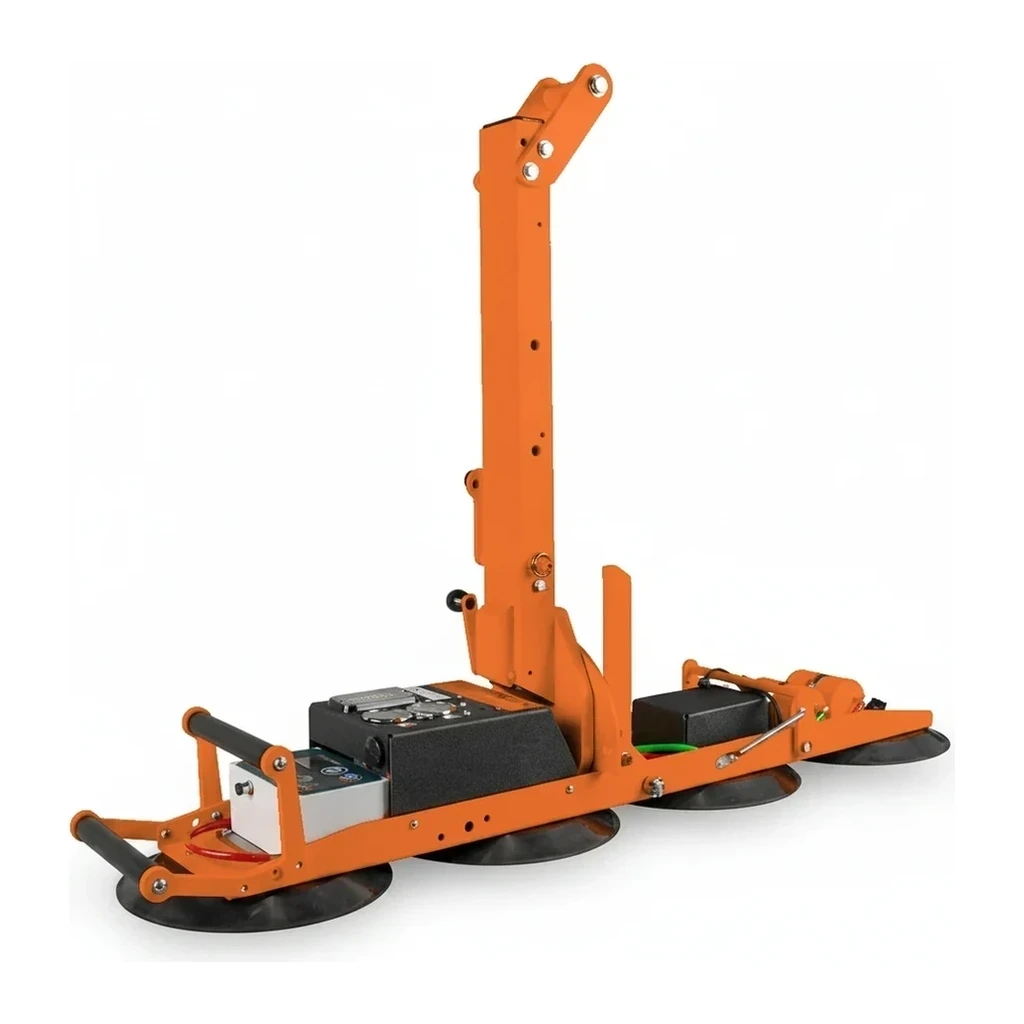
The manipulator uses a vacuum pump system to create suction across one or more contact pads, securely gripping the surface of glass or smooth panels. An articulating frame allows the operator to tilt, rotate, and reposition the load through 90 degrees or more, transitioning panels from horizontal transport to vertical installation orientation. Control is typically via pendant or onboard console, with vacuum sensors monitoring seal integrity throughout the lift. Most units are powered electrically or by battery, and many are designed to mount on trailers, forklifts, or telescopic handlers for mobility. The vacuum system incorporates redundancy and alarms to prevent load drop in the event of power loss or seal failure.
Tipos y variantes
- Trailer-Mounted Manipulator
- Self-contained units on towable chassis, providing independent mobility and often powered by onboard generators or battery packs.
- Forklift Attachment Manipulator
- Vacuum frames designed to mount to forklift tines or quick-attach plates, leveraging existing site equipment for lifting and transport.
- Telescopic Handler Attachment
- Manipulators compatible with telehandler mounting systems, enabling extended reach for high-elevation façade work.
- Mini / Compact Glazing Robot
- Lightweight, battery-powered units suited to interior partitions, storefronts, and confined job sites where space is limited.
- Rotating Panel Lifter
- Emphasizes 360-degree rotation capability for complex angular installations and cladding orientations.
Especificaciones clave
| Especificación | Rango típico | Qué significa |
|---|---|---|
| Load Capacity | 375-800 kg (825-1,760 lb) | Maximum safe working load of the vacuum pad assembly, determining the size and weight of glass or panel the unit can handle. |
| Vacuum Pad Configuration | 2-8 pads | Number and layout of suction points; more pads distribute load and accommodate irregular or large panel geometries. |
| Rotation Range | 0-90° or 360° | Degree of tilt or spin available to transition panels from flat to vertical or achieve precise angular placement. |
| Power Source | Battery, 110/220 V AC, hydraulic | Energy system driving the vacuum pump and hydraulic actuators; battery units offer cordless operation on active job sites. |
| Maximum Panel Dimension | Up to 3.5 × 6 m | Largest sheet size the frame and pads can safely accommodate, critical for curtain-wall and architectural glass. |
Cómo la industria lo dimensiona
The industry sizes glass and glazing manipulators primarily by load capacity in pounds or kilograms. Machines rated under 600 lb (~270 kg) serve residential and storefront panes that two workers could not safely set by hand. Mid-range units from 600 to 1,500 lb (~270-680 kg) handle commercial curtain-wall units and heavy insulated glass. Heavy-duty manipulators above 1,500 lb are deployed for oversized architectural glass and stone panels. Panel dimension limits and vacuum pad count also influence selection, particularly for jobs requiring wide or tall sheets.
Aplicaciones
- Installation of commercial curtain-wall and storefront glazing systems
- Positioning of insulated glass units (IGUs) in high-rise construction
- Handling of large architectural stone and cladding panels
- Interior partition and office glazing in tenant improvement projects
- Façade renovation and glass replacement on existing buildings
- Transport and staging of fragile glass sheets in fabrication yards
Seguridad y operación
- Operators must verify vacuum seal integrity and pad cleanliness before each lift to prevent load detachment.
- Load ratings must not be exceeded; weight of frame, hardware, and any coatings on the glass must be accounted for.
- Work zones below suspended glass should be barricaded to protect personnel from potential falling material.
- Battery charge levels and backup vacuum reserves should be monitored continuously during lifts.
- Wind speed limits and environmental conditions must be observed, particularly for high-elevation or large-surface-area panels.
Normas y certificaciones
- OSHA · 29 CFR 1926.753
- Steel erection standard addresses safe handling and hoisting of materials, applicable to curtain-wall and panel installation.
- ANSI · ANSI/ASSP A10.8
- Scaffolding safety standard relevant to access and fall protection during glazing operations at height.
- ASME · B30.20
- Below-the-hook lifting devices standard; vacuum lifters fall under this scope for design and inspection requirements.
- GANA (Glass Association of North America) · Glazier's Manual
- Industry best practices for safe glazing installation, including recommendations for mechanical lifting aids.
Preguntas frecuentes
How does a glass manipulator differ from a standard vacuum lifter?
What happens if vacuum pressure is lost during a lift?
Can manipulators handle materials other than glass?
What surface conditions prevent effective vacuum grip?
Equipos relacionados
Explorar por fabricante
Fuentes
Cada especificación se verifica con los datos publicados por el fabricante, con la fuente enlazada como referencia.