

Rough Terrain Scissor Lift
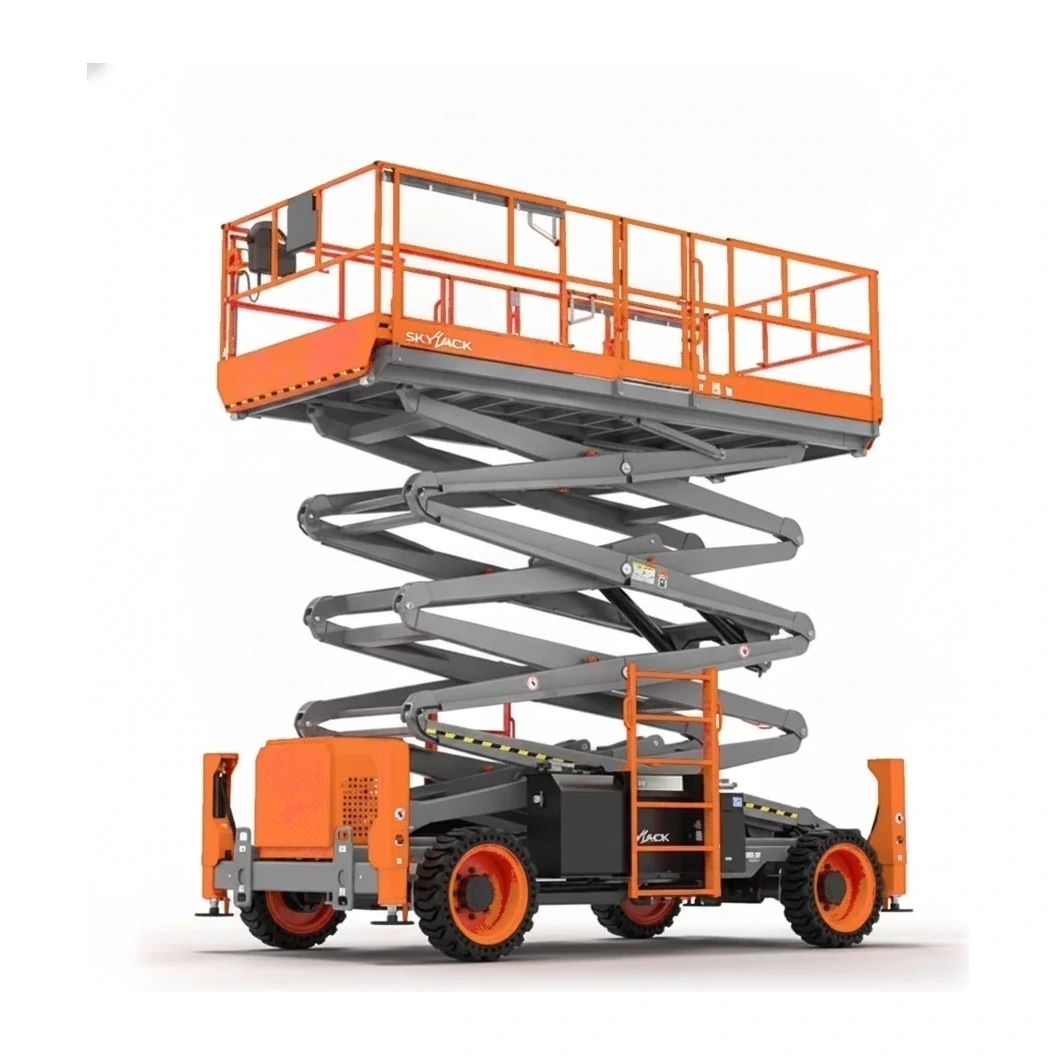
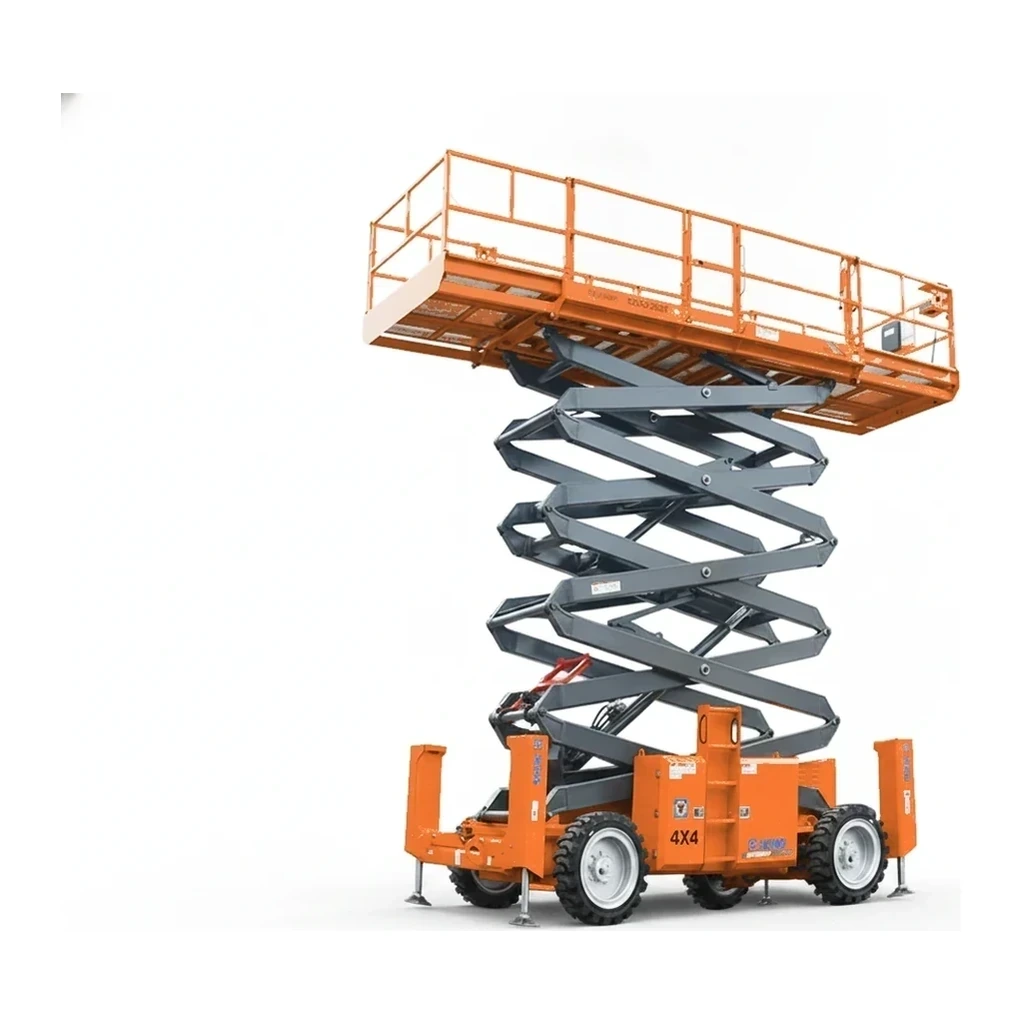
A rough terrain scissor lift is an engine-powered mobile elevating work platform that raises a large guarded deck vertically on a scissor mechanism, built with four-wheel drive, high ground clearance, and lugged tires for unpaved sites. It is the standard vertical-access machine on outdoor construction projects where slab electric scissors cannot travel or work.
Cat classes
Elija una clase de tamaño: la capacidad y el alcance varían en la gama.
Cómo funciona
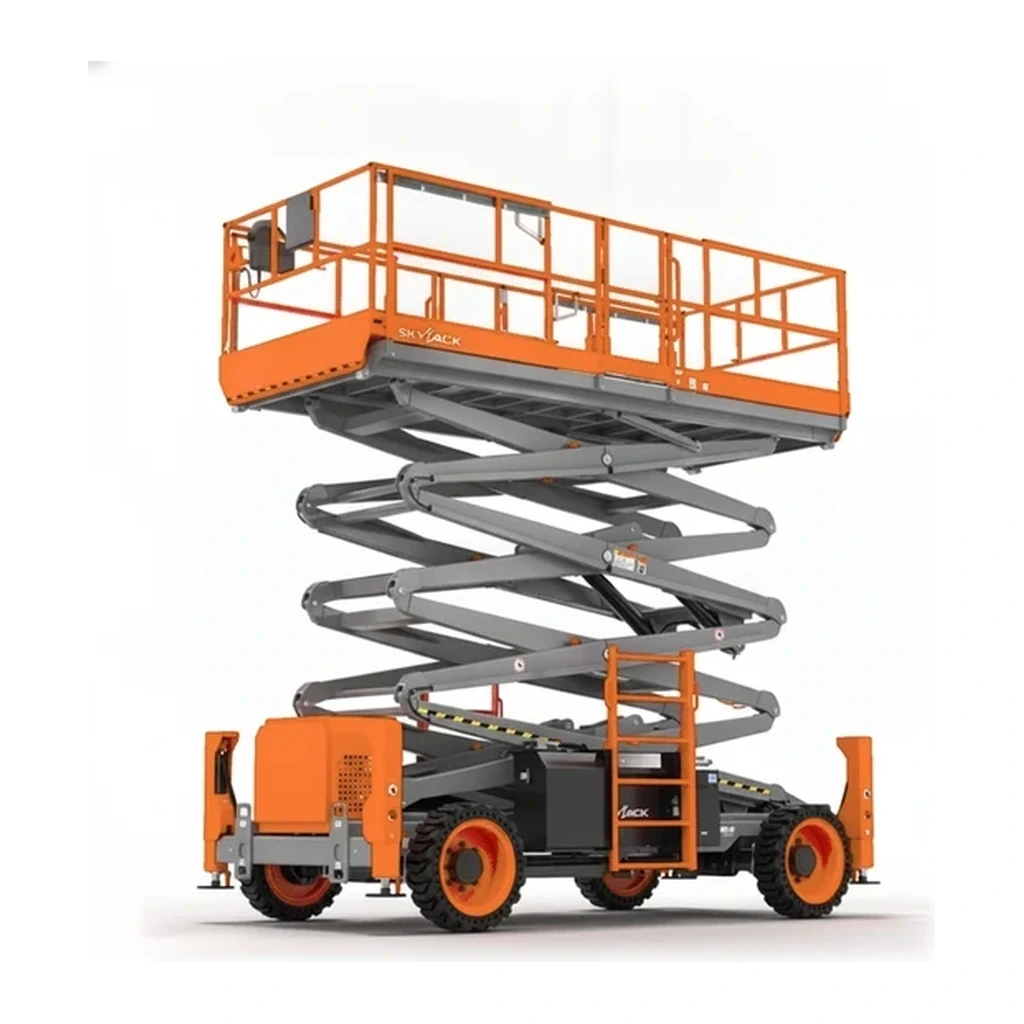
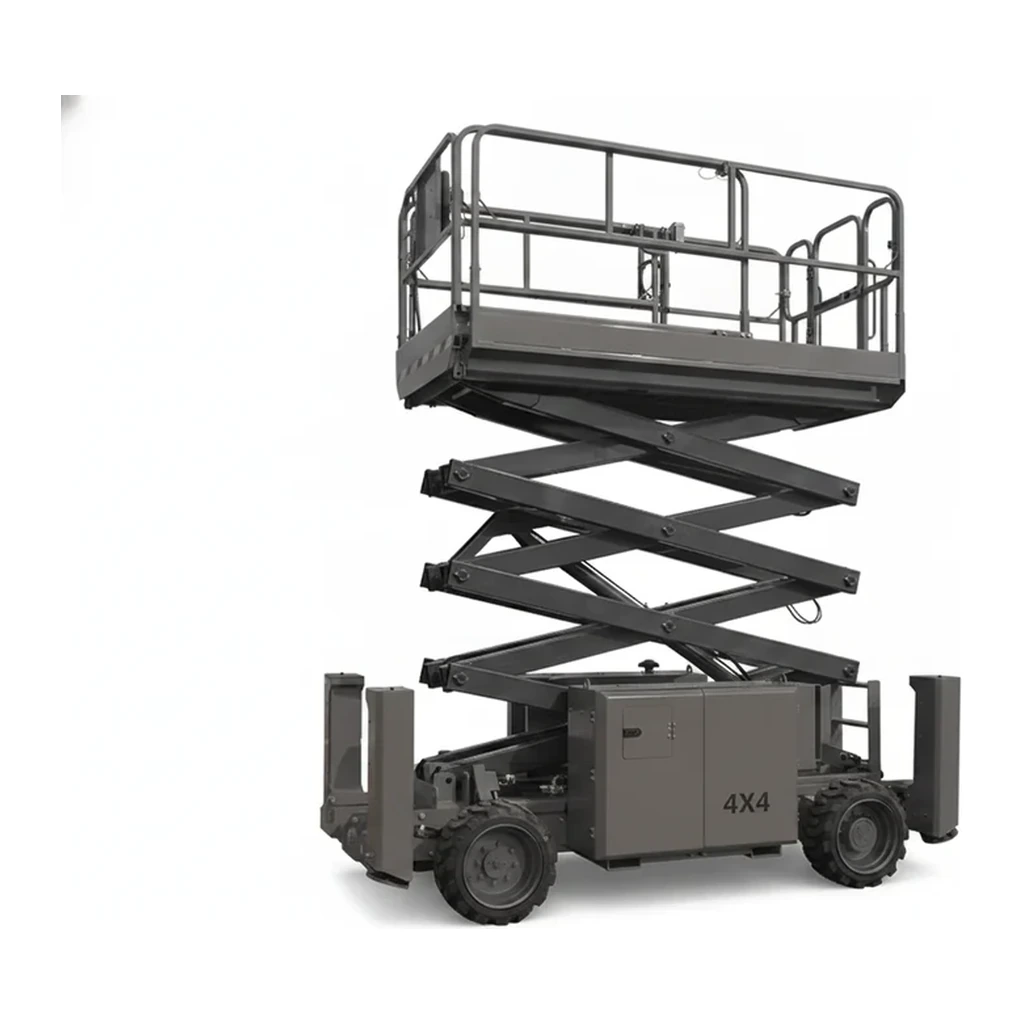
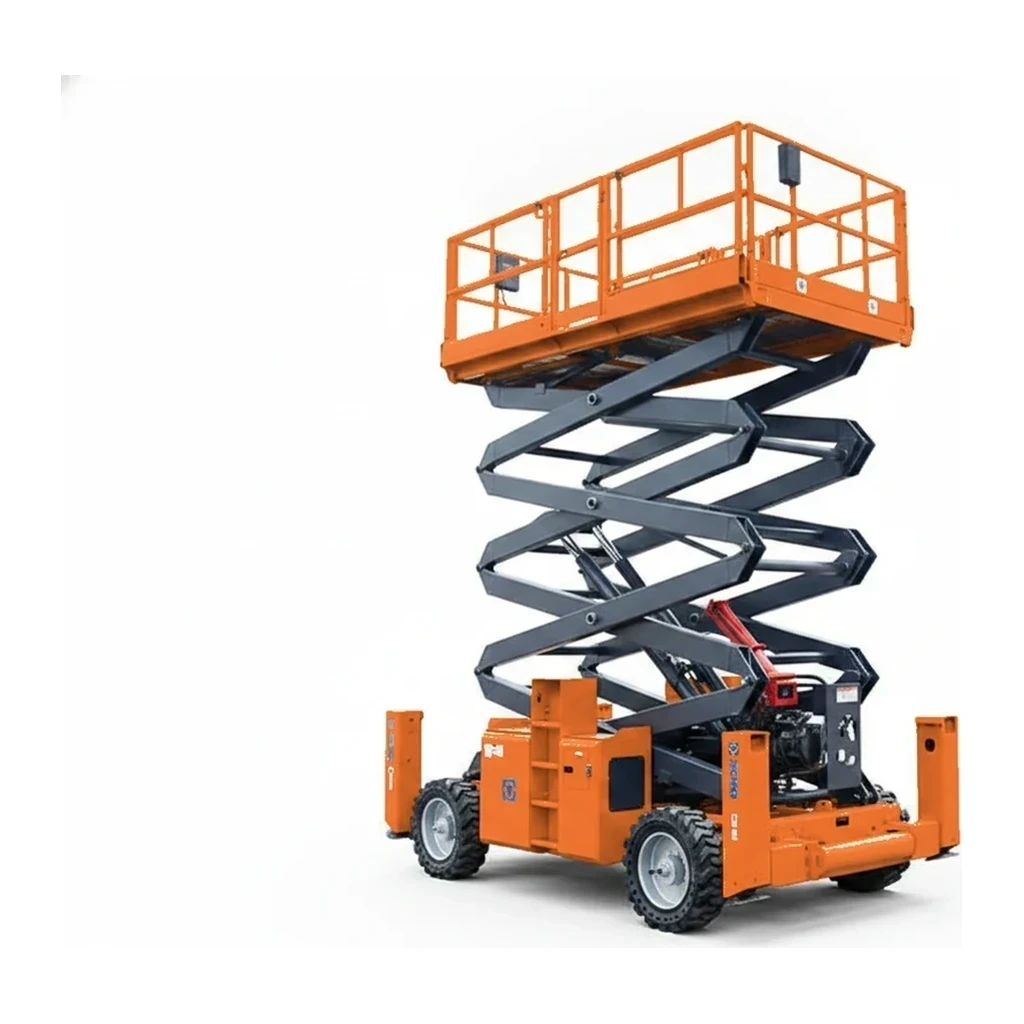
A diesel engine (17.0–61.1 kW across listed models) powers a hydraulic system that drives the wheels and extends the scissor stack. Oscillating axles and deep-tread tires keep all four wheels loaded over ruts and grade breaks, and many models add hydraulic leveling jacks or outriggers that plumb the chassis on uneven ground before the platform rises. The operator drives and lifts from the platform console. Gradeability in the 25–50% range applies to stowed travel—climbing ramps and site grades with the deck down—while elevation is only permitted within the machine's level tolerance, enforced by tilt interlocks. Wide decks with roll-out extensions carry multiple workers, tools, and staged material at height.
Tipos y variantes
- Diesel 4WD scissors
- The core of the class: four-wheel-drive units with oscillating axles for graded and unfinished sites.
- Dual-fuel and gas models
- Engine-powered variants that can run on gasoline or propane where diesel exhaust or refueling logistics are a constraint.
- Electric and hybrid rough terrain scissors
- Battery-drive units with rough terrain running gear, for low-emission outdoor work and sites with noise limits.
- High-capacity wide-deck models
- Units at the top of the class with platform capacities up to 2,500 kg for staging material and multi-trade crews at height.
- Leveling-jack equipped units
- Models with hydraulic outriggers that extend the usable ground envelope by leveling the chassis before lift.
Especificaciones clave
| Especificación | Rango típico | Qué significa |
|---|---|---|
| Working height | 12–76 ft (3.7–23.2 m) | The height at which work can be performed; platform heights span the full range across the class. |
| Platform capacity | 299–2,500 kg (660–5,500 lb) | Large decks in this class are rated to stage materials and carry several workers, far above typical electric-scissor budgets. |
| Gradeability | 25–50% | Maximum stowed climbing slope for ramps and site grades. Elevating is only allowed with the chassis level within manufacturer limits. |
| Engine power | 17.0–61.1 kW | Sets drive performance on soft ground and grades, and hydraulic flow for lift speed. |
| Operating weight | 234–44,339 lb (106–20,112 kg) | Drives trailer selection, ground-bearing checks, and whether a CDL-class hauler is needed at the top of the range. |
| Drive configuration | 2WD or 4WD with oscillating axles | Four-wheel drive with oscillating axles is the norm for true rough terrain work; some units offer 2WD for firmer sites. |
Cómo la industria lo dimensiona
The industry sizes rough terrain scissors by platform height in bands—up to 34 ft, 34–45 ft, 45–55 ft, and 55+ ft—then by platform capacity and deck size for the intended crew and material load. Site factors weigh heavily: ground condition and slope dictate whether leveling jacks are needed, and machine weight at the larger bands drives transport and ground-bearing planning. In MEWP classification these are Group A machines, and most are Type 3 (drivable from the platform).
Aplicaciones
- Exterior building envelope work: siding, glazing, cladding, and painting on new construction
- Steel erection and structural connections on commercial and industrial builds
- Mechanical and electrical installation on sites before paving or slab completion
- Roofing and truss access on low- and mid-rise structures
- Bridge, plant, and infrastructure maintenance over unpaved or broken ground
- Sign, lighting, and facade installation on outdoor commercial sites
Seguridad y operación
- Operators require MEWP training and machine-specific familiarization per ANSI A92.24 and CSA B354 before use, including the leveling-jack procedure where fitted.
- Gradeability is a travel rating only: the machine must be level within manufacturer tolerance before elevating, and tilt alarms and interlocks must never be bypassed.
- Ground assessment is required each setup—compaction, trench edges, backfill, and underground voids all change wheel and jack loading.
- Wind limits apply to elevated work outdoors; deck extensions and sheet materials act as sails and reduce the allowable wind speed.
- Guardrails are the primary fall protection; occupants keep both feet on the deck, and site rules may additionally require a harness.
Normas y certificaciones
- ANSI/SAIA · A92.20 / A92.22 / A92.24
- U.S. MEWP design, safe use, and training standards covering rough terrain scissor lifts.
- CSA · B354.6 / B354.7 / B354.8
- Canadian MEWP standards for design, safe use, and operator training.
Preguntas frecuentes
Can a rough terrain scissor lift work on a slope?
How high do rough terrain scissor lifts go?
Rough terrain scissor or boom lift—which one for outdoor work?
Are electric rough terrain scissor lifts available?
Comparar modelos populares
Buscar por especificación →Normalizado a las mismas unidades. Un guion significa que el valor no fue publicado.
| Modelo | Altura de trabajo | Capacidad de plataforma |
|---|---|---|
| JLG ERT2669 | 26.2 ft (8.0 m) | 1,499 lb (680 kg) |
| JLG ERT4769 | 47 ft (14.3 m) | 800 lb (363 kg) |
| JLG ERT4069 | 40.2 ft (12.3 m) | 800 lb (363 kg) |
| JLG RT2669 | 26.2 ft (8.0 m) | 1,499 lb (680 kg) |
| JLG RT3369 | 32 ft (9.8 m) | 1,001 lb (454 kg) |
| Genie GS-3390 | - | 2,500 lb (1,134 kg) |
Equipos relacionados
Explorar por fabricante
Fuentes
Cada especificación se verifica con los datos publicados por el fabricante, con la fuente enlazada como referencia.