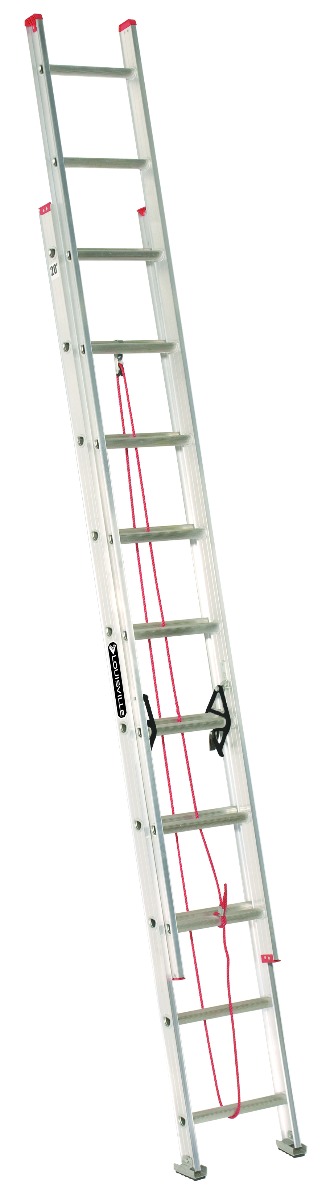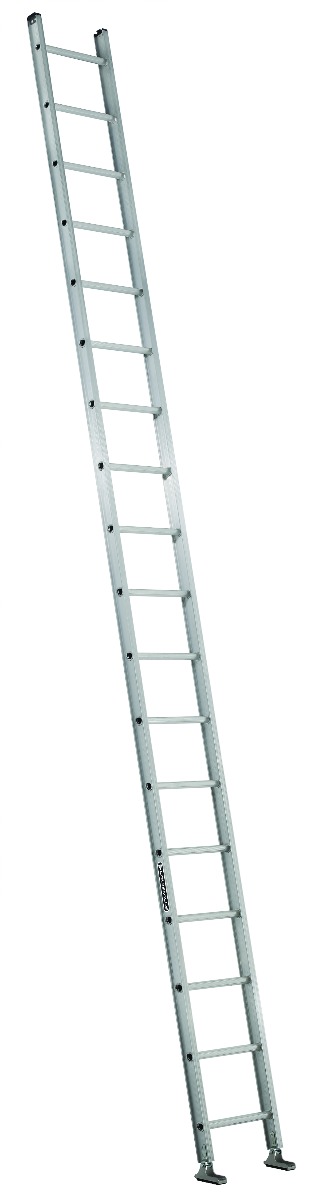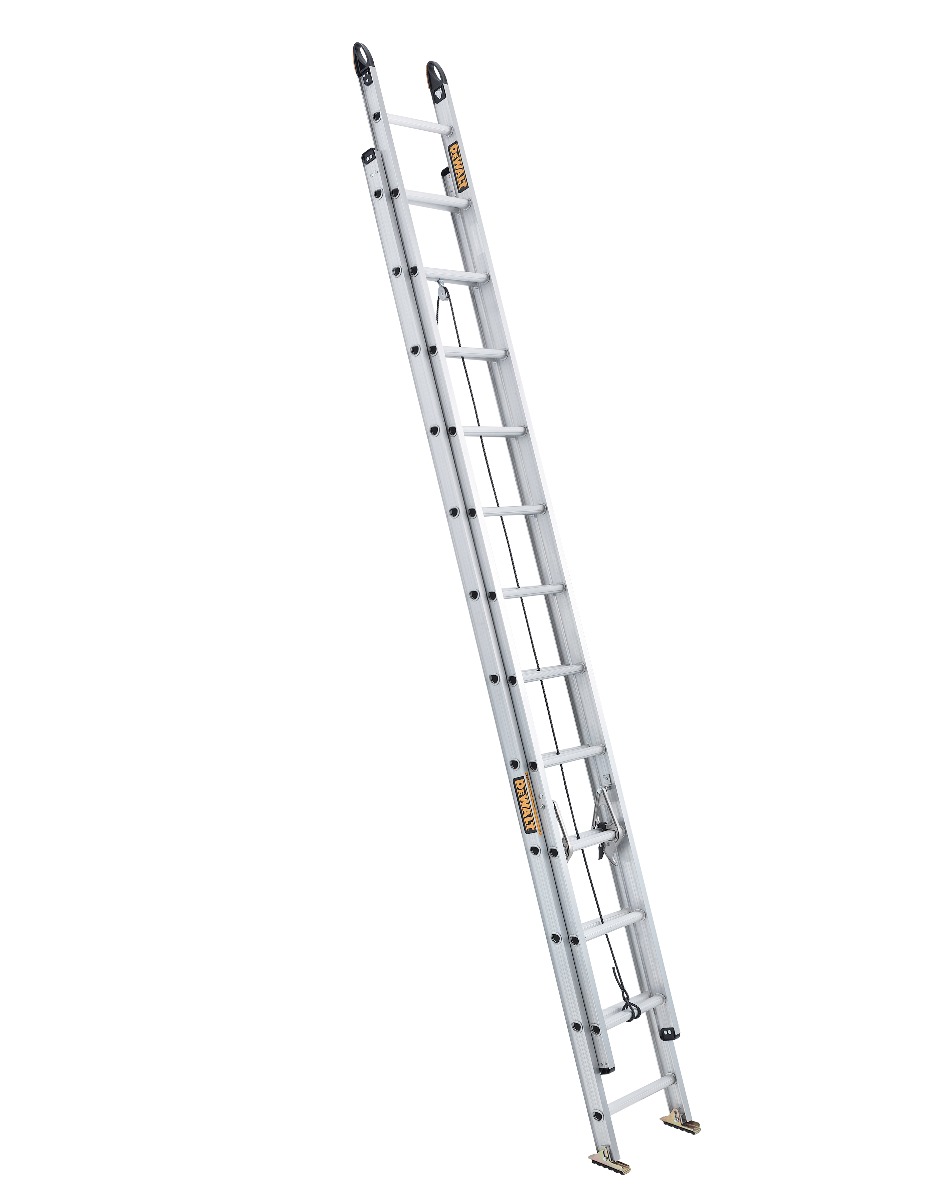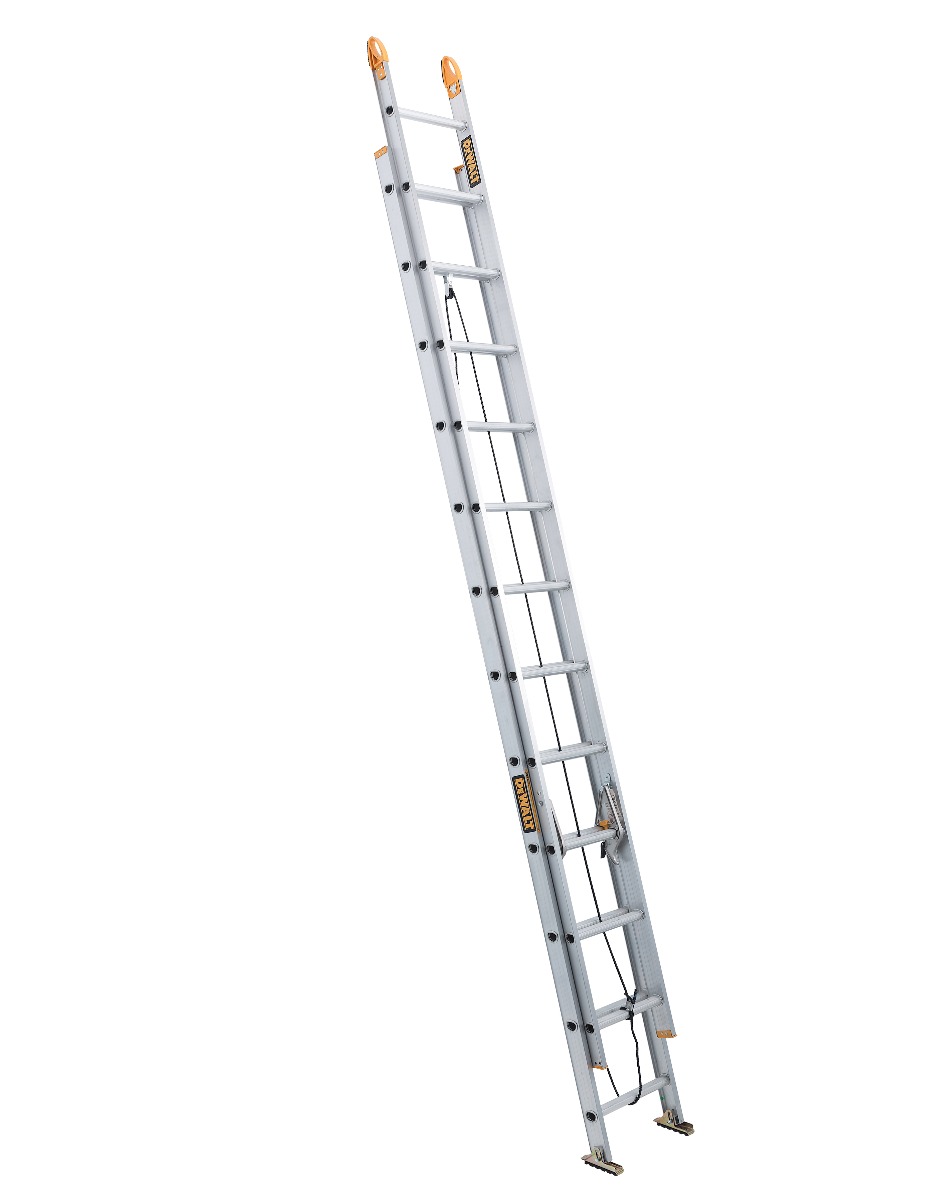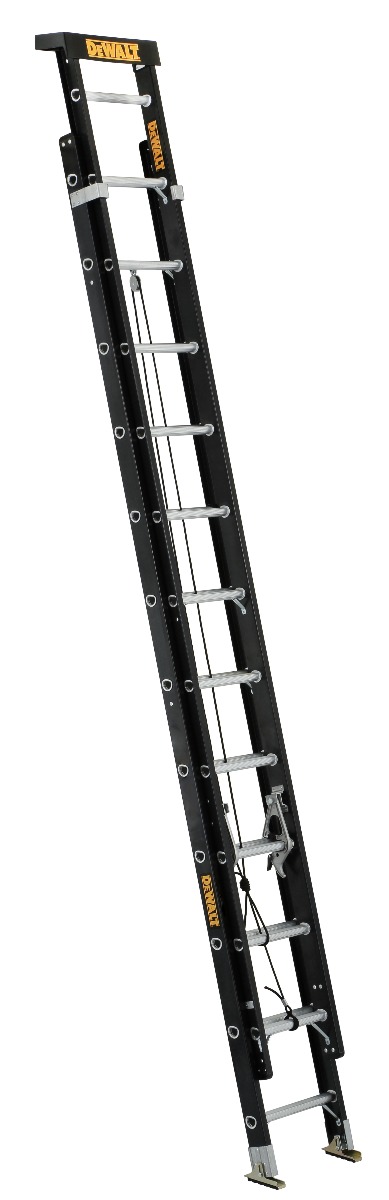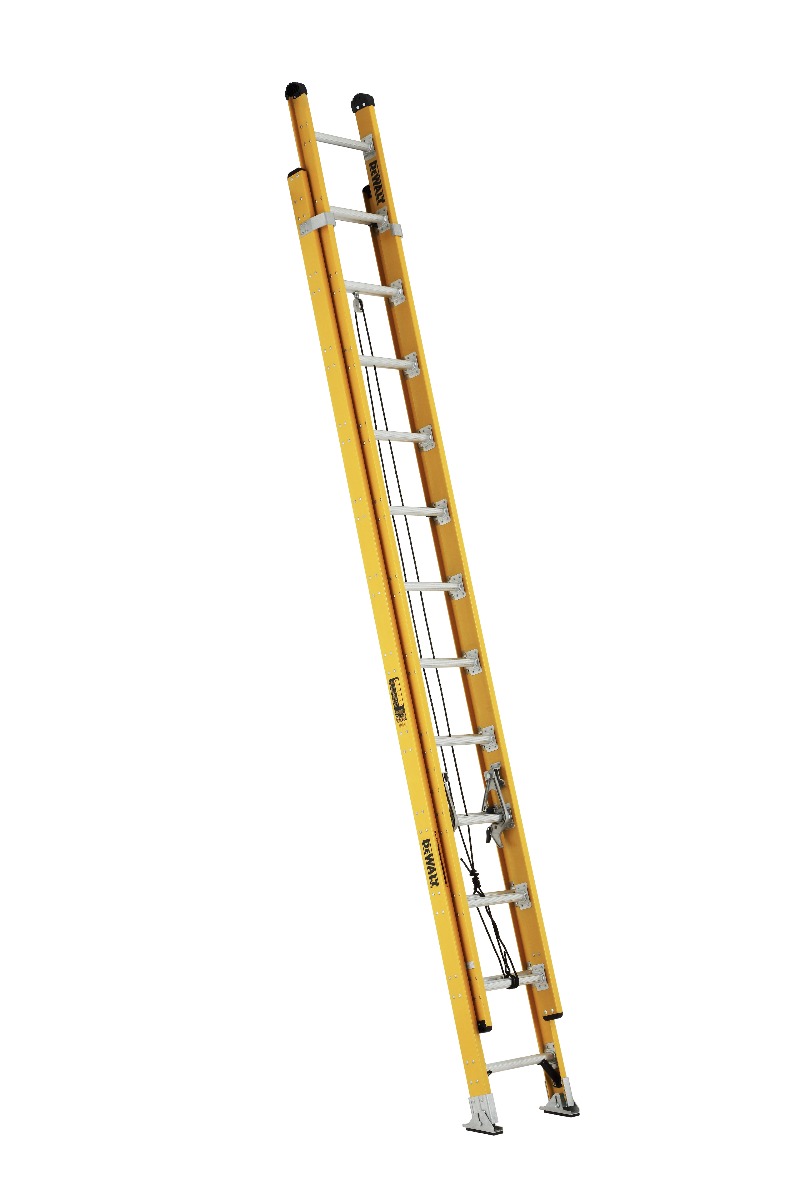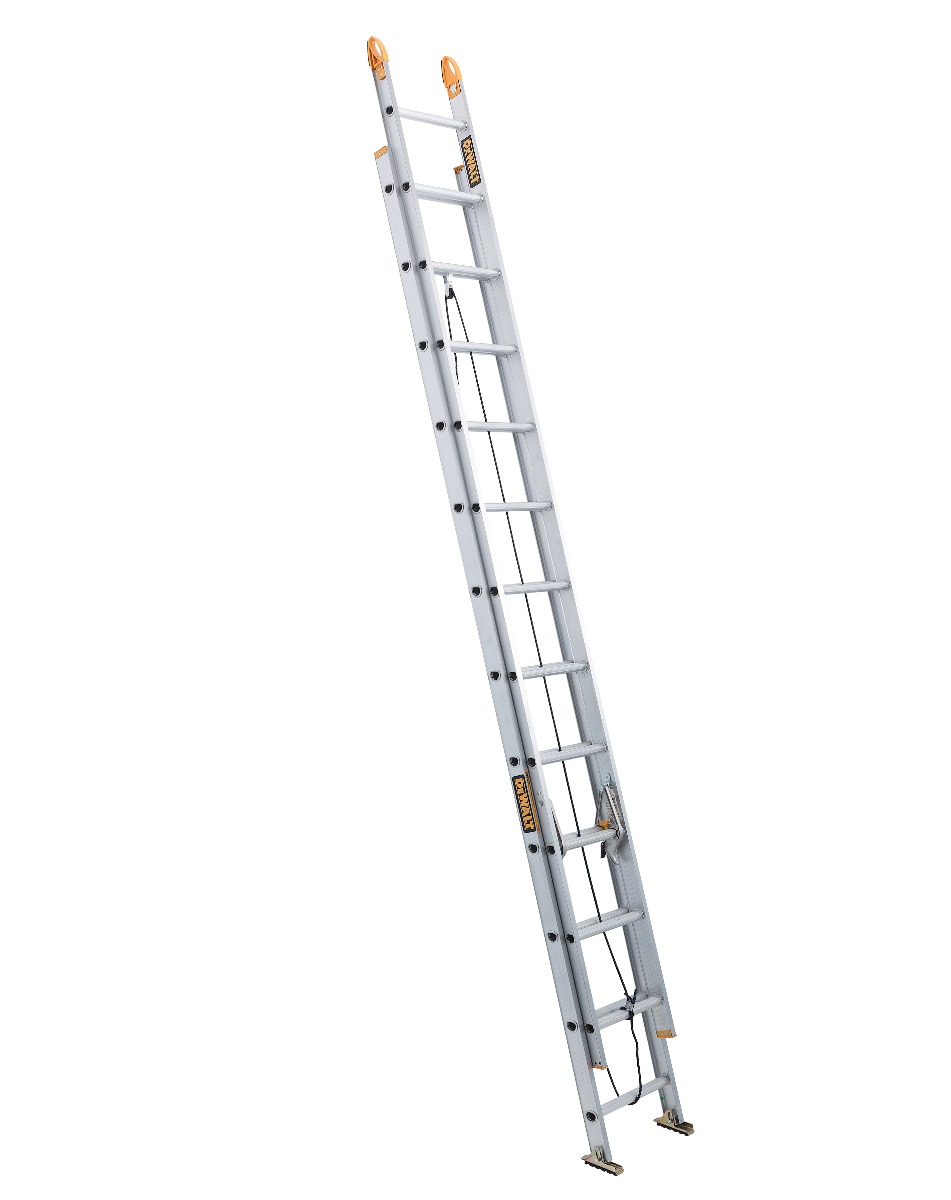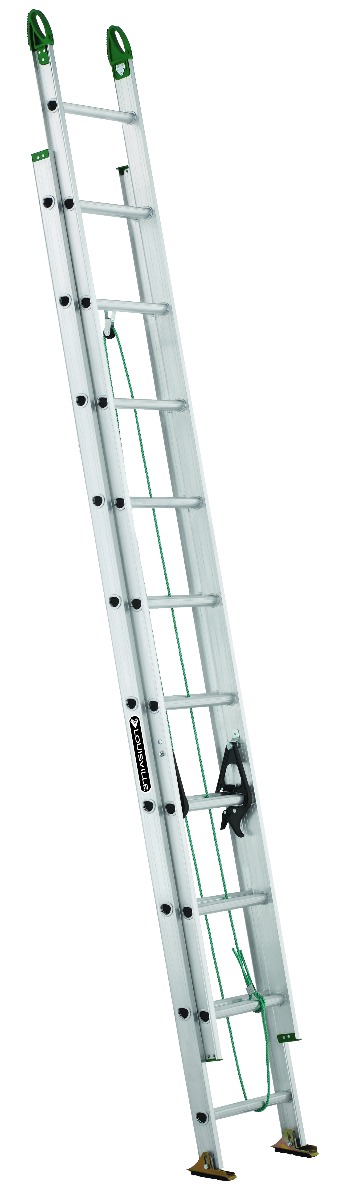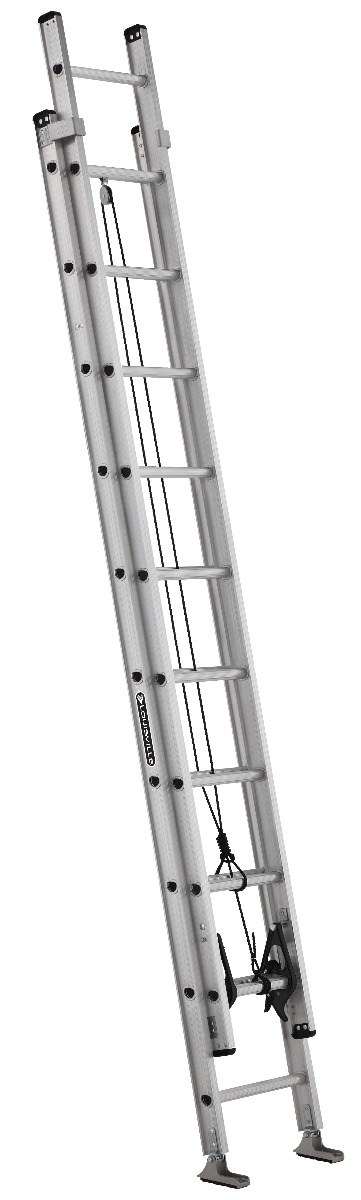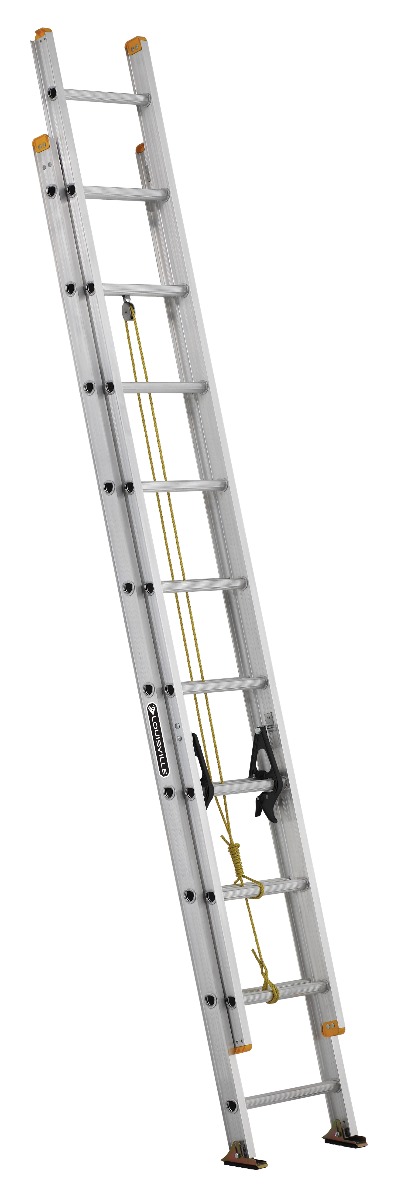

Extension Ladder
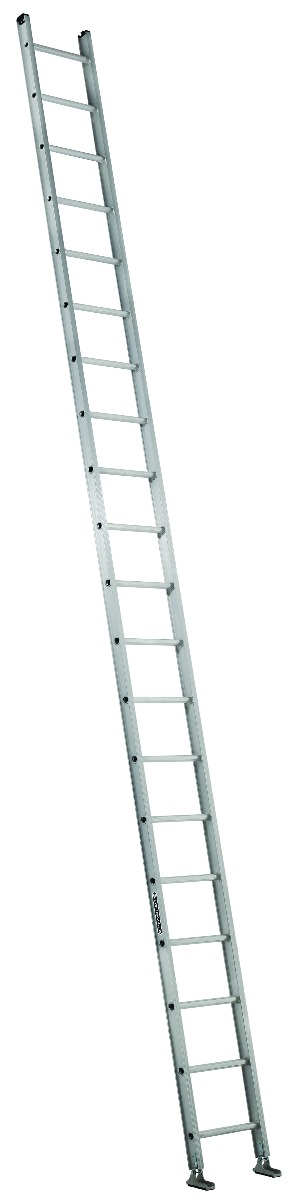
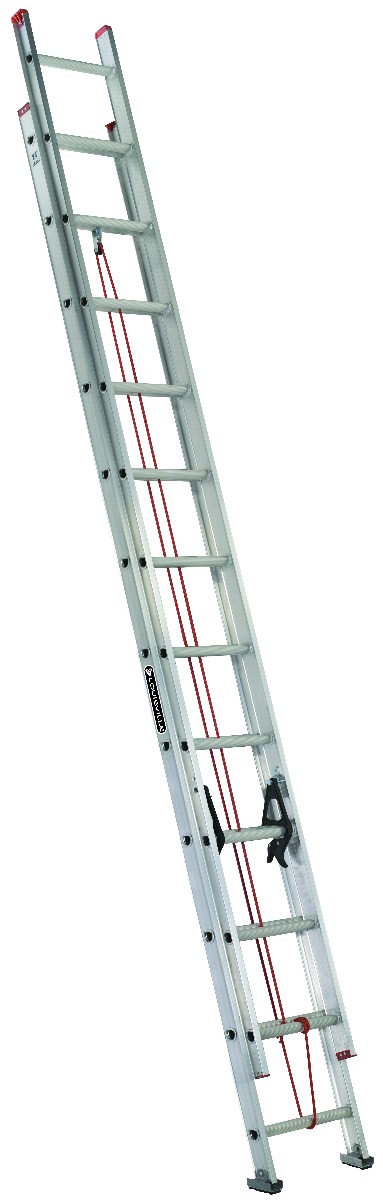
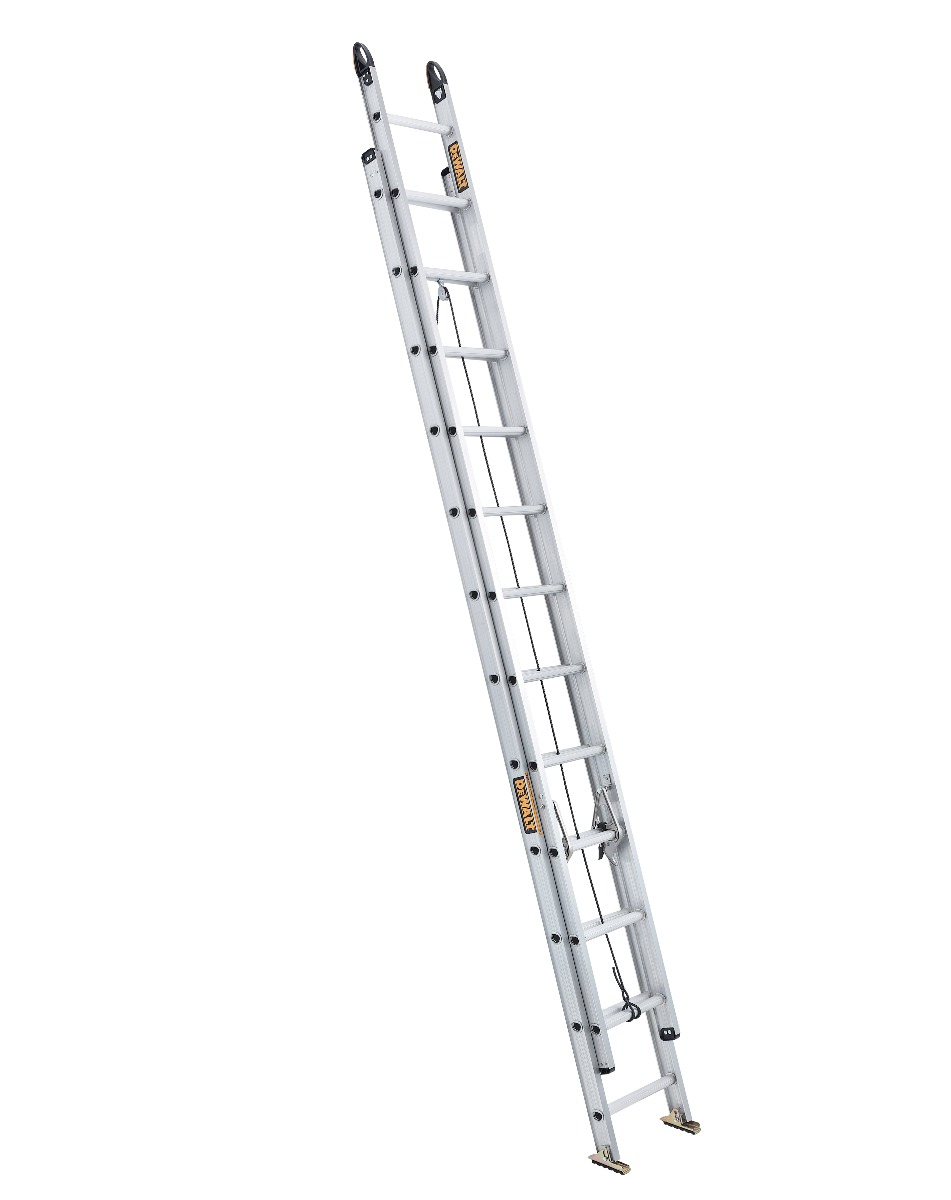
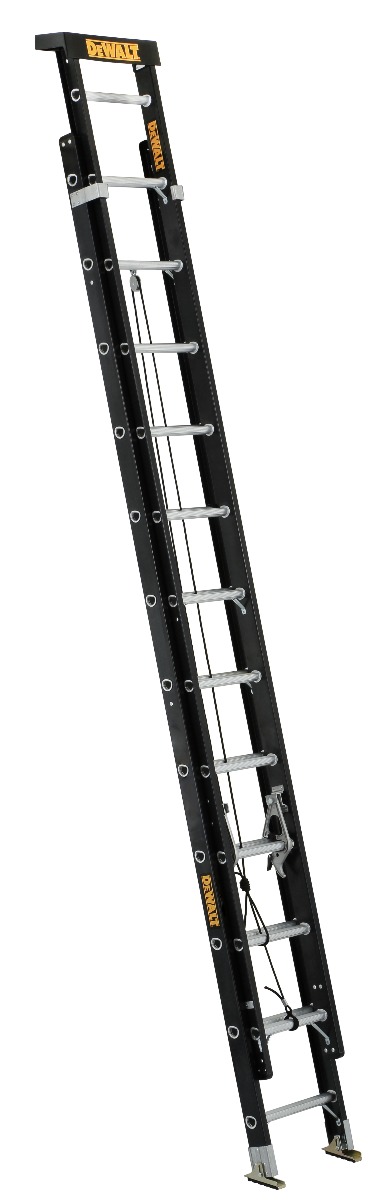
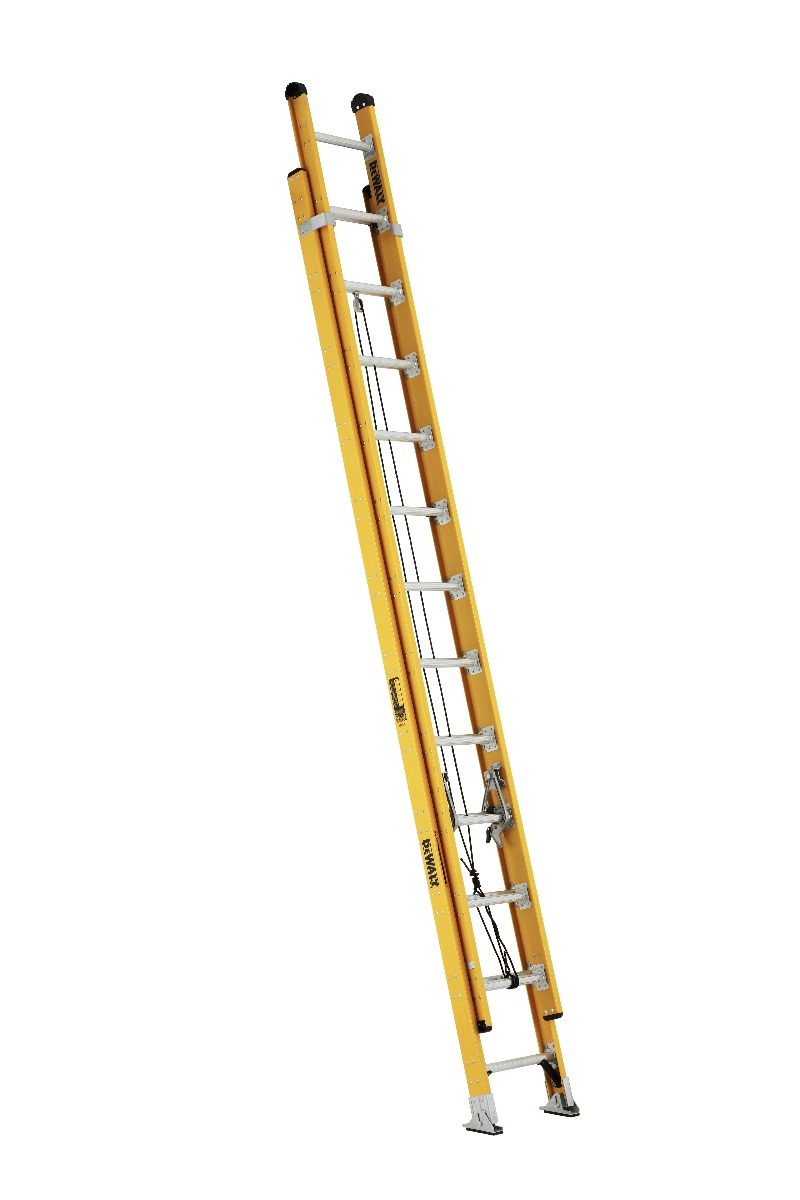
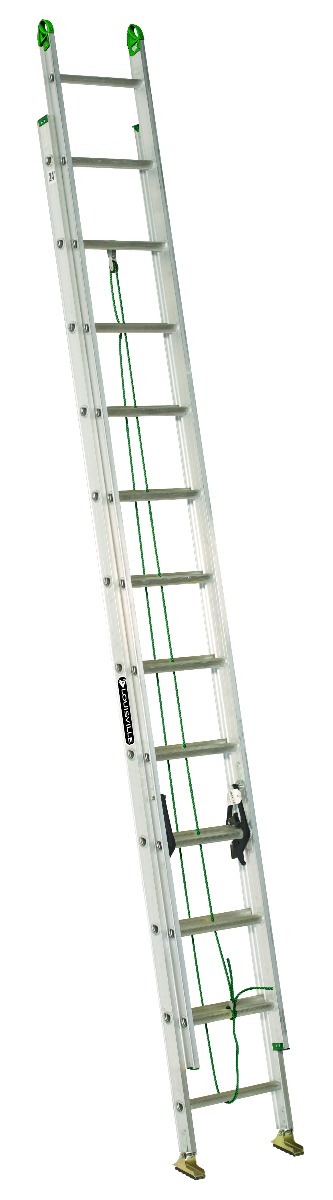
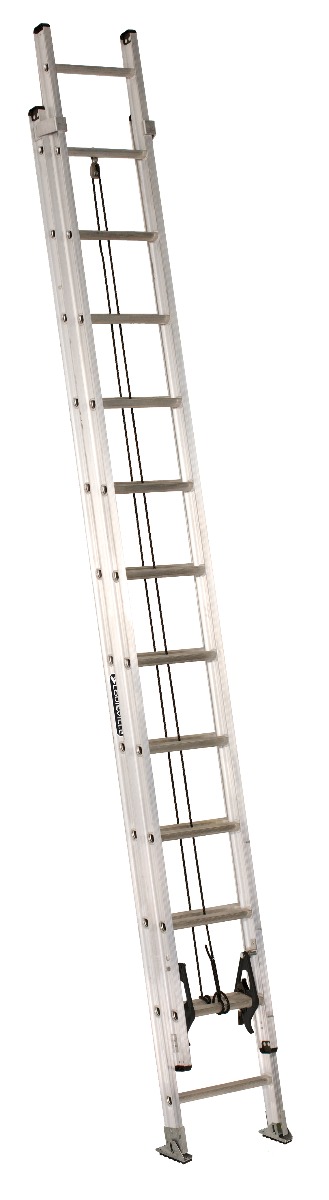
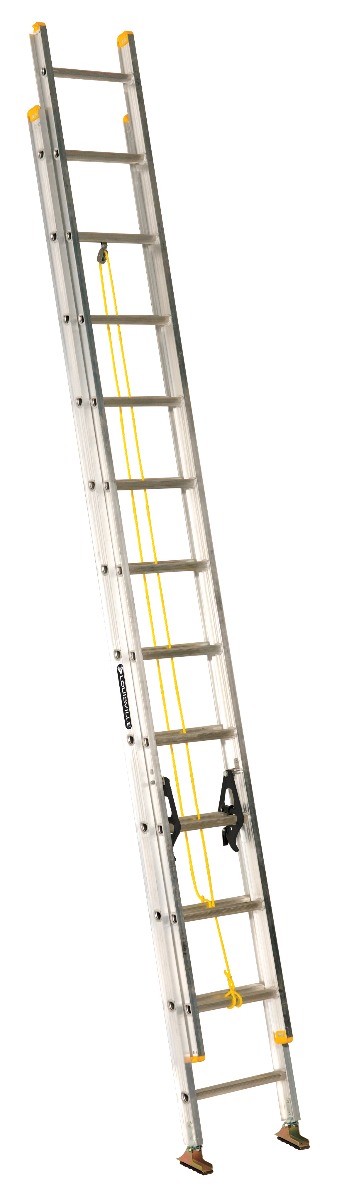
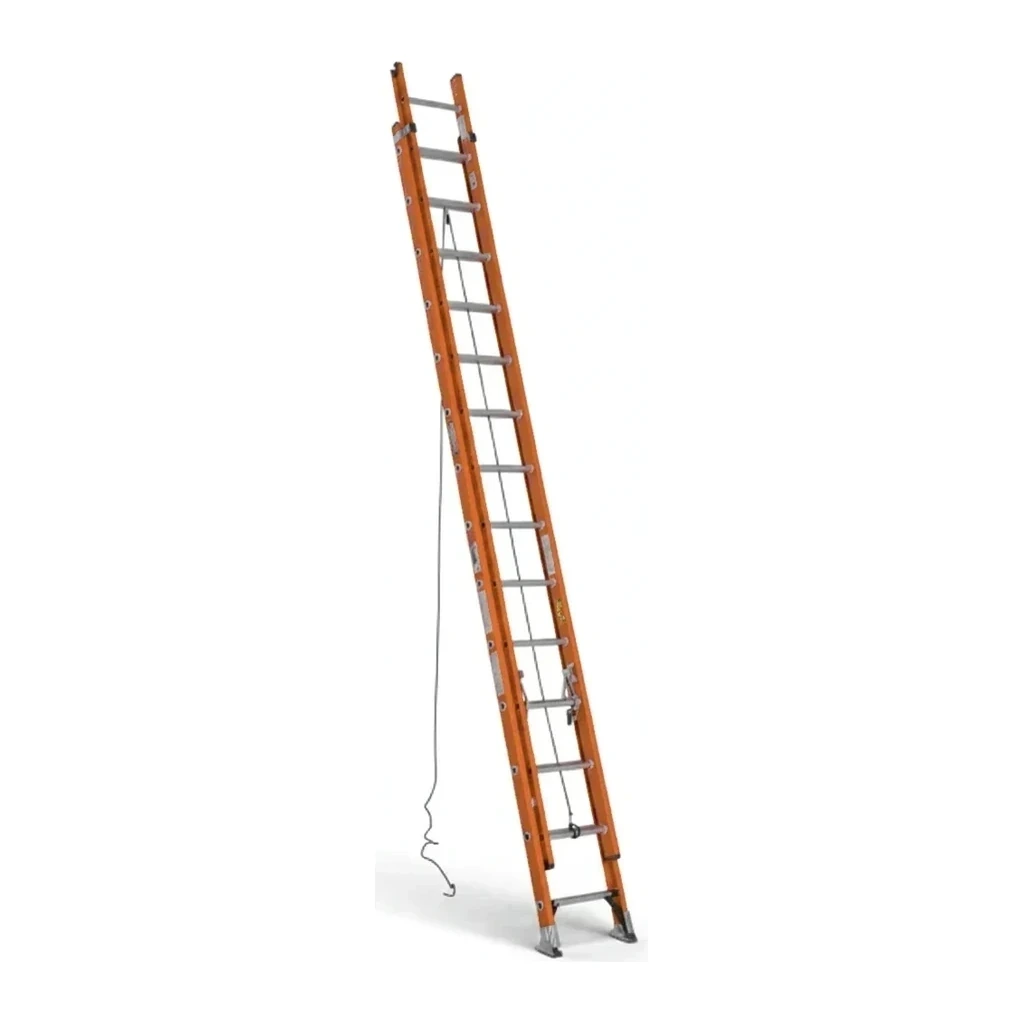
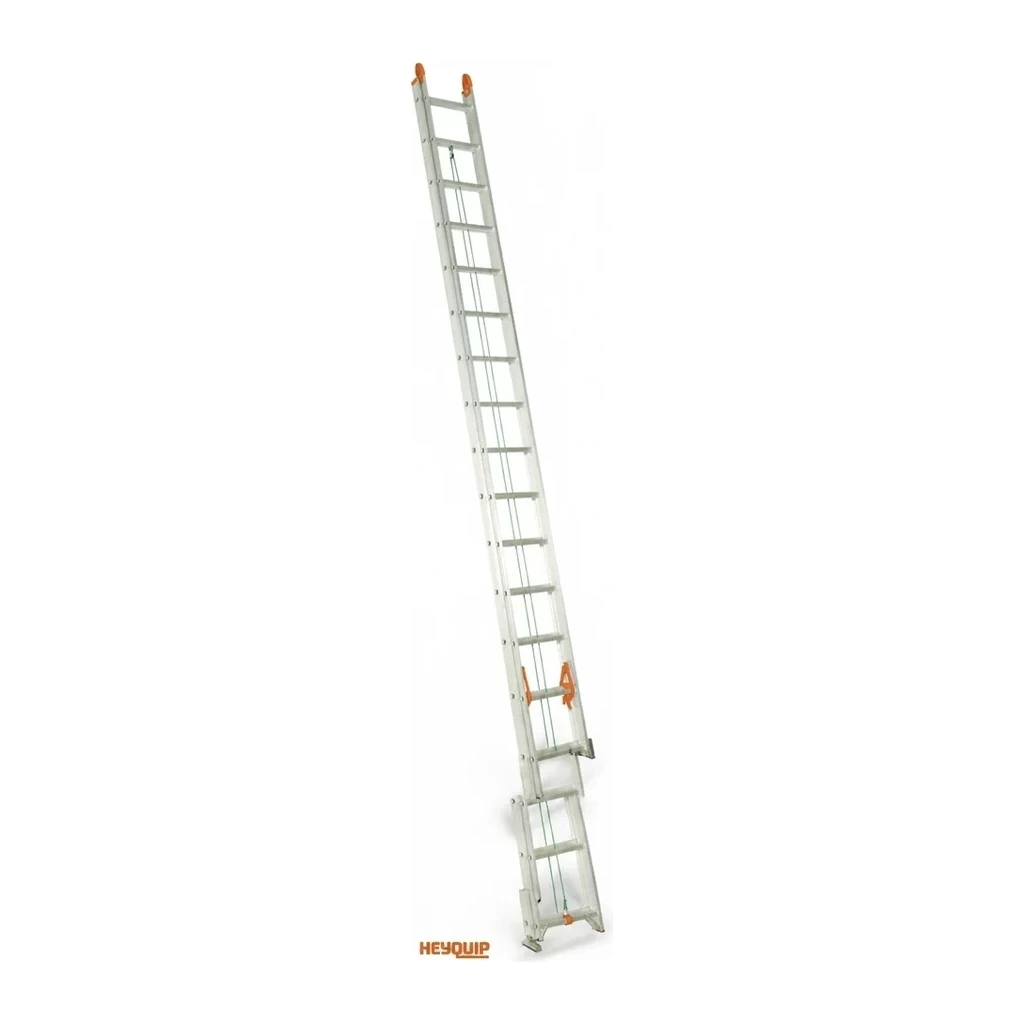
An extension ladder is a two-section (sometimes three-section) ladder whose fly section slides along the base to reach heights a single straight ladder cannot. It leans against a structure rather than standing on its own. The catalog lists 276 models from Louisville Ladder, Werner, Little Giant, Metaltech and Michigan Ladder.
Cat classes
Elija una clase de tamaño — la capacidad y el alcance varían en la gama.
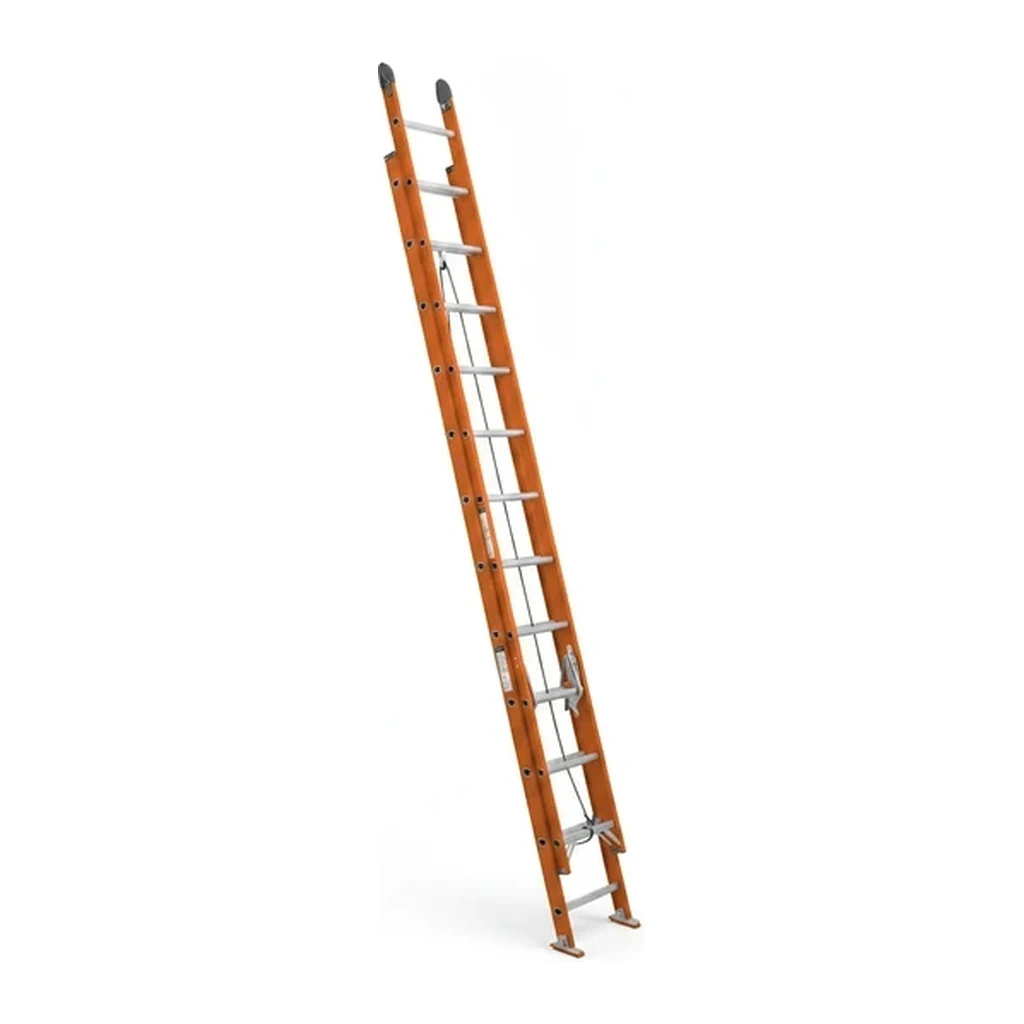
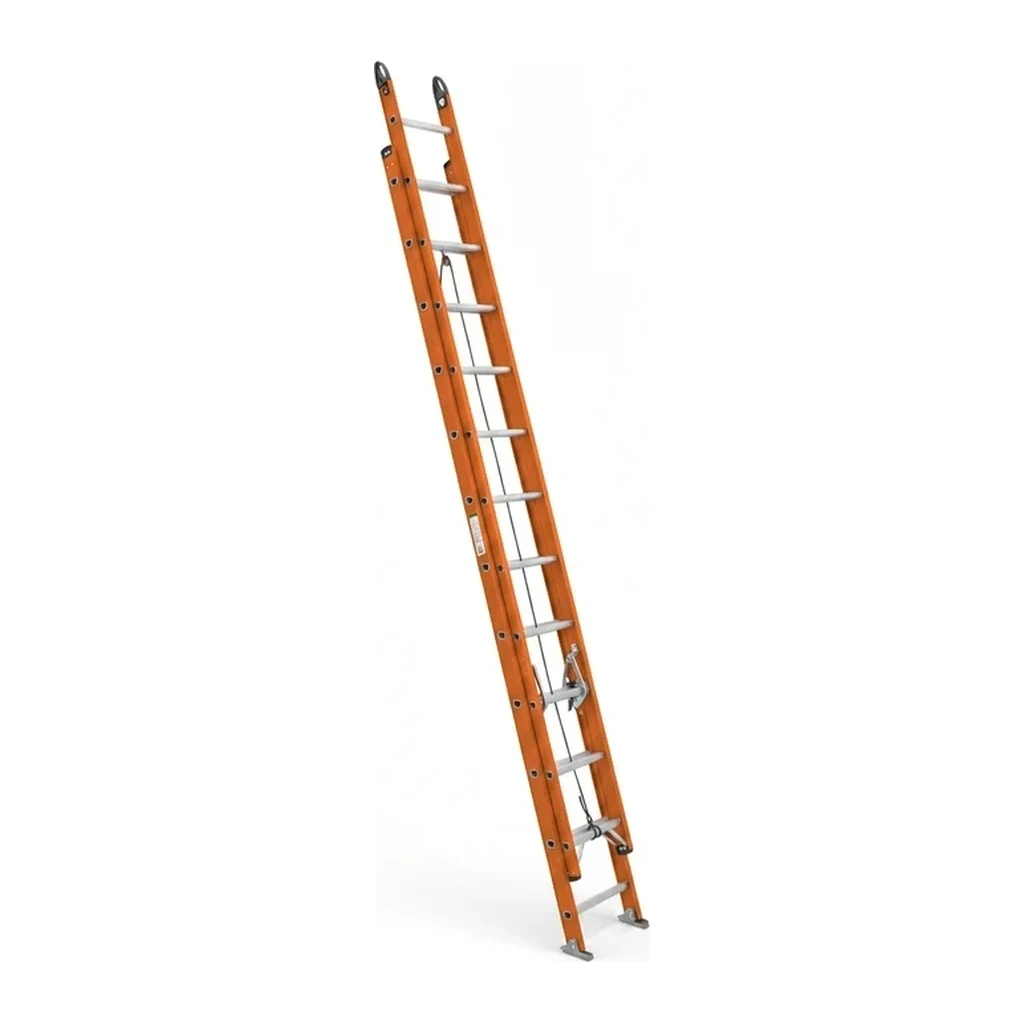
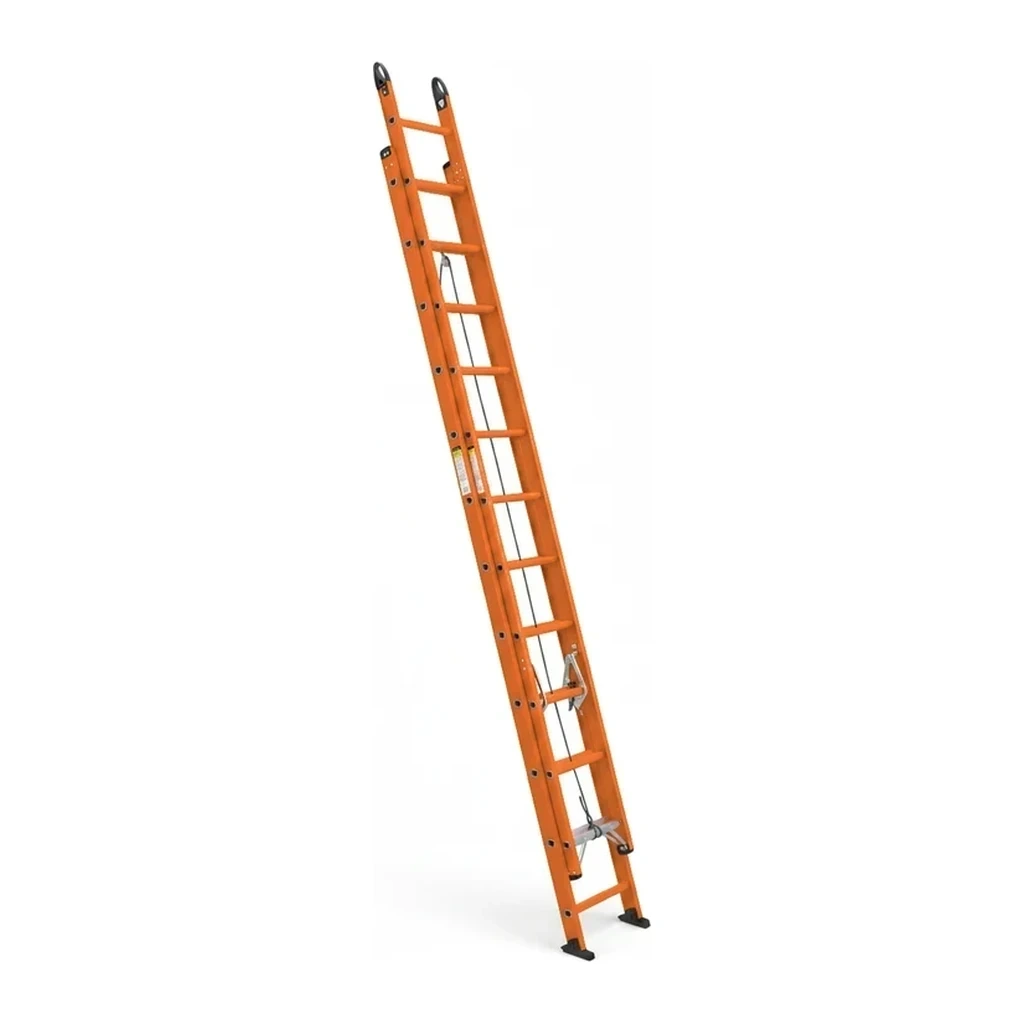
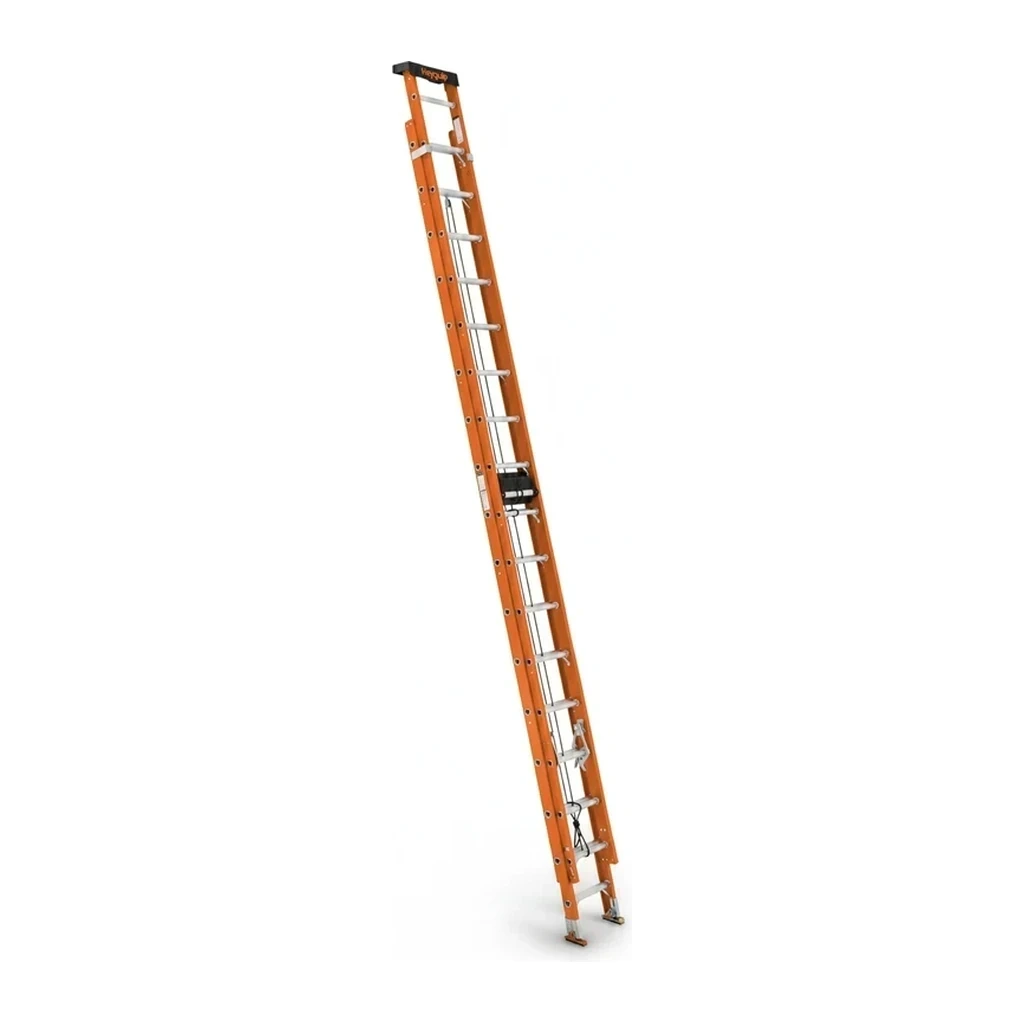
Cómo funciona
The base section stands on the ground while the fly section extends on guides, raised by hand or by a rope-and-pulley and held by rung locks. Section overlap is mandatory and grows with ladder length, which is why working reach is always less than nominal length. Set up at the proper lean — one unit out for every four up — the rails carry load into the ground while the top rests against the structure. Listed models span 200–750 kg load capacities across aluminum and fiberglass builds.
Tipos y variantes
- Aluminum extension ladders
- Light and corrosion-resistant, the general-purpose choice — but conductive, so barred from electrical work.
- Fiberglass extension ladders
- Non-conductive rails for work near wiring and services; heavier than aluminum at the same size.
- Three-section ladders
- Shorter closed length for the same reach, easier to transport and store.
- Specialty long-reach models
- The 32+ ft end of the class for three-storey and low commercial work.
Especificaciones clave
| Especificación | Rango típico | Qué significa |
|---|---|---|
| Length | 3–120 ft (0.9–36.6 m) | Nominal extended length; usable reach is less after overlap and setup angle. |
| Load capacity | 441–1,653 lb (200–750 kg) | Total supported weight — worker plus tools and materials — per the duty rating. |
| Material | Aluminum, fiberglass | Aluminum is lighter; fiberglass is non-conductive and mandatory around electrical hazards. |
| Duty rating | Type III to Type IAA | ANSI ASC A14 classification from 200 lb (III) to 375 lb (IAA) working load. |
Cómo la industria lo dimensiona
Extension ladders are sized by nominal extended length in feet. The class breaks into bands: up to 16 ft for single-storey eave and low roof work; 16–20 ft for gutters, second-storey windows and standard residential roofs; 20–26 ft for two-and-a-half-storey commercial soffits and taller residential roofs; 26–32 ft for three-storey commercial walls, steep roofs and chimney work; and 32+ ft for three-plus-storey access. Sizing starts from the height to reach, then adds the losses: required section overlap and the 4:1 setup angle both eat into reach, and access above a roofline needs the ladder extending about 3 ft past the support point. After length, duty rating is matched to the combined weight of worker, tools and materials.
Aplicaciones
- Roofing, gutter and eavestrough access
- Exterior siding, trim and painting
- Window installation and washing on multi-storey buildings
- Utility, cable and signage work at height
- Tree trimming near structures
- General exterior repair and inspection
Seguridad y operación
- Set the base one unit out for every four units of working height — the 4:1 rule in OSHA 29 CFR 1926.1053 — and extend at least 3 ft above a landing used for access.
- Duty ratings under ANSI ASC A14 run from 200 lb Type III to 375 lb Type IAA; the rating covers worker plus tools.
- Aluminum ladders are prohibited near energized overhead lines and electrical equipment — fiberglass is the non-conductive option.
- Maintain three points of contact, keep the body centered between the rails, and tie off the top on long setups or in wind.
- Inspect rung locks, rope and feet before each use; a worn rung lock is how fly sections fail suddenly.
Normas y certificaciones
- ANSI ASC · A14.2
- Safety standard for portable metal ladders, including duty rating types.
- ANSI ASC · A14.5
- Safety standard for portable reinforced-plastic (fiberglass) ladders.
- OSHA · 29 CFR 1926.1053
- Construction ladder rule covering setup angle, extension above landings and use practices.
Preguntas frecuentes
What length of extension ladder does a two-storey building take?
How much weight can an extension ladder hold?
Why is usable reach shorter than the ladder length?
Aluminum or fiberglass?
Comparar modelos populares
Buscar por especificación →Normalizado a las mismas unidades. Un guion significa que el valor no fue publicado.
| Modelo | Altura máx | Capacidad de carga |
|---|---|---|
| Louisville Ladder L-3016-12-1 | 12 ft (3.7 m) | 661 lb (300 kg) |
| Louisville Ladder L-3016-10-1 | 10 ft (3.0 m) | 661 lb (300 kg) |
| Louisville Ladder L-3016-08-1 | 8 ft (2.4 m) | 661 lb (300 kg) |
| Louisville Ladder L-3016-04-1 | 4 ft (1.2 m) | 661 lb (300 kg) |
| Louisville Ladder AE1228HD | 25 ft (7.6 m) | 827 lb (375 kg) |
| Louisville Ladder AE1232HD | 29 ft (8.8 m) | 827 lb (375 kg) |
Equipos relacionados
Explorar por fabricante
Fuentes
Cada especificación se verifica con los datos publicados por el fabricante, con la fuente enlazada como referencia.
Todos los modelos
288 modelos · Página 5 de 6 · Cada especificación citada a la fuente