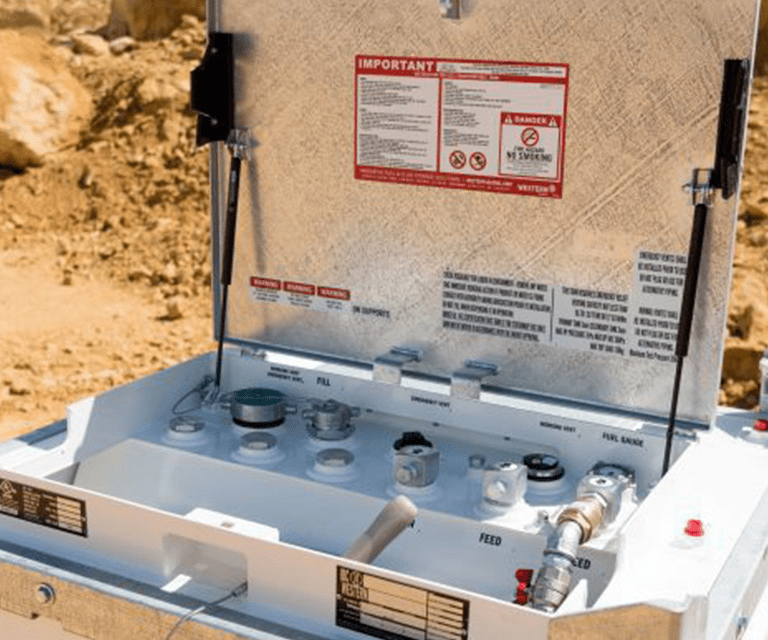

250-500 gal Fuel Tank
The 250-500 gallon fuel tank is the workhorse of jobsite fuel storage, sized to supply diesel or gasoline to a small fleet of equipment for approximately one week. Often delivered as self-contained cube tanks with integrated secondary containment, this class bridges portable tanks and bulk storage. It sits mid-ladder between the Up to 250 gal Fuel Tank for single-machine applications and the 500-1,000 gal Fuel Tank for larger construction operations.
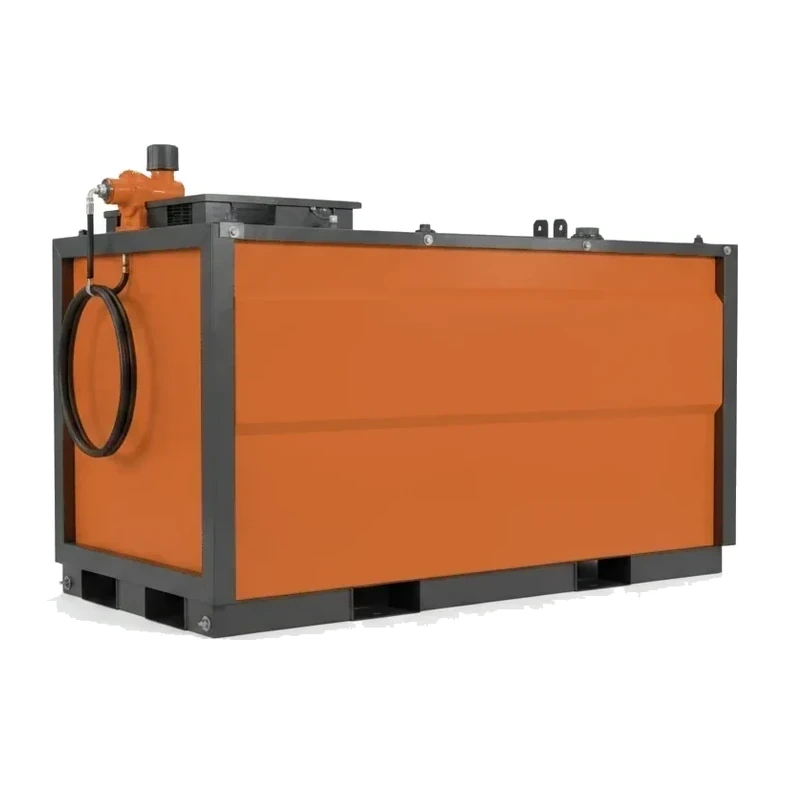
Cat classes
Elija una clase de tamaño: la capacidad y el alcance varían en la gama.
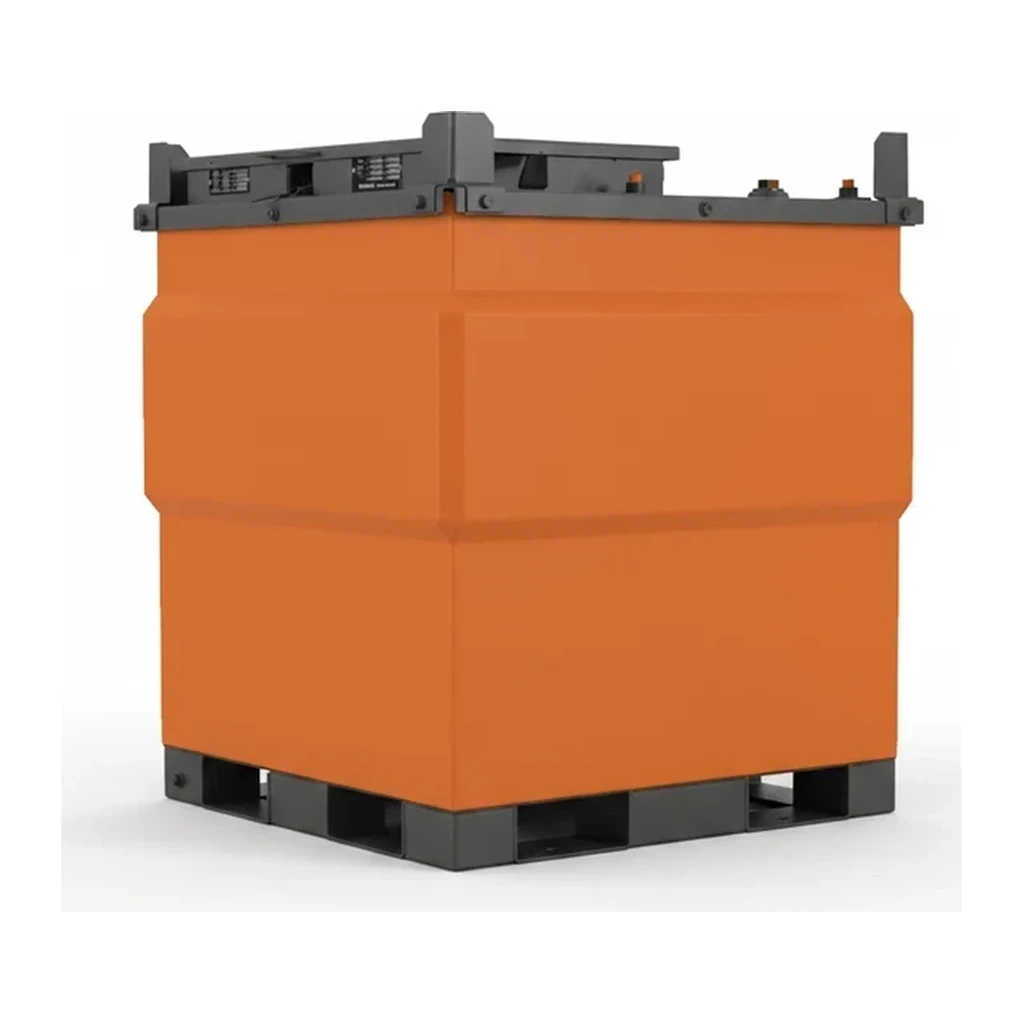
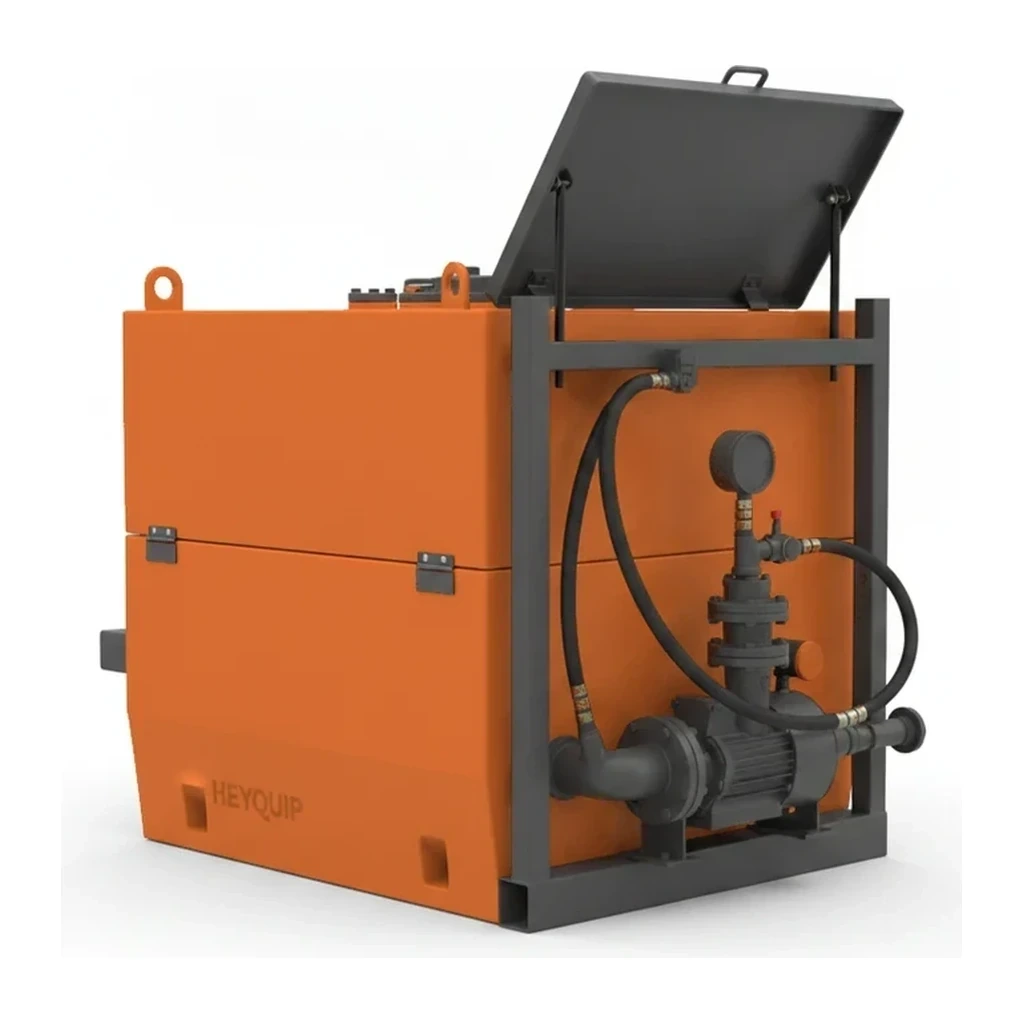
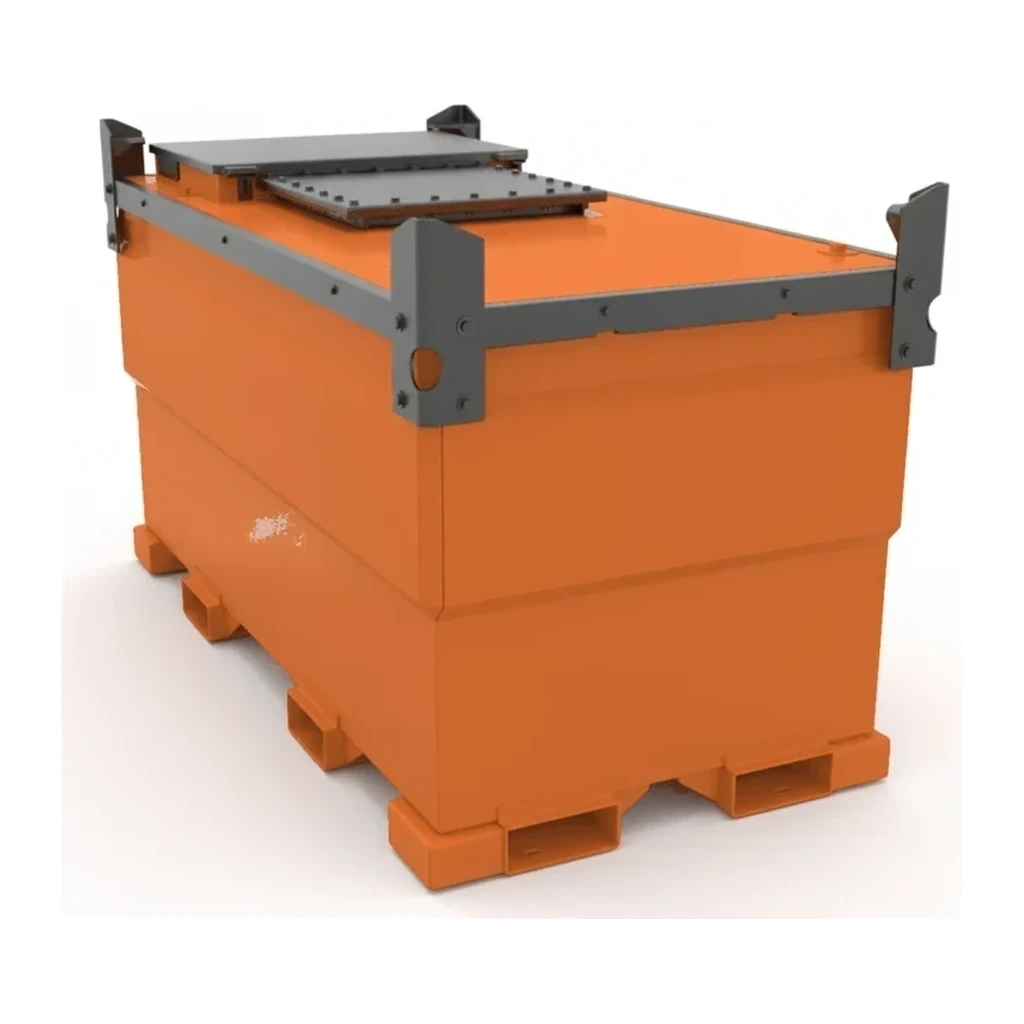
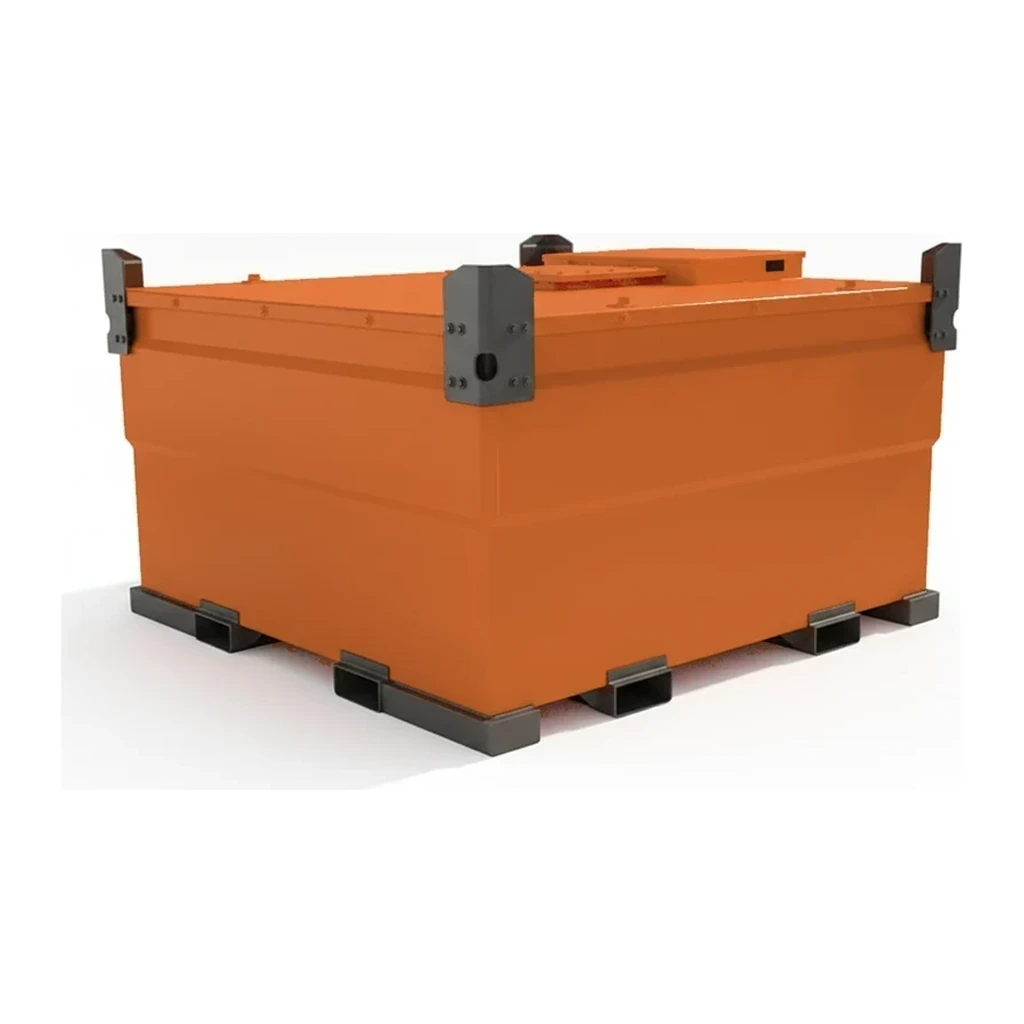
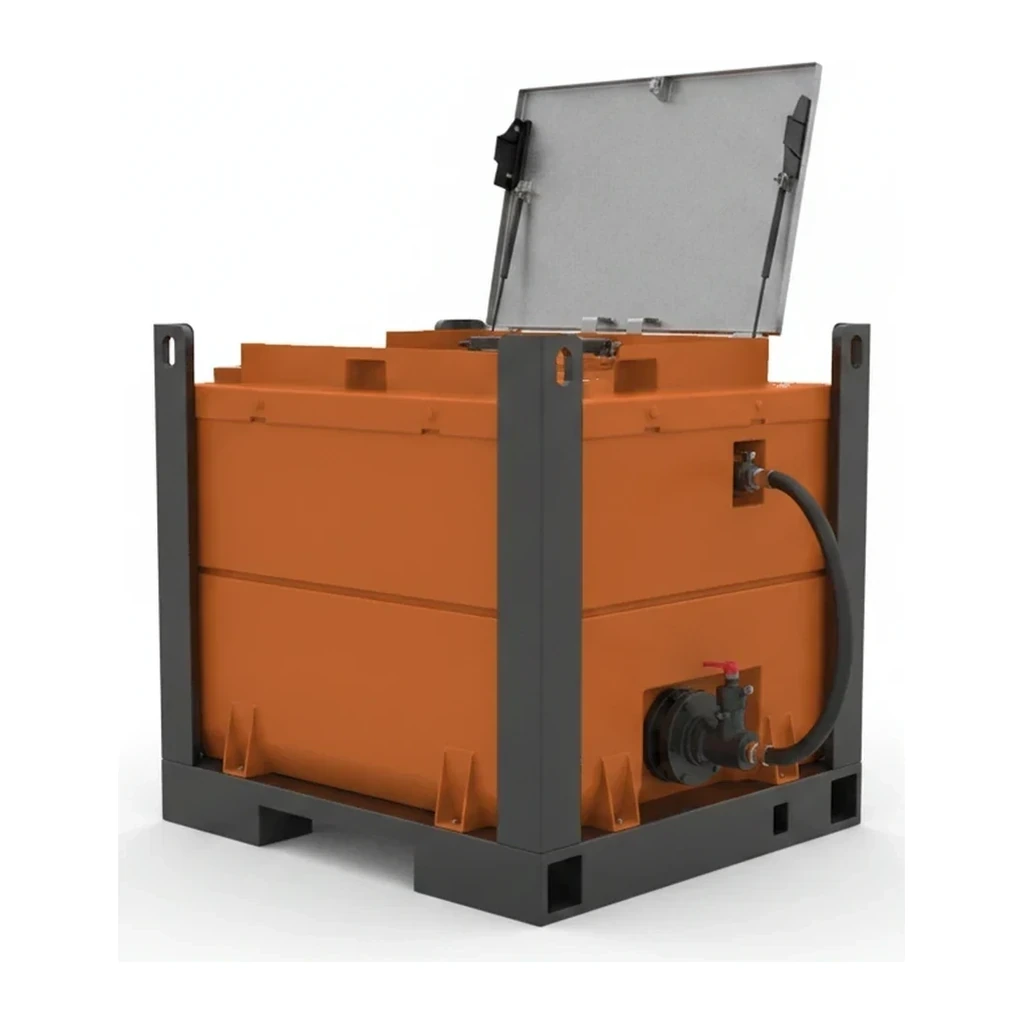
Especificaciones clave
| Especificación | Rango típico | Qué significa |
|---|---|---|
| Capacity | 250-500 gal | Stores roughly 950-1,900 liters of diesel, gasoline, or other fuels |
| Load capacity | 551–1,001 lb (250–454 kg) | Empty tank weight; full fuel load adds approximately 1,135-2,270 kg for diesel |
| Max height | 3.8–104 ft (1.2–31.7 m) | Varies widely by configuration; cube tanks typically under 5 ft, vertical tanks much taller |
Cómo elegir
This size class suits jobsites running two to four pieces of heavy equipment where weekly fuel deliveries align with logistics schedules. The Up to 250 gal Fuel Tank becomes the better choice for single excavators, generators, or light equipment where daily consumption stays below 30-40 gallons. When managing five or more machines, operating remote sites with infrequent delivery access, or supporting equipment with high burn rates (large dozers, multiple generators), the 500-1,000 gal Fuel Tank reduces refill frequency and may lower per-gallon delivery costs.
Lo que maneja este tamaño
- Residential subdivision grading with excavator, dozer, and compactor running concurrently
- Road paving crew operating asphalt paver, roller, and milling machine over multi-day stretches
- Remote solar farm construction with limited fuel delivery windows
- Bridge repair project requiring generator and equipment fuel for 5-7 day work cycles
- Pipeline installation running welding rigs and sideboom tractors
- Temporary fueling station for municipal maintenance yard during tank replacement
Seguridad y operación
- Secondary containment (110% of primary tank volume) required by many jurisdictions; integral to most cube designs, external containment needed for vertical tanks
- Grounding and bonding cables mandatory during fuel transfer to prevent static discharge; permanent grounding stakes recommended for stationary installations
- Venting systems must accommodate thermal expansion and prevent vacuum lock during dispensing; vent caps require flame arrestors in many applications
- Placarding and labeling per NFPA 30 and local fire codes; minimum setback distances from structures, property lines, and ignition sources vary by fuel type and jurisdiction
Transporte y logística
- Cube-style tanks under 500 gallons typically transport on flatbed trailers or in pickup beds when empty; full weight requires equipment trailer or delivery truck
- Most units in this range deliverable via standard flatbed with forklift or crane offload; some skid-mounted models allow direct placement by boom truck
- Vertical cylindrical tanks may require specialized cradles or tie-downs for highway transport to prevent rolling
Alimentación
- Electric fuel pumps (12V DC or 120V AC) common for dispensing; 12V systems often powered by onboard battery or connection to equipment being fueled
- Gravity-feed configurations available on elevated or slope-positioned tanks, eliminating pump power requirements
- AC-powered pumps require generator or shore power; typical draw 5-15 amps at 120V for standard transfer pumps
Preguntas frecuentes
How long does 400 gallons of diesel fuel a typical excavator?
What footprint does a 300-gallon cube tank require?
Can this size class store gasoline and diesel interchangeably?
Comparar modelos populares
Buscar por especificación →Normalizado a las mismas unidades. Un guion significa que el valor no fue publicado.
| Modelo | Capacidad de carga | Altura máx |
|---|---|---|
| Poly-Mart PM300CT | 300 gal | - |
| Transcube 10TCG | 251 gal | - |
| Transtech LNG Horizontal Storage Tank 120,000 Gallon | 454.2 gal | 104 ft (31.7 m) |
Equipos relacionados
Explorar por fabricante
Fuentes
Cada especificación se verifica con los datos publicados por el fabricante, con la fuente enlazada como referencia.
250-500 gal Fuel Tank
7 modelos · Cada especificación citada a la fuente