

Traffic Cone
A traffic cone is a portable, stackable marker that guides vehicles and pedestrians around hazards, closures and active work. Fast to deploy and recover, cones are the default device for short-duration and mobile operations. The catalog lists 9 models from Universal Enterprises, JBC Safety Plastic, TrafFix Devices, RoadSafe Traffic Systems, OPTSIGNS and Brady.
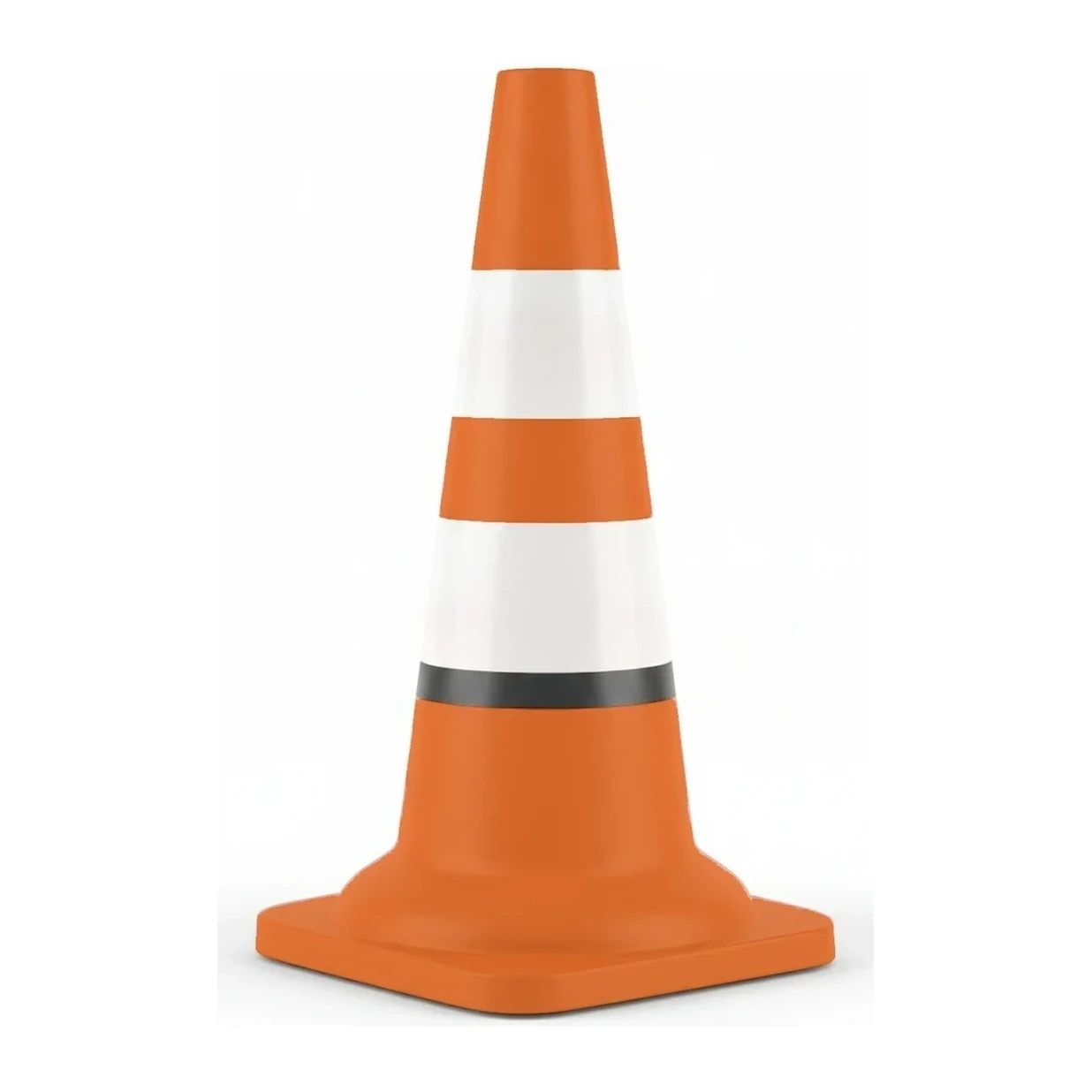
Cómo funciona
A flexible PVC or polymer body over a broad base presents a high-visibility target that deforms under wheel strikes and pops back. Retroreflective collars make cones legal and visible for nighttime use. Cones work in series: placed along tapers and edge lines at planned spacing, they read as a continuous guide. Crews deploy and retrieve them from a moving vehicle on mobile operations, which is why weight and stackability matter as much as visibility.
Tipos y variantes
- Standard road cones
- Full-size cones with reflective collars for street and highway work zones.
- Compact utility cones
- Shorter cones for parking lots, plants and low-speed guidance.
- Heavy-base cones
- Wide, weighted bases for wind and high-speed truck blast.
- Collapsible cones
- Spring-fold designs that pack flat in service vehicles.
Especificaciones clave
| Especificación | Rango típico | Qué significa |
|---|---|---|
| Height | Varies by model | Road speed drives required cone height: the MUTCD sets taller minimums for freeway and high-speed use. |
| Base size and weight | Varies by model | A broader, heavier base resists truck blast and wind without external ballast. |
| Reflective collar | Varies by model | Retroreflective banding is required for nighttime deployment. |
| Material | Varies by model | Flexible PVC bodies take wheel strikes and rebound; harder polymers add durability in yards and plants. |
Cómo la industria lo dimensiona
Cones are sized by height against road speed: the MUTCD requires taller cones as speeds rise, with the tallest classes reserved for freeways and nighttime work. Beyond height, jobs are planned by count: taper and spacing tables convert closure length and speed into the number of cones a crew must carry, place and retrieve.
Aplicaciones
- Short-duration lane closures and shoulder work
- Mobile operations with rolling deploy-and-retrieve
- Utility, landscaping and municipal spot work
- Parking, event and pedestrian guidance
- Incident scene marking
Seguridad y operación
- Cone height and reflectorization must match road speed and time of day: undersized or bare cones are noncompliant on high-speed roads at night.
- Cones provide guidance only; they stop nothing. Worker protection near live lanes comes from barriers, attenuators and buffer space.
- Deploying and retrieving cones exposes workers to traffic: high-visibility apparel and working from the protected side are standard practice.
Normas y certificaciones
- FHWA · MUTCD
- Sets cone height minimums by road type, reflectorization requirements and channelizing applications.
- ASTM · D4956
- Retroreflective sheeting standard applicable to cone collars.
Preguntas frecuentes
What height of cone does a highway job require?
Why do cone bases vary so much?
How many cones does a lane closure take?
Equipos relacionados
Explorar por fabricante
Todos los modelos
9 modelos · Cada especificación citada a la fuente