

Concrete Vibrator
A concrete vibrator consolidates freshly placed concrete by transmitting high-frequency vibration into the mix, liquefying it momentarily so trapped air escapes and the material packs tight around reinforcement and into form corners. Proper vibration is what turns a placed load into dense, honeycomb-free structural concrete.
Cat classes
Choisissez une classe de taille : la capacité et la portée varient selon la gamme.
Fonctionnement
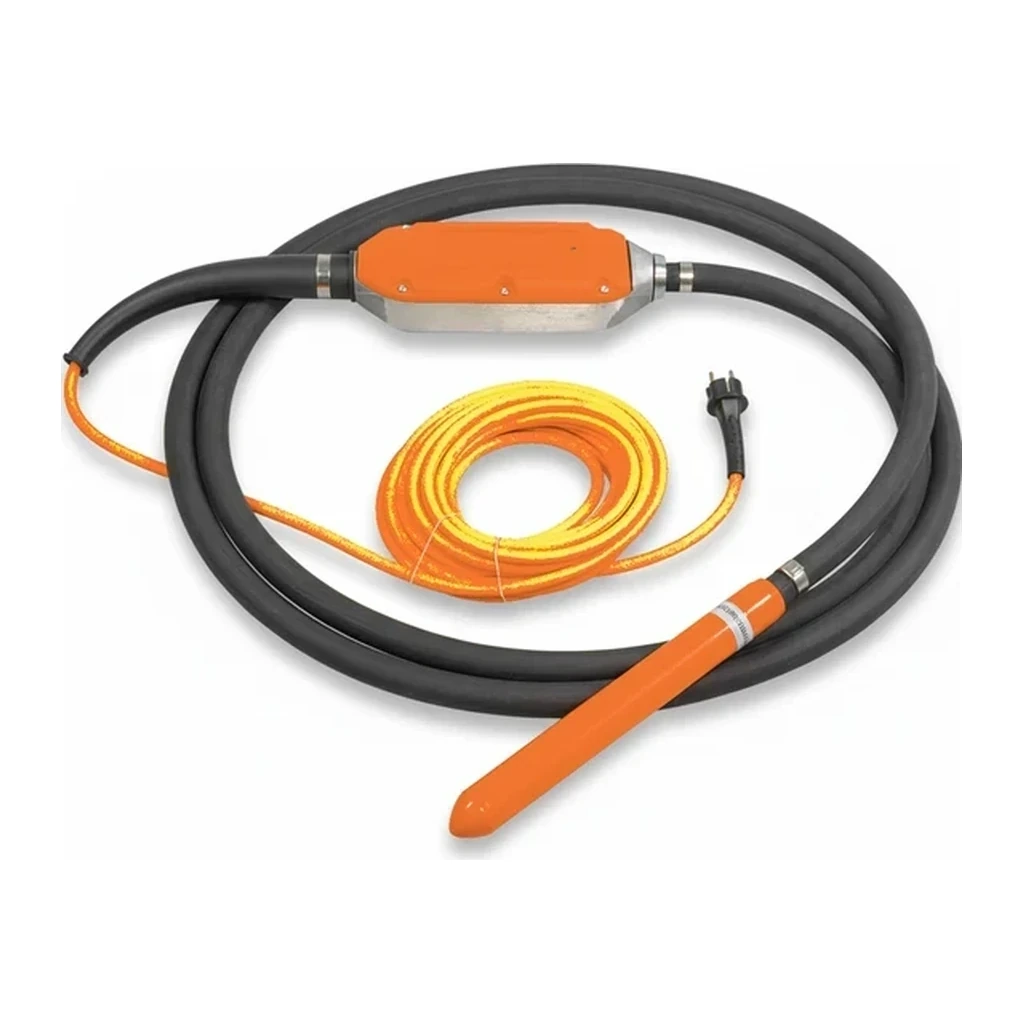
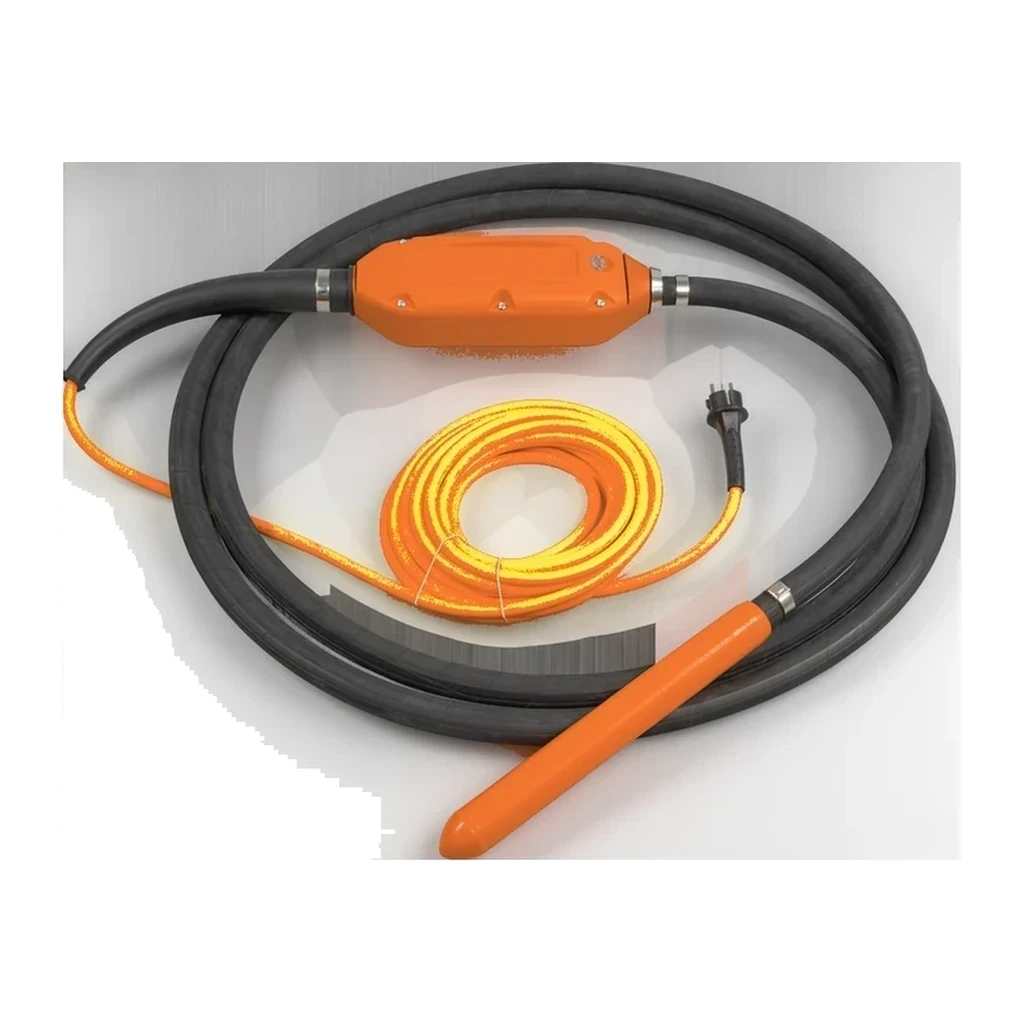
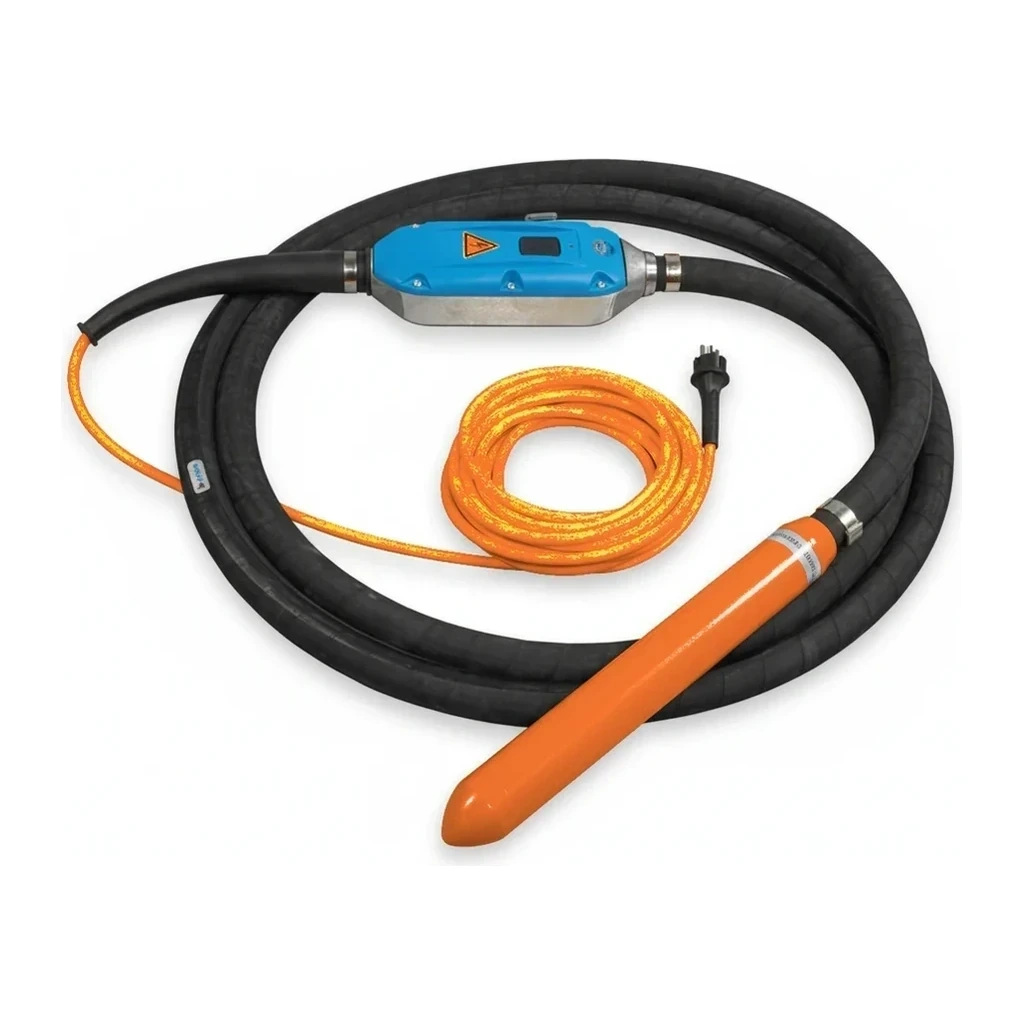
Internal (poker) vibrators, the dominant format in this class, spin an eccentric weight inside a steel head at the end of a flexible shaft, driven by an electric motor, gasoline engine or high-frequency converter. The operator inserts the head vertically into the fresh lift, lets entrapped air rise, and withdraws slowly, working a spaced pattern so vibrated zones overlap. Listed heads run 31-58 mm in diameter with protection hoses of 5.0 m; electric drive units span 42-250 V nominal and draw 1.4-20.0 A. Form-mounted external vibrators clamp to the formwork and vibrate through it where the mix is inaccessible, and surface vibration (screeds) consolidates thin slabs from the top.
Types et variantes
- Flexible-shaft poker vibrator
- Motor or engine drives a flexible shaft with an eccentric head; the general-purpose internal vibrator for slabs, footings and walls.
- High-frequency internal vibrator
- Motor-in-head design fed by a frequency converter; consistent speed under load, common on structural and low-voltage-mandated sites.
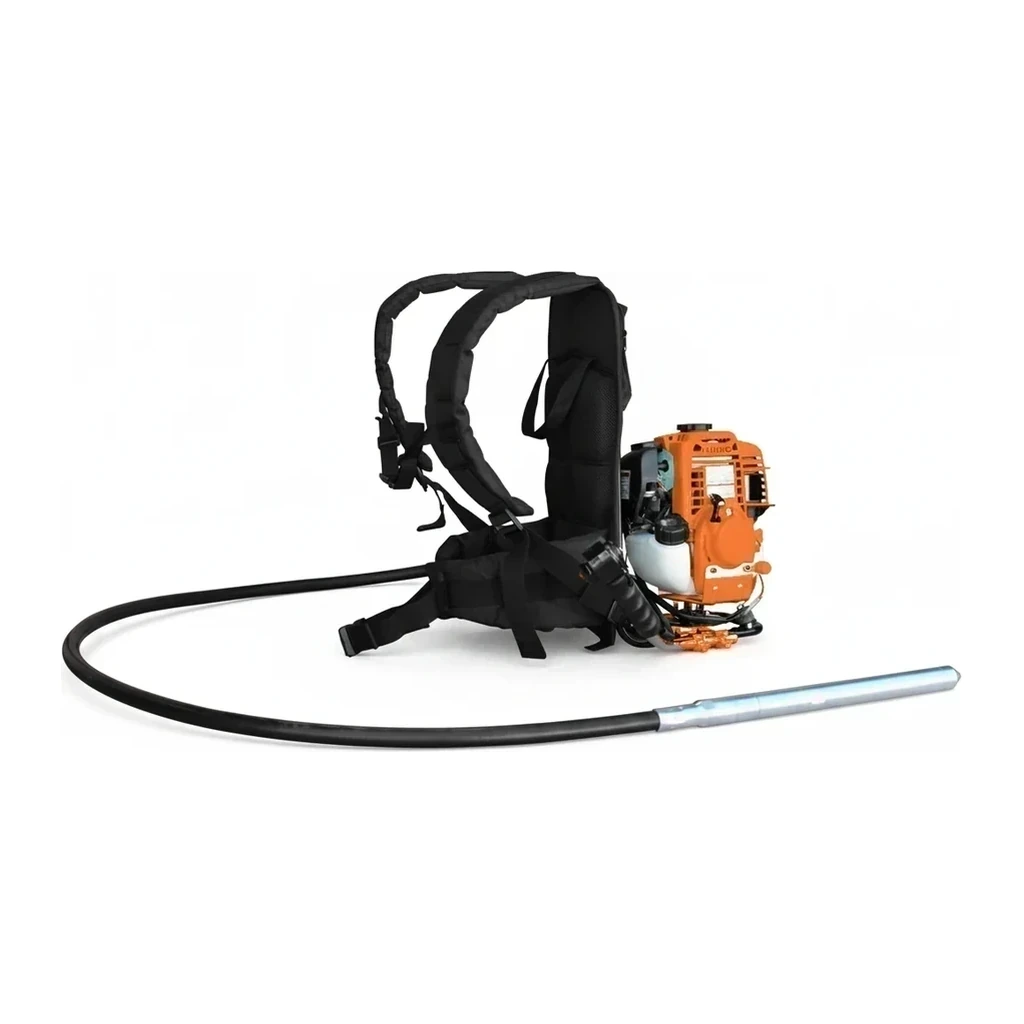
- Backpack vibrator
- Engine carried on the operator's back driving a flex shaft: mobility for footings and remote placements without power.
- External form vibrator
- Clamps to formwork and vibrates through the form skin where congested reinforcement blocks internal access.
Spécifications clés
| Spécification | Plage typique | Signification |
|---|---|---|
| Head diameter | 31-58 mm on listed models | Smaller heads fit tight rebar and thin sections; larger heads move more concrete per insertion on mass pours. |
| Nominal voltage | 42-250 V across listed electric units | Low-voltage units serve wet locations and sites mandating reduced-voltage tools; standard units need matching supply. |
| Nominal current | 1.4-20.0 A | Draw must fit the circuit or generator feeding the unit, especially when several tools share supply. |
| Weight | 5.3-30.0 lb on listed units | Carried weight drives operator fatigue across a full pour of repeated insertions. |
| Protection hose length | 5.0 m listed | Sets the reach from drive unit to head, which determines how far the motor can sit from the placement. |
Comment l'industrie le dimensionne
Internal vibrators are sized by head diameter against section thickness and reinforcement spacing: the head must pass between bars and suit the lift depth, with each insertion consolidating a radius roughly proportional to head size. Crews match head diameter to the thinnest congested section on the pour and increase insertion count rather than forcing an oversized head.
Applications
- Consolidating slab-on-grade pours
- Vibrating footings and foundation walls
- Working concrete around dense rebar in columns and beams
- Precast concrete production
- Driveway and sidewalk placement
- Consolidating tight formwork sections and corners
Sécurité et opération
- Electric vibrators work in wet concrete by nature: ground-fault protection and intact cords are non-negotiable, and low-voltage systems exist specifically for wet-location safety.
- Prolonged operation transmits hand-arm vibration; rotation among crew members and grip-friendly handling reduce cumulative exposure.
- The spinning head must never contact the operator or run dry against formwork and rebar for extended periods, which overheats the head.
Normes et certifications
- ACI · 309R
- Guide to Consolidation of Concrete: insertion spacing, duration and withdrawal practice for internal vibration.
- OSHA · 29 CFR 1926.404(b)(1)
- Ground-fault protection requirements for cord-connected tools on construction sites.
- OSHA · 29 CFR 1926.702
- Concrete and masonry equipment provisions applicable to powered placement tools.
Questions fréquentes
What head size suits a given pour?
What happens if concrete is under- or over-vibrated?
Why do some sites require low-voltage vibrators?
What is an external form vibrator for?
Comparer les modèles populaires
Chercher par spécification →Normalisé aux mêmes unités. Un tiret signifie que la valeur n'a pas été publiée.
| Modèle | Puissance moteur | Poids en service |
|---|---|---|
| Multiquip J36H90H | - | - |
| Wacker Neuson BV50 | 2 hp | 28.7 lb (13 kg) |
| Multiquip J36B65 | - | 183 lb (83 kg) |
Équipements connexes
Parcourir par fabricant
Sources
Chaque spécification est vérifiée par rapport aux données publiées par le fabricant, avec la source liée pour référence.