

Track Excavator
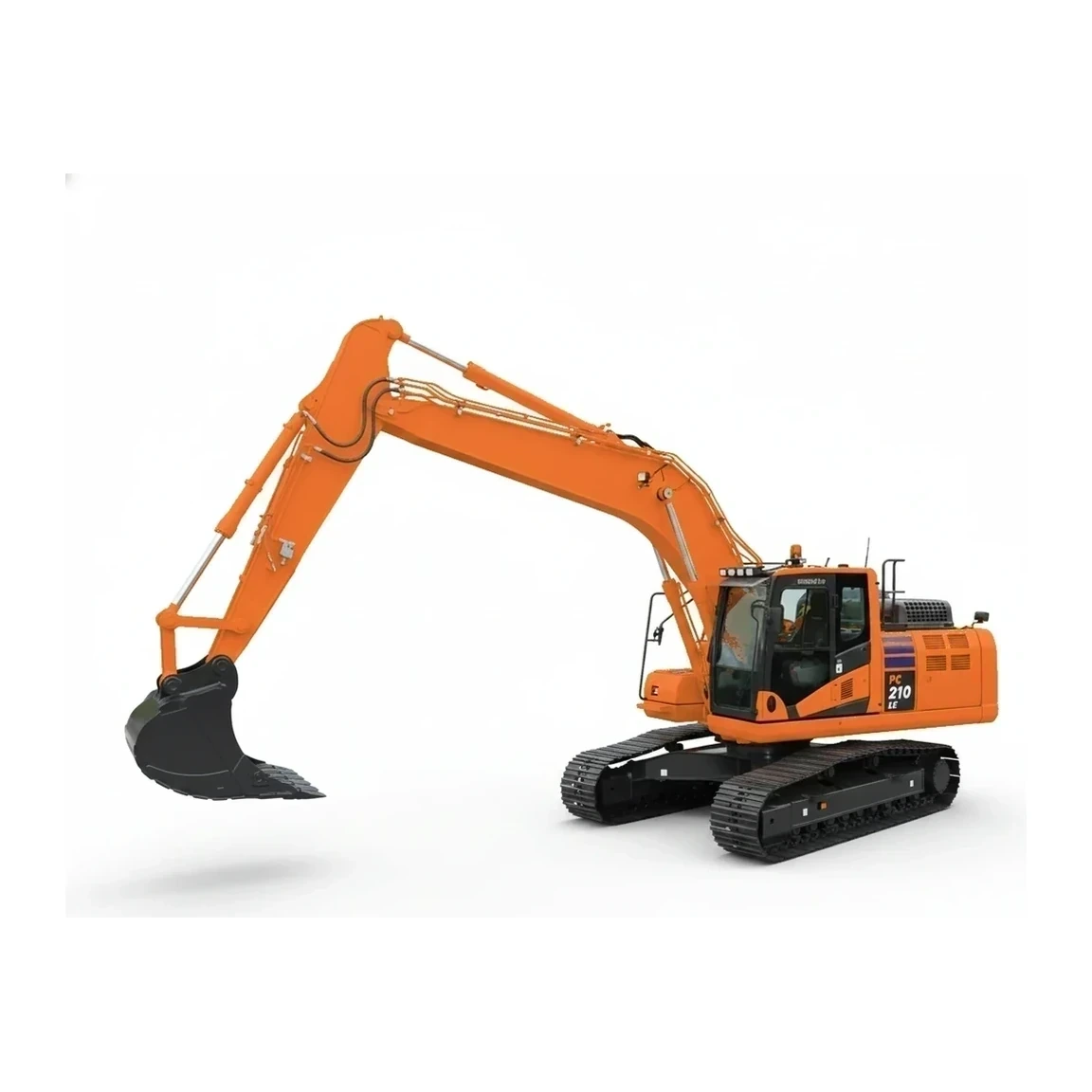
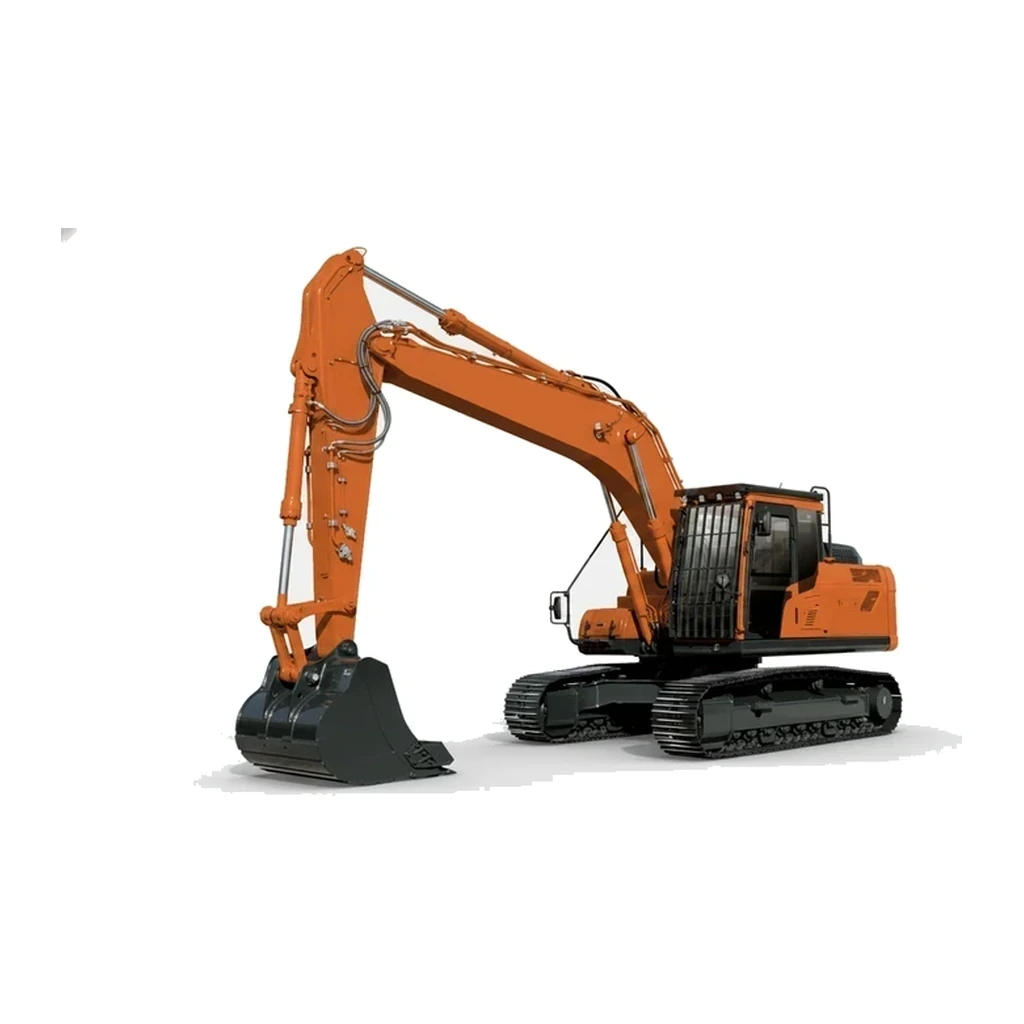
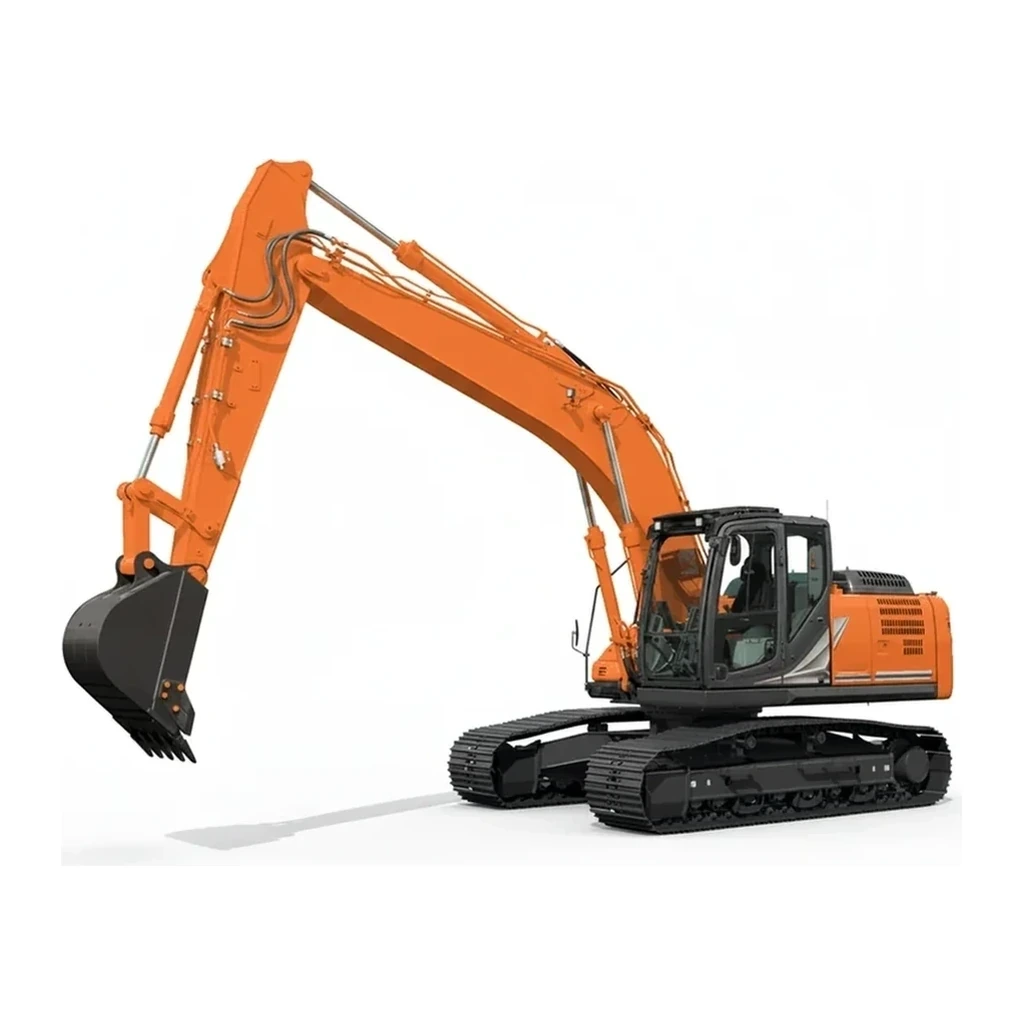
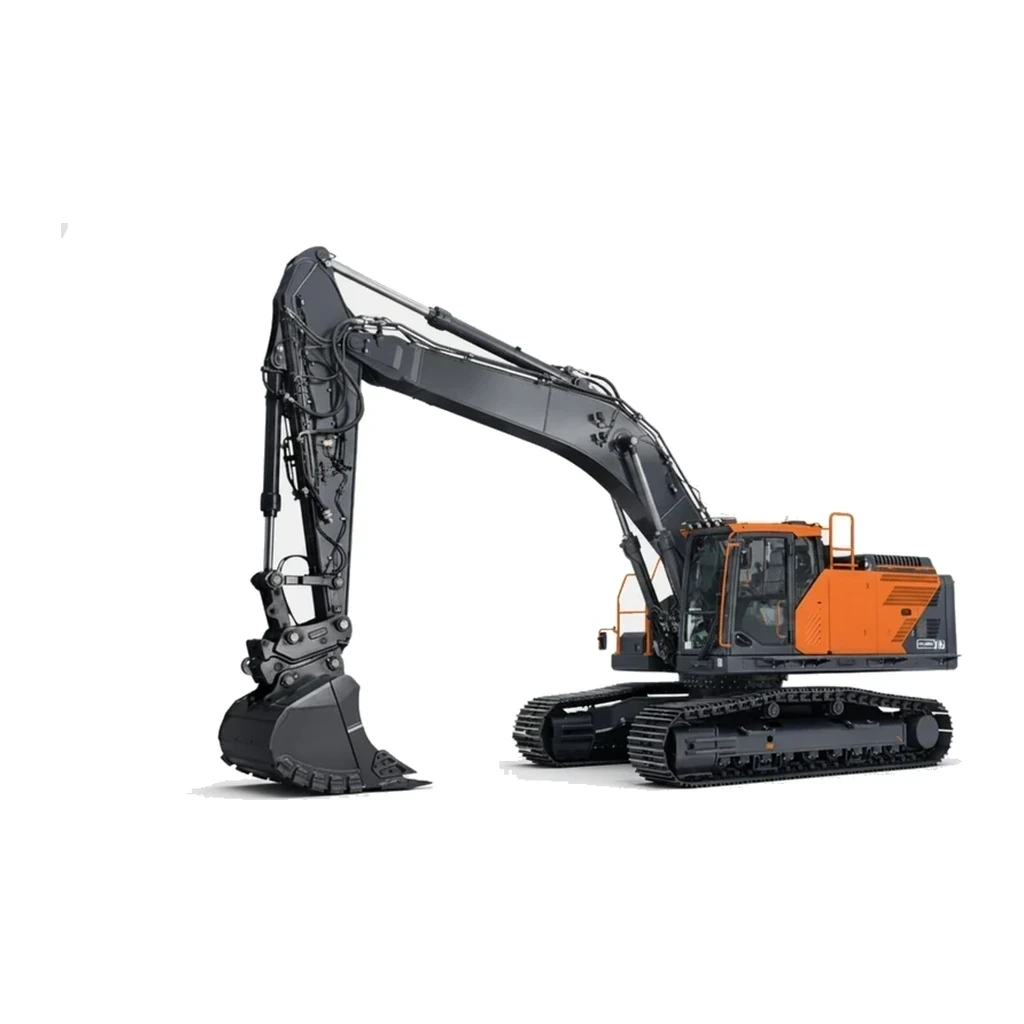
A track excavator (crawler excavator) is the standard full-size digging machine of construction: a slewing upperstructure with boom, stick and bucket mounted on a crawler undercarriage. It is the industry's primary tool for mass excavation, deep trenching, loading and heavy lifting on ground where wheels would sink or slip.
Cat classes
Choisissez une classe de taille — la capacité et la portée varient selon la gamme.
Fonctionnement
A diesel engine drives one or more hydraulic pumps that feed the boom, stick and bucket cylinders, a swing motor that rotates the house on a slew ring, and two independent track motors. Load-sensing hydraulics apportion flow across simultaneous functions, letting an operator dig, swing and travel in one continuous cycle. The crawler undercarriage spreads machine weight across a large track footprint—catalog figures run 0.4–0.6 bar of ground pressure—which is what lets a machine weighing tens of thousands of pounds work on fills, slopes and soft ground. Digging force comes from the stick and bucket cylinders; catalog bucket digging force spans 65–142 kN across the class.
Types et variantes
- Standard / conventional
- Full counterweight overhang, the default configuration with the best lift-to-weight ratio.
- Reduced tail swing
- Shortened counterweight radius for urban and lane work, at some cost in lift capacity.
- Mass-excavation configuration
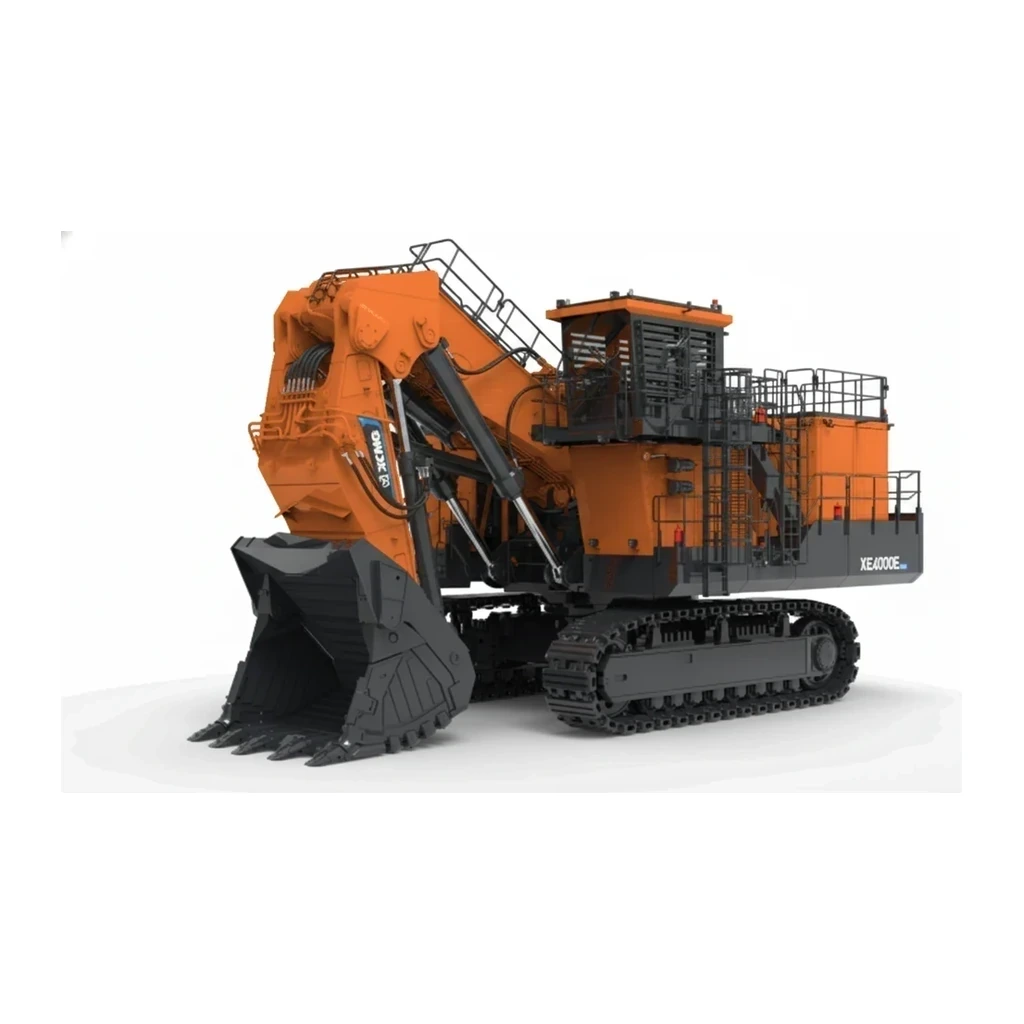
- Shorter, heavier boom and stick with an oversized bucket for high-volume loading rather than depth or reach.
- Long-boom / long-stick configuration
- Extended front for extra dig depth and reach short of a dedicated long-reach machine.
- Demolition-spec machine
- Guarding, cab protection and high-visibility fronts for structural demolition duty.
- Hybrid-drive models
- Swing-energy recovery systems that cut fuel burn in high-cycle digging.
Spécifications clés
| Spécification | Plage typique | Signification |
|---|---|---|
| Operating weight | 22,046–837,757 lb (10,000–380,000 kg) | The universal sizing dimension; the catalog bands the class from 22,000–33,000 lb up to 100,000+ lb. |
| Maximum dig depth | 6–52.4 ft (1.8–16.0 m) | Vertical reach below grade, spanning the full class from utility machines to production excavators. |
| Maximum reach | 21–62.3 ft (6.4–19.0 m) | Horizontal working envelope at ground line, from catalog records across the full class. |
| Bucket capacity | 2.0–6.7 m³ | Heaped capacity spanning the class; production machines in the upper bands run the largest buckets. |
| Bucket digging force | 65–142 kN | Cylinder-generated breakout at the bucket, the figure that determines performance in dense or cemented ground. |
| Engine power | 25.5–1999.5 hp | Diesel power across the full weight range, from utility-class machines through production excavators. |
| Ground pressure | 0.4–0.6 bar | Track-footprint bearing pressure on larger models—low enough to work fills and soft subgrade that wheeled machines cannot. |
Comment l'industrie le dimensionne
Track excavators are sized by operating weight, quoted in metric tonnes or pounds, because weight predicts dig depth, lift capacity and transport requirements together. The catalog splits the class into five bands—22,000–33,000, 33,000–50,000, 50,000–70,000, 70,000–100,000 and 100,000+ lb—a run that covers everything from 10-ton utility machines to production excavators loading off-highway trucks. Transport is the practical dividing line: the lower bands move on tag trailers, while upper bands require lowboys, permits and route planning.
Applications
- Mass excavation and basement digs on commercial and residential projects
- Deep trenching for storm, sanitary and watermain installation
- Truck loading in cut-to-fill earthmoving and aggregate operations
- Foundation, footing and shaft excavation with over-side lifting of pipe and trench boxes
- Demolition and site clearing with breaker, shear and grapple attachments
- Slope shaping, pond construction and heavy landscaping
Sécurité et opération
- Keep the machine and spoil back from trench edges per OSHA Subpart P; the excavator's own weight is the most common surcharge that collapses a trench wall.
- Lift pipe and trench boxes only within the load chart and use the lifting eye, not bucket teeth.
- Enforce a swing-radius exclusion zone; struck-by incidents during slewing are the class's leading ground-crew hazard.
- Verify overhead line clearances before positioning; boom height at full extension exceeds most distribution-line heights.
- Travel with the heavy end (final drives) uphill on grades, and carry the bucket low.
Normes et certifications
- OSHA · 29 CFR 1926.602
- Material handling equipment provisions for earthmoving machinery on construction sites.
- OSHA · 29 CFR 1926 Subpart P
- Excavation protective-system rules that govern trench work performed with these machines.
- ISO · ISO 10567
- Rated lift capacity of hydraulic excavators—the method behind published load charts.
Questions fréquentes
What separates a track excavator from a mini excavator?
Why tracks instead of wheels?
How much can machines in this class dig per pass?
How are these machines moved between sites?
Comparer les modèles populaires
Chercher par spécification →Normalisé aux mêmes unités. Un tiret signifie que la valeur n'a pas été publiée.
| Modèle | Poids en service | Profondeur d’excavation max | Portée max | Puissance moteur |
|---|---|---|---|---|
| Takeuchi TB280FR | 18,805 lb (8,530 kg) | 14 ft (4.3 m) | 23.6 ft (7.2 m) | 69 hp |
| Takeuchi TB290 | 18,779 lb (8,518 kg) | 15 ft (4.6 m) | 24.4 ft (7.4 m) | 69 hp |
| Takeuchi TB2150 | 34,480 lb (15,640 kg) | 18 ft (5.5 m) | 28.7 ft (8.7 m) | 114 hp |
| John Deere 130P | 29,033 lb (13,169 kg) | 6 ft (1.8 m) | 27.3 ft (8.3 m) | 98 hp |
| Case CX160C | 36,299 lb (16,465 kg) | 19.9 ft (6.1 m) | - | 124 hp |
| Case CX210C | 51,147 lb (23,200 kg) | - | 51.2 ft (15.6 m) | 157 hp |
Équipements connexes
Parcourir par fabricant
Sources
Chaque spécification est vérifiée par rapport aux données publiées par le fabricant, avec la source liée pour référence.
Tous les modèles
544 modèles · Page 2 sur 12 · Chaque spécification citée à la source