
Lever Hoist (Come-Along)
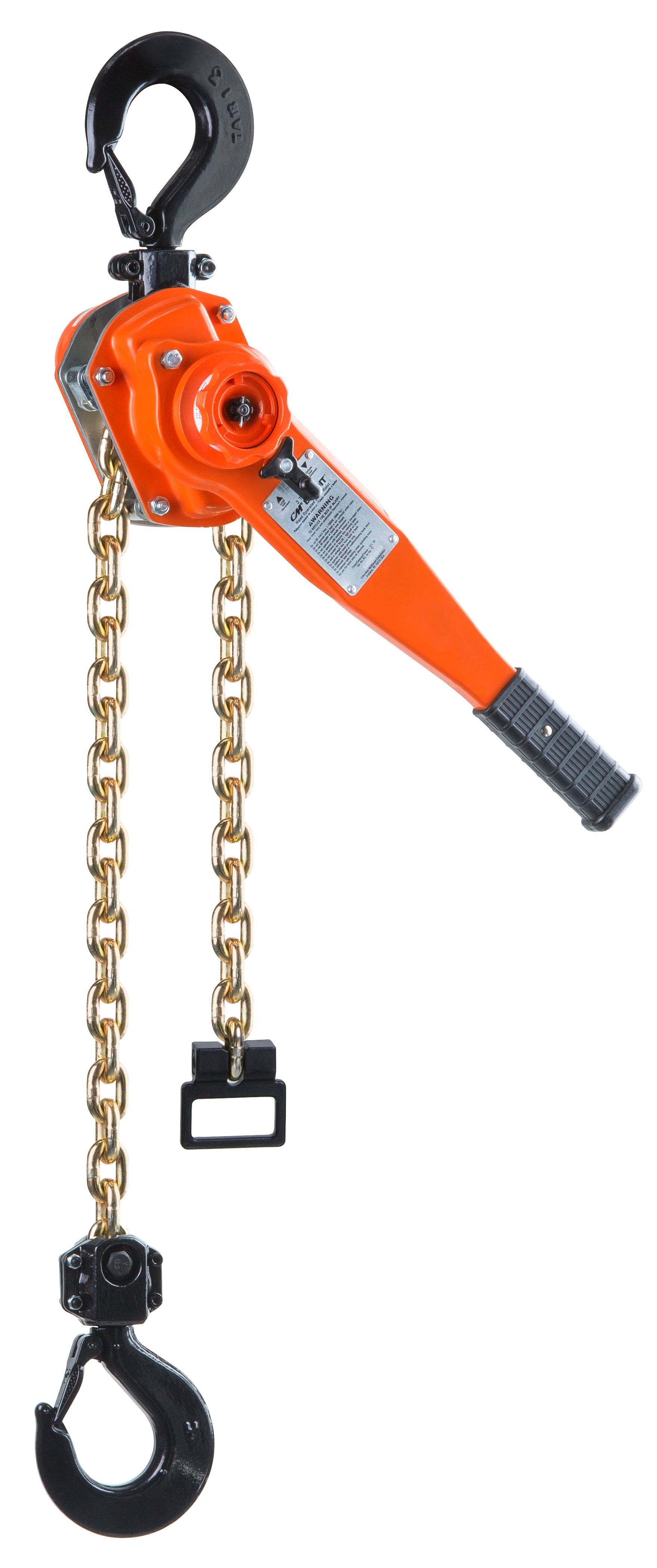
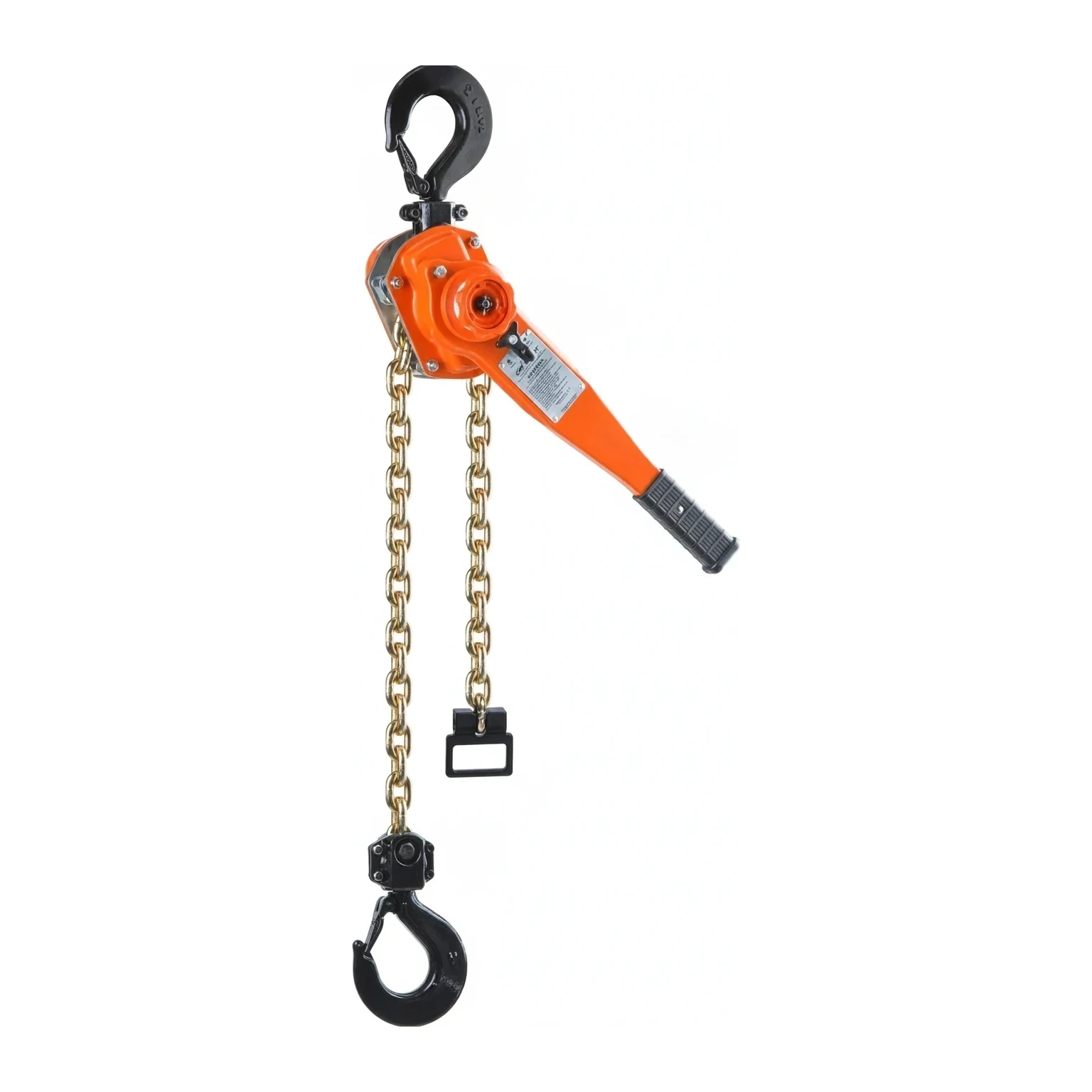
A lever hoist, commonly called a come-along, is a portable hand-operated chain hoist actuated by a reciprocating lever mechanism rather than a hand chain loop. These compact devices provide controlled mechanical advantage for pulling, positioning, and tensioning loads in locations where electric or pneumatic hoists are impractical or unavailable. Lever hoists are distinguished by their ability to operate in any orientation and in confined spaces where access is limited.
Fonctionnement
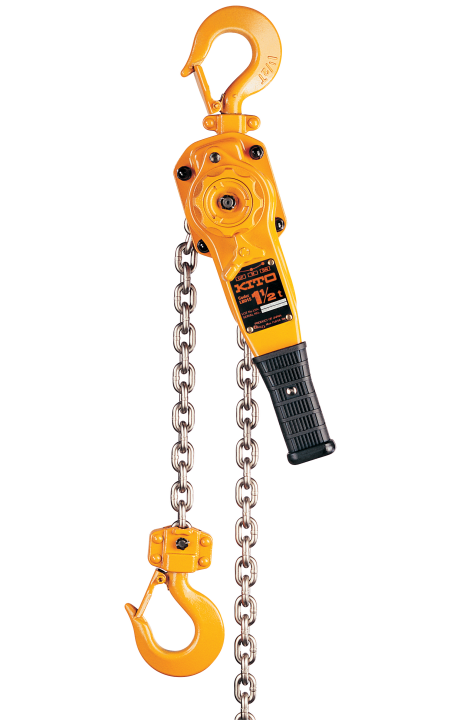
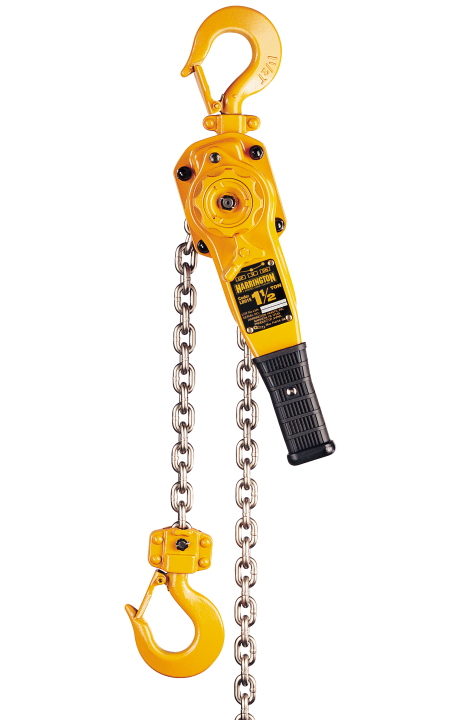
The operator actuates a lever handle in a pumping or ratcheting motion, which engages a pawl-and-ratchet mechanism to incrementally advance a load chain through a gear reduction system. Each stroke of the lever moves the load chain a small, controlled distance, allowing precise positioning and tensioning. A friction brake or mechanical pawl holds the load securely between strokes and when the lever is released. Most lever hoists feature a three-position control lever or selector switch that determines operational mode: lift (pull in), lower (let out), or neutral (free-wheeling for rapid chain positioning without load). The load chain passes through a chain sprocket housed within the body, and standard configurations include top and bottom hooks for attachment to anchor points and loads.
Types et variantes
- Standard Lever Hoist
- General-purpose units with traditional ratchet mechanism for lifting, pulling, and tensioning in any orientation; the most common configuration across industries.
- Mini Lever Hoist
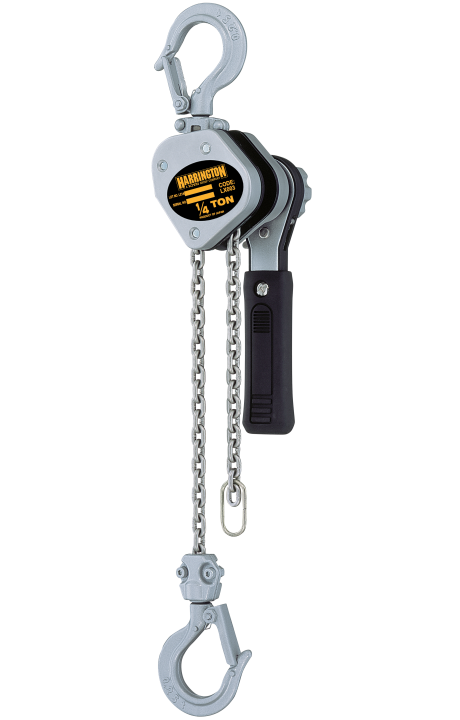
- Compact, lightweight models with shorter lever handles and reduced body profiles for use in extremely tight clearances and confined spaces.
- Ratchet Puller
- Specialized for horizontal pulling applications, often with shorter lift heights and design optimized for tensioning rather than vertical lifting.
- Spark-Resistant Lever Hoist
- Constructed with non-sparking bronze or other special alloys for safe operation in hazardous or potentially explosive environments.
- Low-Headroom Lever Hoist
- Features a reduced-height top hook assembly to minimize the distance between the attachment point and the load, allowing operation in restricted overhead clearance.
Spécifications clés
| Spécification | Plage typique | Signification |
|---|---|---|
| Load Capacity | 750 kg: 3,000 kg (0.75-3 tonnes) | The maximum working load limit the hoist is rated to lift or pull safely; the primary sizing specification. |
| Lift Height (Chain Travel) | 4.9–19.7 ft (1.5–6 m) | The maximum distance the load hook can travel from fully retracted to fully extended; often customizable by chain length. |
| Handle Effort | 44.1–88.2 lb (20–40 kg) | The force required to operate the lever handle at rated capacity; varies with mechanical advantage and capacity. |
| Chain Size/Grade | 6-10 mm diameter, Grade 80 or 100 | The load chain diameter and material grade; higher grades and larger diameters correspond to higher capacity models. |
| Net Weight | 17.6–77.2 lb (8–35 kg) | The weight of the hoist itself; important for portability and for calculating total suspended load in rigging applications. |
Comment l'industrie le dimensionne
The industry sizes lever hoists by load capacity measured in tonnes (metric tons) or tons (short tons), with common capacities ranging from 0.75 to 3 tonnes in the mainstream market. The 1.5-tonne (1.5-ton) and 3-tonne (3-ton) capacities dominate steel erection and rigging work, while lighter 0.75-tonne models serve maintenance and light positioning tasks. Capacities above 3 tonnes, including 6-tonne heavy-duty pullers, are specified for structural dragging and heavy tensioning. Capacity selection is based on the maximum expected load, with industry practice recommending selection well within rated limits to account for dynamic loading and safety factors.
Applications
- Steel erection and structural alignment, pulling beams and columns into position during assembly
- Rigging and load positioning in maintenance, construction, and industrial settings where portability is required
- Tensioning cables, guy wires, and turnbuckles in tower work, utility installations, and temporary structures
- Machinery moving and equipment alignment in confined spaces or areas without power access
- Vehicle and heavy equipment recovery and extraction in off-road and industrial environments
- Theatrical rigging and stage set positioning where quiet, precise manual control is necessary
Sécurité et opération
- Inspect the load chain, hooks, and body for wear, deformation, cracks, or damage before each use; remove damaged units from service immediately
- Ensure the load is within the rated capacity and that the hoist is properly anchored to structurally sound attachment points rated for the imposed loads
- Maintain proper load chain alignment and avoid side-loading hooks, which can induce bending stresses and reduce capacity
- Never use a lever hoist to lift or support personnel, and keep all personnel clear of the load path and potential drop zones
- Engage the neutral or free-wheel position only when the load is fully supported by other means, as this disengages the brake mechanism
Normes et certifications
- ASME · B30.16
- Safety standard for overhead hoists (underhung), covering design, inspection, testing, maintenance, and operation of lever-operated hoists.
- ASME · B30.21
- Safety standard for manually leveraged hoists, providing specific requirements for lever hoist construction and use.
- OSHA · 29 CFR 1926.251
- Rigging equipment for material handling; mandates compliance with applicable ASME standards and proper inspection protocols.
- ANSI · ANSI/ASME B30 Series
- Establishes design factors, proof testing, and periodic inspection intervals for lever hoists used in industrial and construction settings.
Questions fréquentes
What is the difference between a lever hoist and a chain hoist?
How is lever hoist capacity rated?
Can a lever hoist be used for both lifting and pulling?
What is the free-wheel or neutral position used for?
Équipements connexes
Parcourir par fabricant
Sources
Chaque spécification est vérifiée par rapport aux données publiées par le fabricant, avec la source liée pour référence.
Tous les modèles
12 modèles · Chaque spécification citée à la source