
Portable Belt Conveyor
A portable belt conveyor is a mobile, adjustable-angle conveyor system that transports bulk materials, debris, and construction waste from one elevation or location to another. These units consist of a continuous belt looped over pulleys and mounted on a wheeled or skid frame, enabling quick deployment and repositioning on job sites. They are essential in construction, roofing, landscaping, and demolition for moving materials efficiently without manual handling.
Fonctionnement
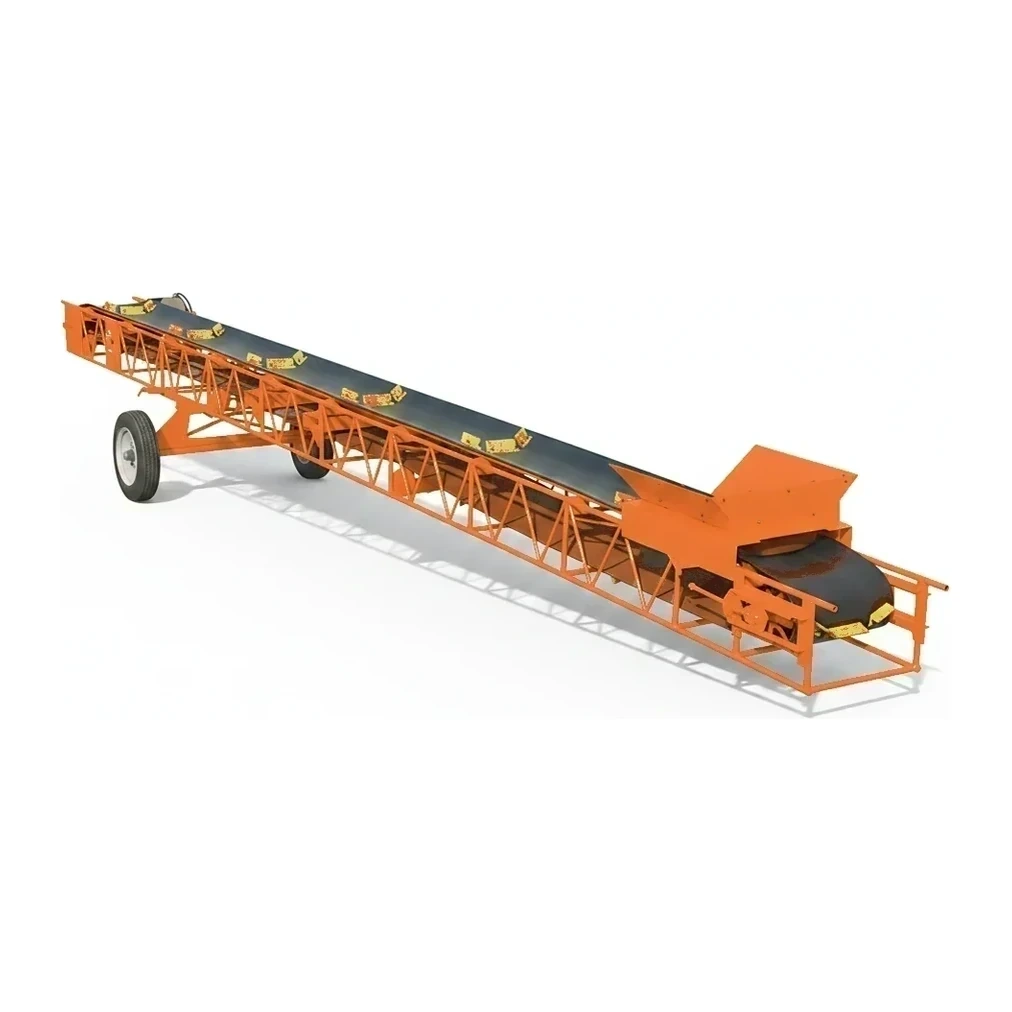
The conveyor operates via an electric or gas-powered motor that drives a continuous belt around two or more pulleys. Material is loaded onto the belt at the intake end, typically at ground level, and the belt carries it up an inclined frame to discharge at the desired height or location. The discharge angle and height are adjustable on most models, allowing positioning of the output point over trucks, hoppers, or stockpiles. Most portable belt conveyors feature telescoping or folding sections to adjust length, and many include wheels or a tow hitch for transport. Belt speed is typically fixed or adjustable to match material flow rates, and side guards prevent spillage during transport. Setup involves positioning the unit, adjusting the angle, and connecting power before loading begins.
Types et variantes
- Standard Portable Conveyor
- Wheeled units with fixed or adjustable length, commonly used for roofing, landscaping, and general material transport on construction sites.
- Telescoping Conveyor
- Features extendable sections that allow variable length adjustment, suited for tasks requiring frequent repositioning or variable reach.
- Tracked Radial Conveyor
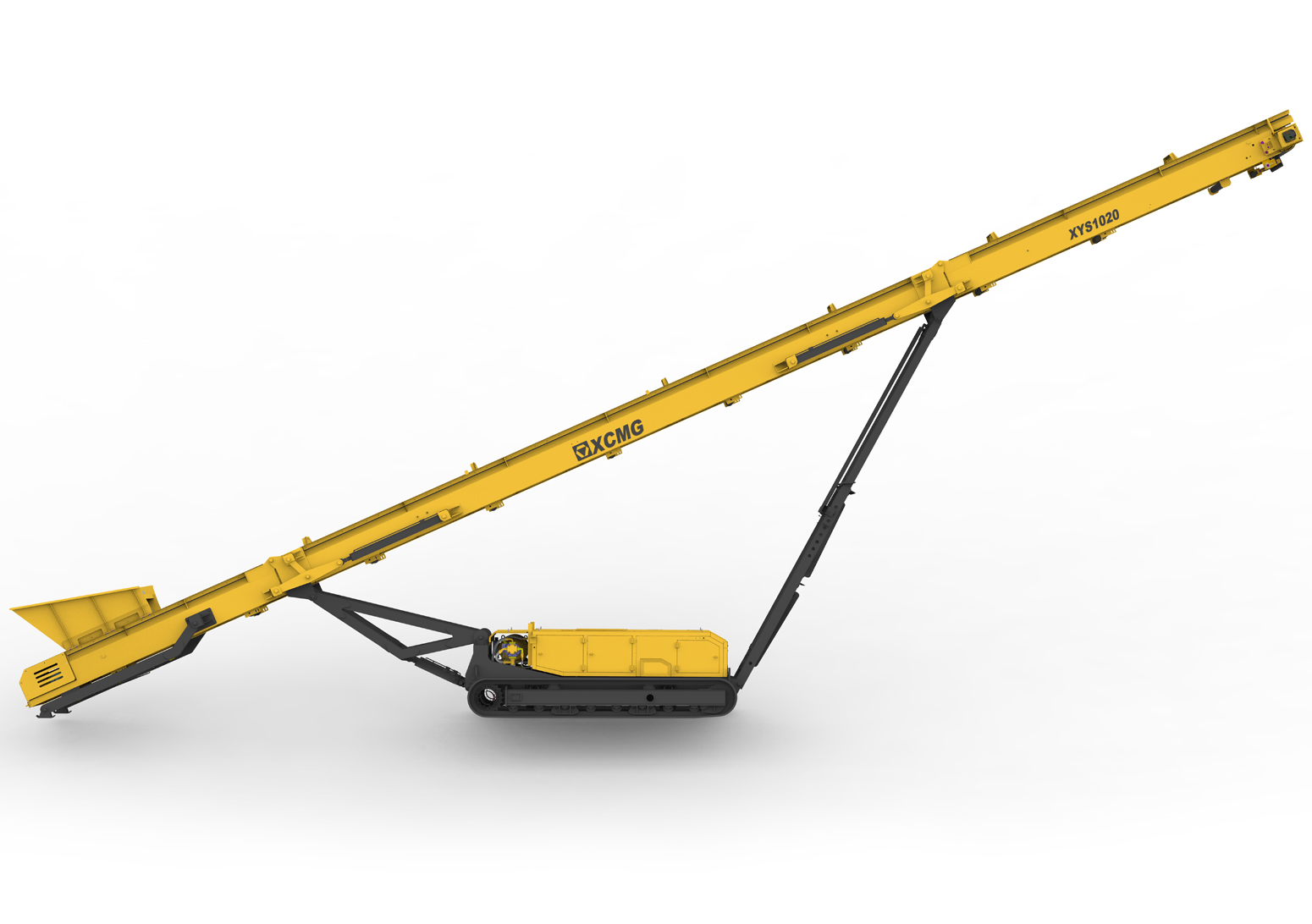
- Self-propelled models with radial swing capability, primarily used in aggregate processing and mining operations for stockpile building.
- Truss-Frame Conveyor
- Heavy-duty industrial models with truss-reinforced frames designed for high-capacity material handling in quarries and recycling operations.
- Folding/Compact Conveyor
- Lighter-duty units that fold for easy transport and storage, used for residential roofing and basement debris removal.
Spécifications clés
| Spécification | Plage typique | Signification |
|---|---|---|
| Length | Sized in feet; models available from under 20 ft to over 40 ft | Determines maximum vertical and horizontal reach; the primary sizing metric in the industry. |
| Load Capacity | 441–13,188 lb (200–5,982 kg) | Maximum material weight the belt can transport, varying by belt width and motor power. |
| Belt Width | Varies by model | Affects material volume and type; wider belts handle larger debris and higher flow rates. |
| Discharge Height | Varies with length and angle | Maximum elevation at which material can be discharged, dependent on conveyor length and angle. |
| Power Source | Electric (110V/230V/480V) or gasoline engine | Determines site compatibility; electric models require accessible power, while gas units operate independently. |
Comment l'industrie le dimensionne
The industry sizes portable belt conveyors primarily by length in feet, which determines both horizontal reach and achievable discharge height when angled. Models up to 20 ft handle getting debris out of a basement or material up a single storey. Conveyors from 20 to 40 ft serve roofing and second-storey feeds, and standard trash-out runs. Units over 40 ft are deployed for long runs: deep excavation spoil and multi-storey material feeds. Load capacity, belt width, and power type are secondary considerations that align with material volume and site conditions.
Applications
- Roofing material tear-off and debris removal from residential and commercial buildings
- Excavation spoil removal from basements, trenches, and below-grade work areas
- Landscape material delivery including mulch, soil, and gravel to elevated or distant locations
- Construction waste and demolition debris transport to dumpsters or trucks
- Aggregate and recycling plant material transfer between processing equipment and stockpiles
- Concrete and masonry supply delivery to upper floors during multi-storey construction
Sécurité et opération
- Emergency stop controls must be accessible and clearly marked along the conveyor length to halt operation immediately
- Pinch points at pulleys, rollers, and belt junctions require guarding to prevent entanglement injuries
- Stable positioning and adequate ground support are critical; many models require outriggers or ballast when operating at steep angles
- Clear communication is necessary when loading and positioning to avoid overloading or material spillage
- Electrical models require proper grounding and GFCI protection, especially in wet or outdoor conditions
Normes et certifications
- ANSI · ANSI/ASME B20.1
- Covers safety standards for conveyors and related equipment, including guarding and emergency stop requirements.
- OSHA · 29 CFR 1926.555
- Addresses conveyor safety in construction settings, including maintenance, operation, and protective measures.
- CEMA · Conveyor Equipment Manufacturers Association
- Publishes industry guidelines for conveyor design, installation, and safe operation practices.
Questions fréquentes
How is conveyor length related to discharge height?
What determines whether to use an electric or gas-powered model?
Can portable belt conveyors handle wet or sticky materials?
What maintenance do portable belt conveyors require?
Équipements connexes
Parcourir par fabricant
Sources
Chaque spécification est vérifiée par rapport aux données publiées par le fabricant, avec la source liée pour référence.
Tous les modèles
47 modèles · Chaque spécification citée à la source