

Material Lift
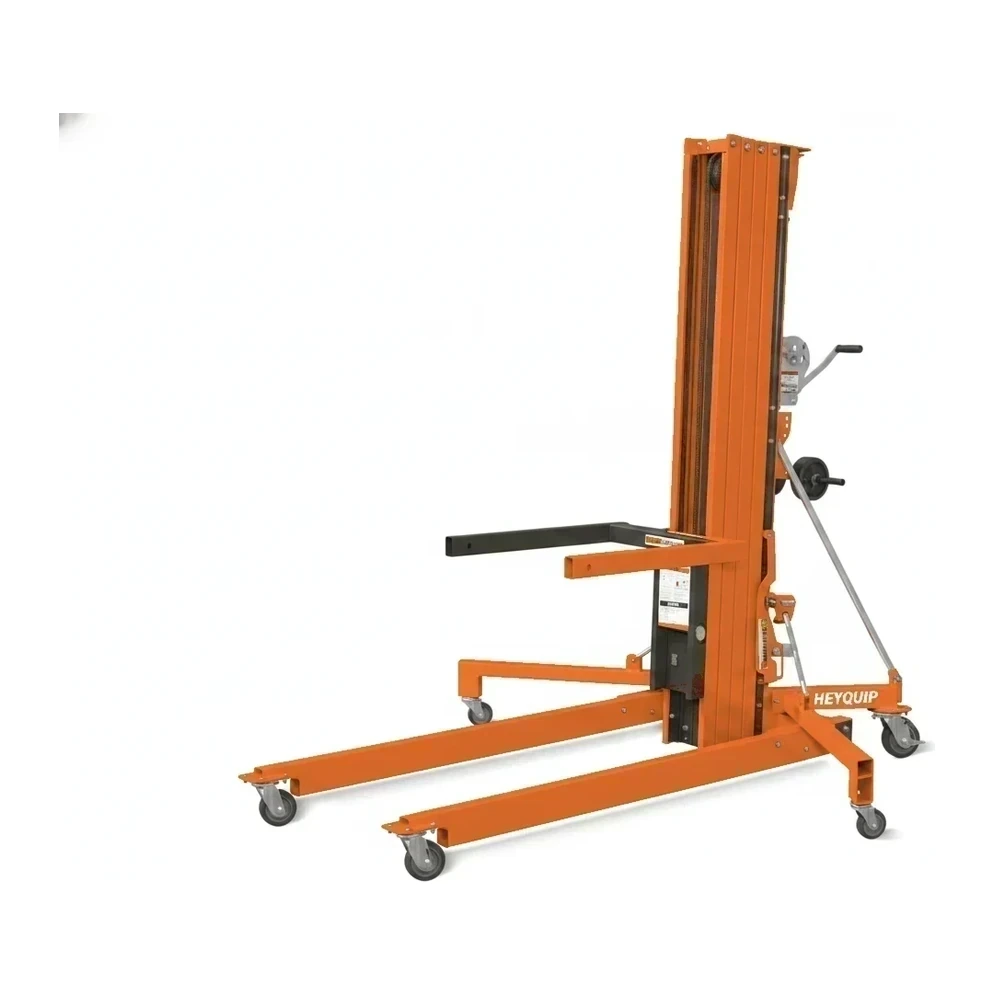
A material lift is a manually or power-operated vertical hoist designed to raise construction materials, equipment, and tools to elevated work areas. Unlike personnel lifts, material lifts are engineered exclusively for load handling and are not rated for human transport. They are widely deployed in construction, facility maintenance, and warehouse operations where repetitive vertical material transfer is required.
Cat classes
Choisissez une classe de taille : la capacité et la portée varient selon la gamme.
Fonctionnement
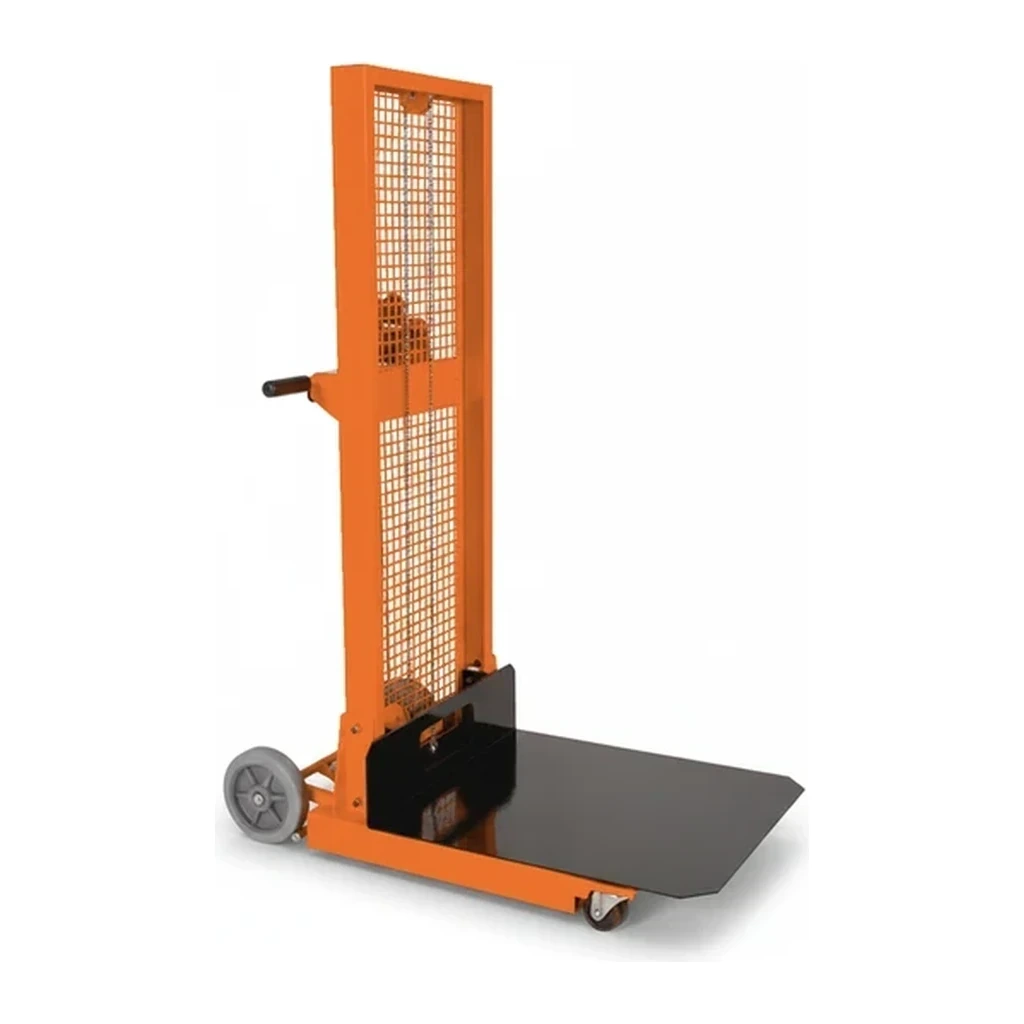
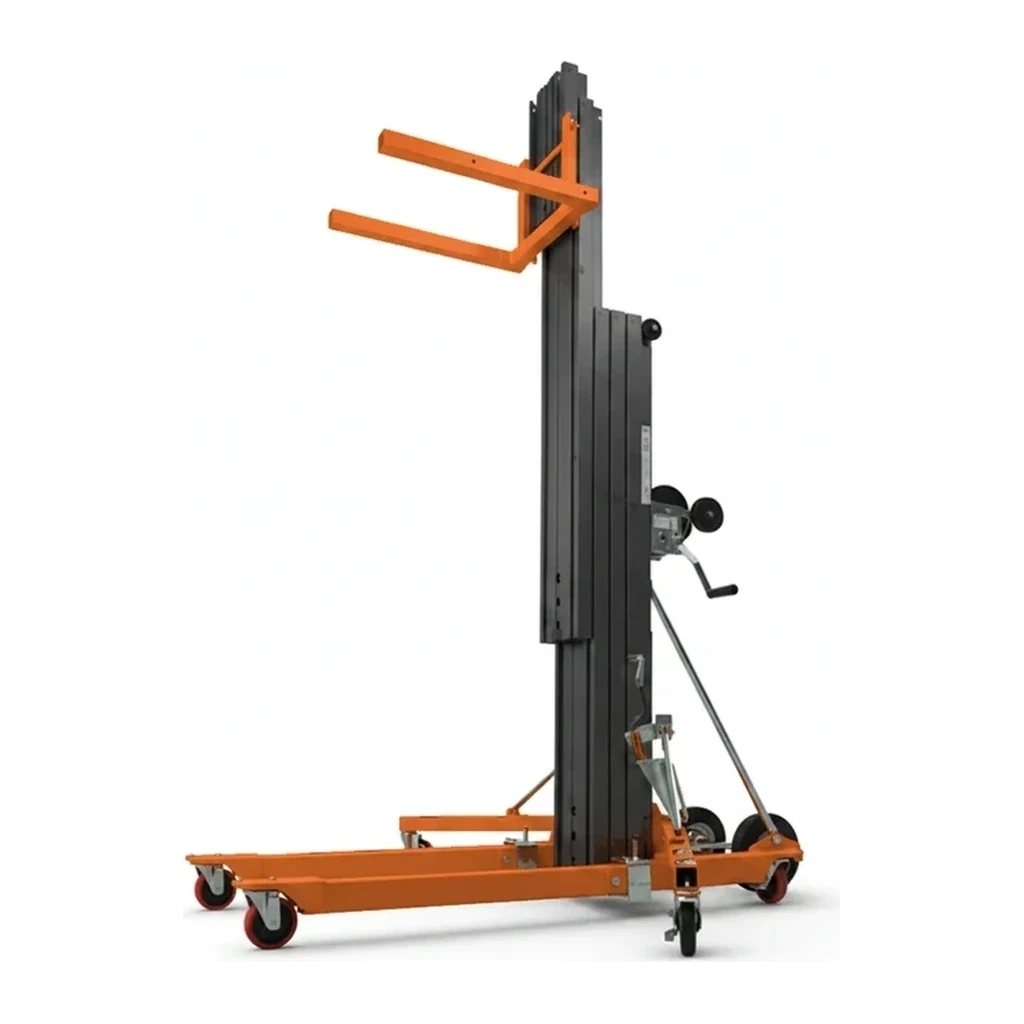
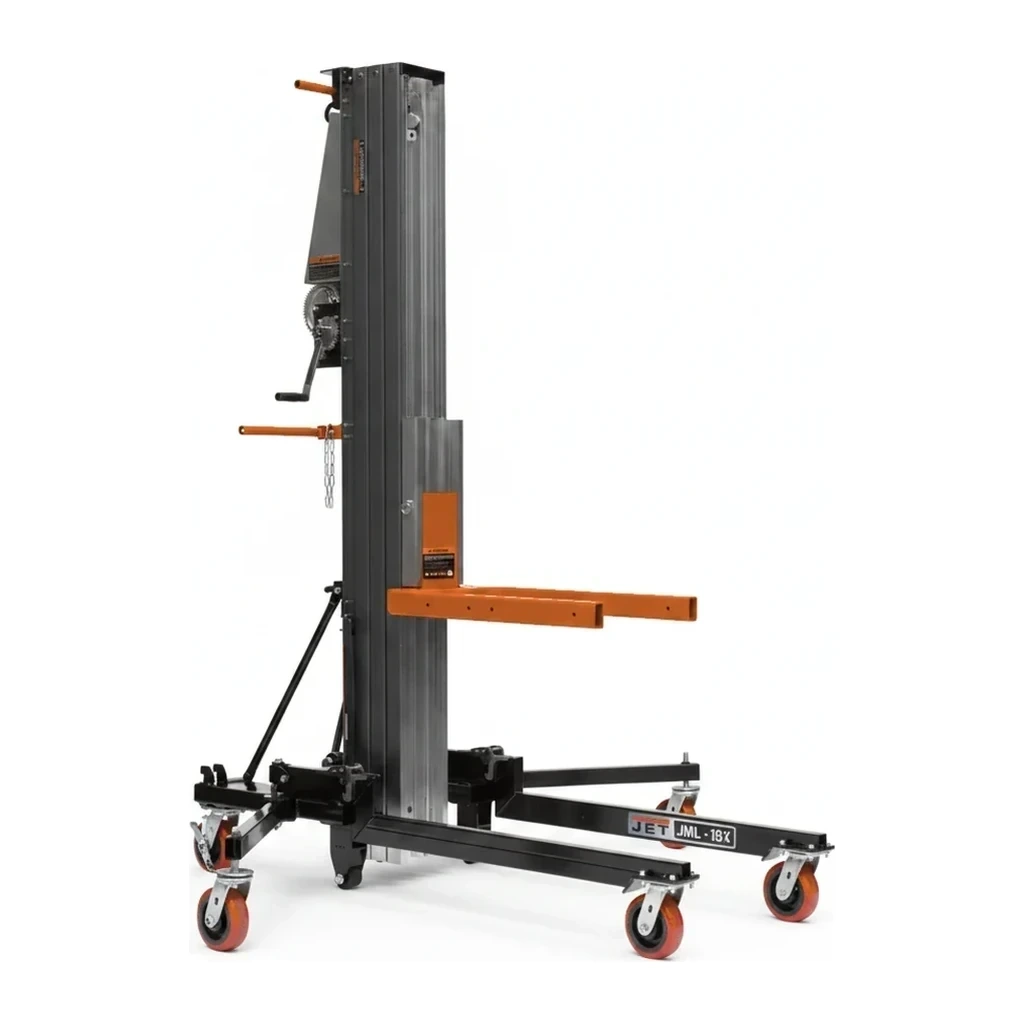
Material lifts employ a mast or tower structure with a guided platform or carriage that travels vertically along rails or tracks. The platform is raised and lowered using a hand-crank winch, electric winch, or pneumatic system, with cable or chain drive mechanisms providing lift force. Load platforms are stabilized by guide rollers or tracks, and many models feature tilt-prevention mechanisms and locking collars to secure the platform at intermediate heights. Operators position the lift at the work site, load materials onto the platform, and engage the winch or power unit to elevate the load. Once at the desired height, the platform is locked or held in position while workers unload materials from scaffolding, rooftops, or elevated decks. Outriggers or base extensions provide stability, and some models include wheels for repositioning between locations.
Types et variantes
- Hand-Crank Material Lift
- Manually operated winch lifts with crank handles, offering portability and no power requirements for lighter loads and lower heights.
- Electric Winch Material Lift
- Motor-driven lifts with electric winch systems, providing faster cycle times and reduced operator effort for heavier loads and frequent use.
- Superlift / Contractor Lift
- Heavy-duty tower lifts with higher capacities and extended reach, commonly used for HVAC units, ductwork, and structural materials.
- Portable Material Hoist
- Lightweight, collapsible designs with smaller footprints for confined spaces and frequent relocation on job sites.
- Platform Material Lift
- Lifts with enclosed or railed platforms for securing loose materials, tools, and bundled loads during vertical transport.
Spécifications clés
| Spécification | Plage typique | Signification |
|---|---|---|
| Working Height | 2.0-7.9 m (6.5-26 ft) | Maximum vertical reach from ground to platform at full extension, determines application suitability for ceiling and roof work. |
| Lift Capacity | 150-4,080 kg (330-9,000 lb) | Maximum load weight the platform can safely raise, varies widely from light-duty tool lifts to heavy structural material hoists. |
| Operating Weight | 98-12,184 kg (215-26,860 lb) | Total weight of the lift unit, impacts portability, floor loading requirements, and transportation logistics. |
| Stowed Height | 2.0-2.2 m (6.5-7.2 ft) | Collapsed or retracted height for transport and storage, affects clearance through doorways and onto trailers. |
Comment l'industrie le dimensionne
The industry classifies material lifts by working height in feet, as this directly correlates with the ceiling and structural heights encountered in construction. Lifts up to 12 ft serve standard residential and low-ceiling commercial work; 12-18 ft models handle typical commercial ceilings and rooftop access; 18-26 ft units address high-bay warehouses, mezzanines, and industrial facilities. Load capacity is a secondary consideration, ranging from 150 kg for tool and supply lifts to over 4,000 kg for heavy HVAC and structural equipment hoists. Models are further differentiated by manual versus powered operation and portability features.
Applications
- Lifting ductwork, HVAC units, and mechanical equipment to rooftops and elevated installations in commercial construction
- Delivering drywall, ceiling panels, and finishing materials to elevated work areas in interior construction
- Hoisting tools, fasteners, and supplies to scaffolding and upper floors to reduce manual carrying by workers
- Positioning signage, lighting fixtures, and truss assemblies in warehouses, arenas, and retail facilities
- Transporting masonry, roofing materials, and structural components to multi-level construction zones
- Supporting facility maintenance by moving equipment and parts to mezzanines, catwalks, and ceiling-mounted systems
Sécurité et opération
- Material lifts must never be used to transport personnel; only loads and materials are permitted on the platform
- Operators should verify ground stability and deploy outriggers or stabilizers to prevent tipping under eccentric or maximum loads
- Loads must be centered and secured on the platform, with weight distributed evenly to avoid tilting or shifting during ascent
- Overhead clearance and proximity to power lines require assessment before extending the mast to full height
- Regular inspection of cables, winches, guide tracks, and locking mechanisms is necessary to prevent mechanical failure and load drops
Normes et certifications
- ANSI · A92.9
- Standard for mast-climbing work platforms and material hoists, covering design, testing, and operational safety requirements.
- OSHA · 1926 Subpart N
- Regulations for material hoists, personnel hoists, and elevators in construction, including load ratings and safe operation.
- ASME · B30.6
- Safety standard for derricks, covering manually and power-operated lifting devices used for material handling.
- CSA · Z185
- Canadian standard for construction hoists and material lifts, addressing structural integrity and operational controls.
Questions fréquentes
What distinguishes a material lift from a personnel lift or boom lift?
How is working height different from lift height?
Can material lifts operate on uneven surfaces or slopes?
What factors determine whether a hand-crank or electric winch model is appropriate?
Comparer les modèles populaires
Chercher par spécification →Normalisé aux mêmes unités. Un tiret signifie que la valeur n'a pas été publiée.
| Modèle | Capacité de charge | Hauteur de levage | Puissance moteur |
|---|---|---|---|
| Genie SLA-20 | 800 lb (363 kg) | - | - |
| Genie SLA-5 | 1,001 lb (454 kg) | - | - |
| Genie SLA-10 | - | - | - |
| Genie SLA-15 | 800 lb (363 kg) | - | - |
| Genie SLA-25 | 650 lb (295 kg) | - | - |
| Genie SLC-12 | 650 lb (295 kg) | - | - |
Équipements connexes
Parcourir par fabricant
Sources
Chaque spécification est vérifiée par rapport aux données publiées par le fabricant, avec la source liée pour référence.