

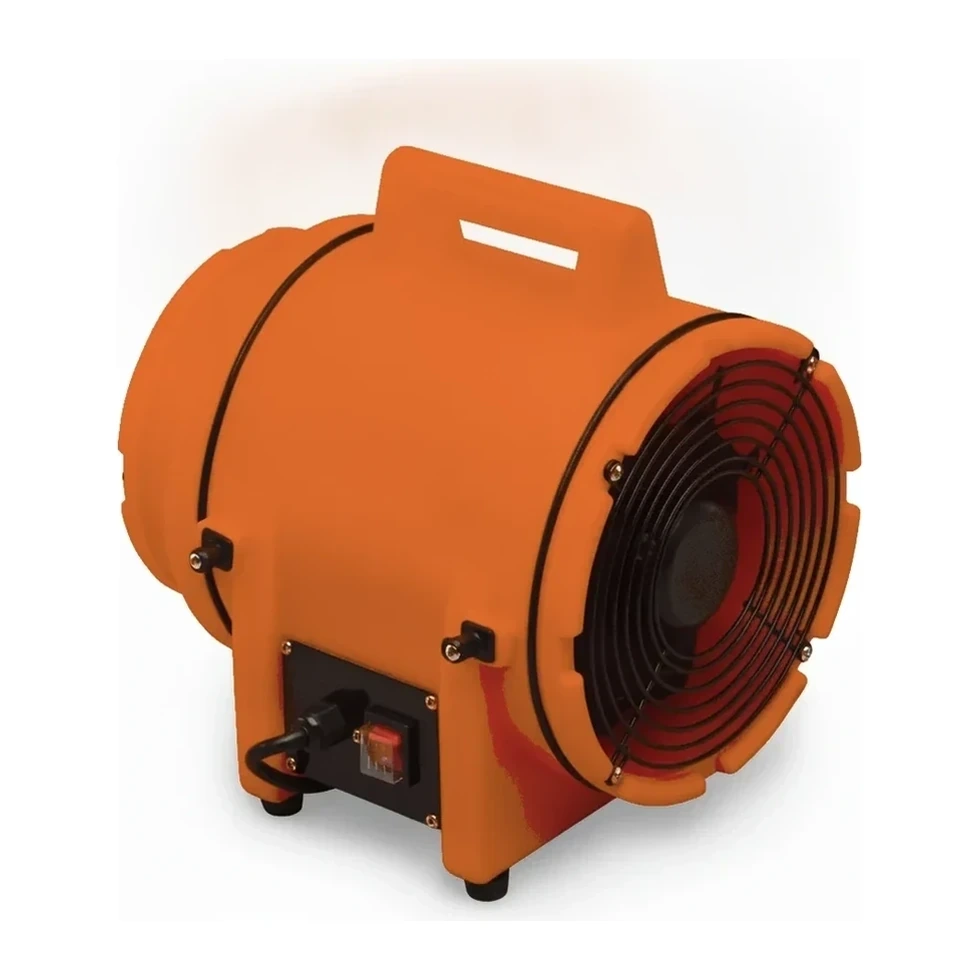
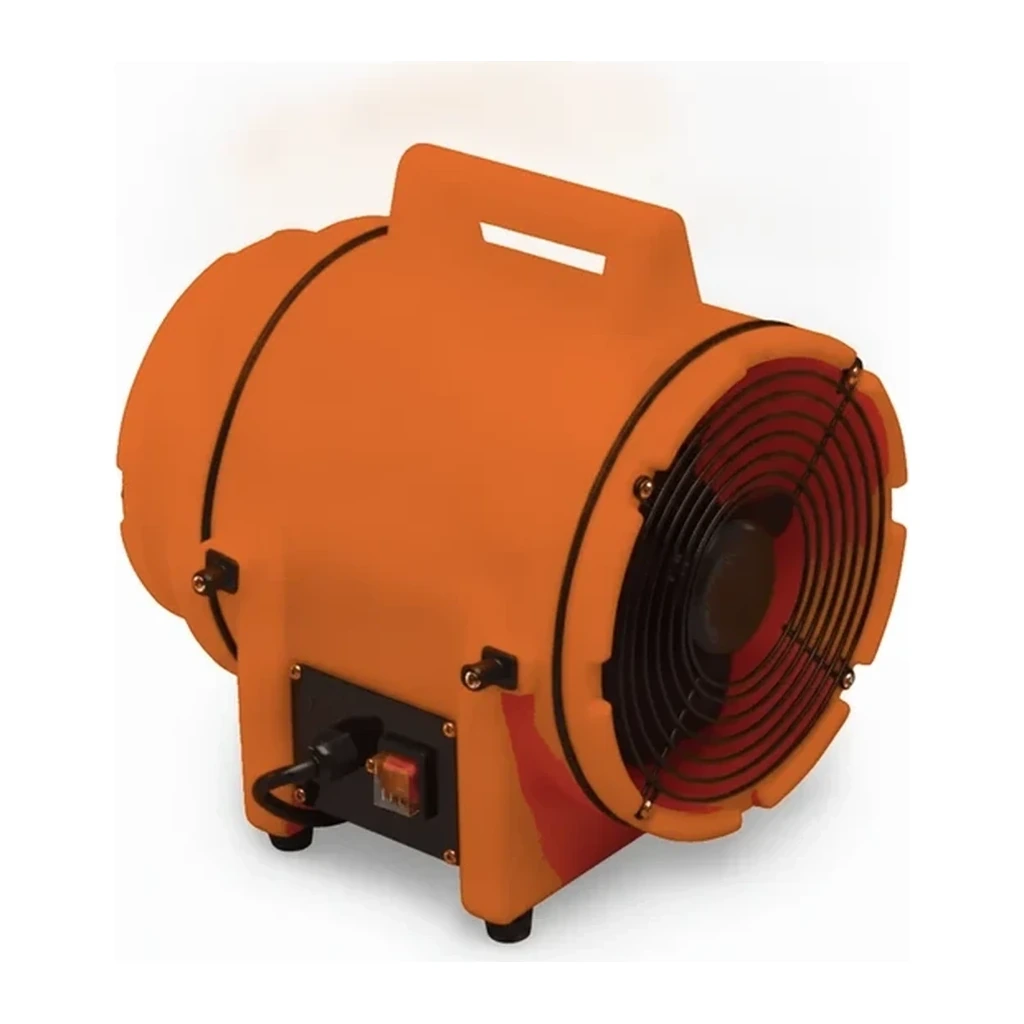
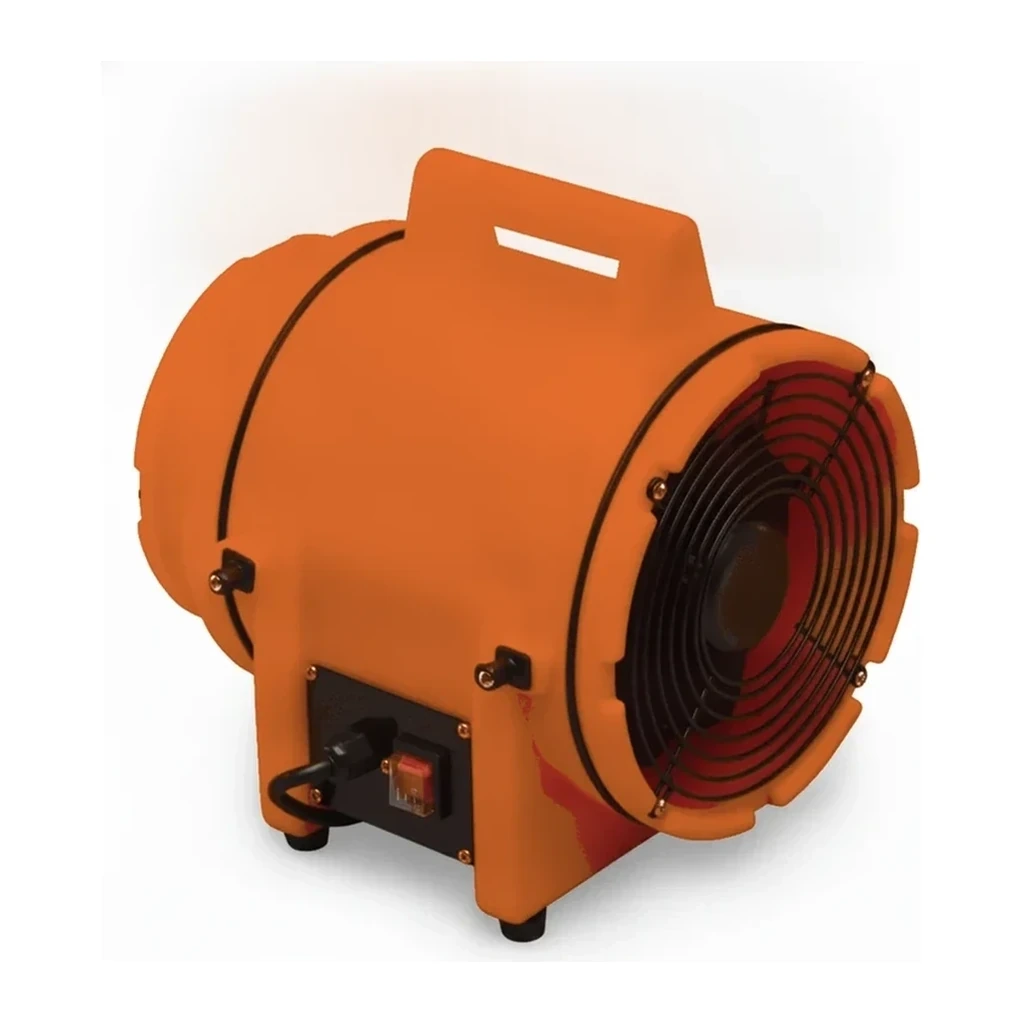
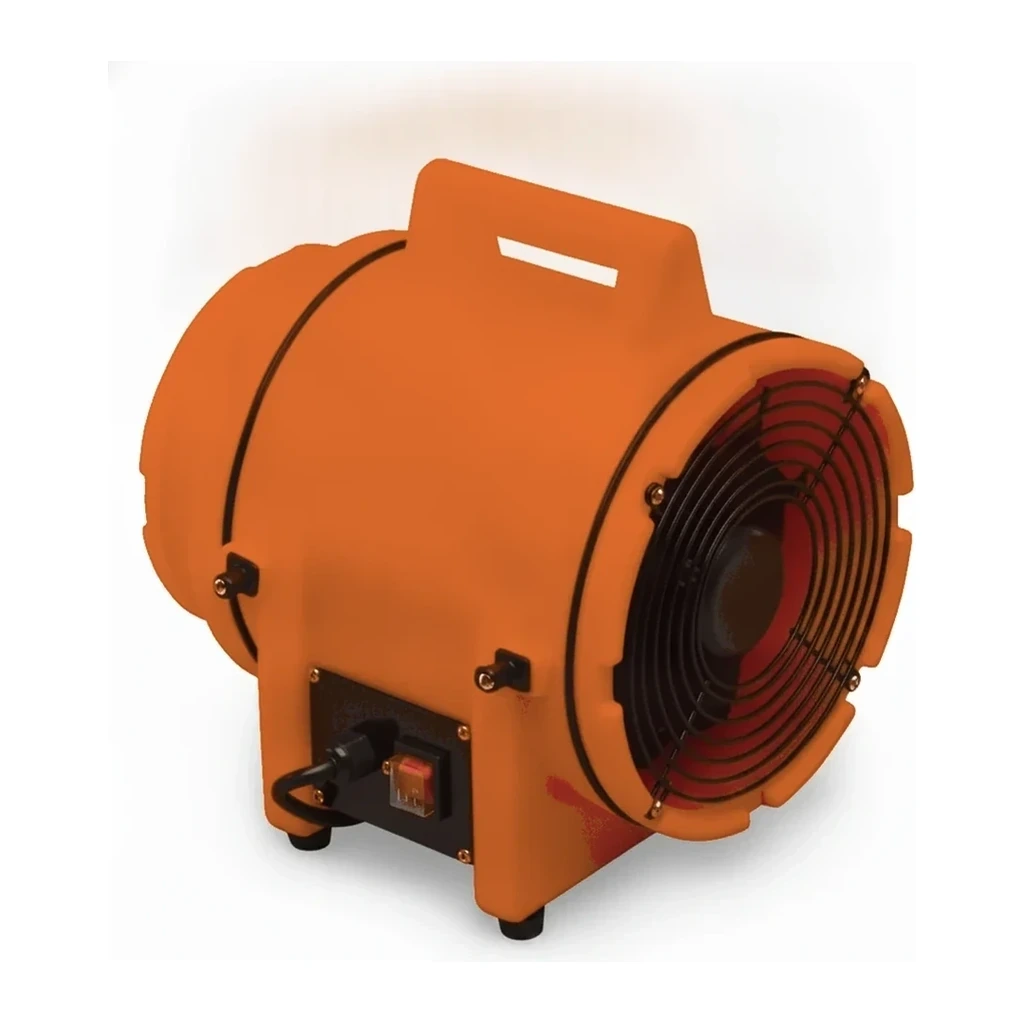
1,000-2,000 cfm Confined Space Ventilator
The 1,000-2,000 cfm confined space ventilator class represents the standard-duty tier for vessel and tank entry operations, rated for 25 to 50 feet of attached ducting. These units bridge the gap between light-duty portable blowers and high-capacity industrial ventilation systems, handling typical permit-required confined space environments. The size class sits in the middle of the confined space ventilator ladder, with units delivering 1,200 to 1,970 cfm airflow.
Cat classes
Choisissez une classe de taille : la capacité et la portée varient selon la gamme.
Spécifications clés
| Spécification | Plage typique | Signification |
|---|---|---|
| Airflow | 1,200-1,970 cfm | Rated delivery with duct resistance factored into performance curves |
| Duct Length Capacity | 25–50 ft (7.6–15.2 m) | Maximum effective duct run before airflow degrades below acceptable ventilation rates |
| Application Zone | Standard vessels and tanks | Sized for entry work in typical industrial confined spaces |
Comment choisir
This size class suits standard vessel entry, tank cleaning, and moderate-depth confined space work where 25 to 50 feet of ducting connects the blower to the entry point. When duct runs exceed 50 feet, when ventilating larger vessels above 10 feet in diameter, or when air change rates demand higher volumes, the 2,000+ cfm Confined Space Ventilator delivers the necessary airflow with less performance loss. For shallow manholes, utility vaults, or short-duct applications where portability is prioritized, the Up to 1,000 cfm Confined Space Ventilator offers sufficient ventilation with easier handling.
Ce que cette taille peut gérer
- Entry and purging of horizontal storage tanks 6 to 10 feet in diameter
- Ventilation of process vessels during maintenance turnarounds
- Fume extraction from coating or cleaning operations inside tanks
- Air supply for welding or grinding work in confined vessels
- Continuous ventilation during multi-worker entry in vertical silos
- Solvent vapor control in paint booths and confined coating areas
Sécurité et opération
- Air monitoring must confirm acceptable atmosphere before and during ventilation; blowers do not substitute for gas detection
- Duct connections require secure attachment to prevent disconnection during operation and loss of ventilation
- Blower placement must remain outside the confined space to avoid introducing exhaust or recirculating contaminated air
- Static bonding and grounding apply when ventilating spaces with flammable vapor hazards
Transport et logistique
- Most units in this class are hand-portable by two workers or moved on hand trucks
- Typical weight and footprint allow transport in pickup beds or van cargo areas without special securing
Alimentation
- Electric models typically draw 115V single-phase, compatible with standard job-site circuits
- Higher-output units may require 230V single-phase or dedicated 20A circuits to avoid breaker trips
Questions fréquentes
How does duct length affect airflow in this size class?
What differentiates this class from smaller confined space blowers?
Can this size class provide both supply and exhaust ventilation?
Équipements connexes
Parcourir par fabricant
Sources
Chaque spécification est vérifiée par rapport aux données publiées par le fabricant, avec la source liée pour référence.
1,000-2,000 cfm Confined Space Ventilator
6 modèles · Chaque spécification citée à la source