

20-35 ft Towable Light Tower
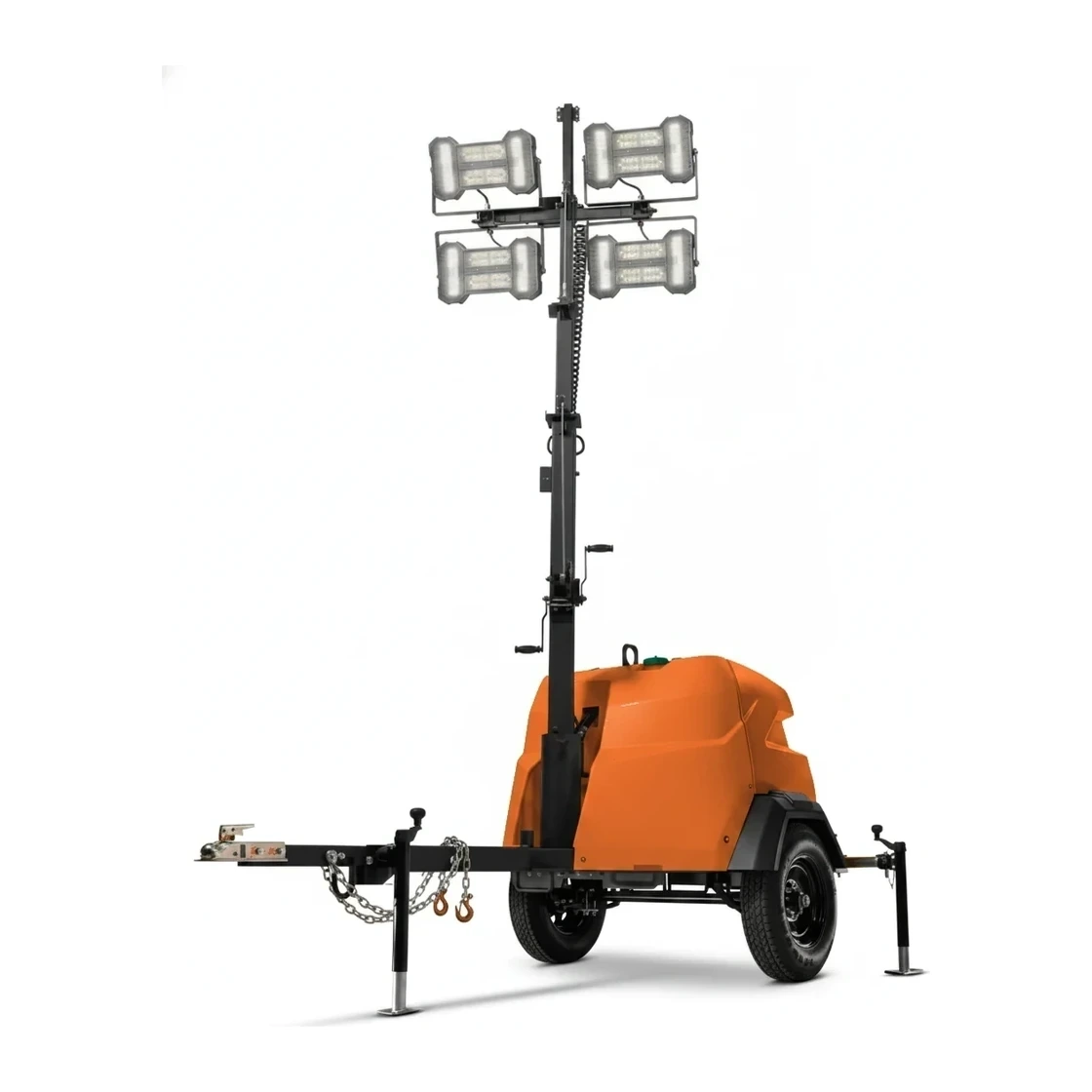
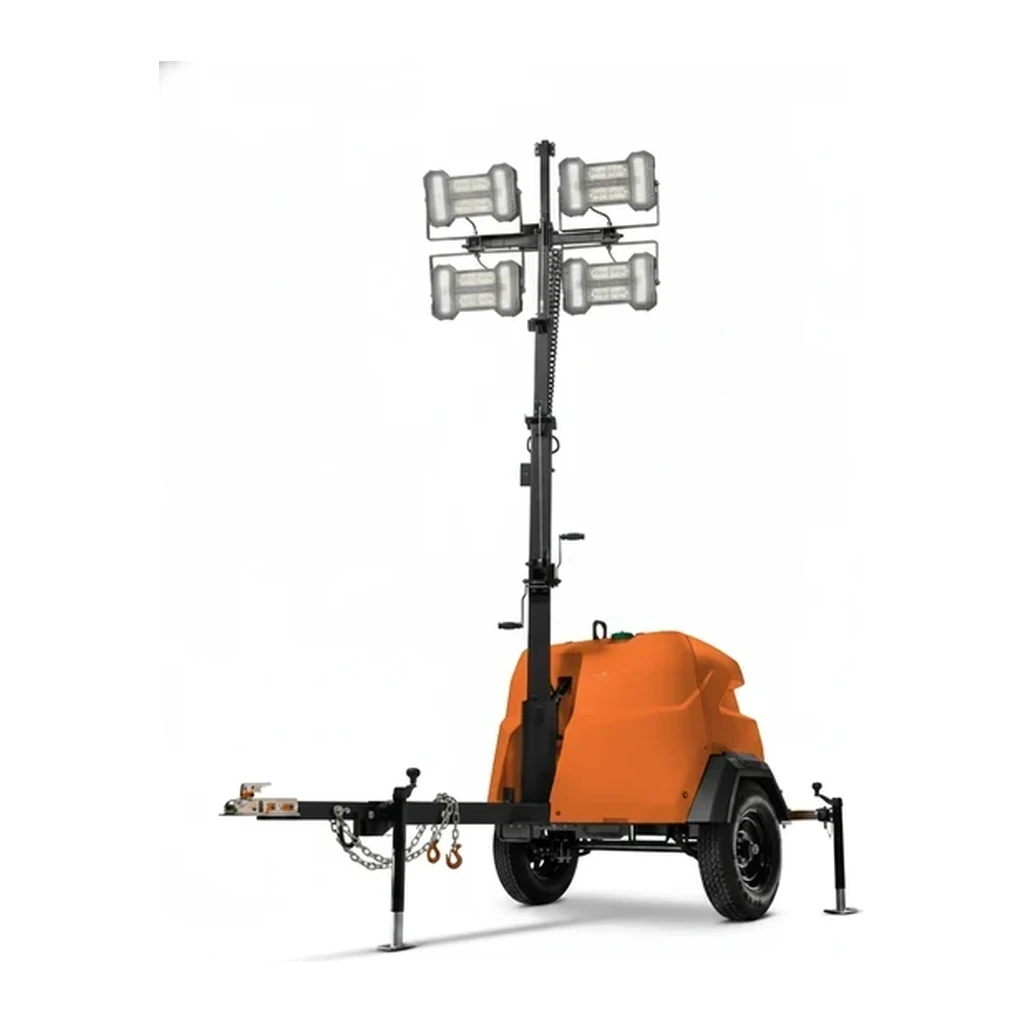
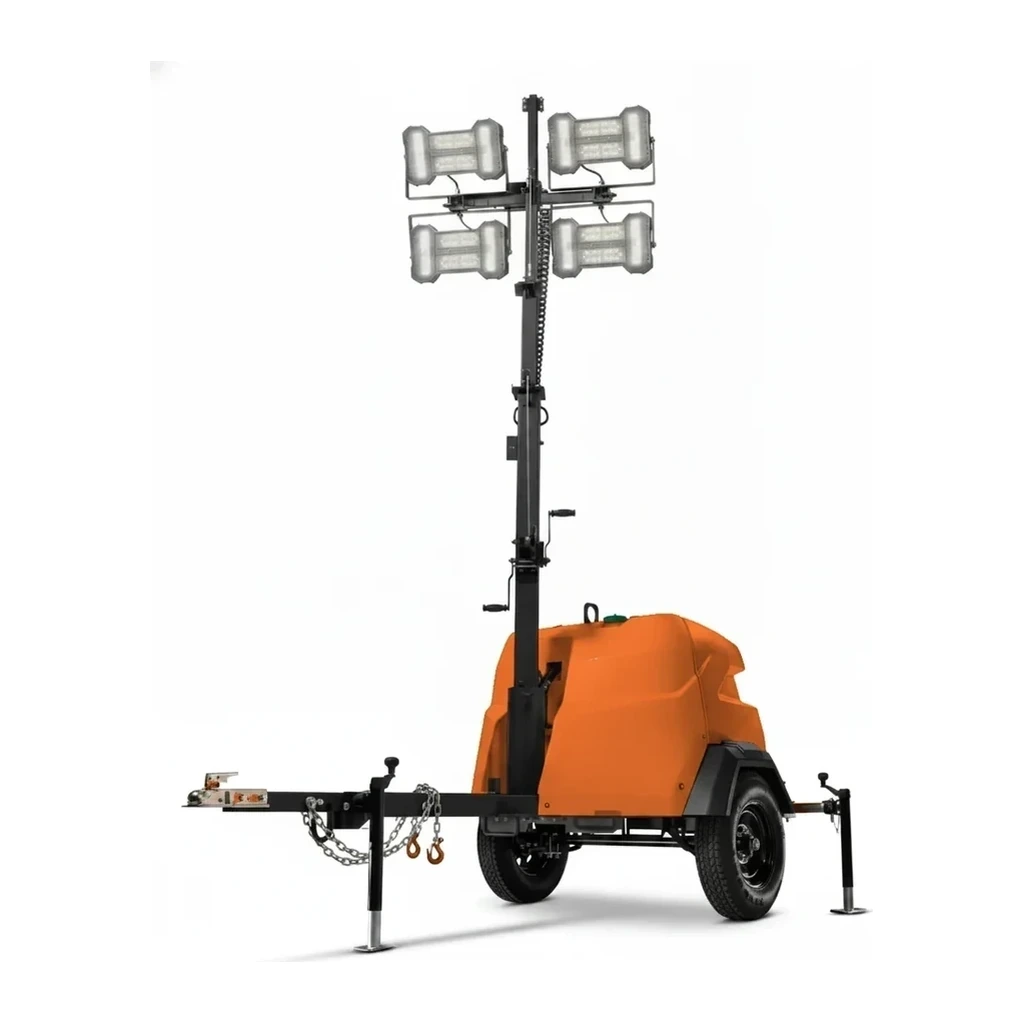
The 20-35 ft towable light tower is the workhorse of temporary job-site lighting, typically deploying a 30 ft mast with metal halide or LED fixtures generating 104,000 to 172,000 lumens. This size class dominates highway work zones, utility staging yards, and night paving operations where a single unit illuminates 5,000 to 7,000 square meters. It represents the upper end of the two-band towable light tower ladder, beyond which portable applications give way to stationary or truck-mounted systems.
Cat classes
Choisissez une classe de taille : la capacité et la portée varient selon la gamme.
Spécifications clés
| Spécification | Plage typique | Signification |
|---|---|---|
| Mast height | 7-27 ft (telescoping to class maximum) | Extended height determines coverage radius and ability to clear obstructions; most units deploy to 25-30 ft. |
| Total lumens | 104,000-172,000 lm | Combined fixture output; higher values support larger work zones or tasks requiring higher lux levels. |
| Fuel tank capacity | 30-117 gal | Dictates runtime between refueling; larger tanks support multi-shift or remote operations with infrequent site access. |
| Operating weight | 400-5,000 kg (880-11,000 lb) | Includes chassis, mast, generator, and full fuel; determines tow-vehicle requirements and trailer-weight classification. |
| Power output | 2.6-17.5 kVA | Onboard generator capacity; some units provide auxiliary power for tools or site equipment in addition to lighting loads. |
Comment choisir
The 20-35 ft band suits applications requiring area lighting across several thousand square meters: road construction, large equipment staging, event setup, emergency response, and utility projects where a single tower replaces multiple smaller units. When coverage needs are confined to a single small work cell, driveway, or residential repair (under 2,000 m²), the Up to 20 ft Towable Light Tower offers easier handling and lower fuel consumption. This 20-35 ft class is the top rung of the towable ladder; operations requiring permanent installation, heights above 35 ft, or integration with fixed infrastructure typically move to stationary floodlight arrays or vehicle-mounted systems rather than a larger towable size.
Ce que cette taille peut gérer
- Highway resurfacing and line-striping during nighttime lane closures
- Utility substation construction and transformer installation in unlit yards
- Commercial parking lot demolition and grading over multi-acre sites
- Emergency response staging areas for wildfire, flood, or infrastructure failure
- Bridge deck repair and inspection where scaffolding requires overhead illumination
- Open-pit mining haul roads and loading zones operating around the clock
Sécurité et opération
- Mast extension and retraction require clear overhead space and attention to power lines, tree canopies, and aircraft approach zones; many jurisdictions require overhead clearance surveys before deployment.
- Stabilizing outriggers or ballast must be deployed on level ground to prevent tip-over during wind events; manufacturer load charts specify maximum wind speed for extended operation.
- Refueling procedures require engine shutdown and ventilation; diesel spillage on hot engine components presents fire risk in dry or combustible environments.
- Sound levels of 63-68 dB(A) at operator position necessitate hearing protection during maintenance and may trigger noise-ordinance compliance in residential or noise-sensitive zones.
Transport et logistique
- Road-towable via pintle hitch or ball coupler by pickup trucks and service vehicles rated for 880-11,000 lb trailer loads; heavier models require ¾-ton or larger tow vehicles.
- Self-contained axle and wheel assembly with DOT-compliant lighting and breakaway braking; most units meet highway speed limits without escort.
- Compact footprint when stowed (mast retracted) allows storage in standard equipment yards and transport through residential streets to confined sites.
Alimentation
- Integrated diesel generator (3-12 hp) powers lamps and onboard controls; no external electrical connection required for lighting operation.
- Fuel consumption typically 0.6-1.8 gal/hr depending on load and ambient conditions; 30-117 gal tanks provide 17 to 195 hours of continuous runtime.
- Some models include auxiliary 120/240 V outlets (up to 17.5 kVA) for powering hand tools, chargers, or small site equipment alongside the lighting array.
Questions fréquentes
What ground area does a 30 ft mast typically illuminate to 20 lux?
Can one vehicle tow multiple 20-35 ft light towers in tandem?
How does metal halide compare to LED in this size class?
Comparer les modèles populaires
Chercher par spécification →Normalisé aux mêmes unités. Un tiret signifie que la valeur n'a pas été publiée.
| Modèle | Puissance de sortie | Capacité de carburant |
|---|---|---|
| Allmand Maxi-Lite | 20 kw | 100.0 gal |
| Generac MLTB | 2.6 kVA | - |
| Generac MLT6SMDS LED Light Tower | 6 kw | 39.9 gal |
| Atlas Copco HiLight MI+ 6 | - | - |
| Generac CTF-10 | - | - |
| Multiquip LT-12D | - | - |
Équipements connexes
Parcourir par fabricant
Sources
Chaque spécification est vérifiée par rapport aux données publiées par le fabricant, avec la source liée pour référence.
20-35 ft Towable Light Tower
9 modèles · Chaque spécification citée à la source