
Walk-Behind Trencher
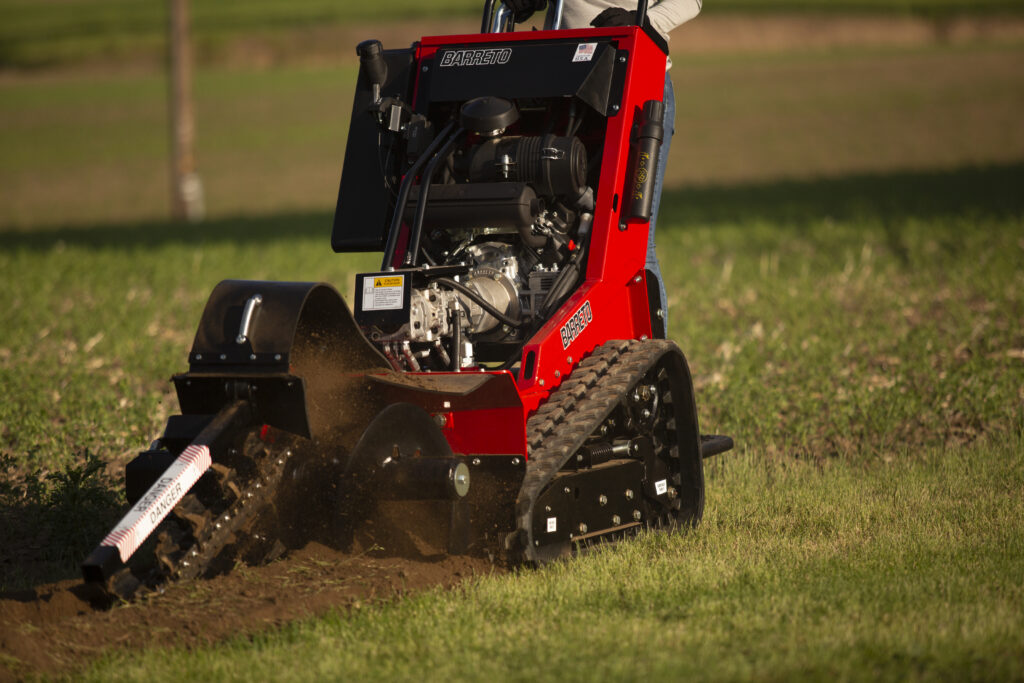
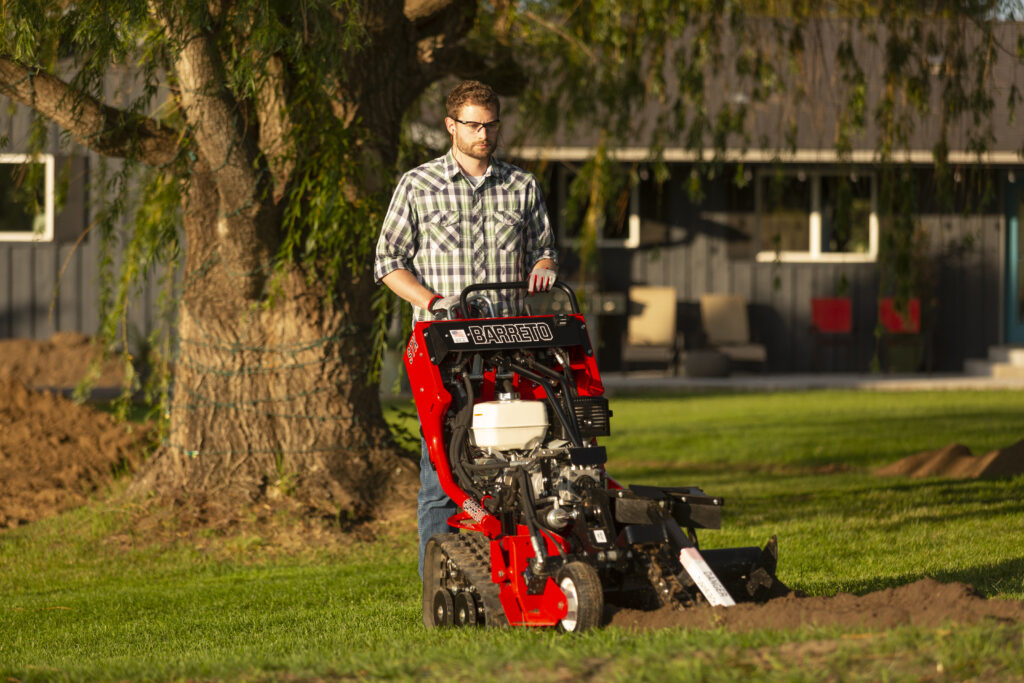
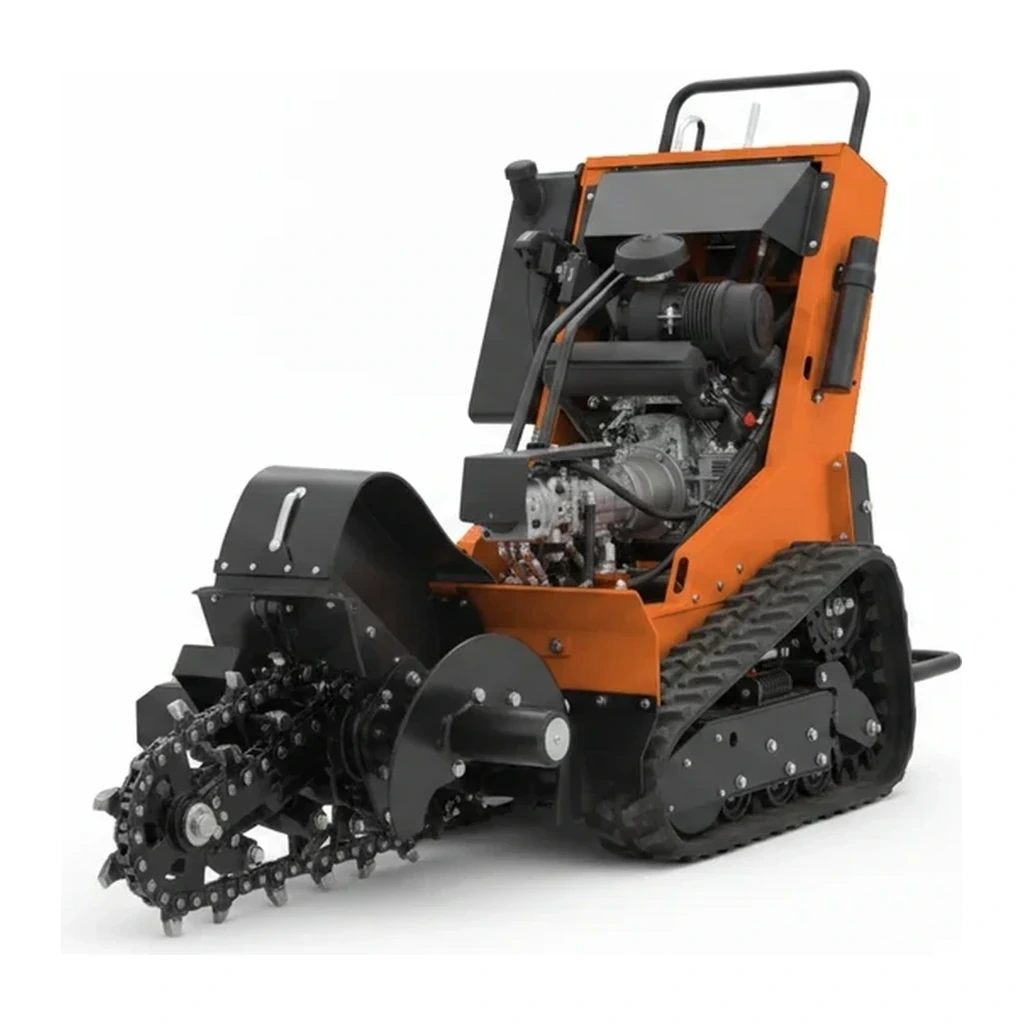
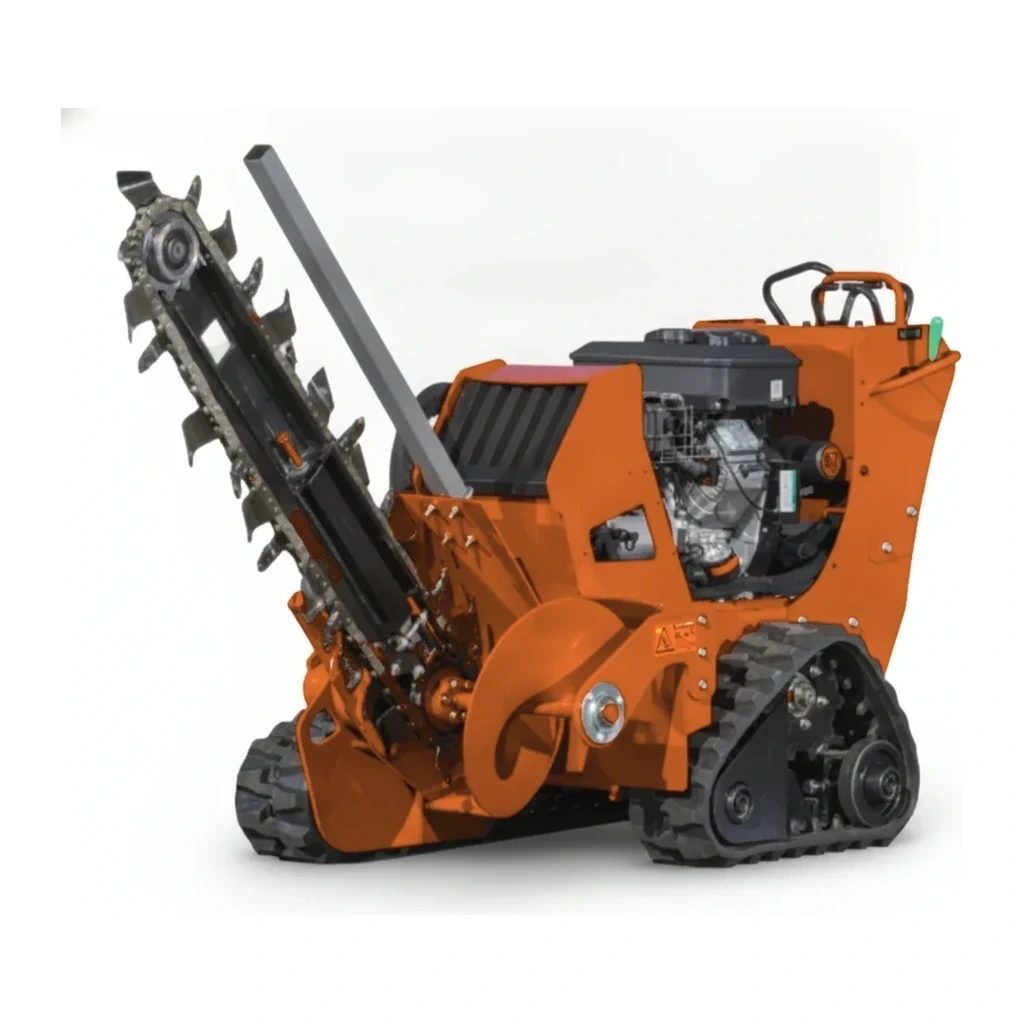
A walk-behind trencher is a compact, pedestrian-operated machine that cuts narrow trenches for irrigation, drainage, and service lines. The operator walks behind the unit, guiding a boom-mounted digging chain into the ground. Its footprint fits through standard gates and along fence lines where ride-on machines cannot work.
Cat classes
Choisissez une classe de taille — la capacité et la portée varient selon la gamme.
Fonctionnement
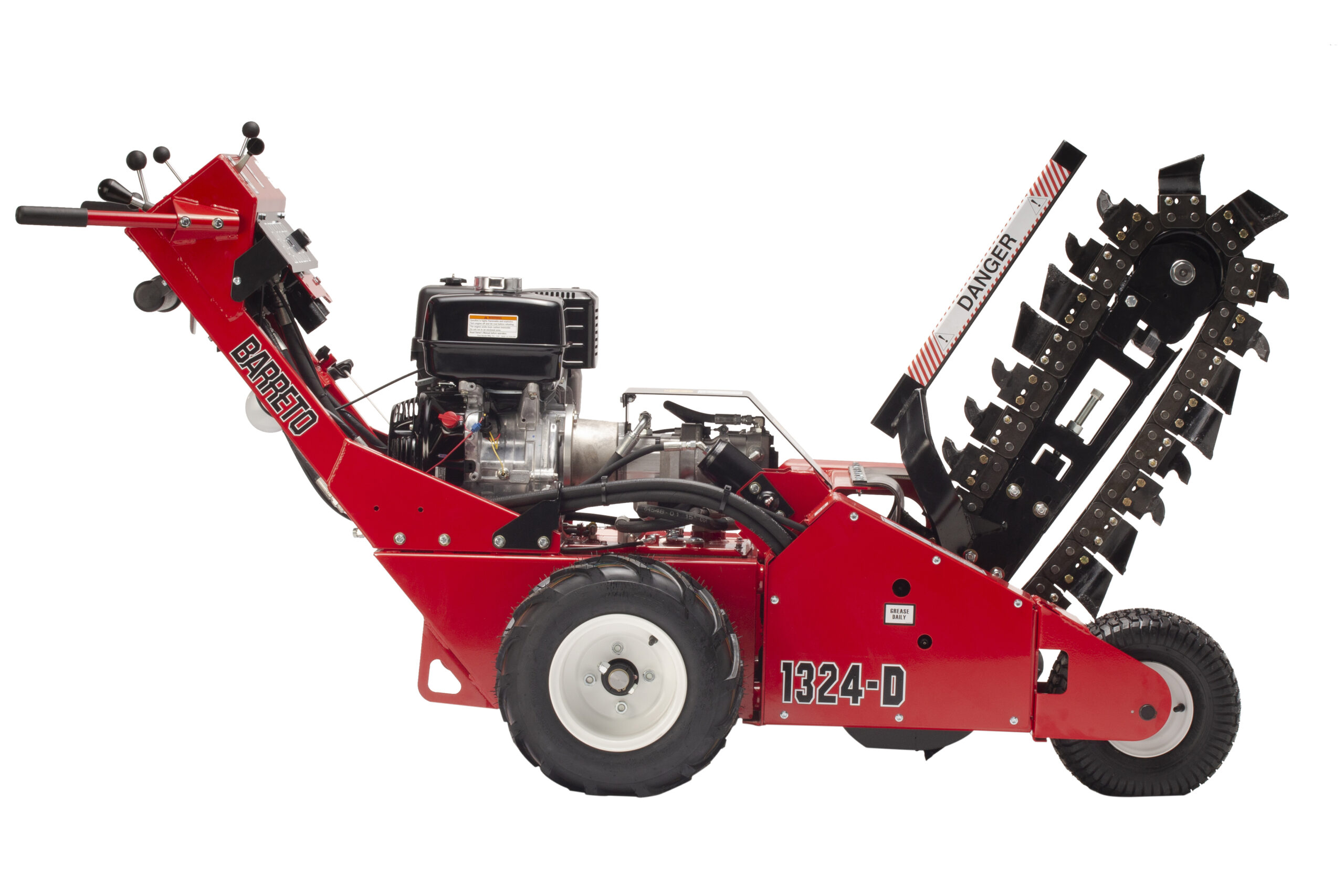
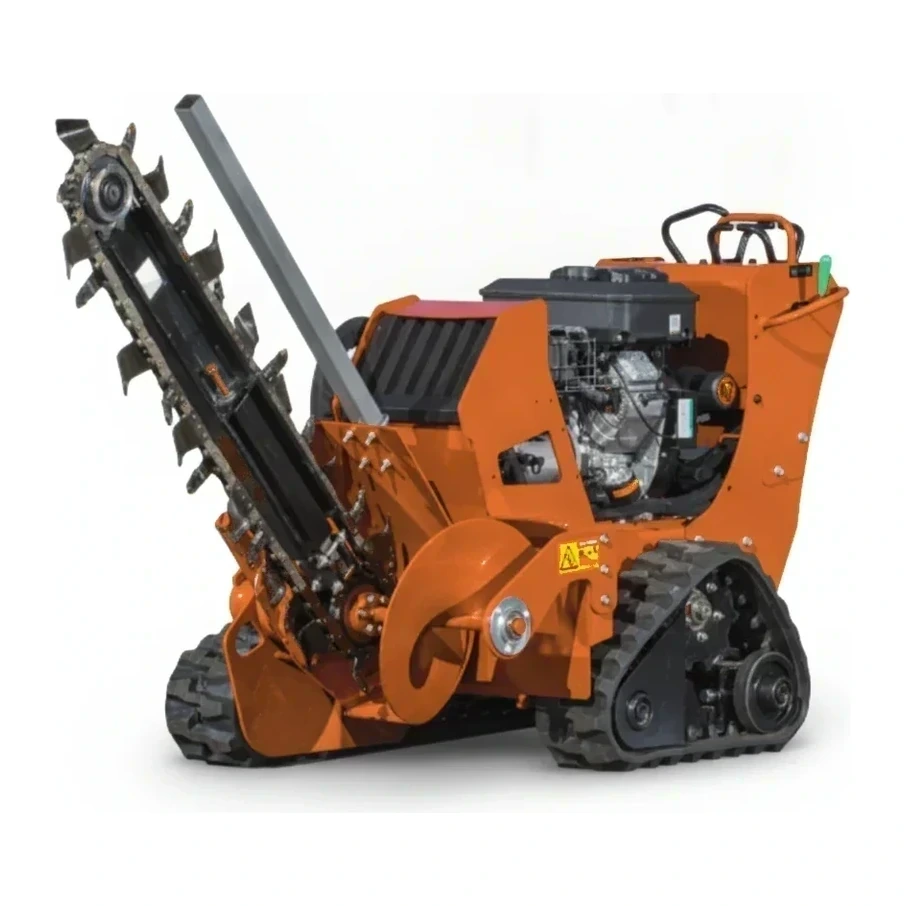
An engine drives a toothed digging chain around a boom that pivots into the ground to the set depth. As the chain cuts, it carries spoil to the surface where an auger windrows it beside the trench. The operator walks the machine slowly backward or forward, keeping chain speed matched to soil resistance. Depth adjusts by boom angle; most compact models cut narrow slots sized for pipe, cable, and drip lines. Tracked and wheeled drive variants trade flotation against maneuverability on turf and slopes.
Types et variantes
- Compact wheeled trenchers
- The lightest units for turf-friendly, gate-access irrigation and cable work.
- Tracked walk-behind trenchers
- Track drive adds traction and stability on slopes and loose ground.
- Hydraulic-drive heavy walk-behinds
- The 20-39 hp band with deeper booms for service mains and drainage.
Spécifications clés
| Spécification | Plage typique | Signification |
|---|---|---|
| Engine power (hp) | Cataloged bands run 6-19 hp and 20-39 hp | Power sets chain force and production speed in firm ground. |
| Maximum dig depth (ft) | From about 2 ft on compact units; larger cataloged listings extend deeper | Must reach code burial depth for the utility being installed. |
| Operating weight | About 517 to 869 kg (1,140 to 1,916 lb) across cataloged band samples | Governs trailer choice and how the machine handles on turf and slopes. |
Comment l'industrie le dimensionne
Walk-behind trenchers are sized by required dig depth and ground conditions against the two cataloged power bands. The 6-19 hp band covers irrigation, drip, and shallow cable runs in maintained ground; the 20-39 hp band adds chain force and depth for service lines and drainage in firmer soil. Access width — gates, side yards, slopes — often decides the machine as much as depth does.
Applications
- Irrigation and sprinkler line installation
- Landscape lighting and low-voltage cable burial
- Drainage lines around foundations
- Service laterals for water, gas, and electrical connections
- Fence-line and root-barrier cutting
Sécurité et opération
- Call 811 for utility locates before cutting; shallow services are exactly where these machines dig.
- Keep feet and bystanders clear of the chain; operate only from the designated operator position.
- Shut the machine down before clearing jams or inspecting the chain.
- Work across slopes within the manufacturer's stability limits, never boom-downhill beyond them.
Normes et certifications
- Common Ground Alliance · 811 / Best Practices
- Locate requests are mandatory before any mechanized digging, including shallow trenching.
- OSHA · 29 CFR 1926.651(b)
- Underground installations must be located, and machines kept clear of marked lines during cutting.
- OSHA · 29 CFR 1926 Subpart P
- Excavation protection rules apply if workers later enter any trench 5 ft or deeper.
Questions fréquentes
What can a walk-behind trencher dig through?
Which power band fits typical irrigation work?
How do these machines get to the job?
Équipements connexes
Parcourir par fabricant
Sources
Chaque spécification est vérifiée par rapport aux données publiées par le fabricant, avec la source liée pour référence.
Tous les modèles
65 modèles · Page 2 sur 2 · Chaque spécification citée à la source