

Truss and Roller Screed
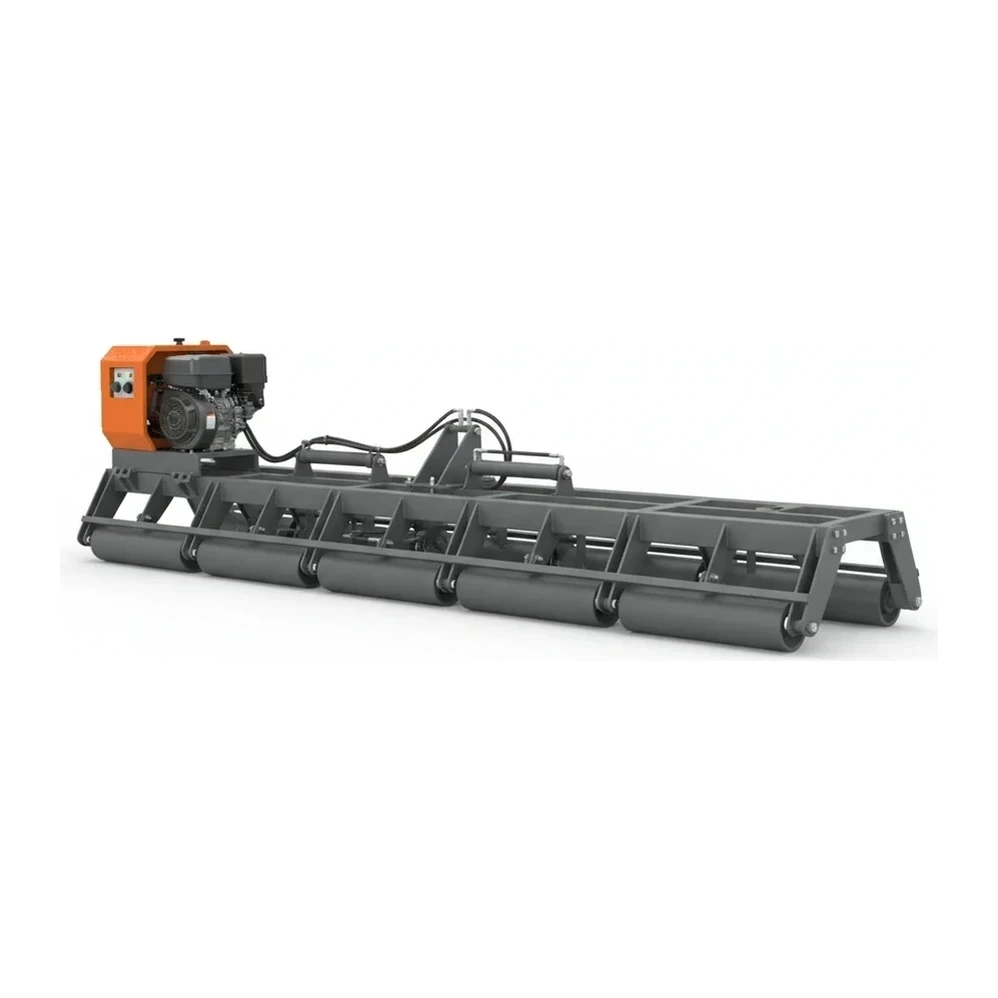
Truss and roller screeds are mechanical concrete finishing tools designed to strike off and level freshly placed concrete across wide spans. These devices employ either a rotating tube (roller screed) or a rigid truss frame to achieve a flat, uniform surface faster and more consistently than hand screeding methods. The equipment class is essential for large-format flatwork including bridge decks, parking structures, and commercial slabs.
How it works
Roller screeds operate by spinning a lightweight tube or pipe at high speed across the concrete surface, the vibration and rotation action consolidating and leveling the material as the screed advances. Truss screeds use a rigid aluminum or magnesium beam supported at both ends, either manually operated or motor-driven, to strike off excess concrete and establish grade. Many modern units incorporate laser-guided or grade-following systems to maintain precise elevation control across long spans. The screed typically rests on fixed forms, rails, or wet screeds and is advanced incrementally or continuously as the pour progresses. Drive-on models allow operators to walk or ride on the screed itself, eliminating the need for workers to walk directly on fresh concrete and enabling coverage of spans far beyond the reach of hand crews.
Types & variants
- Roller Screed (Spinning Tube)
- Uses a high-speed rotating tube to vibrate and level concrete; lightweight and highly portable for smaller to mid-sized pours.
- Truss Screed (Rigid Beam)
- Employs a fixed truss frame, often manually advanced, for precise strike-off on narrow to moderate spans; common in residential and light commercial work.
- Drive-On Screed
- Heavy-duty truss or roller unit designed for operators to walk or ride on, enabling wide-span coverage without stepping on fresh concrete.
- Laser-Guided Screed
- Incorporates laser receivers and automated grade control for high-precision leveling on large commercial and infrastructure projects.
- Bridge Deck Screed
- Specialized wide-span truss screed engineered for transportation infrastructure, often with dual-lane coverage and heavy-duty construction.
Key specifications
| Specification | Typical range | What it means |
|---|---|---|
| Span Length | Data not available | The maximum width the screed can cover in a single pass, determining pour layout and form spacing. |
| Power Source | Gasoline, electric, or pneumatic | Drives the vibrating tube or truss oscillation mechanism; selection depends on site conditions and emission requirements. |
| Tube/Beam Diameter or Depth | Varies by model | Affects vibration characteristics and the thickness of concrete the screed can effectively consolidate. |
| Operating Weight | Varies by span and construction | Influences the crew size needed for setup and the structural demands on supporting forms or rails. |
How the industry sizes it
The industry sizes truss and roller screeds by span length, measured in feet, which dictates the width of concrete that can be struck off in a single pass. Spans under 20 ft suit driveways, small decks, and residential slabs, while spans over 20 ft accommodate bridge decks, warehouse floors, and wide commercial pours beyond the practical reach of hand crews. Selection criteria include pour width, required surface tolerance, accessibility for setup, and whether laser or manual grade control is needed.
Applications
- Bridge deck and overpass concrete finishing on transportation infrastructure projects
- Large commercial and industrial slab pours including warehouse floors and distribution centers
- Parking structure decks and elevated slabs requiring wide-span coverage
- Residential driveways, patios, and garage slabs where consistent flatness is specified
- Airport apron and taxiway concrete placement with stringent surface tolerance requirements
- Stadium and arena seating decks and concourses with complex grading
Safety & operation
- Operators must maintain secure footing on the screed or adjacent stable surfaces to prevent falls into wet concrete or onto forms
- Engine-powered units require adequate ventilation in enclosed or semi-enclosed pours to prevent carbon monoxide accumulation
- Crew communication protocols are critical when advancing the screed to avoid pinch points and coordinate lifting or repositioning
- Laser-equipped models require eye safety practices and awareness of laser classification and exposure limits
- Proper lifting techniques and mechanical assistance should be used during setup and teardown to prevent musculoskeletal injuries
Standards & certifications
- OSHA · 29 CFR 1926 Subpart Q (Concrete and Masonry Construction)
- Establishes requirements for safe concrete placement operations including formwork, shoring, and worker protection.
- ACI · ACI 117 (Specifications for Tolerances for Concrete Construction)
- Defines surface flatness and levelness tolerances that screed operations are designed to achieve.
- ANSI · ANSI/ASSE A10.9 (Concrete and Masonry Work)
- Provides safety standards for equipment and practices in concrete construction activities.
- EPA · Tier 4 Emissions Standards (where applicable)
- Regulates exhaust emissions from gasoline and diesel engines on motorized screed units.
Frequently asked
What is the difference between a roller screed and a truss screed?
How is span length determined for a specific project?
When is laser guidance necessary on a screed?
What are common industry aliases for this equipment class?
Related equipment
Browse by manufacturer
Sources
Every specification is verified against the manufacturer's published data, with the source linked for reference.
All models
1 models · Every spec cited to source