

Ride-On Power Trowel
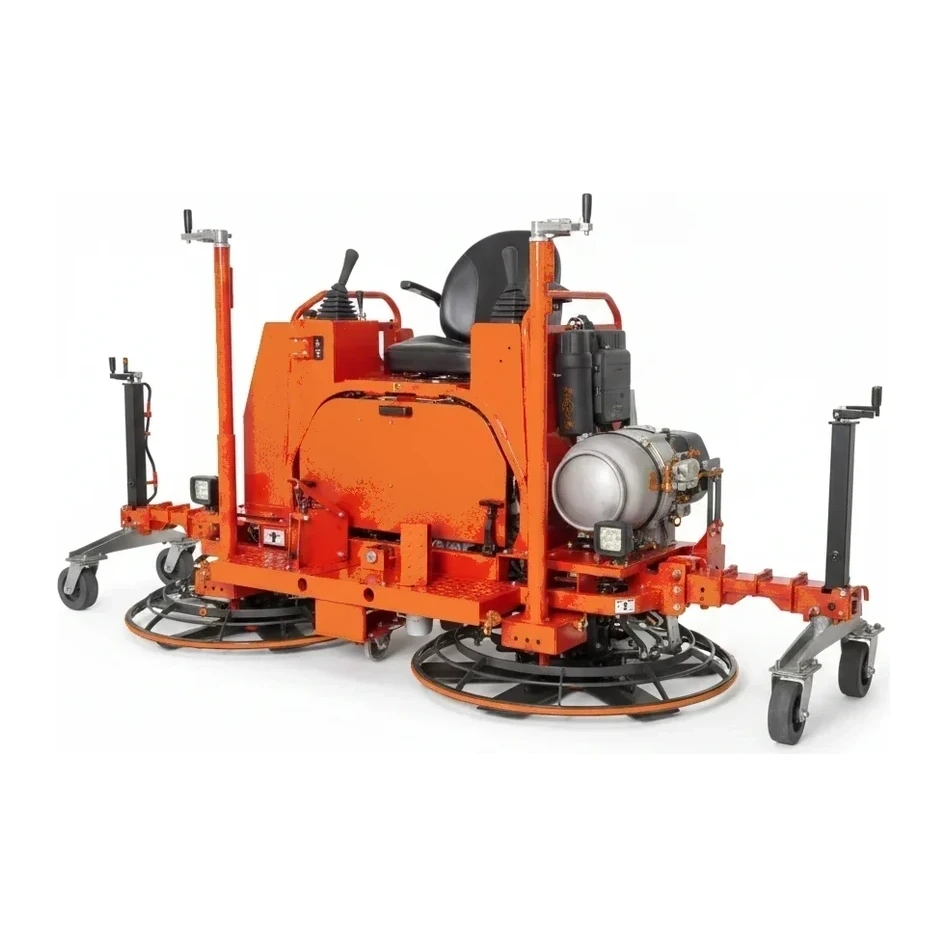
A ride-on power trowel carries the operator on a seat between two overlapping or side-by-side blade rotors, finishing large concrete slabs far faster than walk-behind machines. Listed models span 22.1-84 hp with rotor diameters of 36.0-57.6 in and panning path widths of 74-140 in, built for warehouse, industrial and large commercial floors.
Cat classes
Pick a size class: capacity and reach differ across the range.
How it works
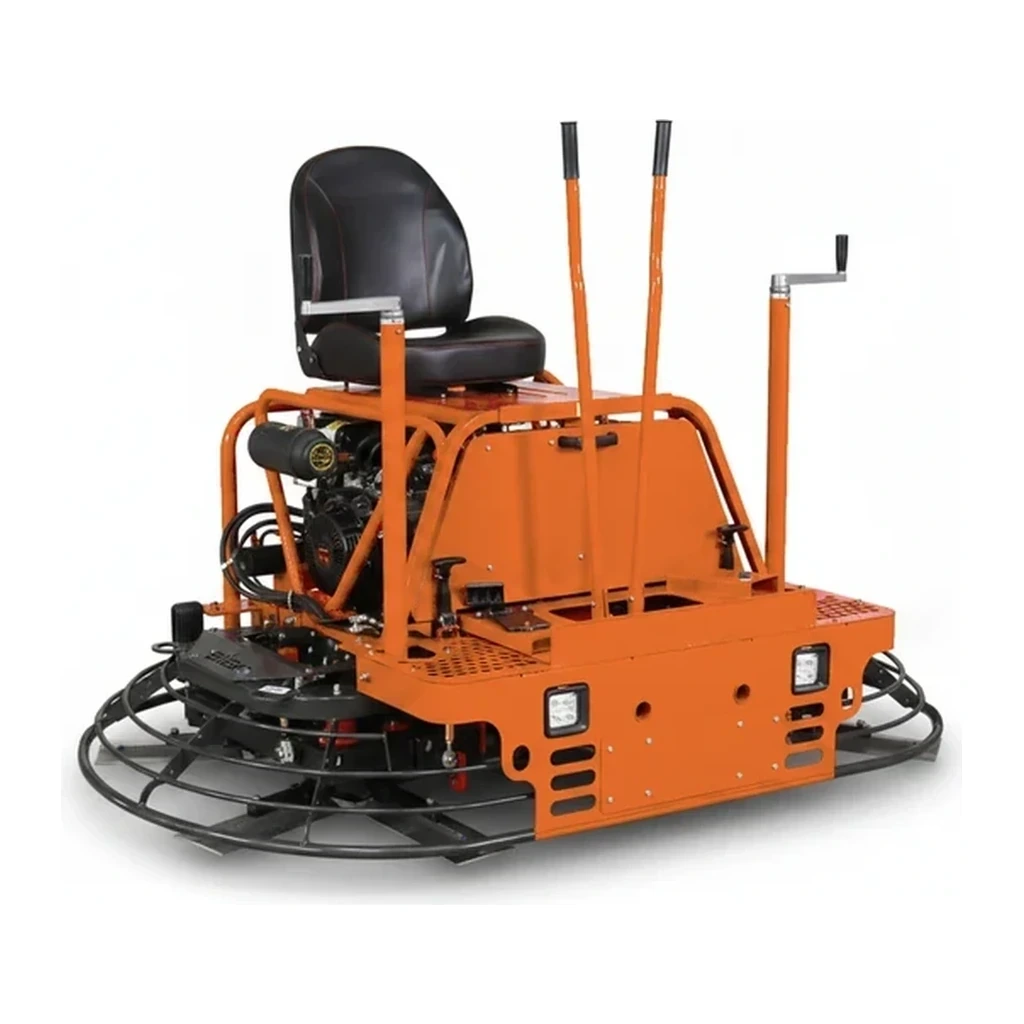
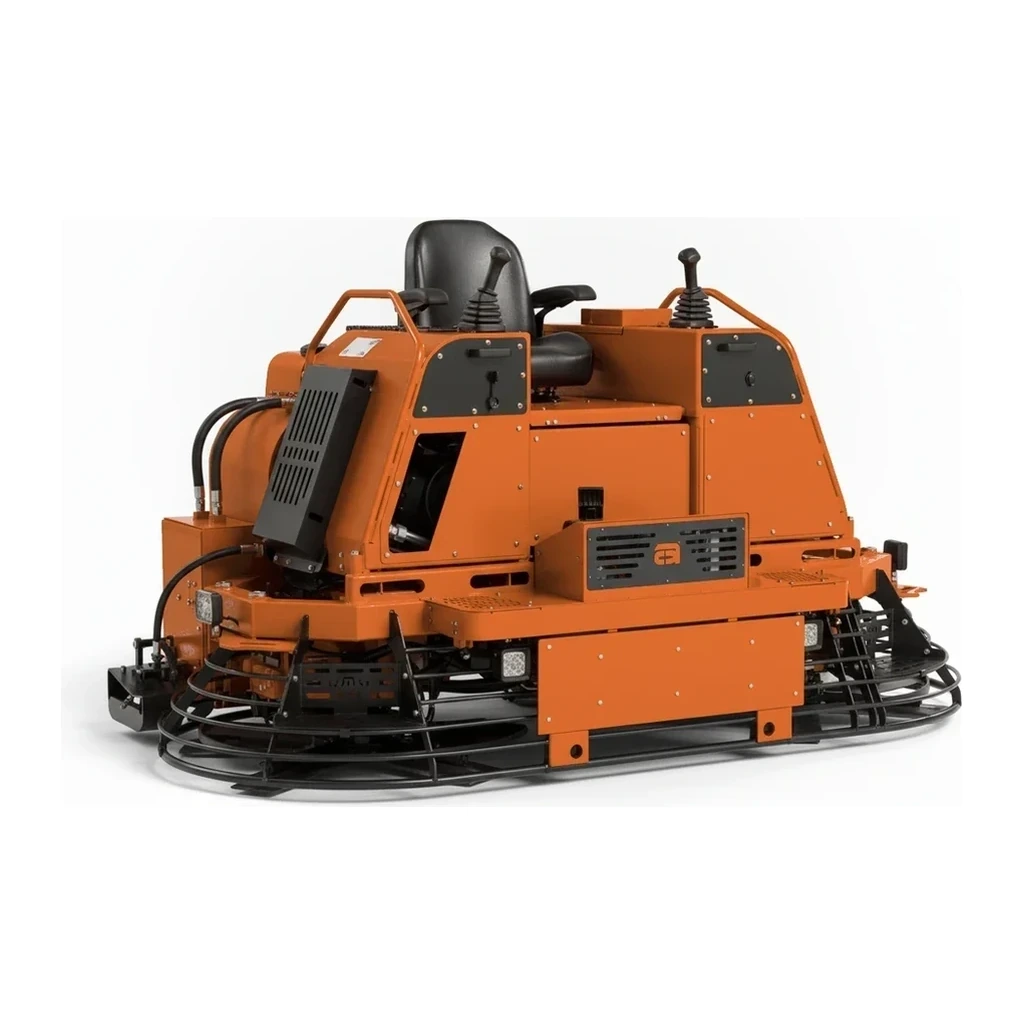
Twin rotors counter-rotate beneath the operator, steered by tilting the rotors against the slab through mechanical levers or hydraulic joysticks. Finishing follows the same staged sequence as walk-behind work, pans or flat blades early, pitched blades at rising speed later, but the machine's weight and power, with listed rotor speeds of 130-180 rpm, produce the contact pressure that large floors need to reach a hard burnished finish inside the setting window. Fuel capacities of 6-18 gal on listed units support continuous finishing on pours too large to interrupt.
Types & variants
- Overlapping-rotor machine
- Rotor paths intersect, eliminating the unfinished strip between rotors; requires timed blade synchronization.
- Non-overlapping machine
- Side-by-side rotors with a guard ring between; mechanically simpler, with a small strip covered on the next pass.
- Mechanical-drive trowel
- Clutch-and-linkage steering and drive; lighter and simpler, common at the lower power end.
- Hydrostatic trowel
- Hydraulic drive and joystick steering at the higher power end, reducing operator effort across long shifts.
Key specifications
| Specification | Typical range | What it means |
|---|---|---|
| Engine power | 22.1-84.0 hp | Sustains rotor speed under the contact pressure that hard-troweled large floors demand. |
| Panning path width | 74–140 in (188–356 cm) | Floor width finished per pass: the primary productivity figure for large slabs. |
| Rotor diameter | 36–57.6 in (91.4–146 cm) | Combined with rotor count, sets coverage and how the machine works around columns and edges. |
| Rotor speed | 130-180 rpm | Upper-range speeds bring on hard steel-troweled finishes as the surface tightens. |
| Fuel capacity | 6.0-18.0 gal | Run time between refuels; large continuous pours cannot pause finishing to fuel mid-slab. |
How the industry sizes it
Ride-on trowels are sized by panning width and horsepower against slab area and the finishing window. The rule of thumb is coverage: the machine must complete each finishing stage across the whole placement before the concrete outruns the crew, so bigger single-day pours push toward the 140 in end of the class, while smaller machines serve as second units working edges and infill.
Applications
- Warehouse and distribution center floors
- Parking structure decks
- Industrial plant slabs
- Big-box retail floors
- Airport apron and hangar slabs
- Large exterior flatwork
Safety & operation
- Ride-on machines finish enclosed buildings while running gasoline engines for hours: carbon monoxide monitoring and ventilation are mandatory practice for interior slabs.
- Deadman-style controls must stop the rotors when the operator leaves the controls, and guard rings must remain fitted around both rotors.
- Machines weigh enough to require ramps and tie-downs rated for the load when moving between decks; travel across finished areas is planned to avoid re-marking the surface.
- Blade changes and pitch adjustments happen only with the engine stopped.
Standards & certifications
- OSHA · 29 CFR 1926.702(c)
- Powered concrete trowel control requirements: power shutoff when the operator leaves the controls.
- ACI · 302.1R
- Floor and slab construction guide covering staged finishing and flatness/levelness practice on large floors.
- OSHA · 29 CFR 1926.55
- Exposure limits for carbon monoxide relevant to engine-powered finishing inside enclosed structures.
Frequently asked
At what slab size does a ride-on replace walk-behind machines?
What distinguishes overlapping from non-overlapping rotors?
Why do these machines carry 6-18 gal of fuel?
How is the machine steered without wheels?
Compare popular models
Find by spec →Normalised to the same units. A dash means the figure was not published.
| Model | Engine power | Operating weight |
|---|---|---|
| Multiquip MRH800GS | - | 1,530 lb (694 kg) |
| Multiquip HTXD-6i | - | 2,275 lb (1,032 kg) |
| Multiquip HTXG-6DF | - | 2,150 lb (975 kg) |
| Allen Engineering HDX600 | 50 hp | 2,194 lb (995 kg) |
| Allen Engineering HDX705 | 84 hp | 2,749 lb (1,247 kg) |
| Allen Engineering HDX760 | 74 hp | 2,687 lb (1,219 kg) |
Related equipment
Browse by manufacturer
Sources
Every specification is verified against the manufacturer's published data, with the source linked for reference.