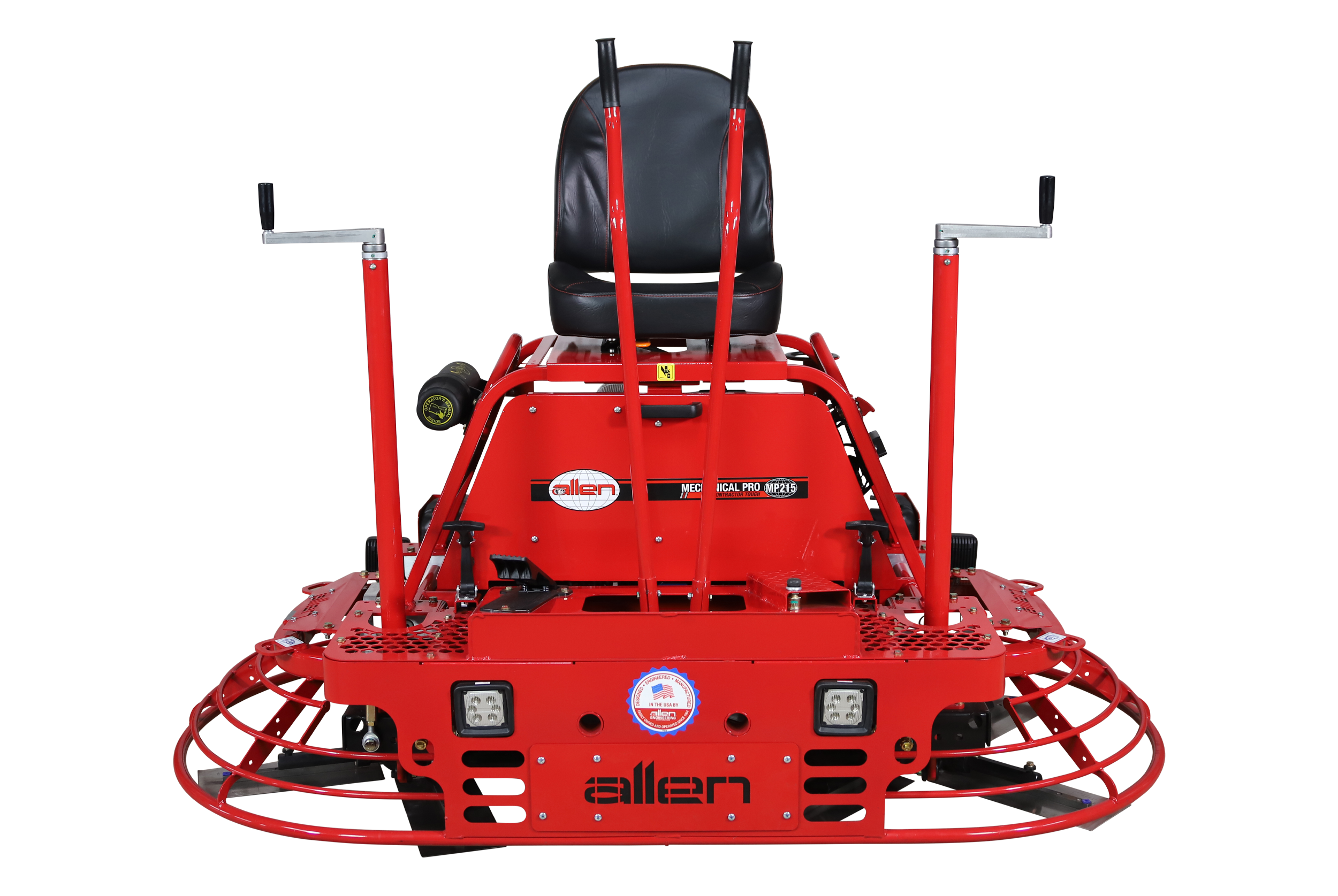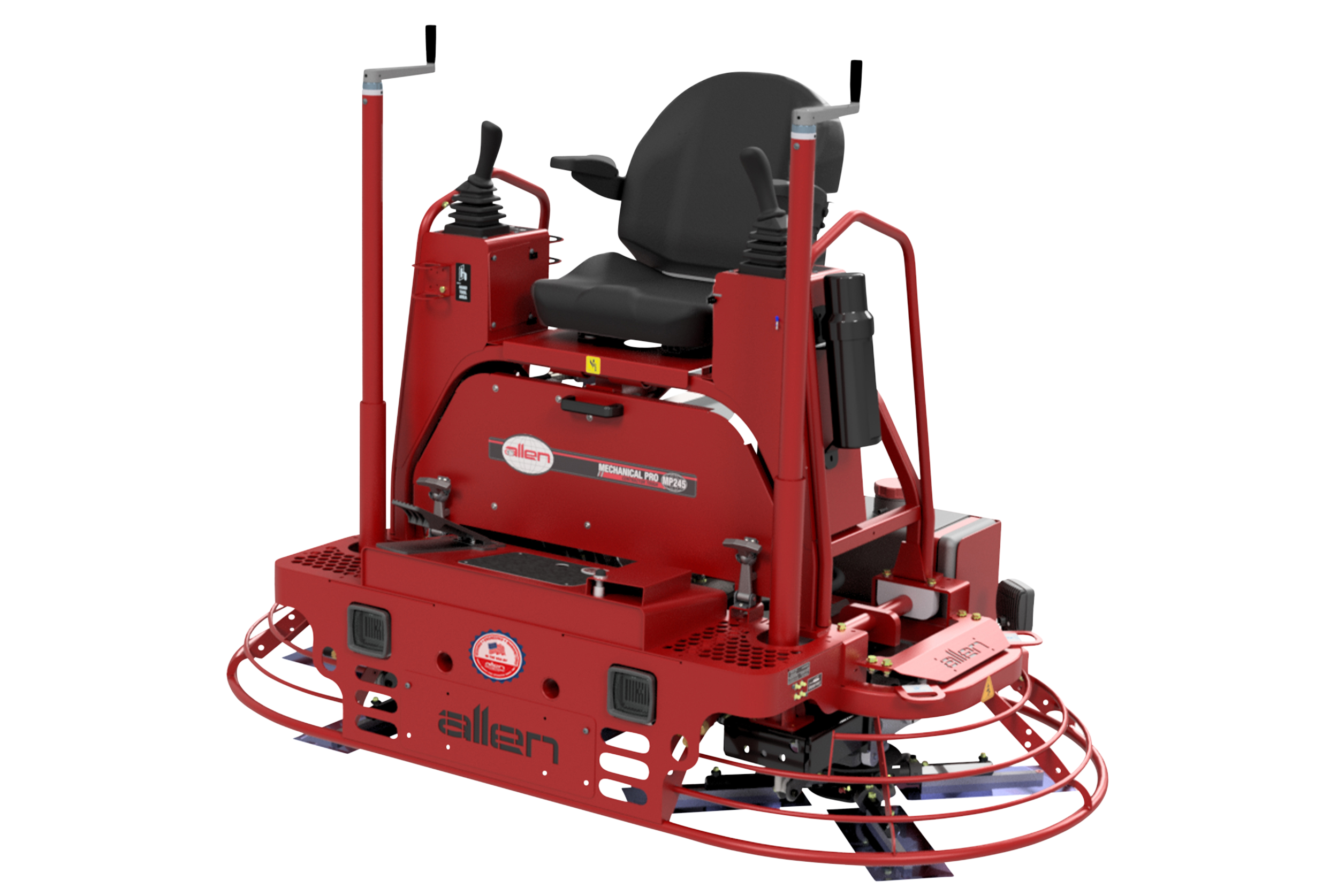

Up to 80 in Ride-On Power Trowel
Up to 80 in Ride-On Power Trowels are two-rotor machines designed for warehouse bays and mid-size commercial slabs where a walk-behind trowel would be inefficient but the largest quad-rotor units are unnecessary. This size class represents the entry point on the ride-on trowel ladder, offering operator-carried productivity on moderate floor areas. Models in this band typically provide a total finishing path width of 63 to 74 inches across both rotors.
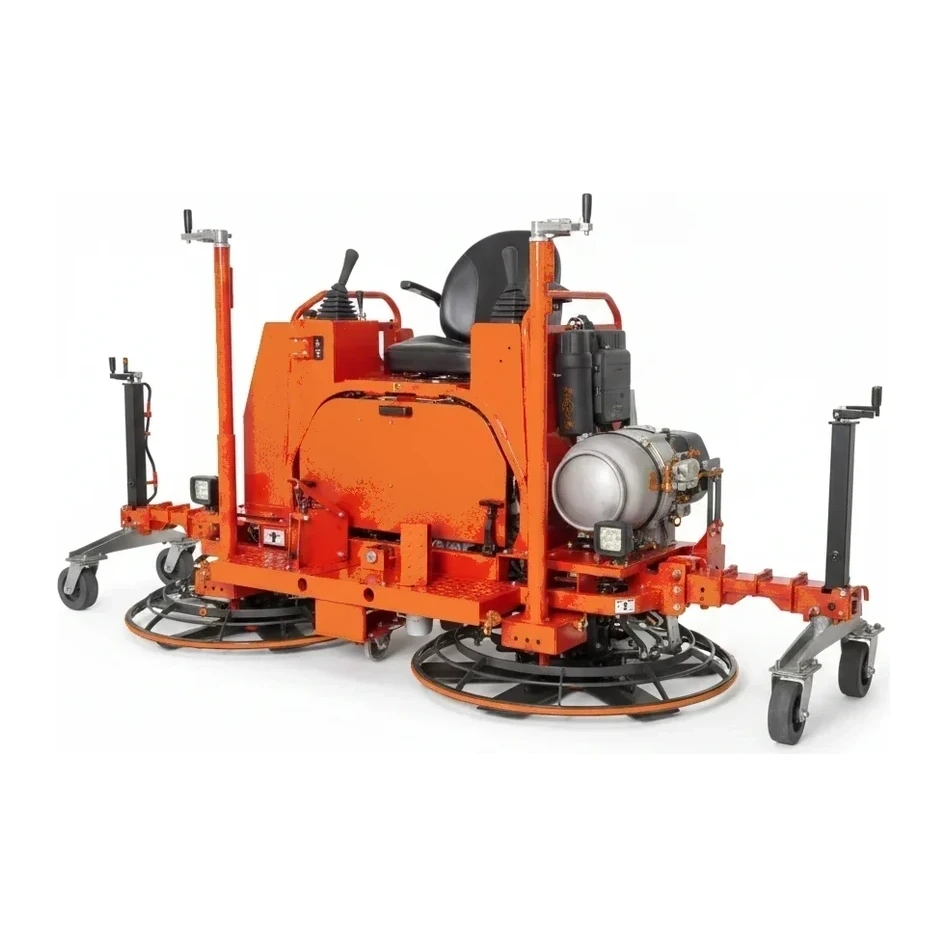
Cat classes
Pick a size class: capacity and reach differ across the range.
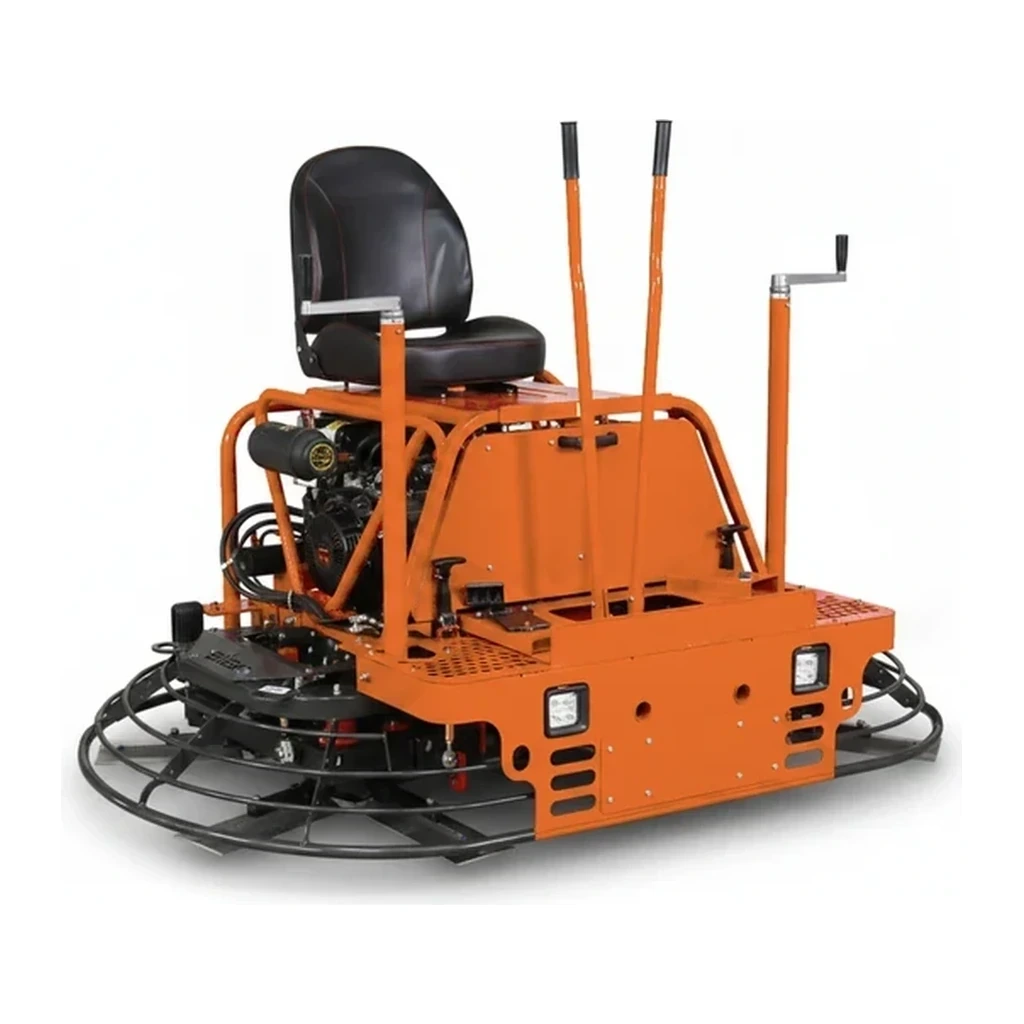
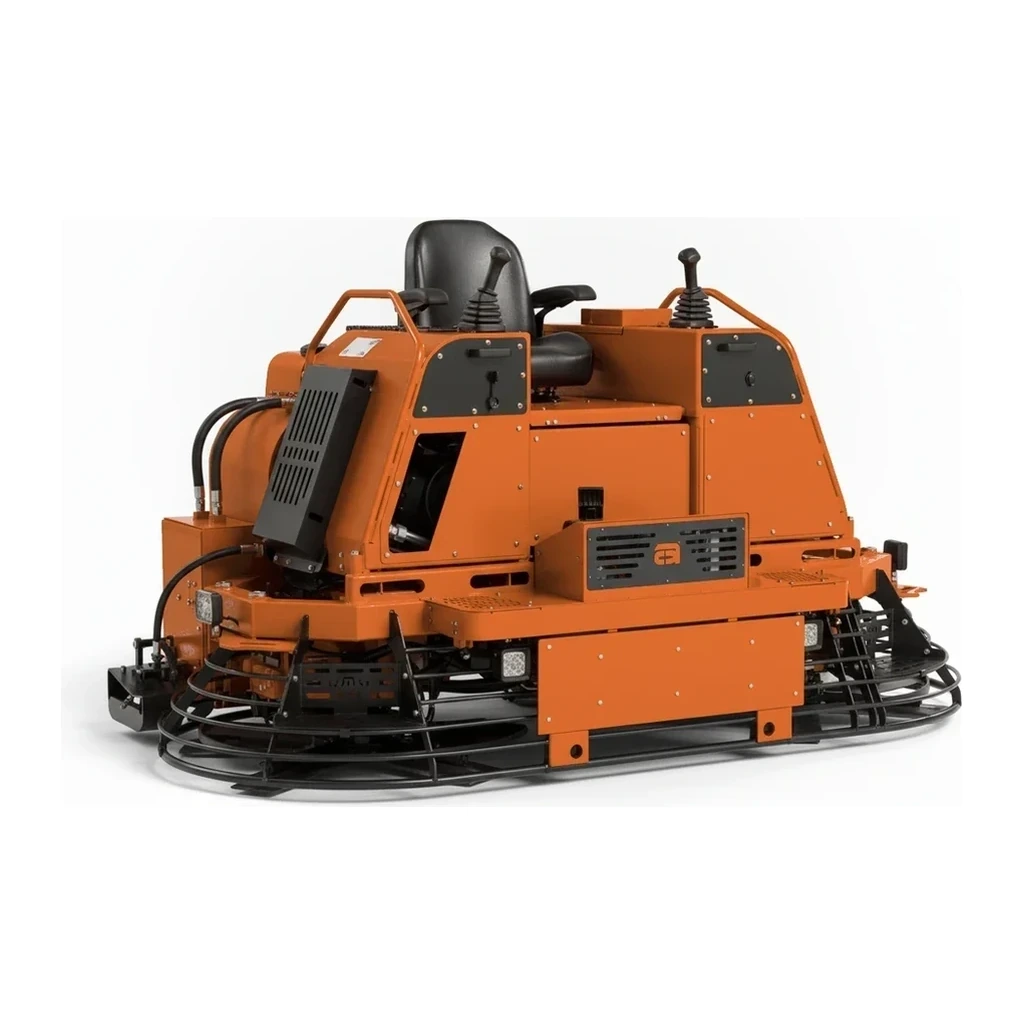
Key specifications
| Specification | Typical range | What it means |
|---|---|---|
| Total Path Width | 63–74 in (160–188 cm) | Combined coverage of both rotors in a single pass; defines productivity per hour on slab. |
| Rotor Configuration | Dual rotor | Two independent finishing rotors for balanced coverage and operator visibility. |
| Machine Class | Ride-on | Operator sits on the machine, reducing fatigue on projects larger than walk-behind capacity. |
How to choose
This size is appropriate for warehouse loading bays, retail tenant build-outs, and industrial floors in the 5,000 to 20,000 square foot range where operator fatigue and schedule constraints make walk-behind trowels impractical. The dual-rotor layout offers good maneuverability in column grids and around embedded anchors. For large distribution centers, tilt-up warehouses, or any slab exceeding 25,000 square feet, the 80+ in Ride-On Power Trowel with quad-rotor design delivers higher production rates and is the preferred choice.
What this size handles
- Warehouse loading dock slabs and truck aprons
- Retail shell spaces and tenant improvement floors
- Light industrial production areas with moderate square footage
- Commercial kitchen and food processing floors
- Parking structures with confined bay widths
- School gymnasiums and multi-purpose rooms
Safety & operation
- Operator must maintain clear sightlines to both rotors and surrounding workers; dual-rotor layout requires attention to front and rear finishing zones
- Emergency stop controls should be within immediate reach from the operator seat; familiarization with shutdown procedures is essential before operation
- Concrete surface must support machine weight during finishing; premature loading can damage slab and compromise flatness
- Protective guards around rotors and moving parts prevent contact with blades spinning at high RPM during floating and finishing passes
Transport & logistics
- Typically loaded onto tagalong or tilt-deck trailers; most models fit within standard 102-inch transport width
- Dual-axle utility trailers with 7,000-10,000 lb capacity commonly used for single-machine transport
- Some units feature fold-down operator stations or removable components to reduce transport height
Power & supply
- Gasoline or diesel engines in the 23-35 horsepower range provide independent power for each rotor and hydraulic systems
- Machines carry onboard fuel tanks; typical runtime on a full tank ranges from 4 to 8 hours depending on load and finish stage
- No external electrical connections required; self-contained power suitable for sites without utility hookups
Frequently asked
What slab size justifies a ride-on trowel over a walk-behind?
How does path width affect production rate?
Can this size handle edge work near walls and columns?
Compare popular models
Find by spec →Normalised to the same units. A dash means the figure was not published.
| Model | Engine power | Operating weight |
|---|---|---|
| Allen Engineering MP215 | 22 hp | - |
| Allen Engineering MP245 | 22 hp | - |
Related equipment
Browse by manufacturer
Sources
Every specification is verified against the manufacturer's published data, with the source linked for reference.
Up to 80 in Ride-On Power Trowel
3 models · Every spec cited to source