
Industrial and Carry-Deck Cranes
How it works
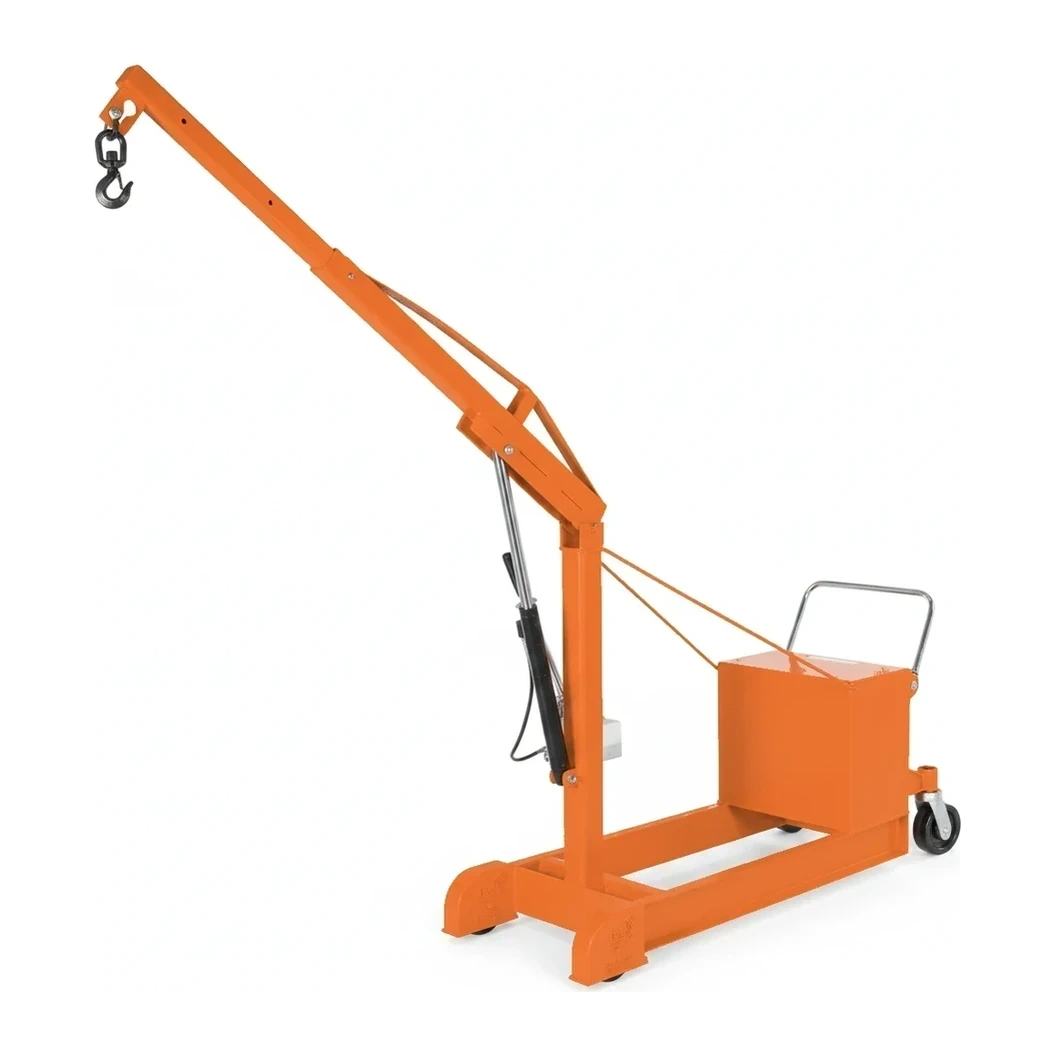
These cranes combine mobility with lifting capability by mounting telescopic or articulating booms on compact, maneuverable chassis. Operators control both travel and lifting functions from a cab or control station, allowing the machine to pick loads, travel with them suspended, and place them precisely in tight quarters. The compact base and low ground pressure enable operation on finished floors and in manufacturing facilities. Most models feature outriggers or stabilizers to increase lifting capacity when stationary, while maintaining a reduced capacity for pick-and-carry operations during travel.
Types & variants
- Carry Deck Crane
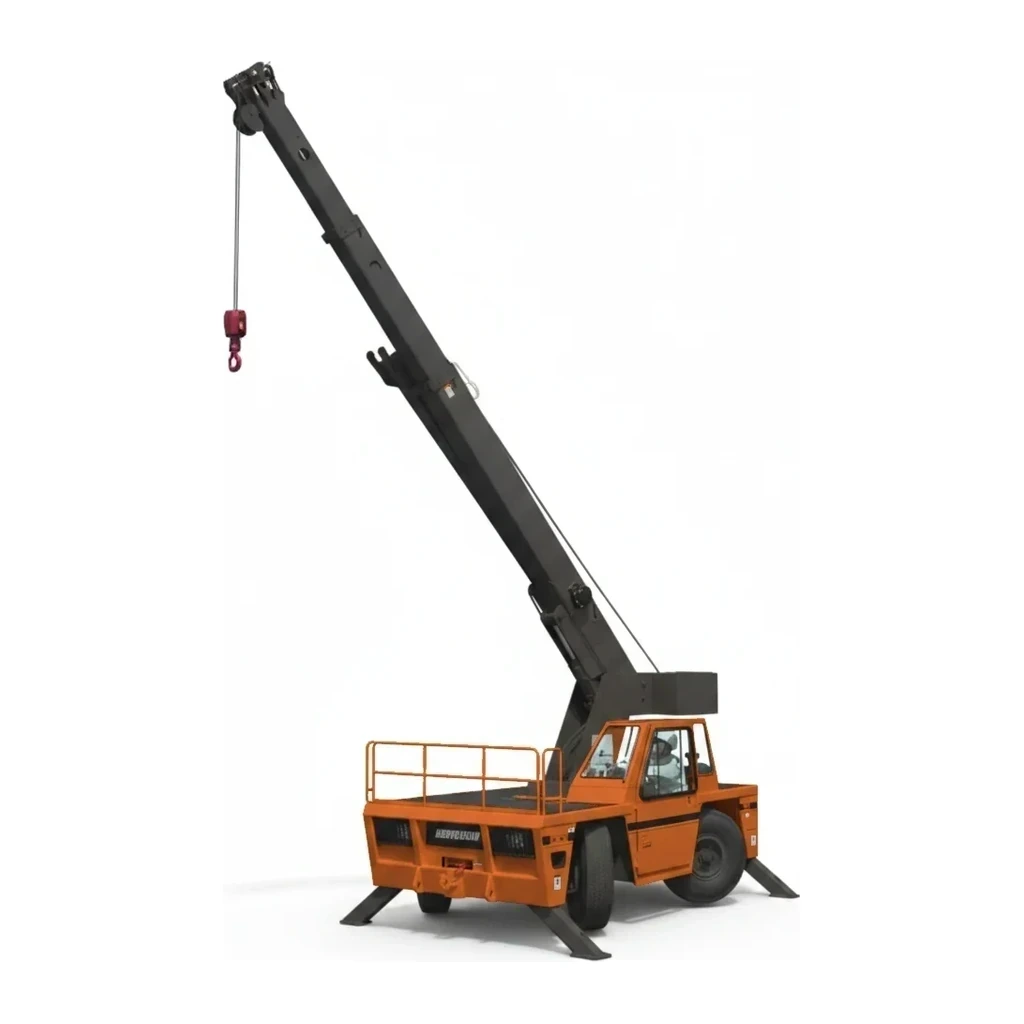
- Four-wheeled industrial crane with a rotating superstructure and telescopic boom mounted on a low-profile deck that can transport loads. Designed for indoor manufacturing and maintenance applications with capacities typically ranging from 3 to 20 tons.
- Industrial Pick-and-Carry Crane
- Compact mobile crane optimized for loading, transporting, and placing materials within industrial facilities. Features tight turning radius and ability to navigate through standard doorways while carrying suspended loads.
- Spider Crane
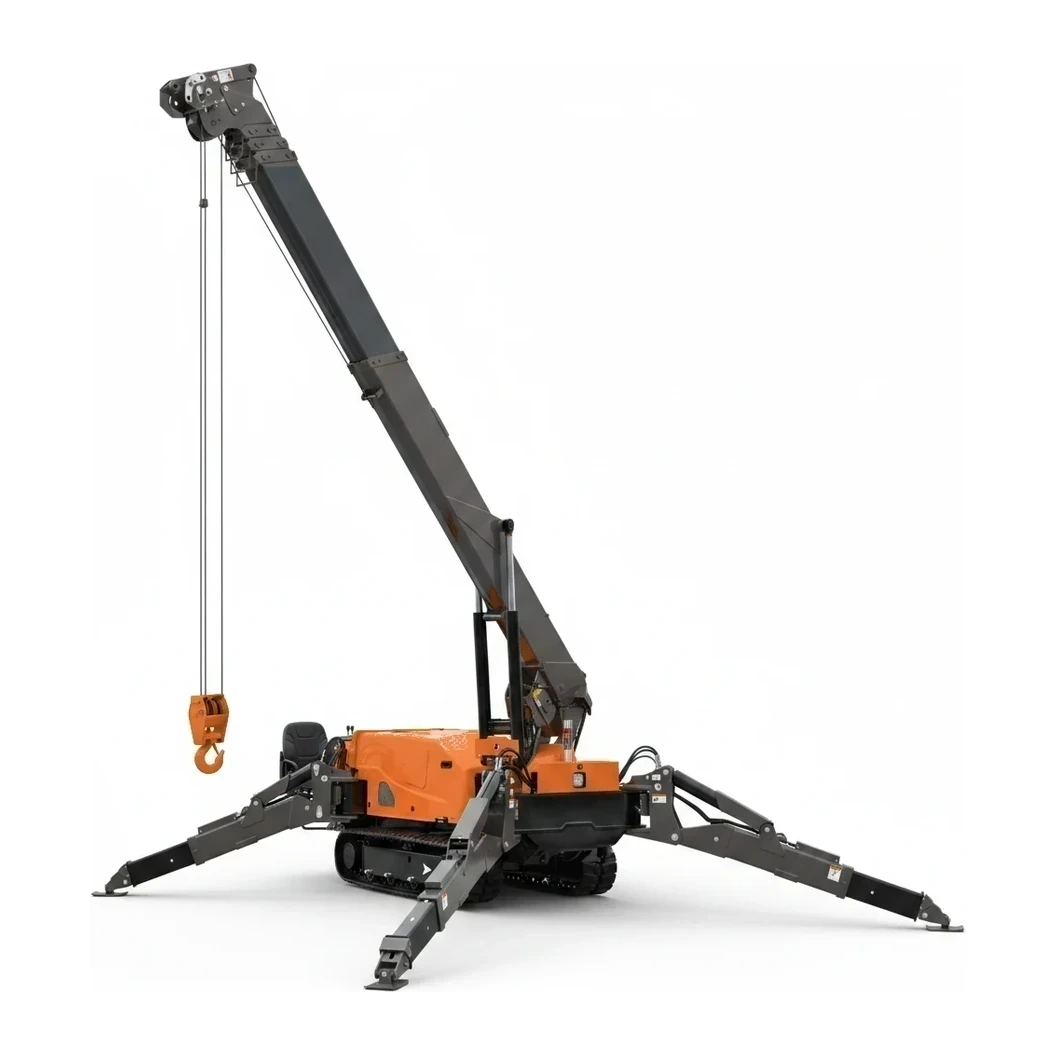
- Ultra-compact crane with extendable stabilizer legs resembling spider legs, allowing setup in extremely confined spaces. Characterized by narrow chassis, tracks or wheeled drive system, and articulating or telescopic boom for accessing difficult locations.
Standards & certifications
- ASME · B30.5
- Safety standard for mobile and locomotive cranes, covering construction, installation, inspection, testing, maintenance, and operation
- OSHA · 29 CFR 1926.1400
- Federal regulations for cranes and derricks in construction, including operator qualification and safety requirements
- ISO · ISO 4309
- International standards for crane wire ropes, inspection, discard criteria, and maintenance practices
Frequently asked
What distinguishes carry-deck cranes from other mobile cranes?
Carry-deck cranes feature a compact, four-wheeled design with the boom mounted on a deck capable of transporting loads. Their low profile, tight turning radius, and ability to operate indoors on finished floors differentiate them from larger mobile cranes designed primarily for outdoor construction.
How is capacity specified for industrial cranes?
Capacity is typically specified in two ways: maximum lifting capacity at minimum radius with outriggers fully extended, and reduced pick-and-carry capacity while traveling. Load charts indicate capacity at various boom angles, extensions, and radii, with separate ratings for stationary versus mobile configurations.
What operator certification is required for industrial cranes?
Operators generally require certification under OSHA regulations and ASME standards, which mandate both written and practical examinations. Certification must be specific to the crane type and capacity class being operated, with employers responsible for ensuring operators are trained and evaluated.
What are typical applications for spider cranes?
Spider cranes are deployed for glass installation, HVAC placement in buildings, equipment installation in basements, construction in historic buildings with access restrictions, and any application requiring compact footprint with the ability to pass through narrow openings or operate on sensitive flooring.