

Carry Deck Crane
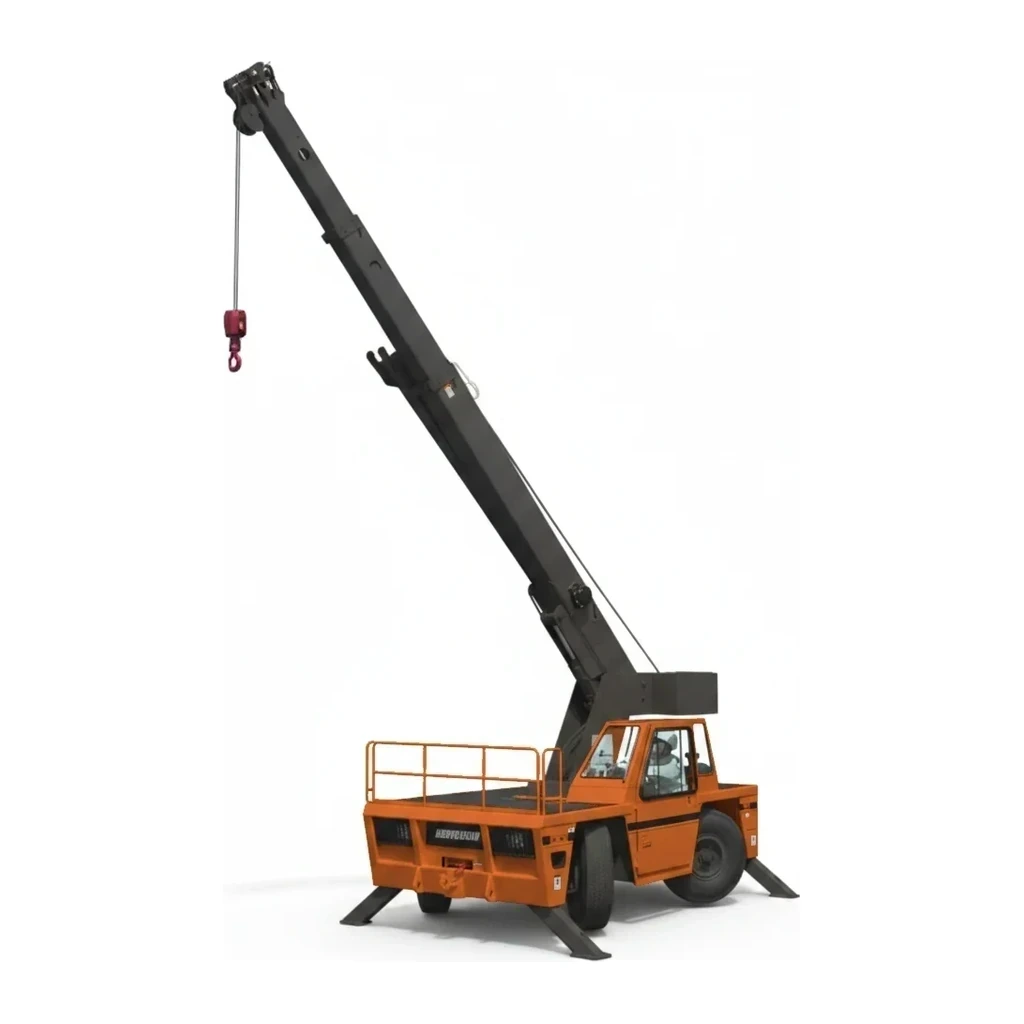
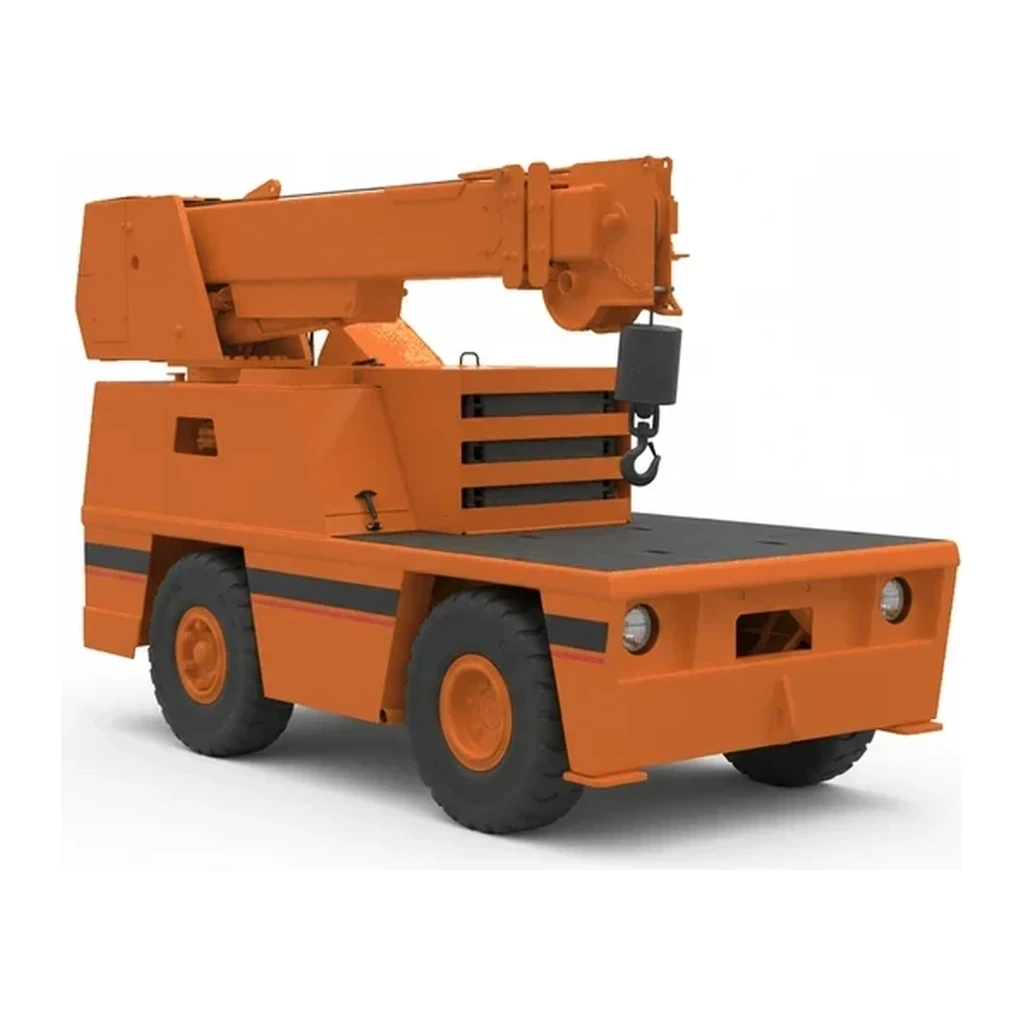
A carry deck crane is a compact, four-wheel mobile crane with a central rotating boom mounted above a flat load-carrying deck. Distinguished by its small footprint and exceptional maneuverability, the machine can transport loads on its deck while navigating tight industrial spaces. Capacities typically range from 2 to 23 tons with maximum reach extending from 15 to 75 feet.
Cat classes
Pick a size class: capacity and reach differ across the range.
How it works
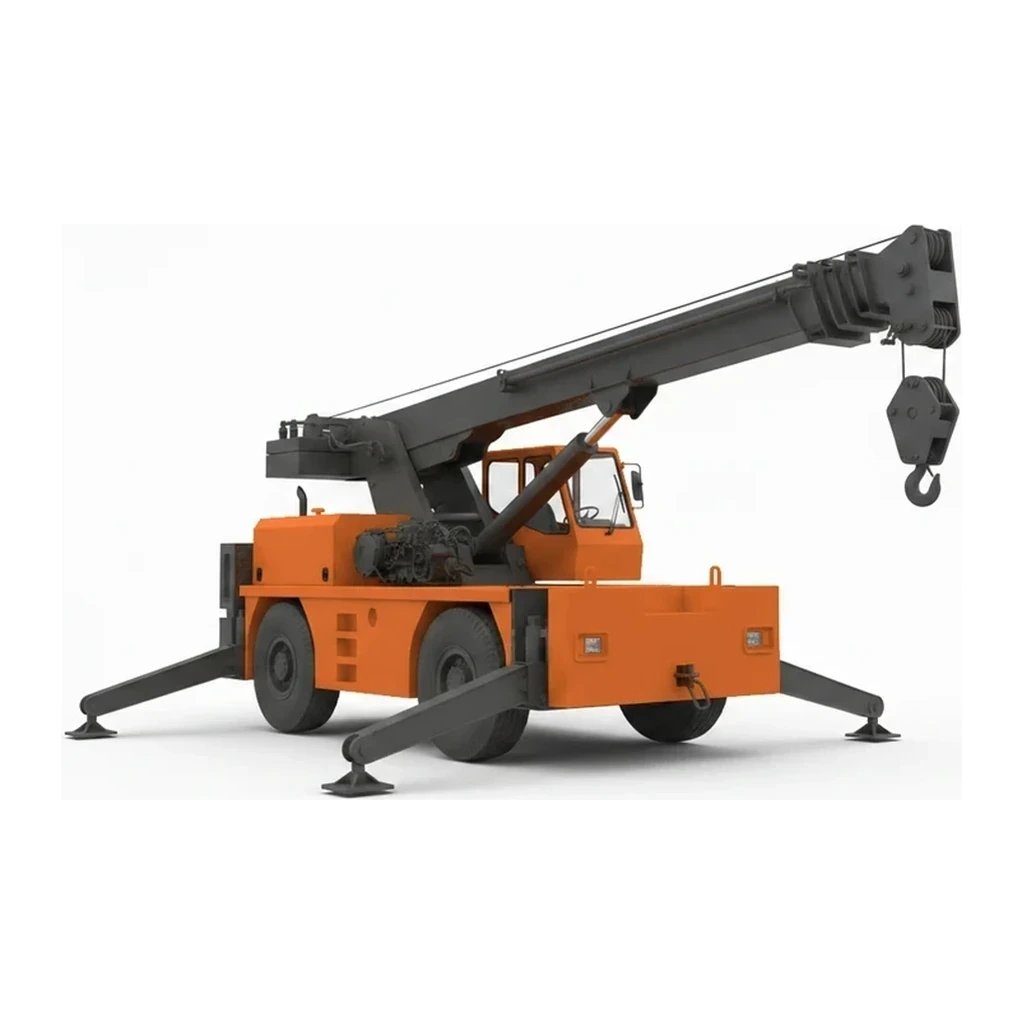
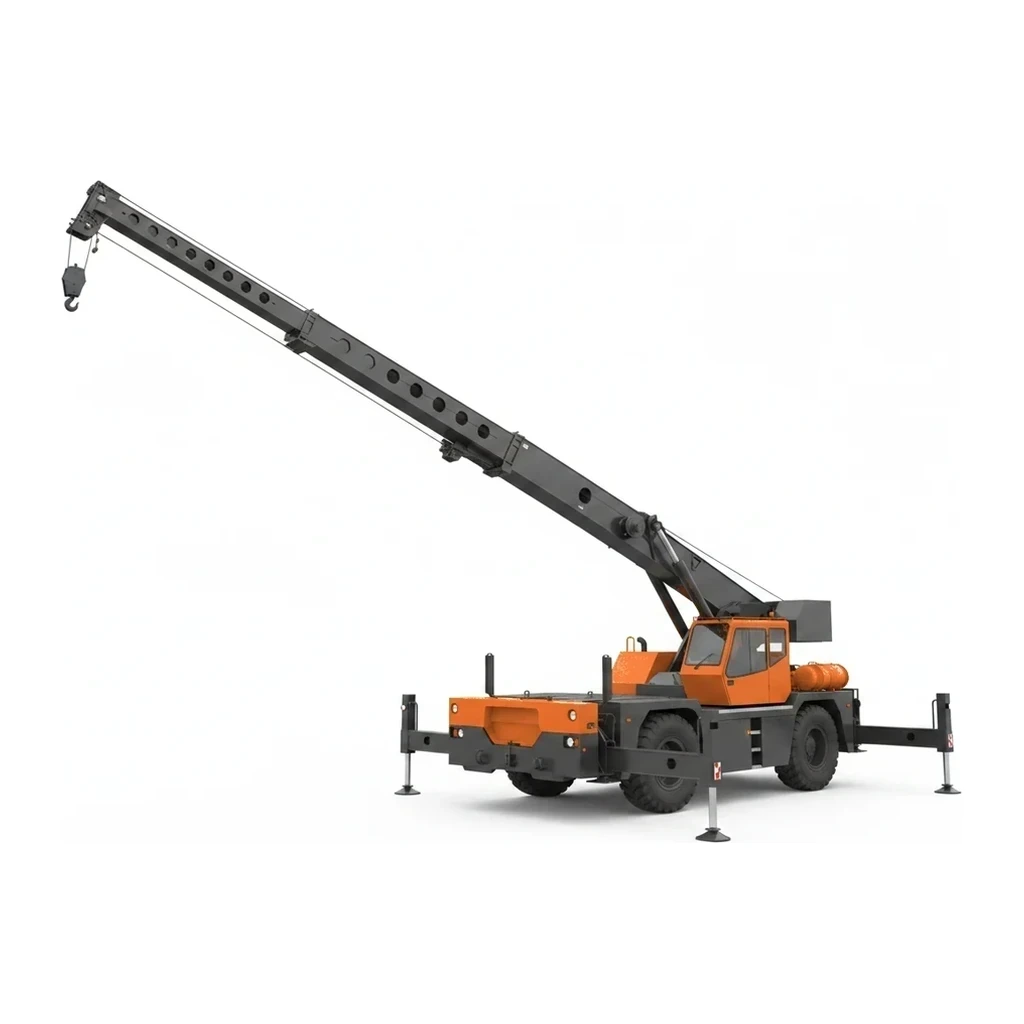
The operator drives the crane to the work area using either rear-wheel or four-wheel steering, positions the machine, and extends outriggers for stability. The telescoping or lattice boom rotates 360 degrees from a center-mounted turret, lifting loads with wire rope and hook block. Once a load is rigged and lifted, it can be set directly onto the rear load deck for transport to another location within the facility. Four-wheel steering (including crab and coordinated modes) allows the crane to maneuver through narrow aisles, doorways, and congested plant floors. The operator controls travel, steering, outriggers, boom extension, hoist, and swing from a single cab or control station. Many models feature both onboard operator controls and optional remote pendants for improved visibility during precision lifts.
Types & variants
- Compact Industrial (Under 9 Tons)
- Smallest footprint models designed for millwright and maintenance work, capable of driving around plant floors with loads on deck for frequent repositioning tasks.
- Standard Carry Deck (9-15 Tons)
- The most common configuration for refinery turnarounds and industrial installations, balancing capacity with the ability to navigate typical facility aisleways.
- Heavy Industrial (15+ Tons)
- Largest capacity carry decks built to move heavy plant equipment inside buildings where overhead cranes are unavailable or impractical.
- Telescopic Boom
- Features hydraulically extending boom sections for variable reach, offering faster setup and simpler operation in repetitive lifting applications.
- Lattice Boom
- Employs bolt-together lattice sections for greater reach and reduced weight, though requiring more setup time compared to telescopic designs.
Key specifications
| Specification | Typical range | What it means |
|---|---|---|
| Lifting Capacity | 2-23 tons | Rated capacity varies by boom configuration, radius, and outrigger extension; determines maximum load the crane can safely handle. |
| Maximum Reach | 15–75 ft (4.6–22.9 m) | Horizontal distance from the crane's centerline to the hook at full boom extension, affecting ability to access loads in confined areas. |
| Deck Load Capacity | Varies by model | Maximum weight the rear load deck can carry during transport, enabling the crane to move lifted loads to different work locations. |
| Overall Width | 7–9 ft (2.1–2.7 m) | Critical dimension for navigating doorways, aisles, and between equipment in industrial facilities. |
| Turning Radius | Varies by steering mode | Four-wheel steering modes (two-wheel, four-wheel, crab) provide different turning characteristics for maneuvering in restricted spaces. |
How the industry sizes it
The industry sizes carry deck cranes by lifting capacity in tons (USt or metric tonnes), with common classifications of up to 15 tons and 15-30 tons. Models under 9 tons serve millwright and maintenance applications requiring frequent deck transport. The 9-15 ton range represents the everyday workhorse for refinery turnarounds and industrial installations in tight aisles. Cranes above 15 tons handle the heaviest plant equipment that must be moved inside buildings. Capacity ratings depend on boom length, load radius, and outrigger configuration, with manufacturers providing detailed load charts for each setup condition.
Applications
- Refinery and petrochemical plant turnarounds requiring equipment replacement in congested pipe racks
- Manufacturing facility maintenance including machine tool installation and HVAC equipment positioning
- Indoor industrial construction where overhead cranes are unavailable or building access restricts larger mobile cranes
- Millwright operations involving frequent repositioning of production equipment across plant floors
- Utility and power plant maintenance for transformer and component handling in switchyards and generating stations
- Fabrication shop material handling where loads must be lifted and transported between work cells
Safety & operation
- Load chart adherence is critical as capacity decreases significantly with boom extension and load radius; operators must verify configuration before each lift
- Outrigger setup on solid, level surfaces with appropriate cribbing prevents tipping and maintains rated capacity
- Four-wheel steering modes require operator training to prevent loss of control during travel, especially when loaded
- Overhead clearance monitoring is essential when operating indoors near ceilings, piping, electrical systems, and ventilation ductwork
- Ground personnel must maintain safe distance from the crane during travel and lifting operations due to limited visibility from the operator's station
Standards & certifications
- ASME · B30.5
- Safety standard for mobile and locomotive cranes, establishing design, inspection, testing, maintenance, and operation requirements.
- OSHA · 29 CFR 1926 Subpart CC
- Federal regulations governing crane operation in construction, including operator qualification, assembly, inspection, and safe work practices.
- ANSI · B30.22
- Articulating boom cranes standard; applicable sections may apply depending on crane configuration and boom design.
- SAE · J1028
- Mobile crane stability ratings and testing procedures used by manufacturers to establish load charts and tipping loads.
Frequently asked
What distinguishes a carry deck crane from other mobile cranes?
How does four-wheel steering improve carry deck crane operation?
What determines capacity rating on a carry deck crane?
Can carry deck cranes operate on uneven surfaces?
Compare popular models
Find by spec →Normalised to the same units. A dash means the figure was not published.
| Model | Lifting capacity | Max reach |
|---|---|---|
| Broderson IC-20 | 4,409 lb (2 t) | 15 ft (4.6 m) |
| Broderson IC-35 | 8,818 lb (4 t) | 19 ft (5.8 m) |
| Broderson IC-40 | 8,818 lb (4 t) | 19 ft (5.8 m) |
| Broderson IC-80 | 17,637 lb (8 t) | 30 ft (9.1 m) |
| Broderson IC-200 | 30,865 lb (14 t) | 50 ft (15.2 m) |
| Broderson IC-200-2SJ | 30,865 lb (14 t) | 50 ft (15.2 m) |
Related equipment
Browse by manufacturer
Sources
Every specification is verified against the manufacturer's published data, with the source linked for reference.