
Telescopic Crawler Crane
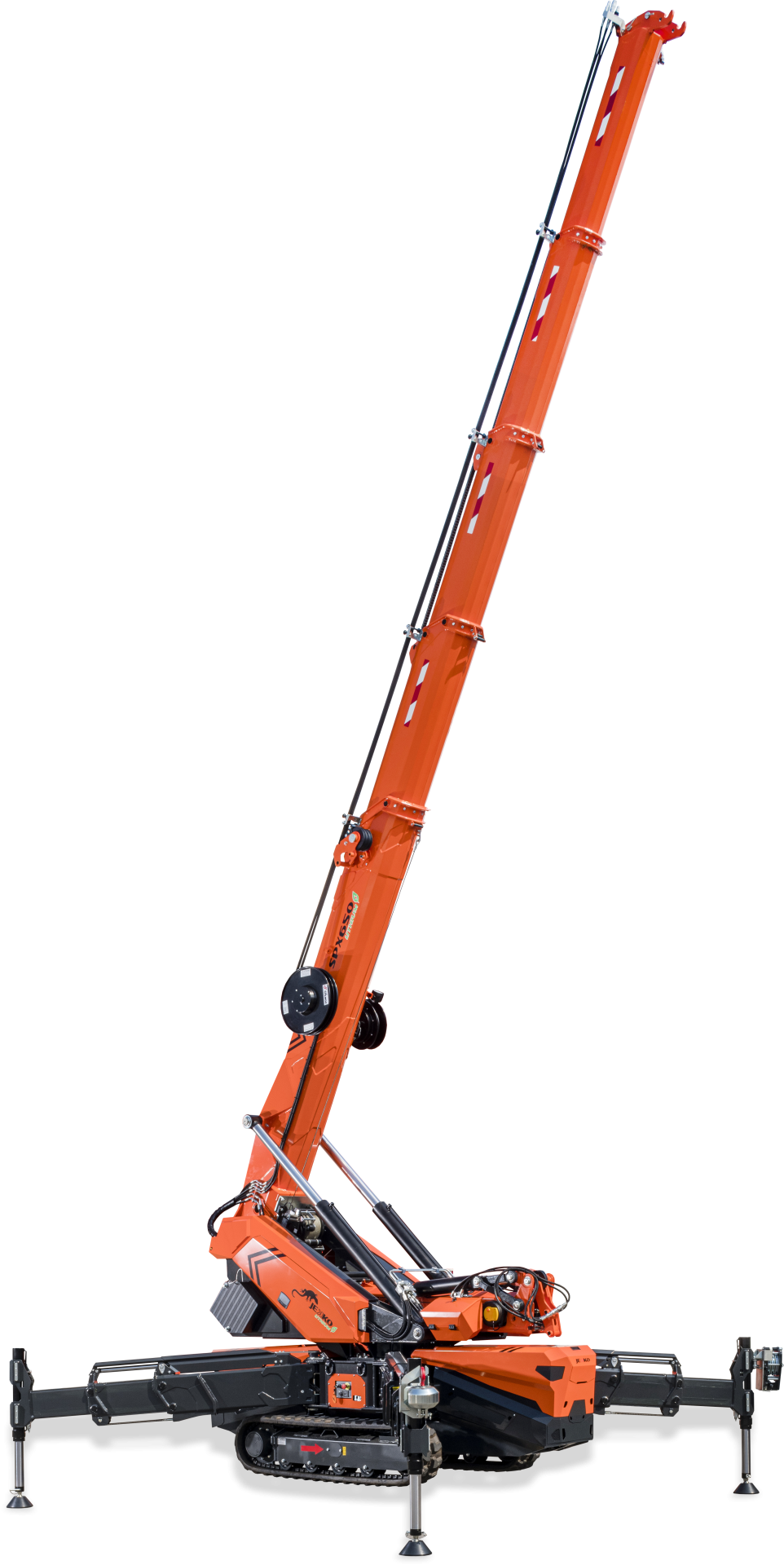
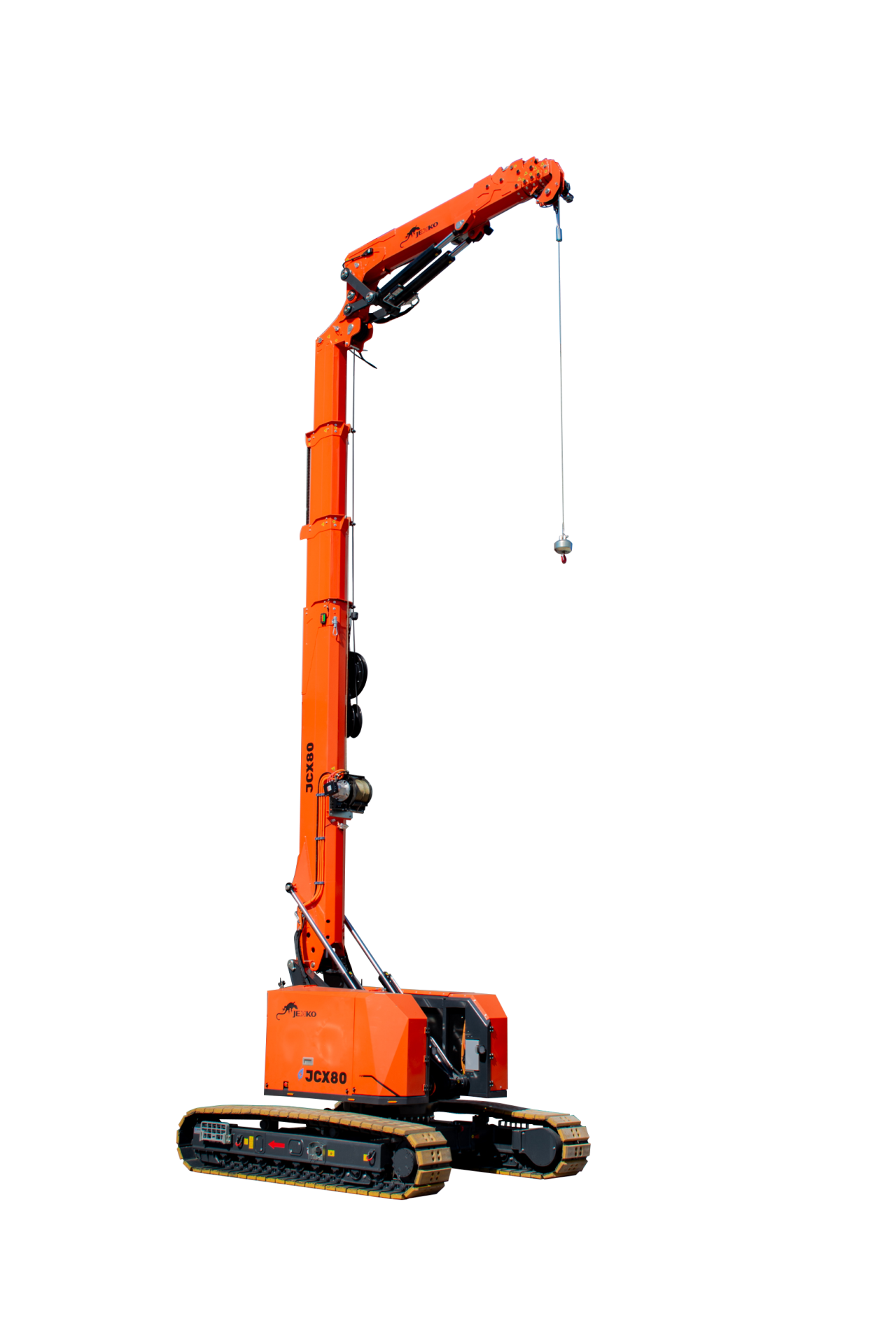
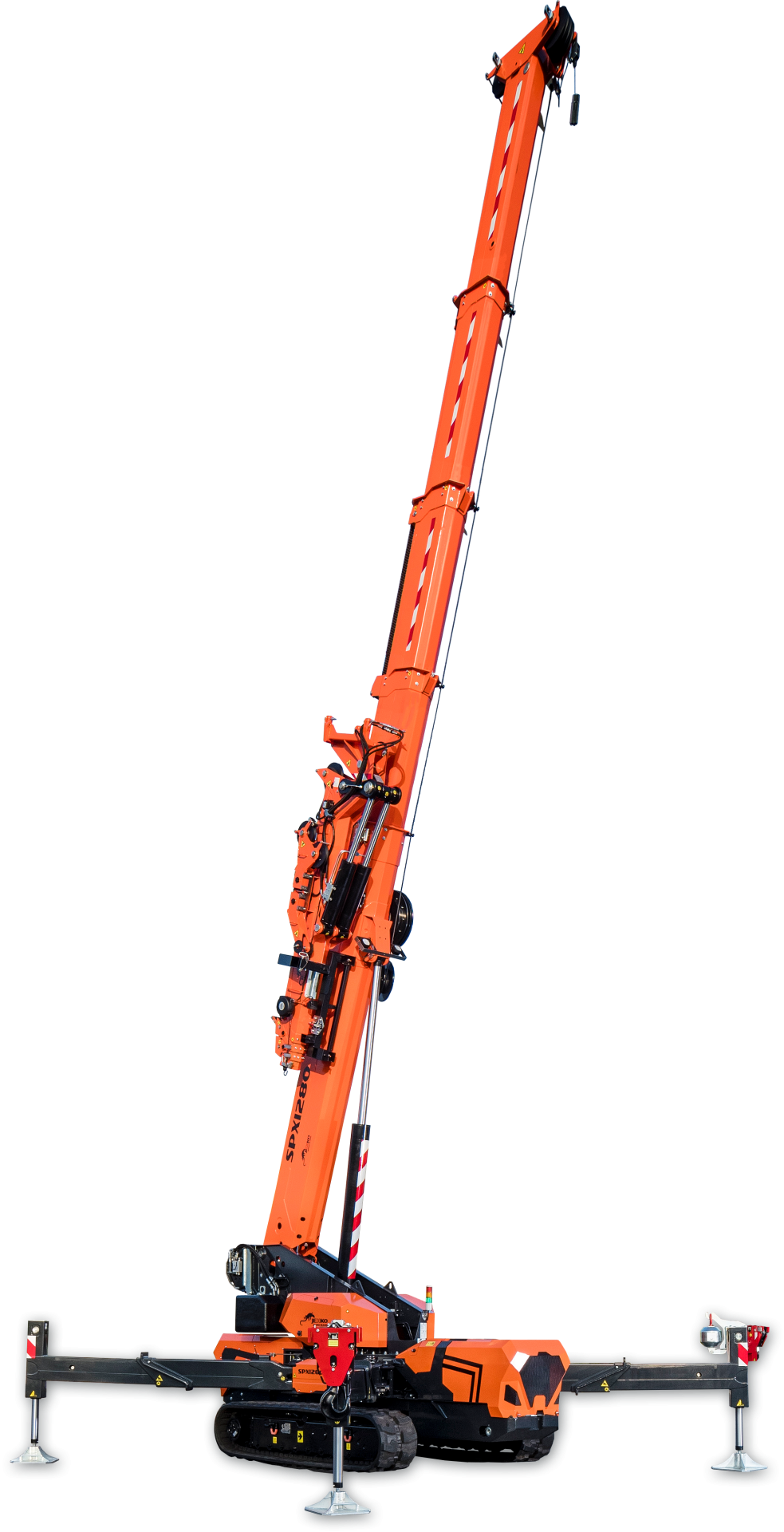
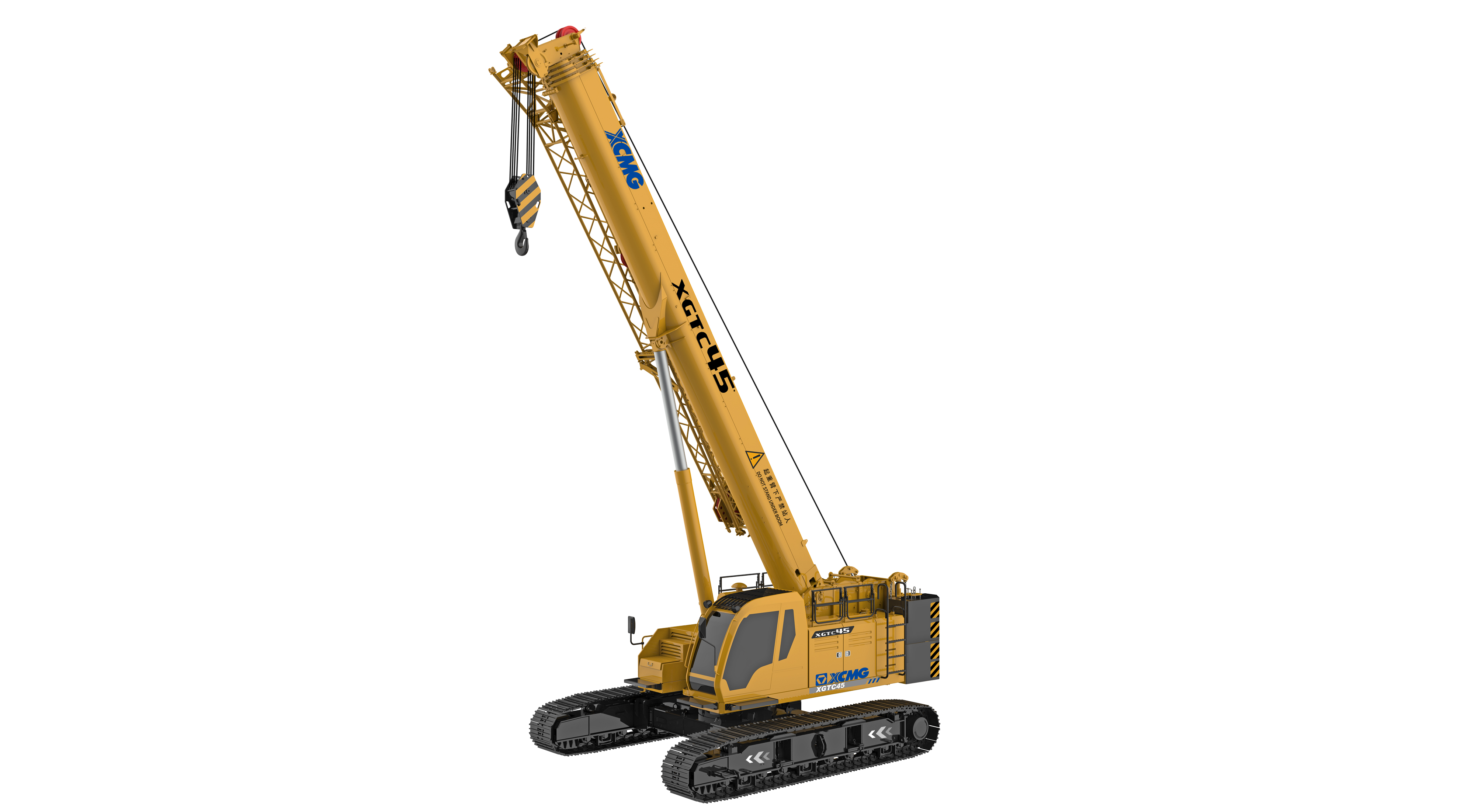
A telescopic crawler crane is a mobile crane that integrates a hydraulically extendable telescopic boom with a continuous track undercarriage, enabling load handling and travel over soft, uneven, or confined terrain without requiring outriggers. This equipment class bridges the gap between compact pick-and-carry cranes and large lattice-boom crawlers, offering versatility in foundation work, pipeline installation, and infrastructure projects. The tracked base distributes ground pressure evenly while the telescopic boom provides variable reach and rapid setup.
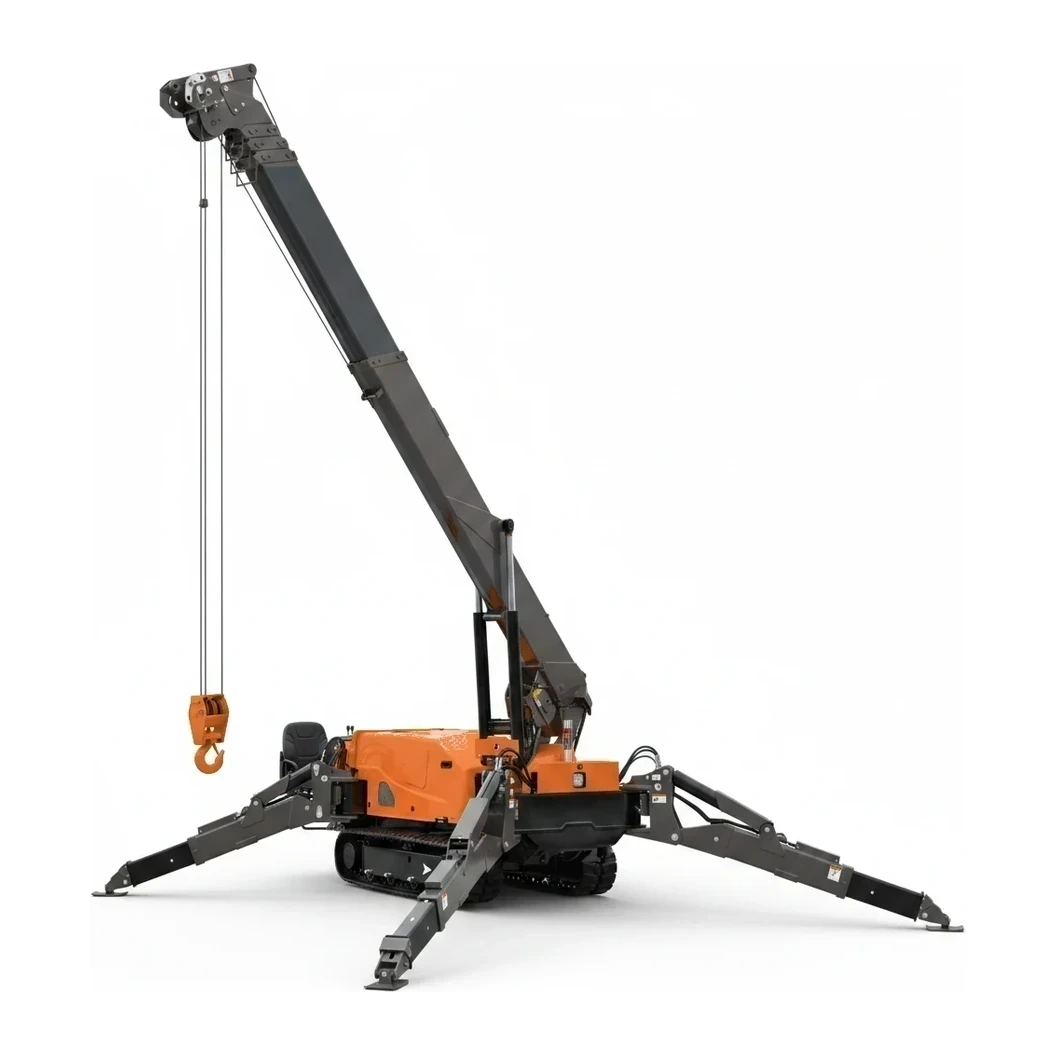
Cat classes
Pick a size class — capacity and reach differ across the range.
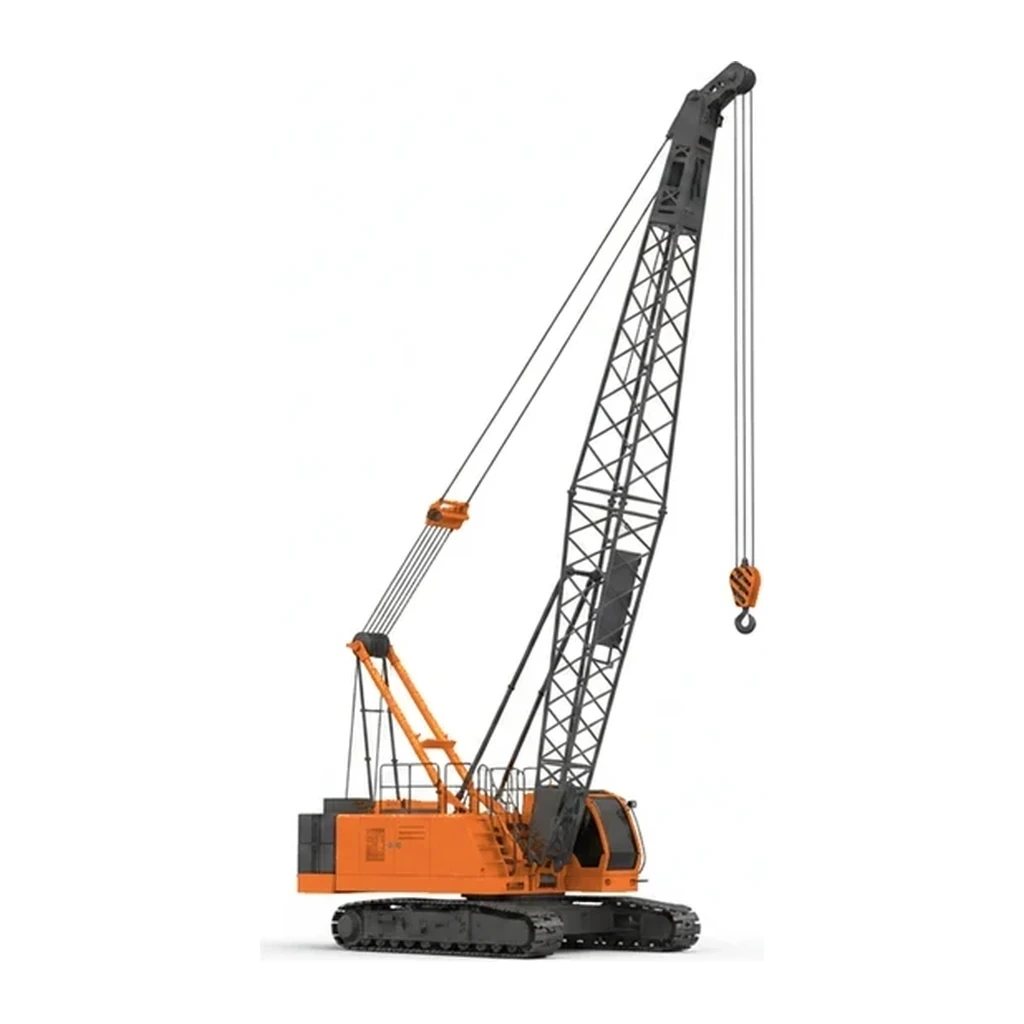
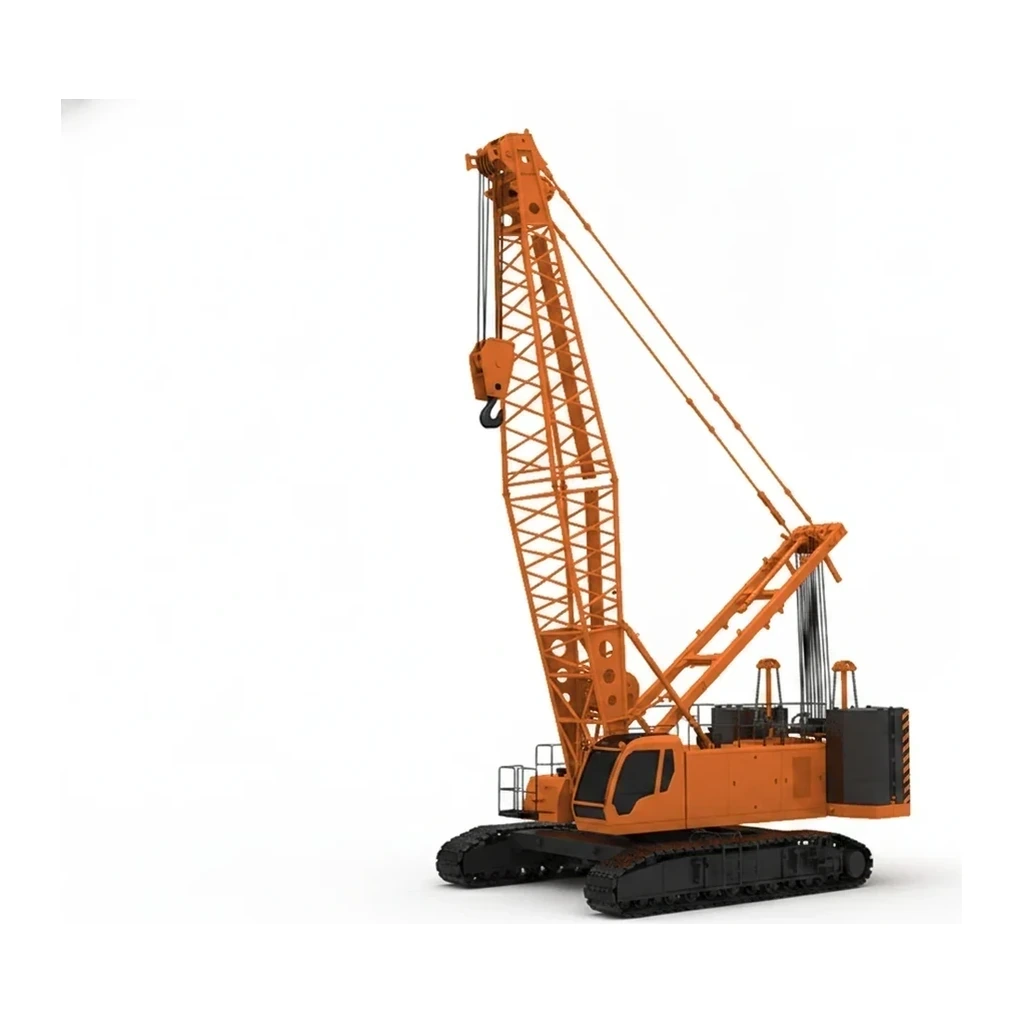
How it works
The machine operates on a pair of rubber or steel tracks that provide flotation and traction on soft ground, allowing the crane to move with loads suspended—a capability known as pick-and-carry operation. The telescopic boom extends and retracts hydraulically, with sections sliding within one another to adjust working radius and height. Operators control boom extension, slewing, hoisting, and track travel from an enclosed cab, typically with load moment indication systems to prevent overloading. Unlike wheeled cranes, telescopic crawlers distribute weight across a large footprint, minimizing ground pressure and eliminating the need for outriggers in many applications. Compact models often feature zero-tail-swing designs for work in tight urban or indoor environments, while larger units provide substantial lifting capacity for heavy industrial tasks.
Types & variants
- Compact Track Crane (Up to 10 ton)
- Small-footprint machines designed for indoor, rooftop, and confined-space work with zero or minimal tail swing, often transported in standard containers or on flatbed trailers.
- Standard Telescopic Crawler (10–80 ton)
- Mid-capacity units for general construction, pipeline, and utility applications, balancing mobility with lifting performance for routine jobsite tasks.
- Heavy Telescopic Crawler (80+ ton)
- Large-capacity machines used for drill rig support, heavy foundation work, and industrial plant construction where high capacity and mobility are both required.
- Zero-Tail-Swing (ZTS) Crawler
- Models engineered so the counterweight and cab remain within the width of the tracks during slewing, enabling operation adjacent to walls and obstacles.
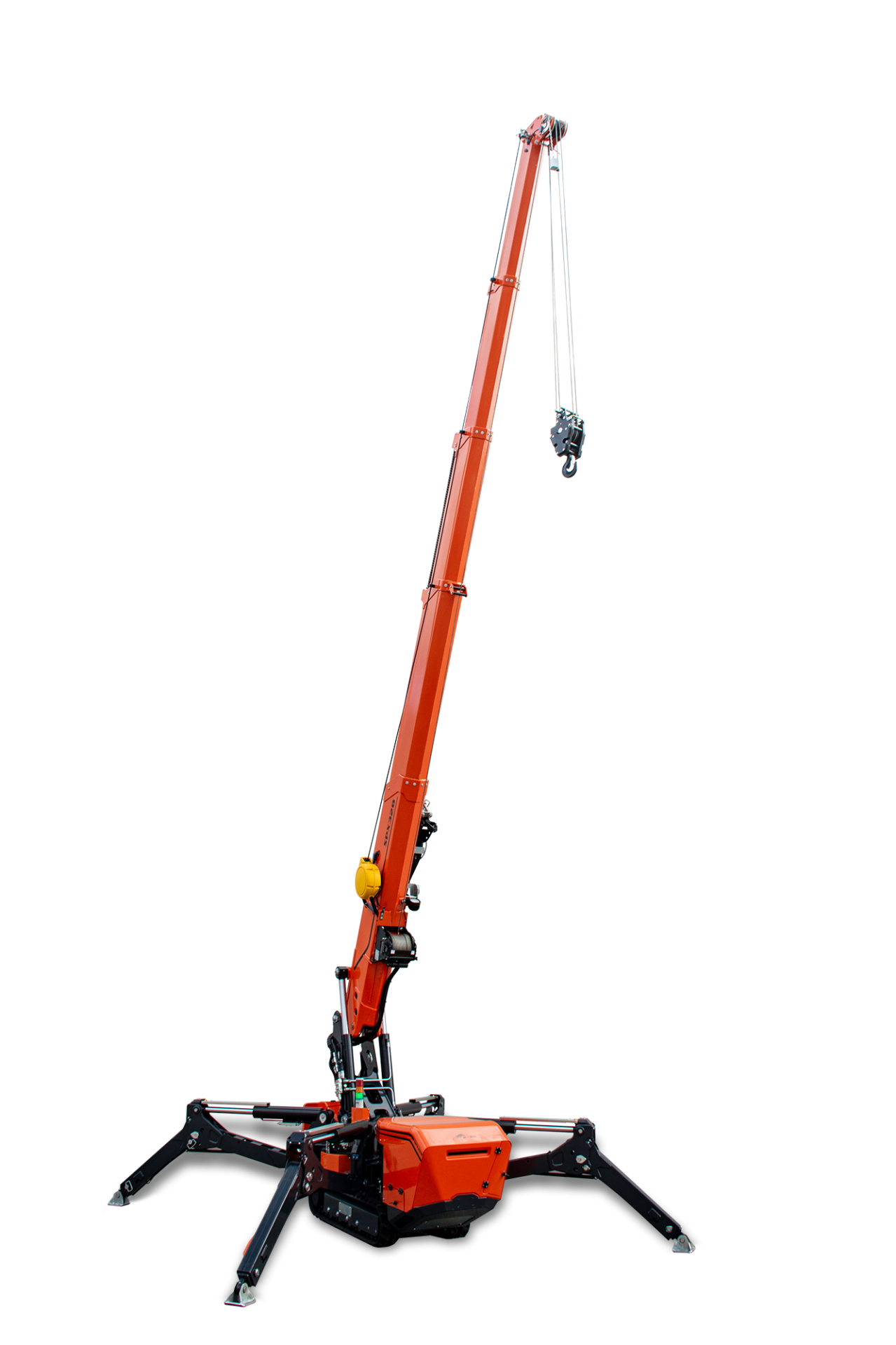
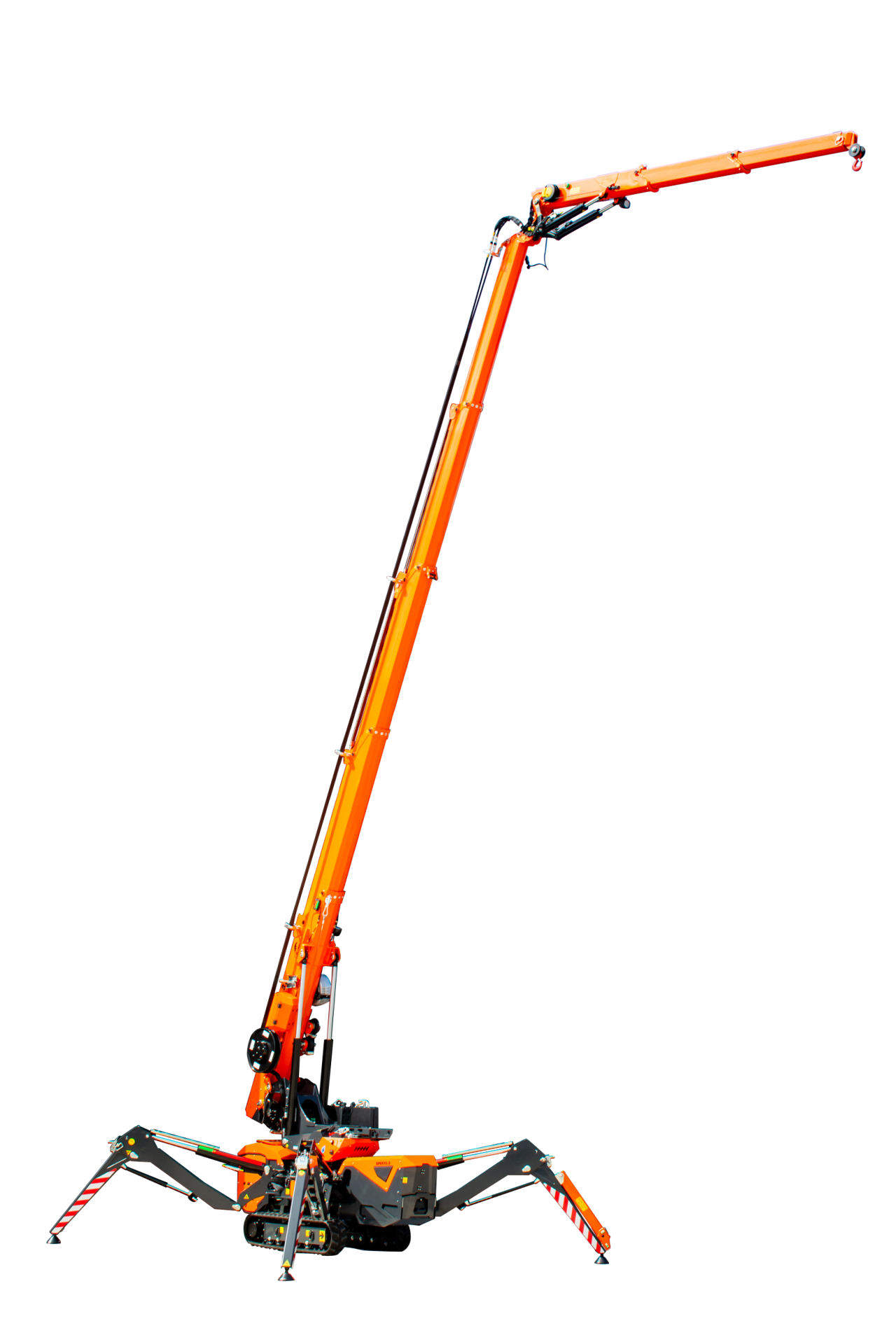
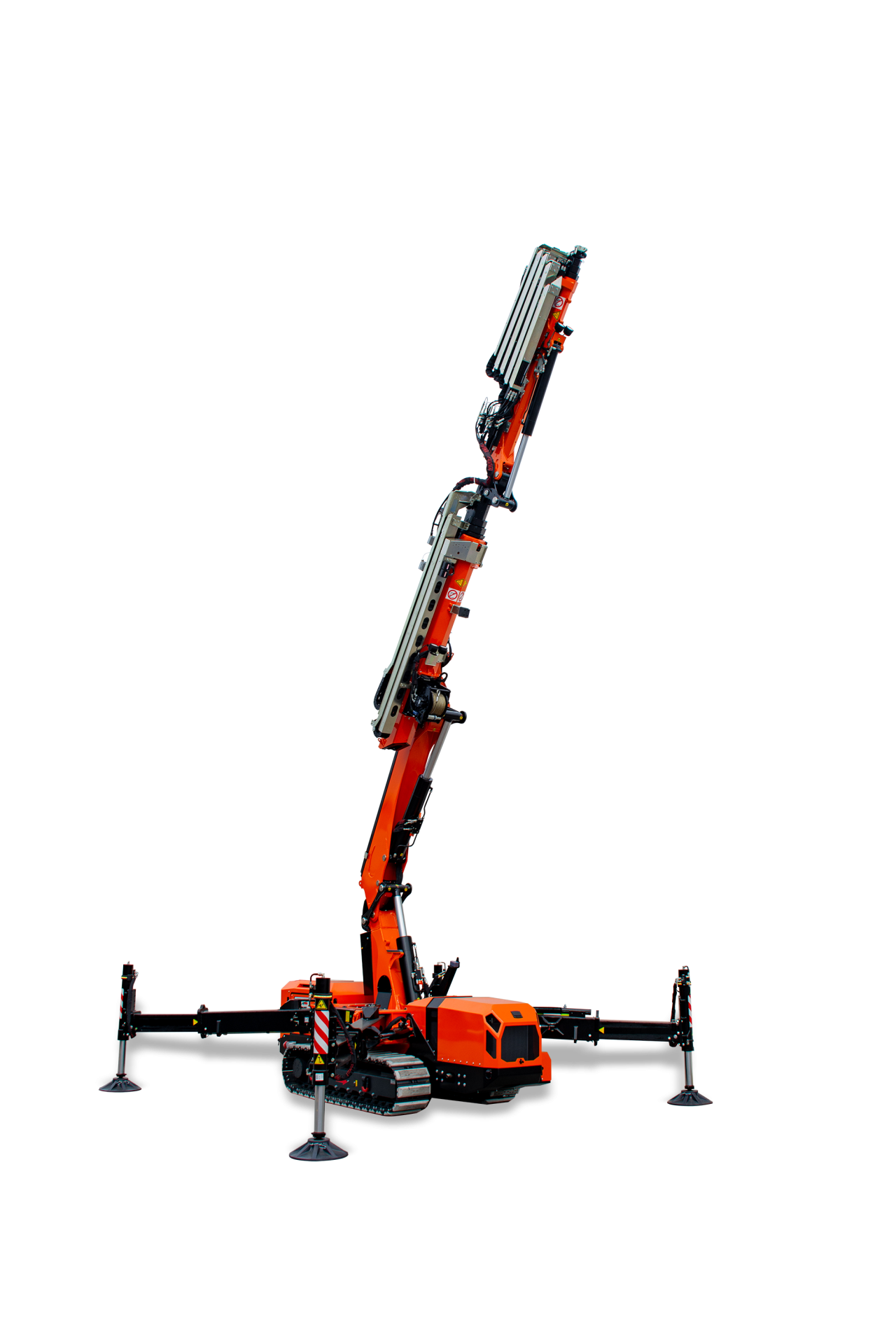
- Spider/Mini Crawler Crane
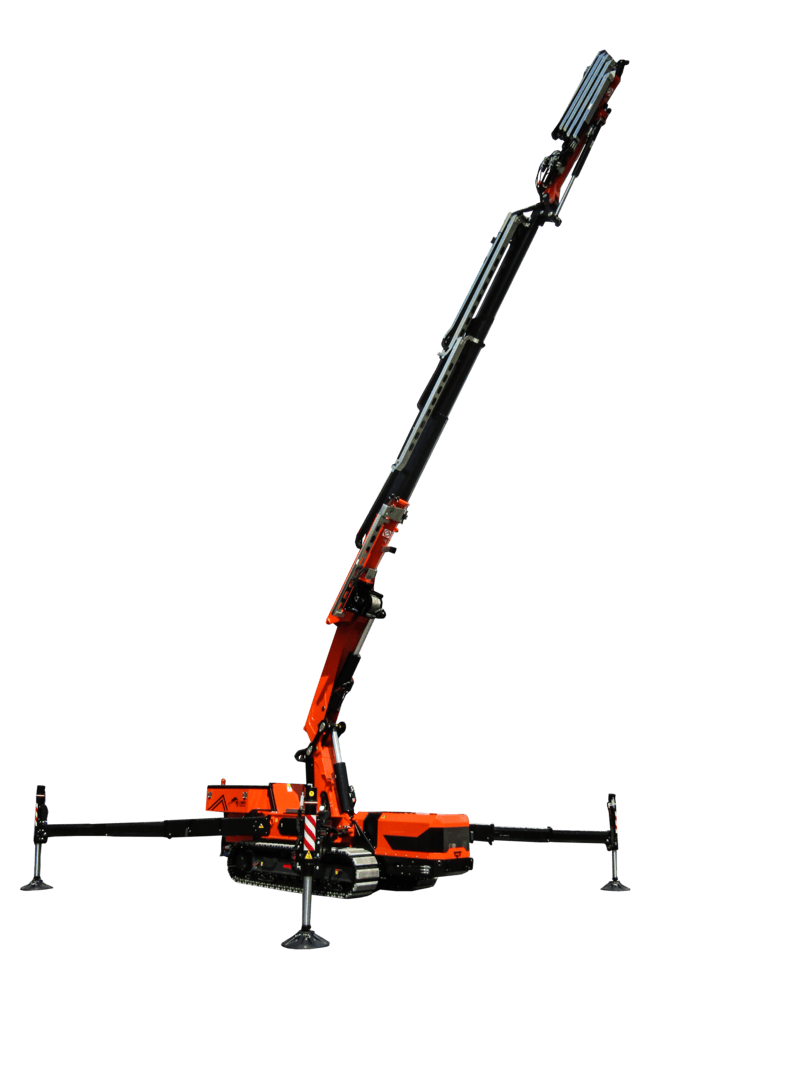
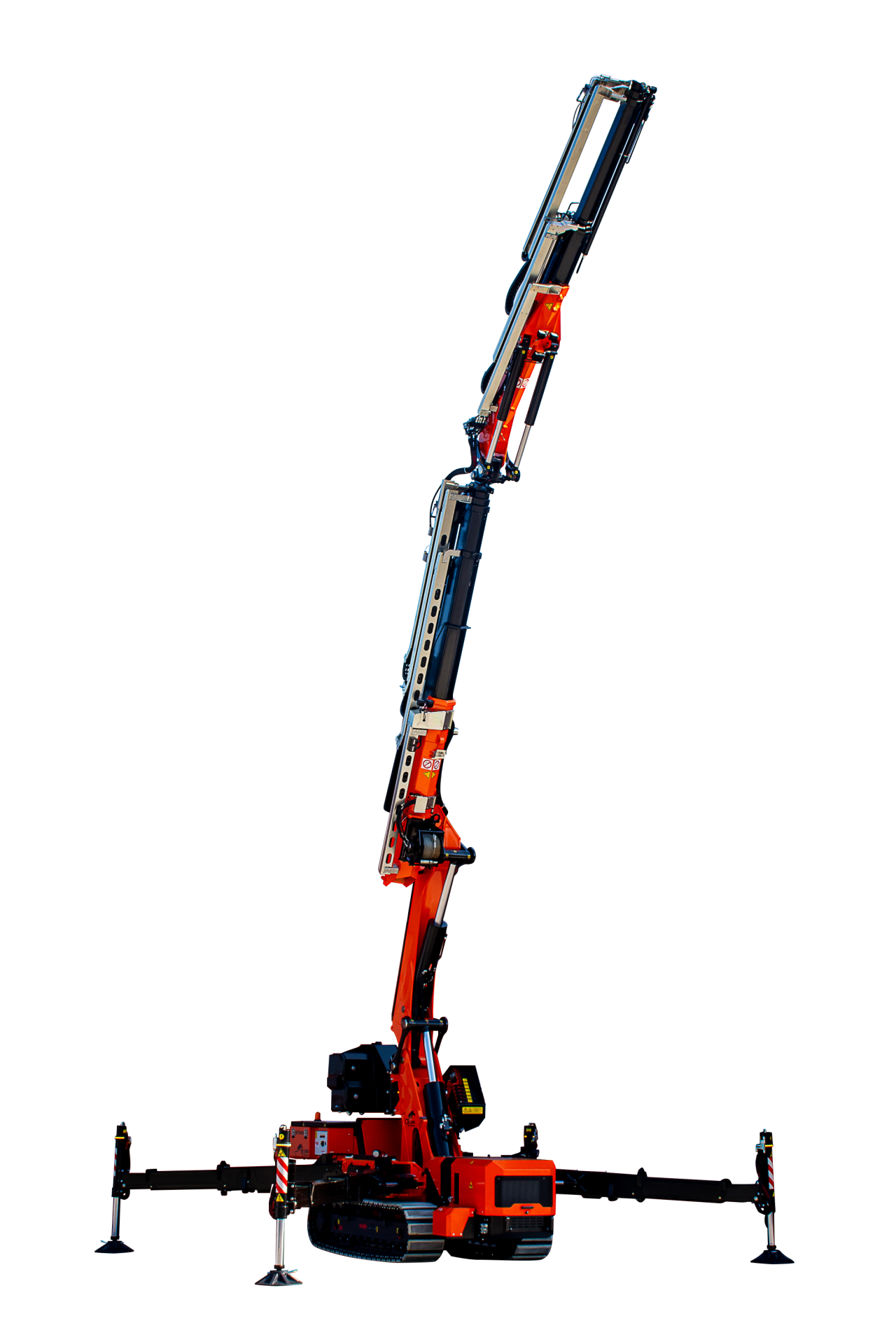
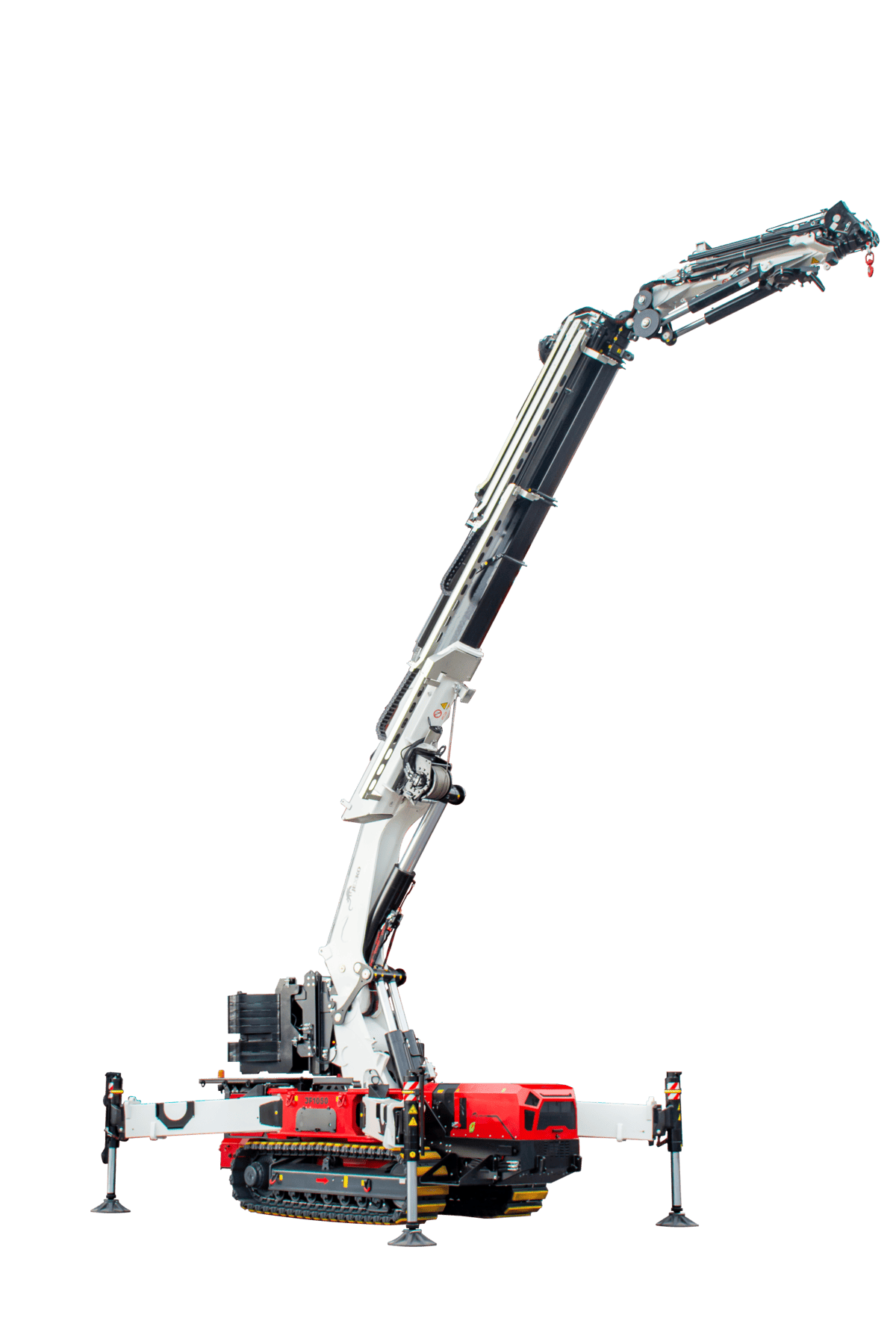
- Ultra-compact units with extendable outrigger legs that can navigate narrow doorways and elevators, commonly used for glass installation and mechanical room equipment placement.
Key specifications
| Specification | Typical range | What it means |
|---|---|---|
| Lifting Capacity | 2.4–648.6 ton | Maximum rated load the crane can lift at minimum radius; capacity decreases as boom extends and radius increases. |
| Maximum Reach | 18–78.7 ft (5.5–24.0 m) | Furthest horizontal distance from the center of rotation to the hook with boom fully extended and at minimum angle. |
| Ground Pressure | 4–12 psi | Weight distributed per square inch of track contact area; lower values permit operation on softer soils without matting. |
| Boom Sections | 2–5 sections | Number of nested telescopic segments; more sections generally provide greater maximum reach and flexibility. |
| Travel Speed | 0.5–2.5 mph | Maximum speed at which the crane can move on its tracks, typically slower when carrying loads. |
How the industry sizes it
The industry sizes telescopic crawler cranes primarily by lifting capacity in tons. Common size bands include models up to 80 tons that travel around soft ground with the load and no outriggers for pipeline, foundation, and bridge work, and heavy units of 80+ tons for drill rig support and large foundation work. Manufacturers offer 169 models from brands including Kobelco Cranes, XCMG, Link-Belt, Tadano, Manitowoc, Unic, Jekko, Maeda, and Grove. Selection depends on required lift capacity, reach, ground conditions, and site access constraints.
Applications
- Pipeline construction and maintenance where cranes must travel along trenches and soft rights-of-way
- Bridge construction and repair, particularly for setting beams and working over water or uneven terrain
- Foundation and piling operations requiring stable lifting near excavations without outrigger setup
- Industrial plant maintenance and turnarounds for equipment placement in congested process areas
- Utility pole and transmission tower installation across varied terrain conditions
- Precast concrete panel erection on sites with limited working space or soft ground
Safety & operation
- Ground bearing capacity must be evaluated before operation; mats or cribbing may be required even with tracked undercarriage to prevent settling
- Load charts account for specific track configurations, boom lengths, and working radii—operators must verify conditions match chart parameters
- Travel with load is restricted to level ground and requires reduced speeds; manufacturer guidelines specify maximum slopes and load limits for travel
- Operators must maintain awareness of tail swing radius on non-ZTS models and overhead clearances during boom extension
- Daily inspections of track tension, hydraulic systems, and boom wear points are essential to prevent mechanical failures under load
Standards & certifications
- ASME B30.5 · Mobile and Locomotive Cranes
- Establishes construction, installation, inspection, testing, maintenance, and operation requirements for mobile cranes including crawler-mounted types.
- OSHA 29 CFR 1926 Subpart CC · Cranes and Derricks in Construction
- Federal regulations governing crane operation in construction, including operator qualification, assembly/disassembly, and ground conditions assessment.
- ISO 4305 · Mobile Cranes — Determination of Stability
- International standard specifying methods for determining stability and establishing rated capacity for mobile cranes.
Frequently asked
What distinguishes a telescopic crawler crane from a lattice-boom crawler crane?
Can telescopic crawler cranes operate without outriggers?
How are compact track cranes transported to jobsites?
What ground conditions require mats under telescopic crawler cranes?
Compare popular models
Find by spec →Normalised to the same units. A dash means the figure was not published.
| Model | Lifting capacity | Max reach |
|---|---|---|
| Grove GHC30 | 59,525 lb (27 t) | 33 ft (10.1 m) |
| Grove GHC85 | 169,756 lb (77 t) | 36.1 ft (11.0 m) |
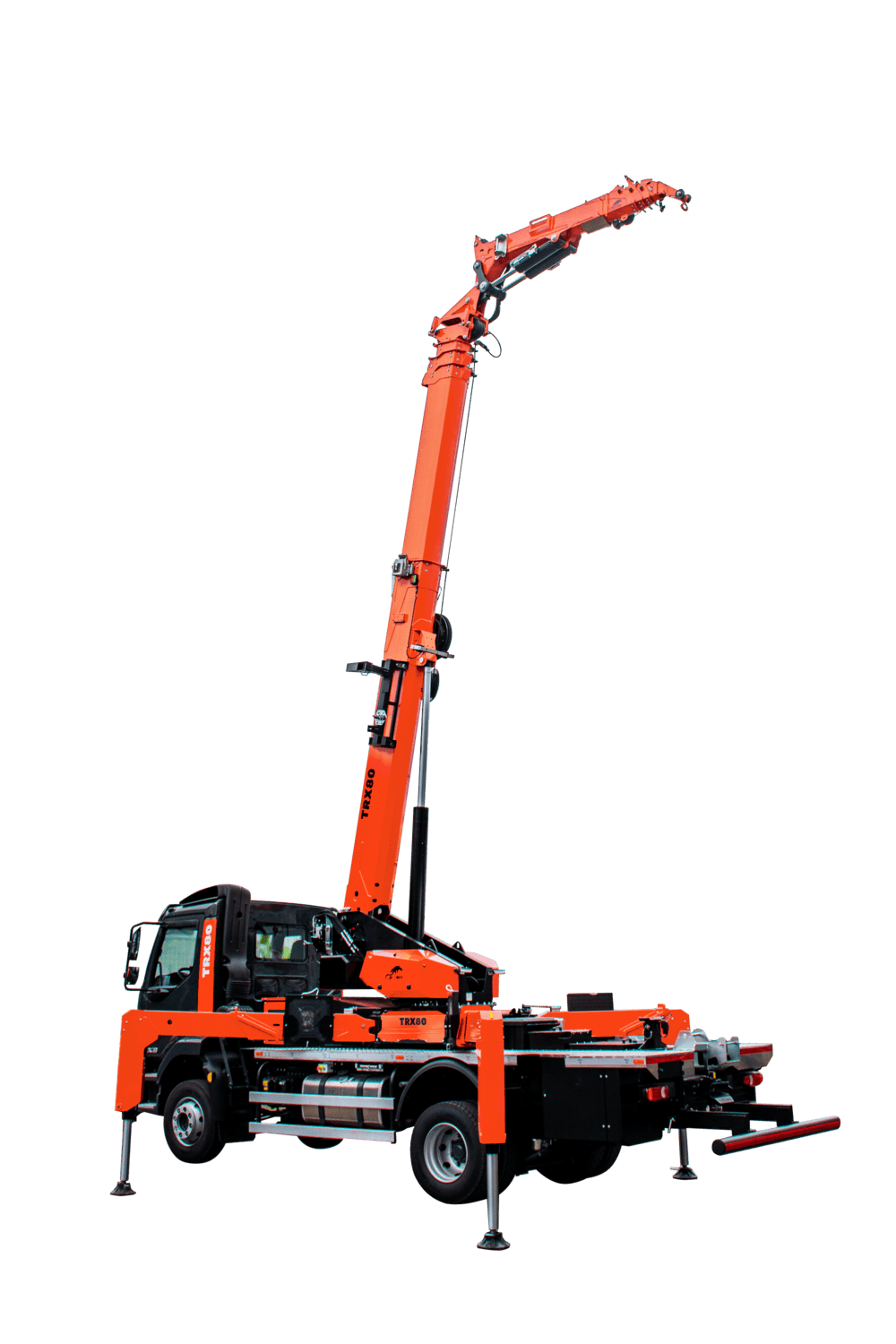
| Jekko TRX80 | 17,637 lb (8 t) | 65.6 ft (20.0 m) |
| Kobelco Cranes CK90UR-3 | 11,023 lb (5 t) | 48.5 ft (14.8 m) |
| Kobelco Cranes CK120UR-3 | 11,023 lb (5 t) | 48.5 ft (14.8 m) |
| Sennebogen 2200 G | 176,370 lb (80 t) | 39.7 ft (12.1 m) |
Browse by manufacturer
Sources
Every specification is verified against the manufacturer's published data, with the source linked for reference.
All models
169 models · Page 2 of 4 · Every spec cited to source