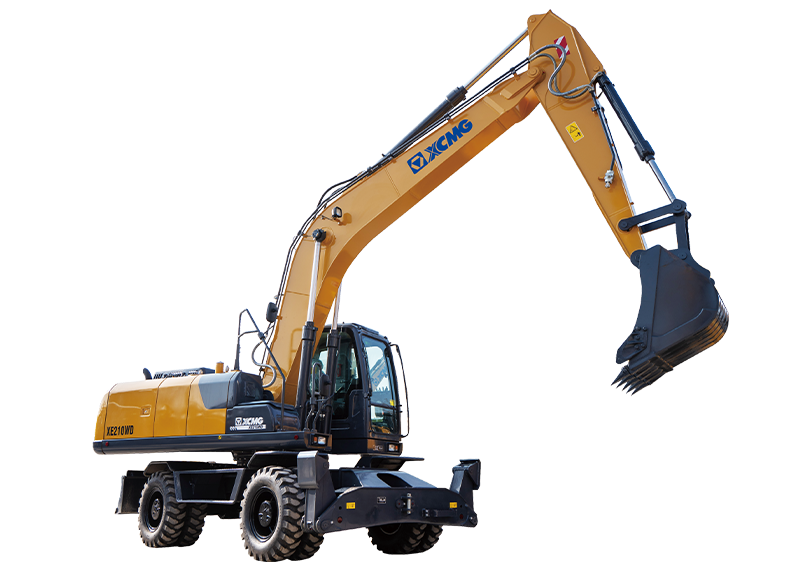

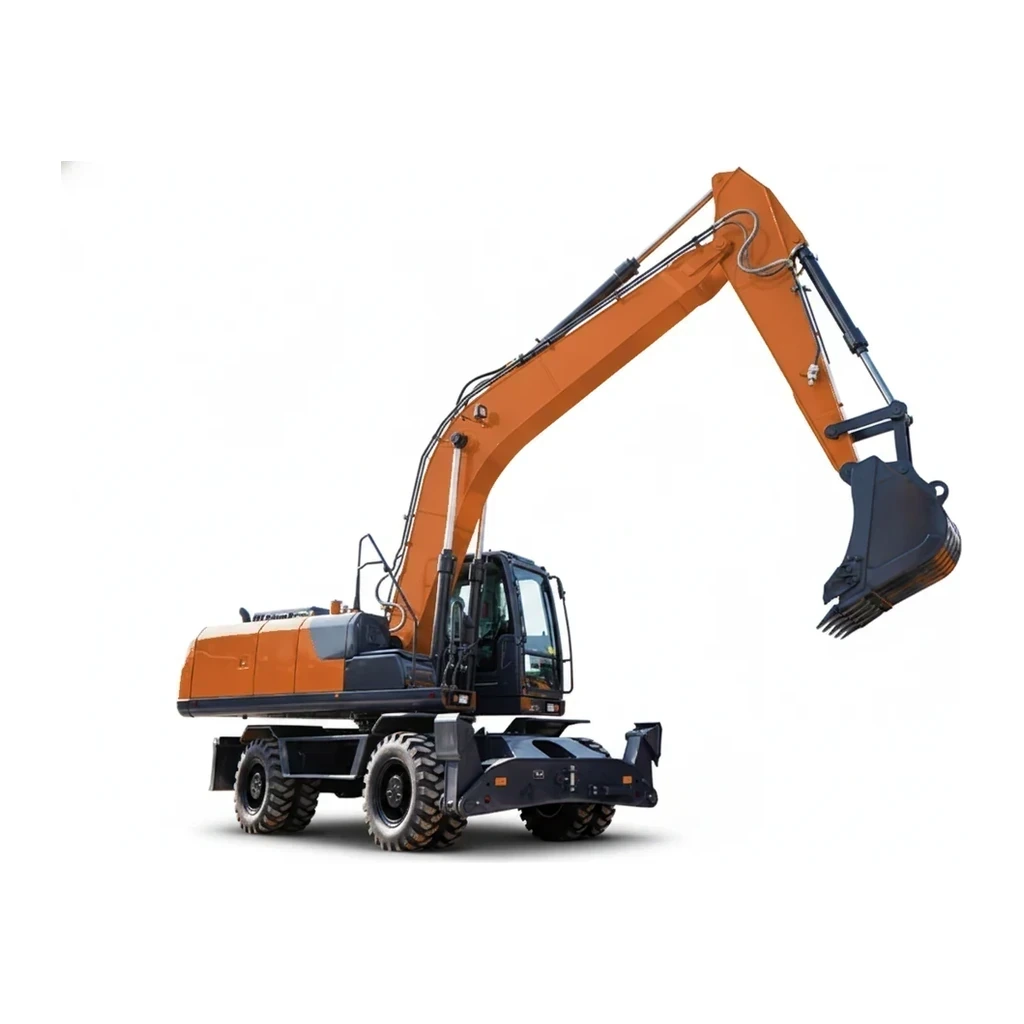
45,000+ lb Wheeled Excavator
The 45,000+ lb wheeled excavator class represents the heaviest end of the wheeled excavator spectrum, built for highway maintenance, rail corridor work, and material handling operations requiring long stabilized reach. Operating weights span 20,800–23,424 kg with engine outputs of 172–181 hp and maximum dig depths reaching 19.9 ft. This size sits above the 30,000-45,000 lb class and represents the largest capacity in the three-tier wheeled excavator ladder.
Cat classes
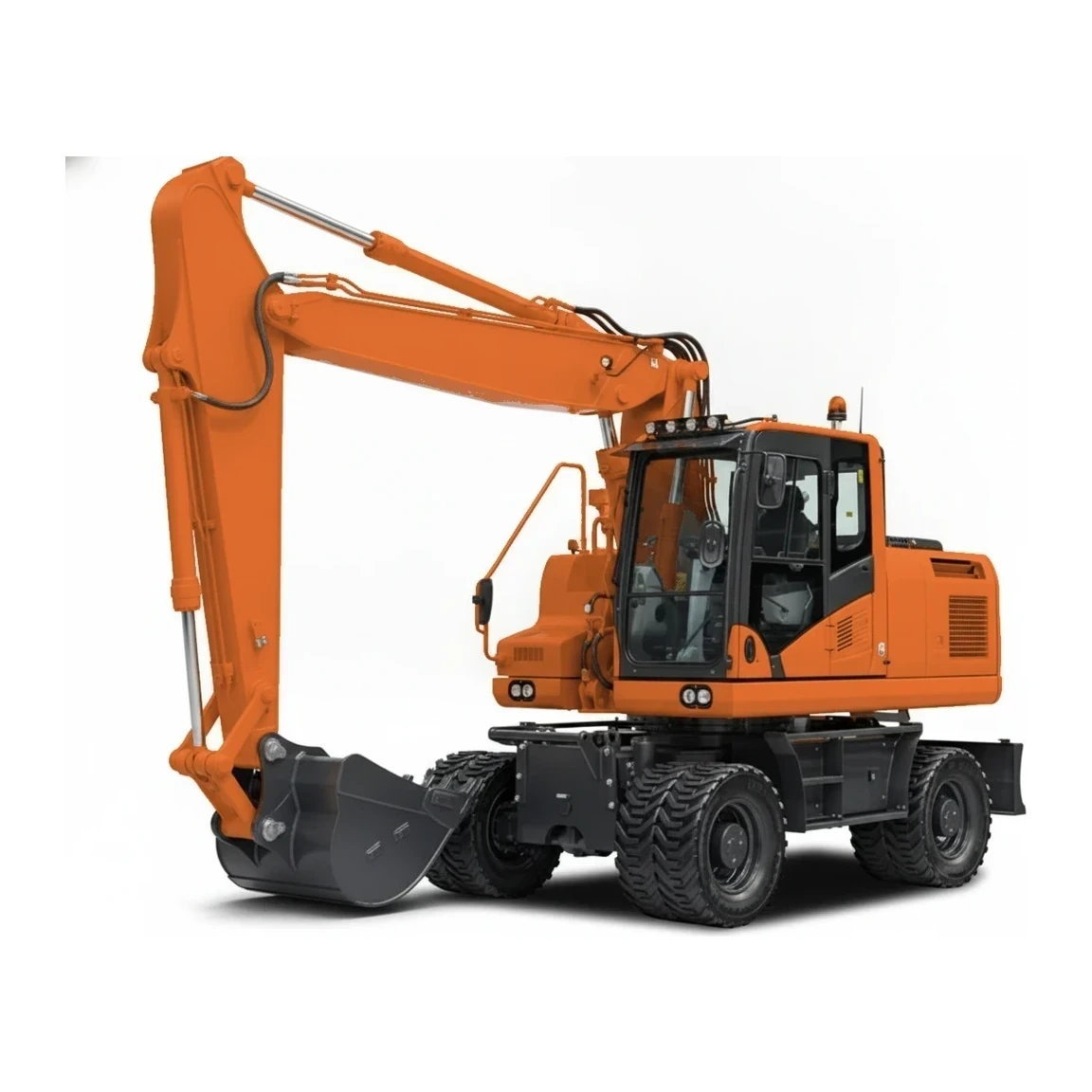
Pick a size class: capacity and reach differ across the range.
Key specifications
| Specification | Typical range | What it means |
|---|---|---|
| Operating weight | 20,800–23,424 kg (45,860–51,640 lb) | Defines transport requirements, ground bearing pressure, and site access constraints for this heavy wheeled class. |
| Engine power | 172–181 hp | Supports hydraulic flow for simultaneous digging and travel at roadside speeds with auxiliary attachments. |
| Max dig depth | 13–19.9 ft (4.0–6.1 m) | Stabilized reach for utility trenching, slope work, and rail embankment excavation from outrigger-supported positions. |
How to choose
This size is specified when projects demand maximum wheeled excavator reach and lifting capacity with highway mobility—typically large-scale roadway reconstruction, rail maintenance-of-way programs, and industrial material handling where tracked excavators lack the road speed or pavement-friendly ground pressure. The 30,000-45,000 lb Wheeled Excavator class suits most general highway maintenance and utility work with lower transport complexity and operating cost. No heavier wheeled excavator class exists; operations requiring greater digging force or reach transition to large tracked excavators or purpose-built rail equipment.
What this size handles
- Interstate median barrier replacement and drainage reconstruction with lane-closure mobility
- Rail corridor ballast excavation and tie replacement from track-adjacent positions
- Bridge approach excavation and large-diameter utility installation along arterial roads
- Industrial scrapyard material sorting and loading with grapple or magnet attachments
- Flood-control channel maintenance requiring frequent repositioning along levee roads
- Large-scale slope stabilization and rockfall cleanup on mountain highways
Safety & operation
- Outrigger deployment and leveling mandatory before digging operations; machine stability algorithms monitor load moments and boom geometry to prevent tipover.
- Rear-view and side-mounted cameras standard due to limited visibility during road travel and repositioning in confined rail or highway work zones.
- ROPS/FOPS cab protection required; audible travel alarms and strobes for mixed-traffic environments where machine operates near active lanes.
- Operator certification for both excavation and on-road travel; coordination with traffic control and railway authority flagging protocols where applicable.
Transport & logistics
- Requires heavy-duty lowboy or RGN trailer rated for 52,000+ lb combined load; tractor with 400+ hp and appropriate permits for oversize/overweight movement.
- Self-transports on public roads at 20–25 mph for regional moves within permit limits; stabilizer and blade retracted, boom secured in travel position.
- Loading via reinforced ramps or hydraulic tilt deck; ground support and approach grading critical due to axle loads exceeding 20,000 lb.
Power & supply
- Diesel fuel capacity typically 80–120 gallons; consumption 3–6 gph under load depending on auxiliary hydraulic demand and travel frequency.
- Tier 4 Final emissions systems standard across current models; DEF (diesel exhaust fluid) replenishment required at regular service intervals.
- Auxiliary hydraulic circuits support high-flow attachments (grapples, compactors, rail grinders) without supplemental power units.
Frequently asked
What distinguishes this class from tracked excavators in the same weight range?
How does outrigger footprint affect site planning for this size?
What attachment compatibility defines this size class?
Compare popular models
Find by spec →Normalised to the same units. A dash means the figure was not published.
| Model | Operating weight | Max dig depth | Max reach | Engine power |
|---|---|---|---|---|
| Hitachi ZX220W-7 | 54,895 lb (24,900 kg) | 20.7 ft (6.3 m) | 33.7 ft (10.3 m) | 172 hp |
| Takeuchi TB395W | 23,424 lb (10,625 kg) | - | - | - |
| Develon DX190W-7K | - | 18 ft (5.5 m) | - | - |
| Develon DX210W-7K | - | 19 ft (5.8 m) | - | - |
| JCB JS200W | 48,502 lb (22,000 kg) | - | - | 172 hp |
| XCMG XE210WD | 45,856 lb (20,800 kg) | - | - | 181 hp |
Related equipment
Browse by manufacturer
Sources
Every specification is verified against the manufacturer's published data, with the source linked for reference.
45,000+ lb Wheeled Excavator
6 models · Every spec cited to source