

Mini Skid Steer
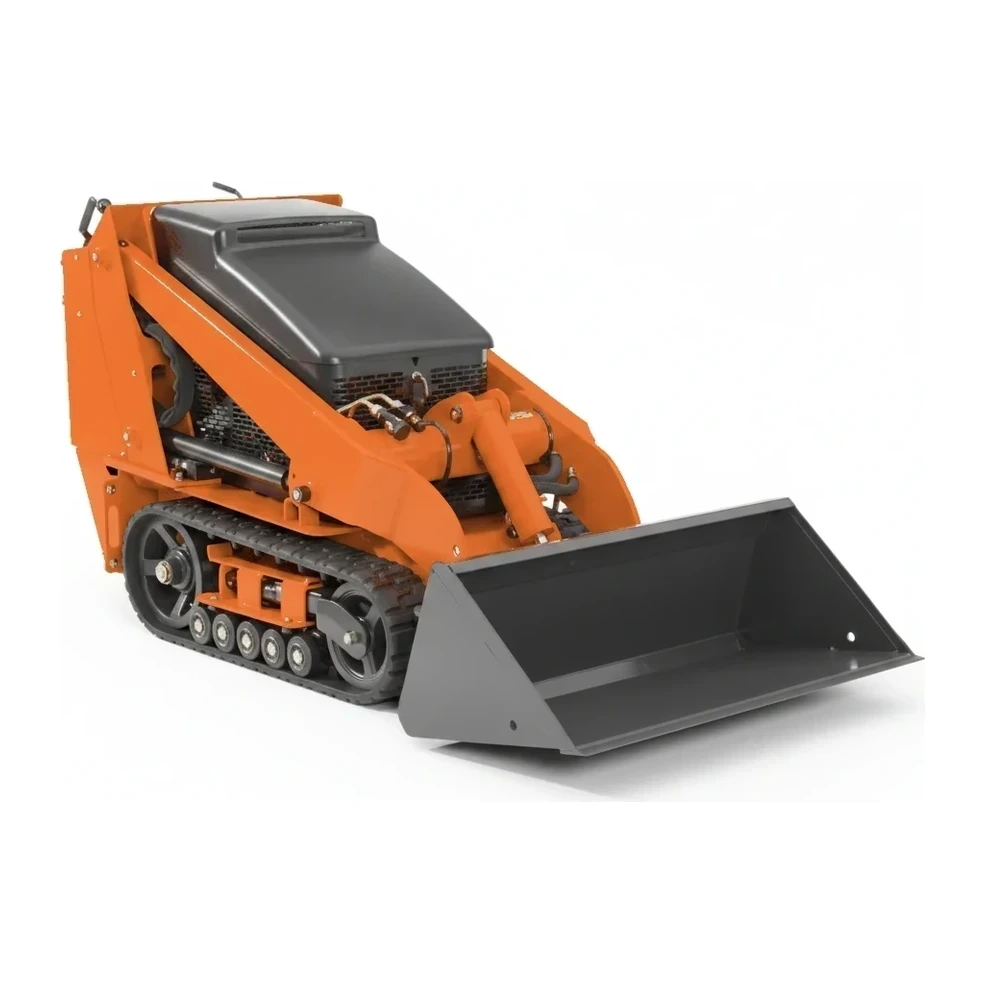
A mini skid steer (compact utility loader) is a walk-behind or stand-on loader small enough to pass garden gates and doorways while running the same attachment families as full-size machines. It exists to mechanize landscape and light construction work in spaces where even a compact track loader cannot enter.
Cat classes
Pick a size class: capacity and reach differ across the range.
How it works
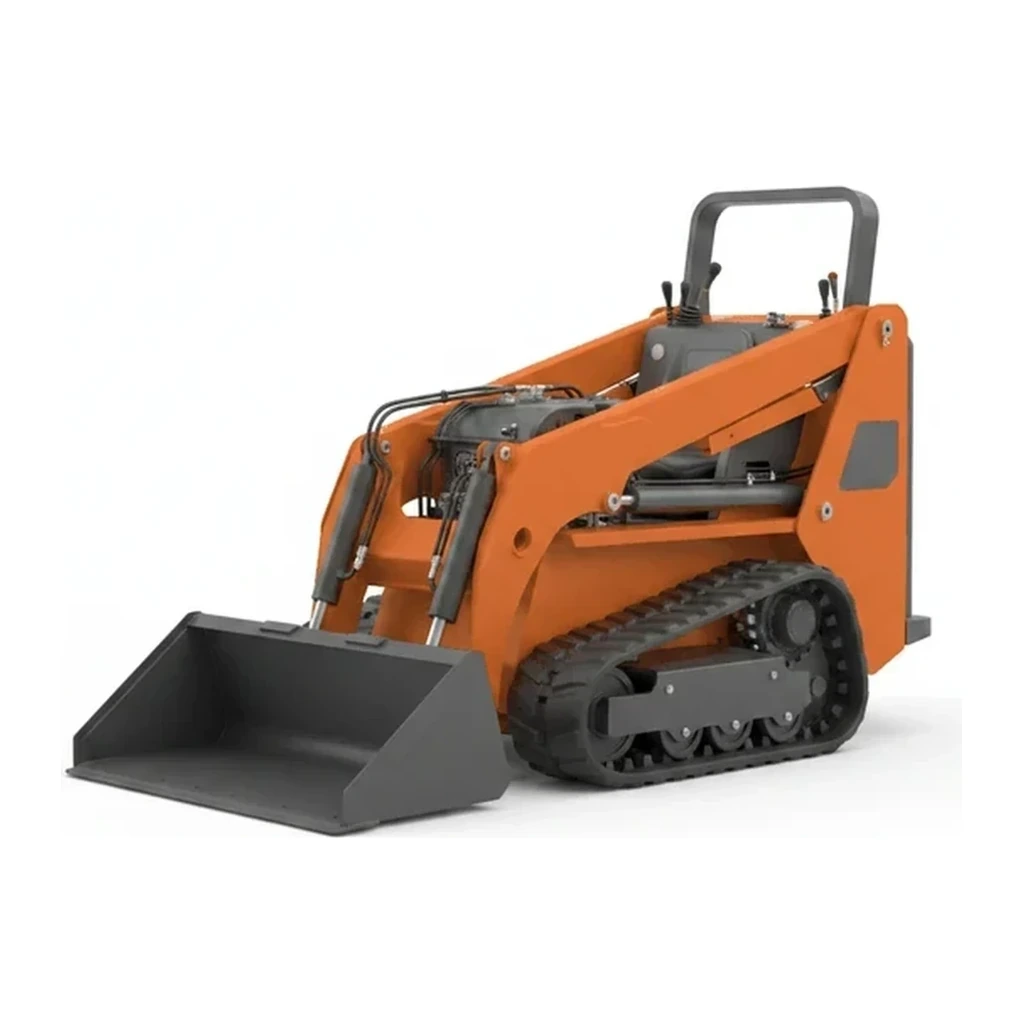
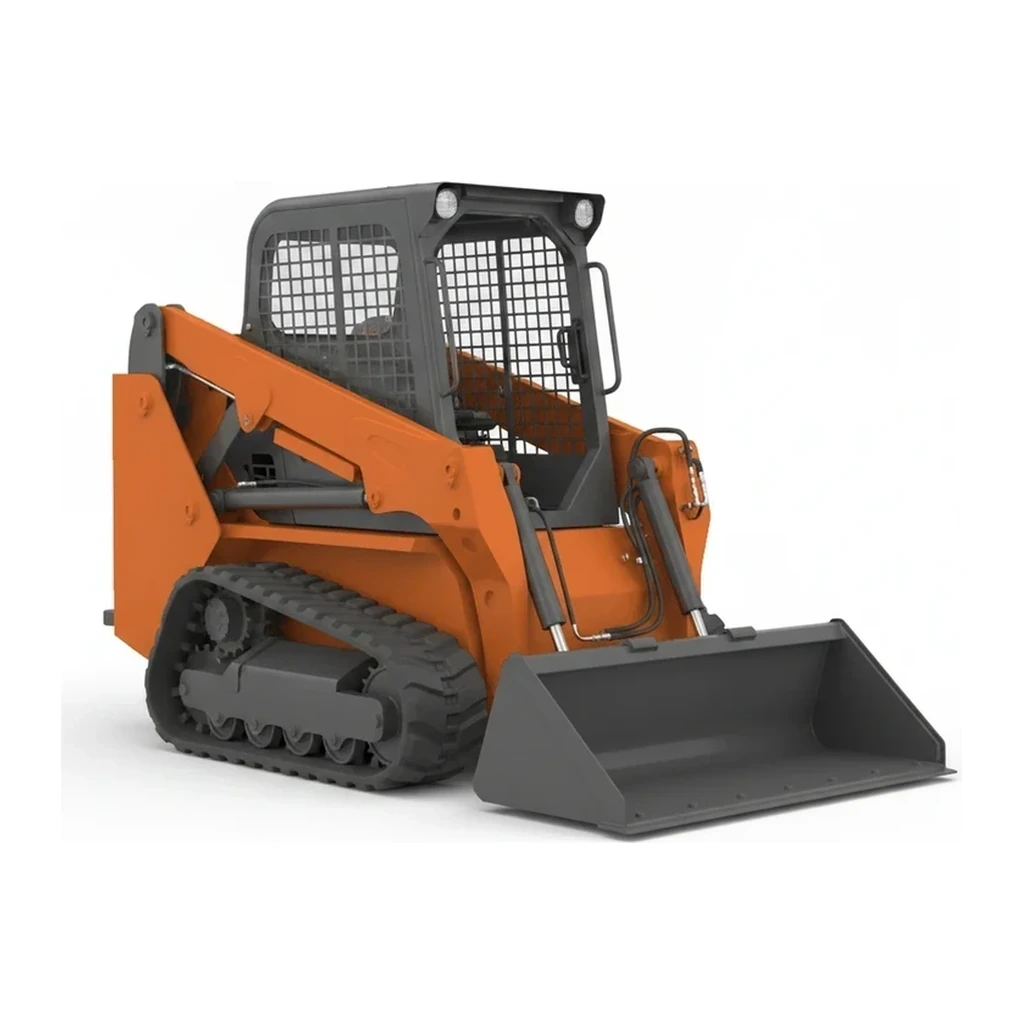
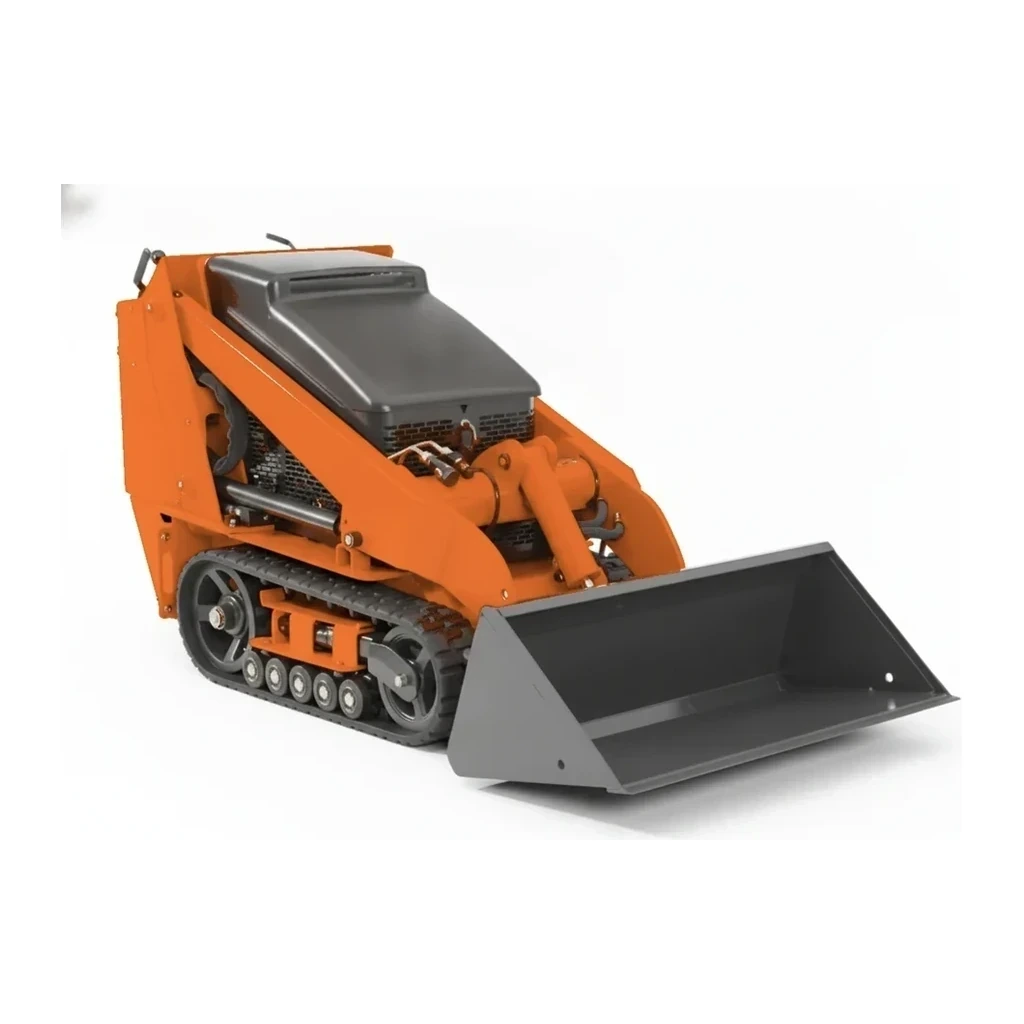
A small diesel or gasoline engine drives hydrostatic pumps powering either wheels or rubber tracks through differential-speed skid steering. The operator stands on a rear platform (or walks behind the smallest units) and works dual-hand controls for drive, lift and auxiliary hydraulics; there is no cab, which keeps overall height and weight down. The front plate accepts a universal mini attachment interface, and the auxiliary circuit — catalog flows run roughly 45-73 L/min — powers augers, trenchers, grapples and hydraulic breakers. The machine's working logic is that of a powered tool carrier: modest bucket capacity, but a full attachment ecosystem through openings a ride-on machine cannot pass.
Types & variants
- Stand-on (platform) units
- The dominant configuration — operator rides a rear platform, combining small footprint with reasonable travel speed.
- Walk-behind units
- The smallest and lightest machines; the operator walks behind, minimizing width and weight for the tightest access.
- Tracked models
- Rubber tracks for flotation and traction on turf, sand and mud — the standard for landscape duty.
- Wheeled models
- Tires for hard-surface work, at lower cost and higher surface speed.
Key specifications
| Specification | Typical range | What it means |
|---|---|---|
| Operating weight | 1,300–4,700 lb (590–2,132 kg) | From catalog records of 585-2,136 kg; the whole class sits under the 3 t band ceiling. |
| Engine power | 23-44 hp | Sized for the auxiliary circuit as much as the drive — attachment performance tracks this figure. |
| Rated lift capacity | 500–1,600 lb (227–726 kg) | From records of 227-726 kg; tipping records run 1,182-1,342 kg on the machines reporting it. |
| Auxiliary hydraulic flow | 45-73 L/min (12-19 gpm) | Determines which attachments the machine can run at rated performance. |
| Travel speed | 5.6-7.1 km/h | Walking-pace travel consistent with stand-on and walk-behind operation. |
How the industry sizes it
Mini skid steers are sized by operating weight and rated operating capacity, with the catalog carrying the class as a single band up to 3 t. Within that ceiling the practical gradations are access width (what gate or doorway the machine passes), lift capacity, and auxiliary flow for attachments; heavier units approach small compact track loaders in capability while keeping the stand-on format.
Applications
- Landscape construction and grading in fenced yards and tight lots
- Auger work for fence posts, footings and tree planting
- Material movement of soil, mulch and gravel through gate-width access
- Trenching for irrigation and low-voltage utilities with a trencher attachment
- Demolition cleanup and debris handling in confined or interior spaces
- Tree and nursery work with grapples and forks
Safety & operation
- Operate from the platform (or designated walk position) only — never ride the machine from anywhere else or walk beside a tracked unit in motion.
- Travel and turn with the load low; small footprint and high attachment loads make raised-load tipping the characteristic incident.
- Match attachment weight to rated capacity — the attachment itself consumes lift capacity before any payload.
- Call 811 before auger or trencher work; the class does much of its digging in developed residential ground.
- Keep bystanders clear; these machines work in occupied yards where the public is closer than on fenced construction sites.
Standards & certifications
- ISO · ISO 14397-1
- Rated operating capacity determination for loaders.
- OSHA · 29 CFR 1926.602
- Material handling equipment provisions applicable on construction sites.
- EPA · Tier 4 / 40 CFR Part 1039 & 1054
- Emissions rules for the small diesel and gasoline engines used across the class.
- CGA · 811 / Best Practices
- Utility damage-prevention process before ground-engaging attachment work.
Frequently asked
What is the difference between a mini skid steer and a regular skid steer?
How much can a mini skid steer lift?
What attachments do these machines run?
Tracks or wheels for a mini skid steer?
Compare popular models
Find by spec →Normalised to the same units. A dash means the figure was not published.
| Model | Operating weight | Max dig depth | Max reach | Engine power |
|---|---|---|---|---|
| Ditch Witch SK800 Mini Skid Steer | 2,919 lb (1,324 kg) | - | - | 25 hp |
| Ditch Witch ST37X Stand-On Trencher | 4,109 lb (1,864 kg) | - | - | 37 hp |
| Vermeer CTX100 Mini Skid Steer | 3,400 lb (1,542 kg) | - | - | 40 hp |
| Vermeer ML150 Mini Loader | 3,999 lb (1,814 kg) | - | - | 40 hp |
| Ditch Witch Zahn Tool Carrier | 1,290 lb (585 kg) | - | - | 27 hp |
| Vermeer CTX160 Mini Skid Steer | 4,114 lb (1,866 kg) | - | - | 40 hp |
Related equipment
Browse by manufacturer
Sources
Every specification is verified against the manufacturer's published data, with the source linked for reference.