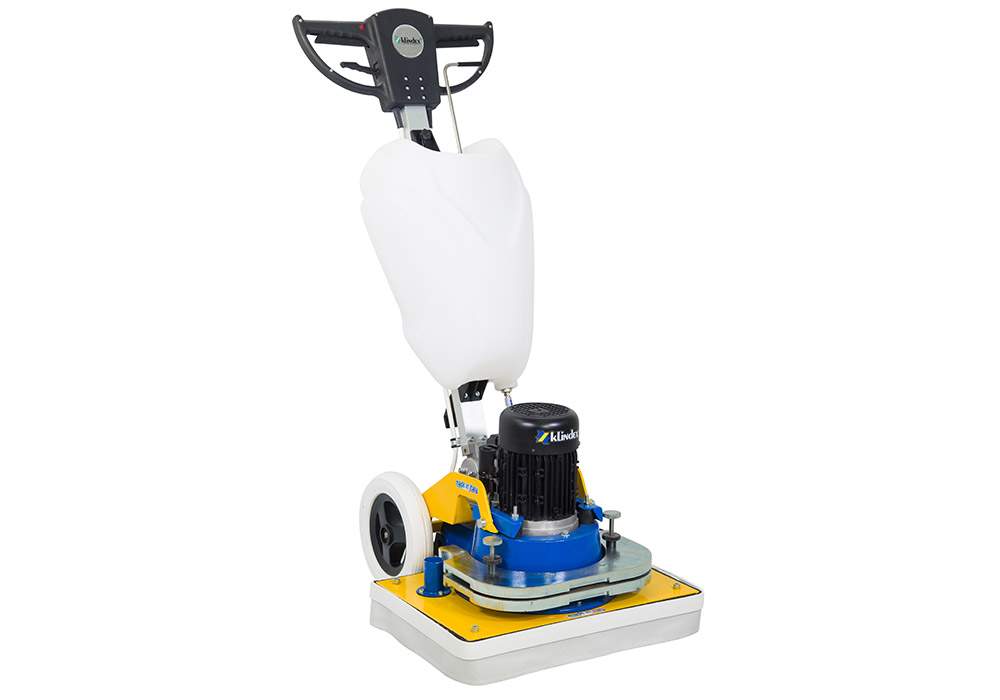
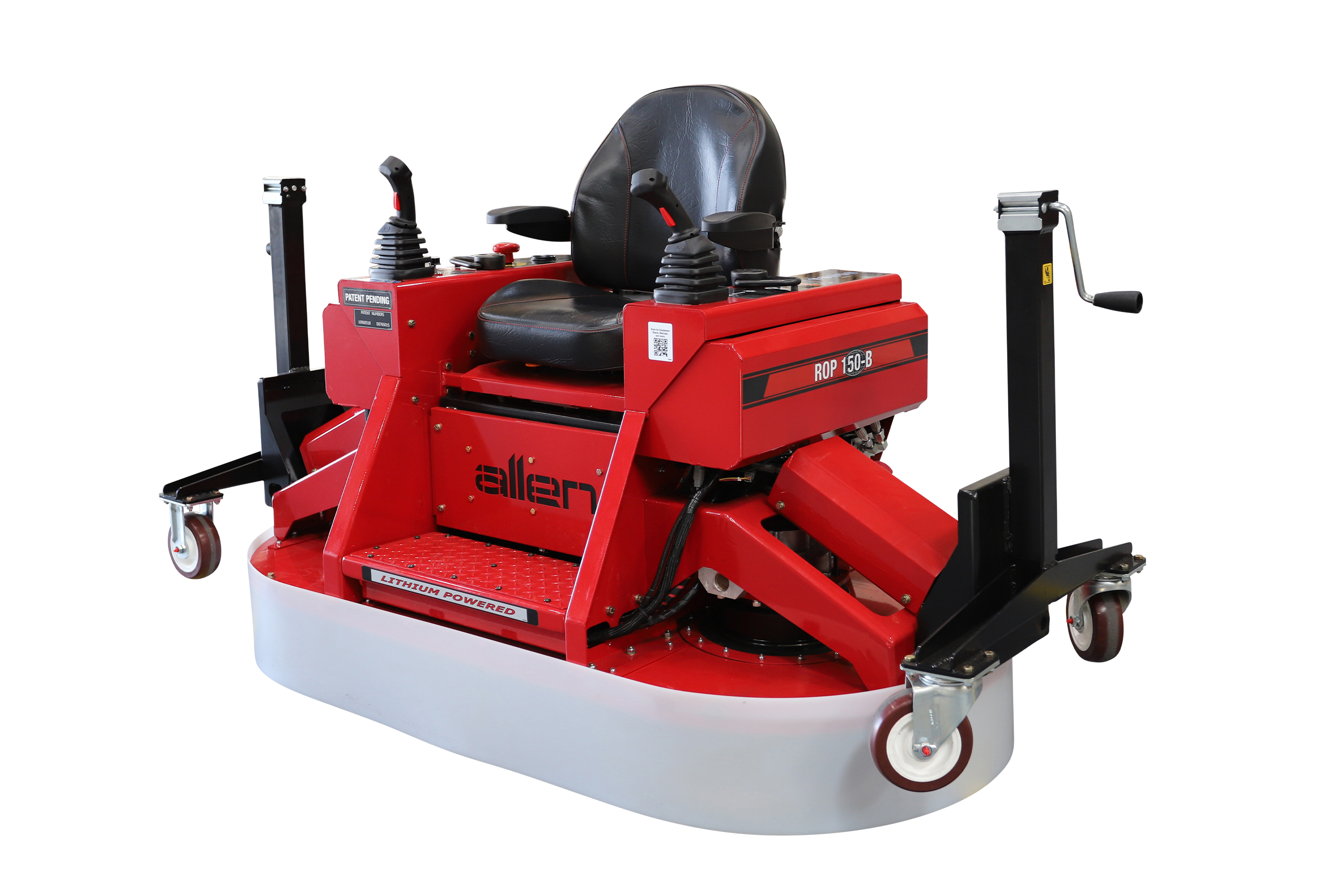
Floor Polisher / Burnisher
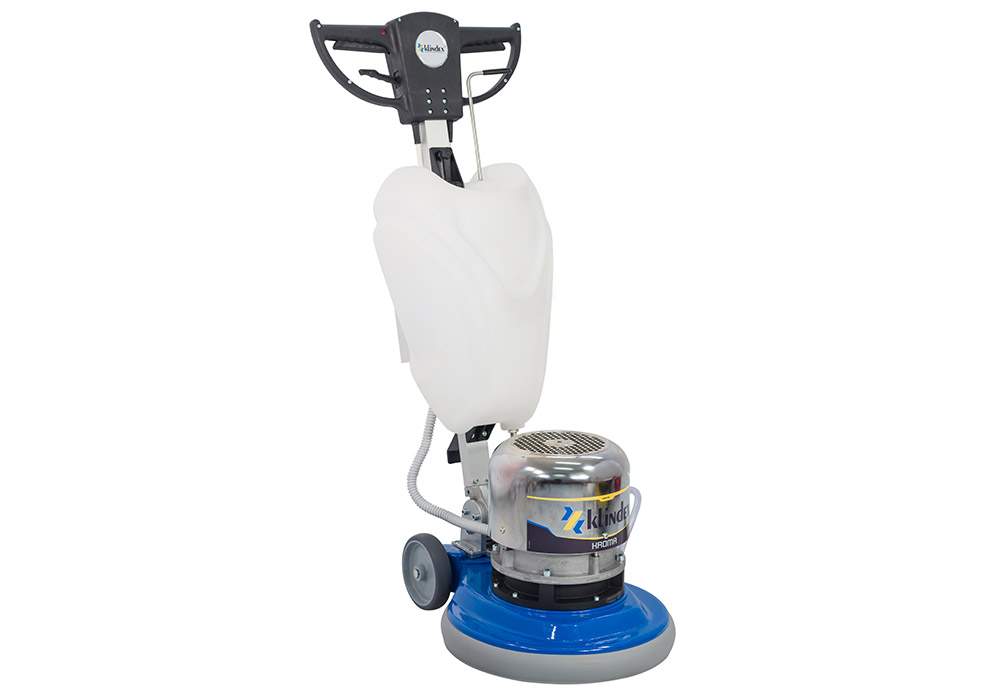
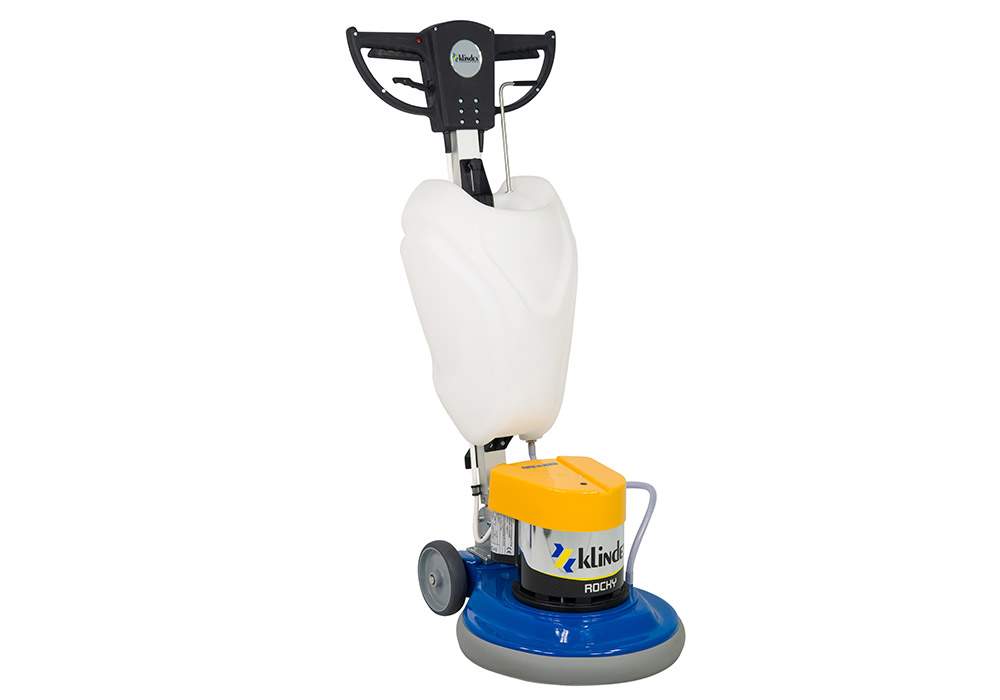
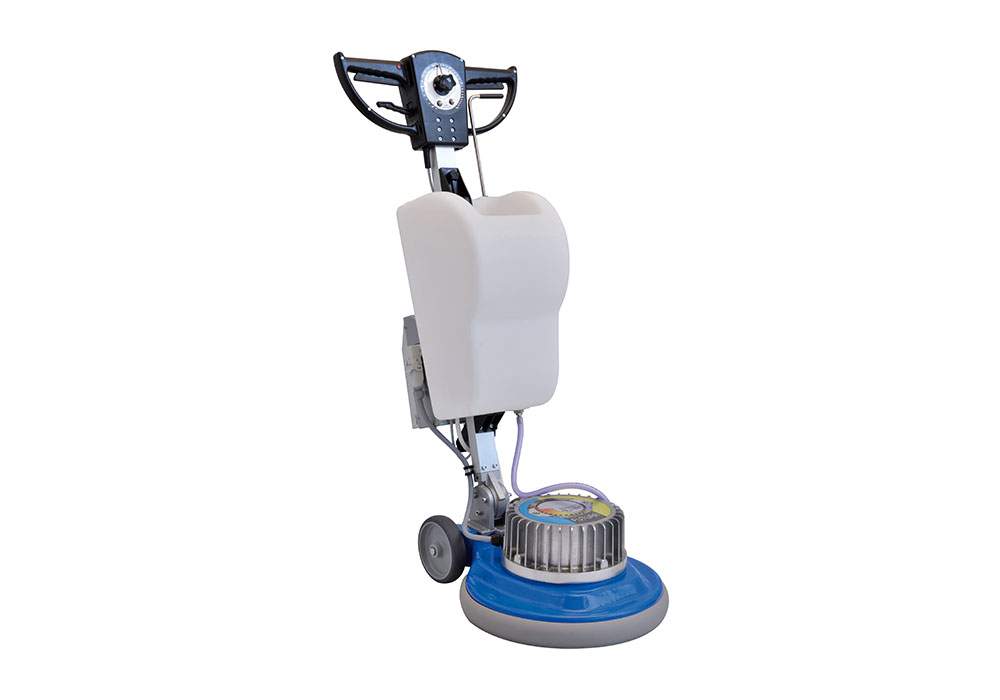
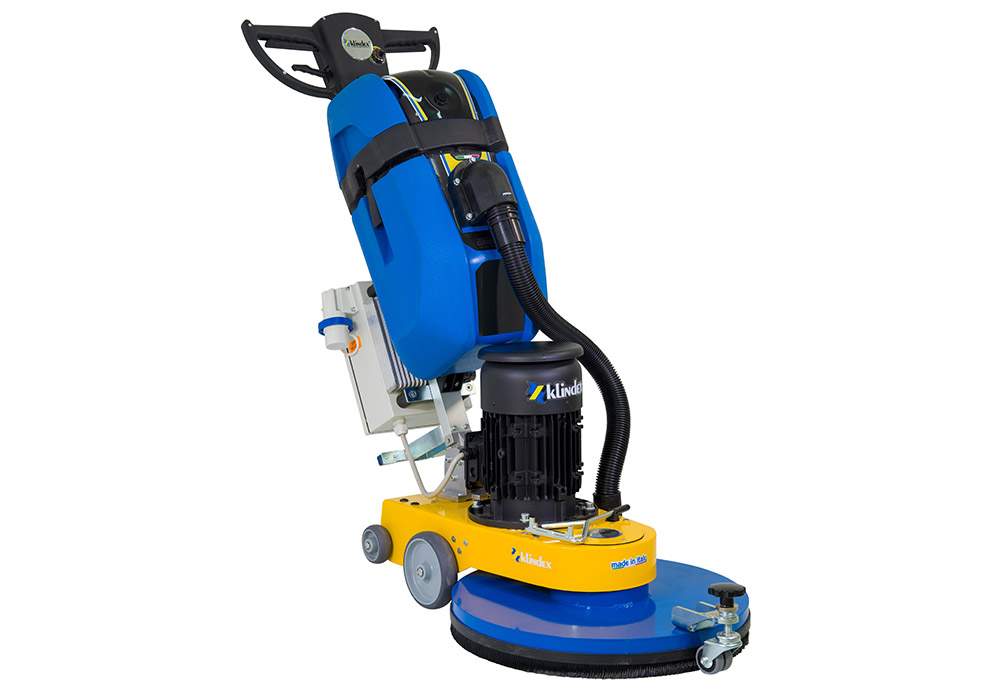
A floor polisher or burnisher is a rotary machine that refines a floor's finish — polishers work through progressive abrasive stages, while high-speed burnishers bring the final gloss up on concrete, terrazzo or finished resilient floors. The catalog lists 30 models from brands including Klindex, American Sanders, Aztec, Hydro-Force and Allen Engineering.
How it works
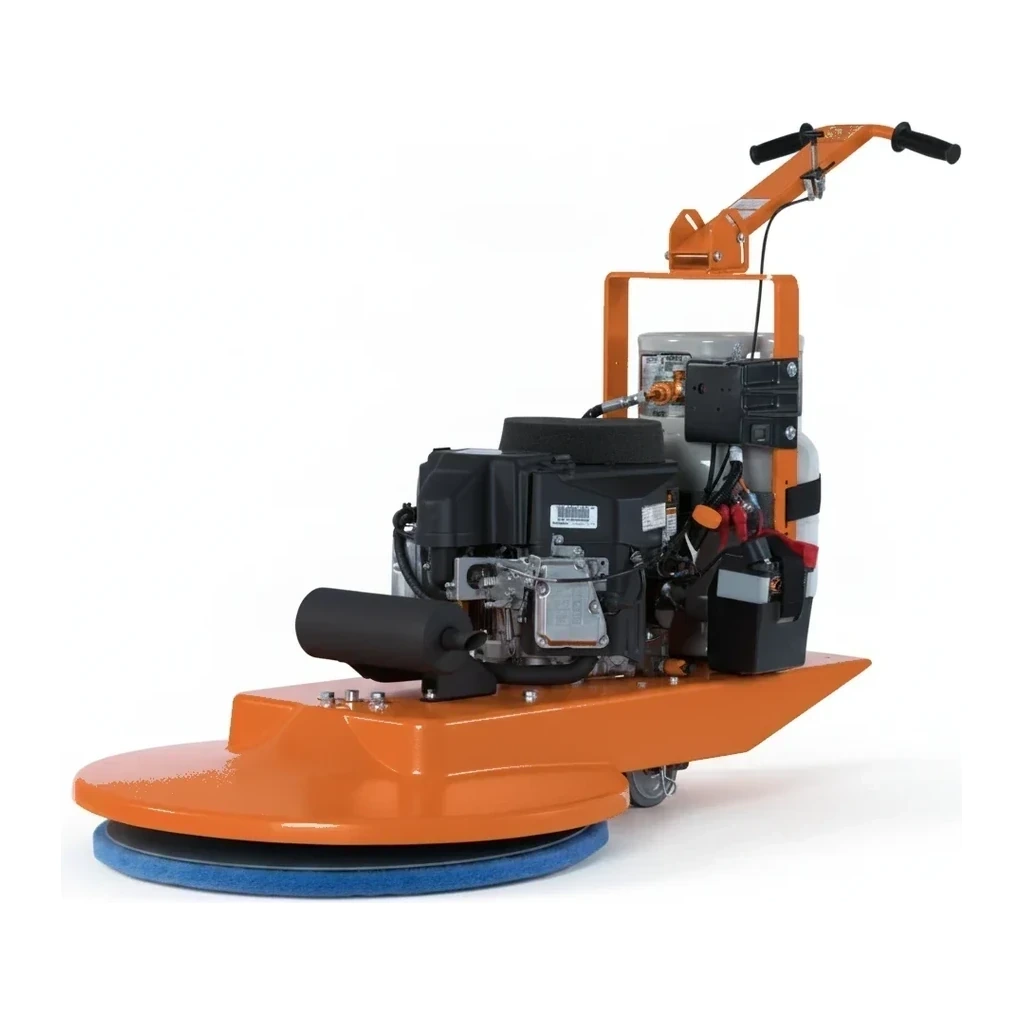
A polisher spins an abrasive pad or diamond-impregnated disc under controlled head pressure, removing microscopic amounts of surface with each pass so scratch patterns from the previous grit are replaced by finer ones. A burnisher runs a soft pad at much higher speed with light pressure, using friction to tighten and gloss the top surface rather than cut it. Power options span electric cord, battery and propane, with propane favored on large open floors for cord-free continuous runs.
Types & variants
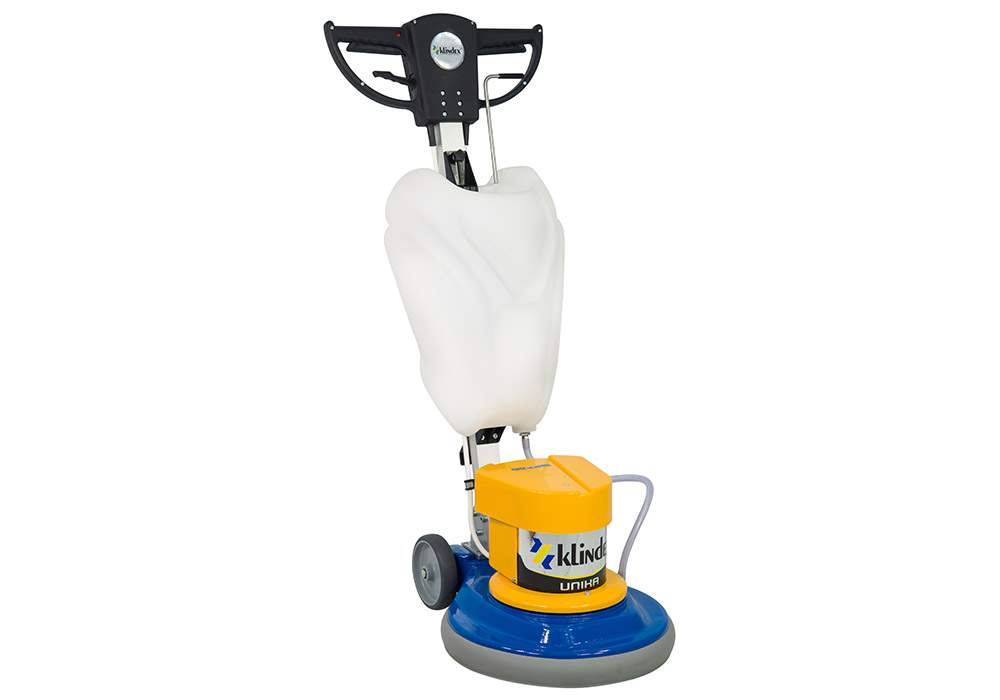
- Low-speed swing polishers
- Versatile single-disc machines for scrubbing, honing and polishing with interchangeable pads.
- High-speed burnishers
- Light-pressure, high-rpm machines that produce the final gloss on finished floors.
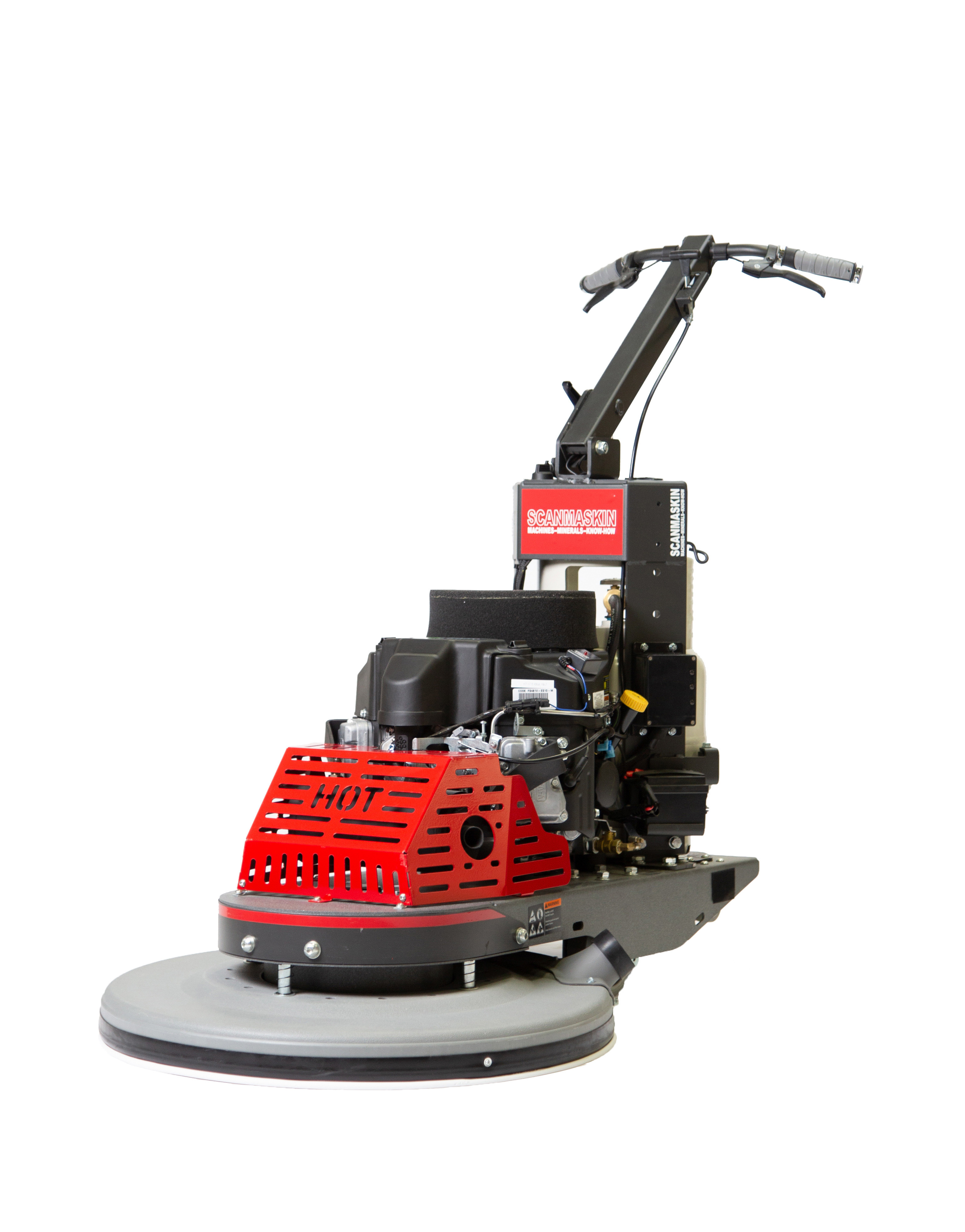
- Propane burnishers
- Engine-powered burnishers for large floor areas without cord management.
- Planetary polishing heads
- Multi-disc heads that flatten and refine concrete toward a polished finish.
Key specifications
| Specification | Typical range | What it means |
|---|---|---|
| Pad or disc diameter | Documented per model listing | Working width sets coverage rate and how close the machine works to walls. |
| Pad speed | Documented per model listing | Low speed suits cutting and honing; high speed produces burnished gloss. |
| Power source | Documented per model listing | Electric, battery or propane — determines run time, emissions and where the machine can operate. |
| Head pressure | Documented per model listing | Down-pressure controls cut aggressiveness during polishing stages. |
How the industry sizes it
Polishers and burnishers are sized by pad diameter and drive speed: larger diameters cover open floors faster, while smaller machines maneuver in aisles and rooms. The finish goal picks the machine type — cutting and honing call for low-speed or planetary heads, final gloss for a high-speed burnisher.
Applications
- Polishing concrete floors in retail, warehouse and institutional buildings
- Burnishing finished VCT and resilient floors to a high gloss
- Honing terrazzo and stone floors
- Maintaining polished concrete gloss as part of a floor care program
- Final-stage finishing after grinding and densifying
Safety & operation
- Propane burnishers produce carbon monoxide; they require ventilation, engine tuning and CO monitoring in enclosed spaces.
- Rotary machines torque against the operator — handle grip and pad contact are established before the switch is pulled.
- Pads and discs are inspected and centered before use; a shredded pad at burnishing speed becomes a projectile.
- Electrical cords are kept behind the work path to avoid runover on cord-powered machines.
Standards & certifications
- OSHA · 29 CFR 1910.1000
- Air contaminant exposure limits, governing CO exposure from propane-powered floor machines indoors.
- NFPA · 58
- Liquefied petroleum gas code covering propane cylinder handling and storage.
- UL · 1017
- Safety standard applicable to commercial floor maintenance machines.
Frequently asked
What is the difference between polishing and burnishing?
When is a propane machine the right choice?
Can a burnisher fix a dull, scratched floor?
Related equipment
Browse by manufacturer
Sources
Every specification is verified against the manufacturer's published data, with the source linked for reference.
All models
30 models · Every spec cited to source