

150-350 cfm Dust Extractor / HEPA Vacuum
The 150-350 cfm dust extractor / HEPA vacuum is the workhorse of jobsite dust control, sized to supply a single-disc grinder or walk-behind saw with continuous extraction. This mid-range class bridges lighter units designed for occasional hand-tool use and larger extractors that feed multiple tools or heavy concrete-prep equipment. With flow rates between 200 and 336 cfm (actual measured range in gallons per minute), machines in this band handle the sustained dust loads typical of floor grinding, saw cutting, and demolition prep.
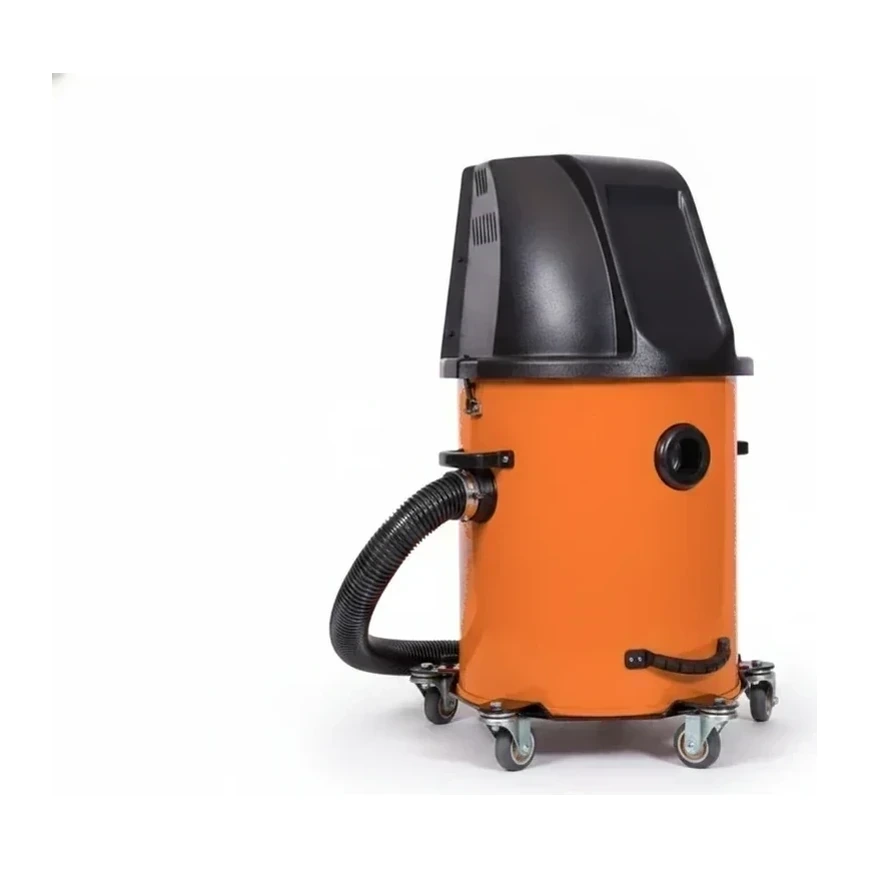
Cat classes
Pick a size class: capacity and reach differ across the range.
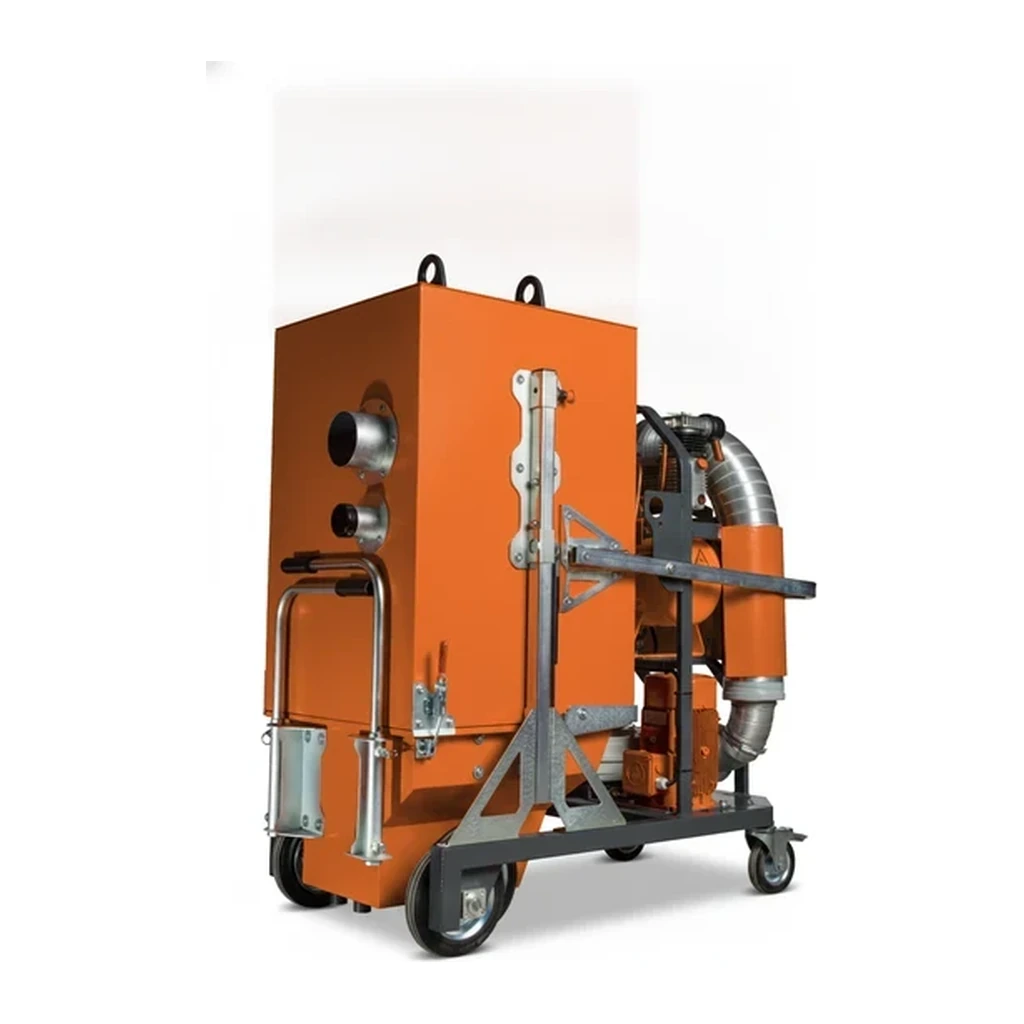
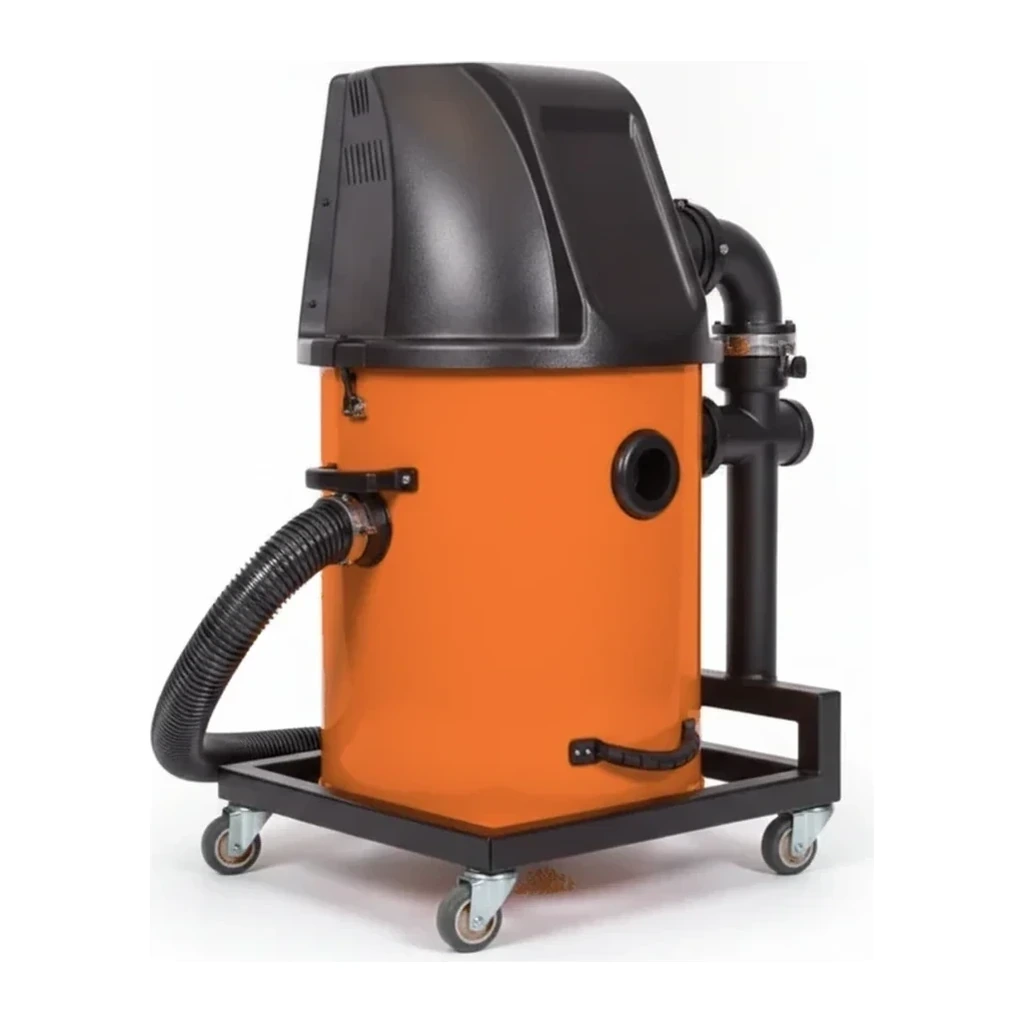
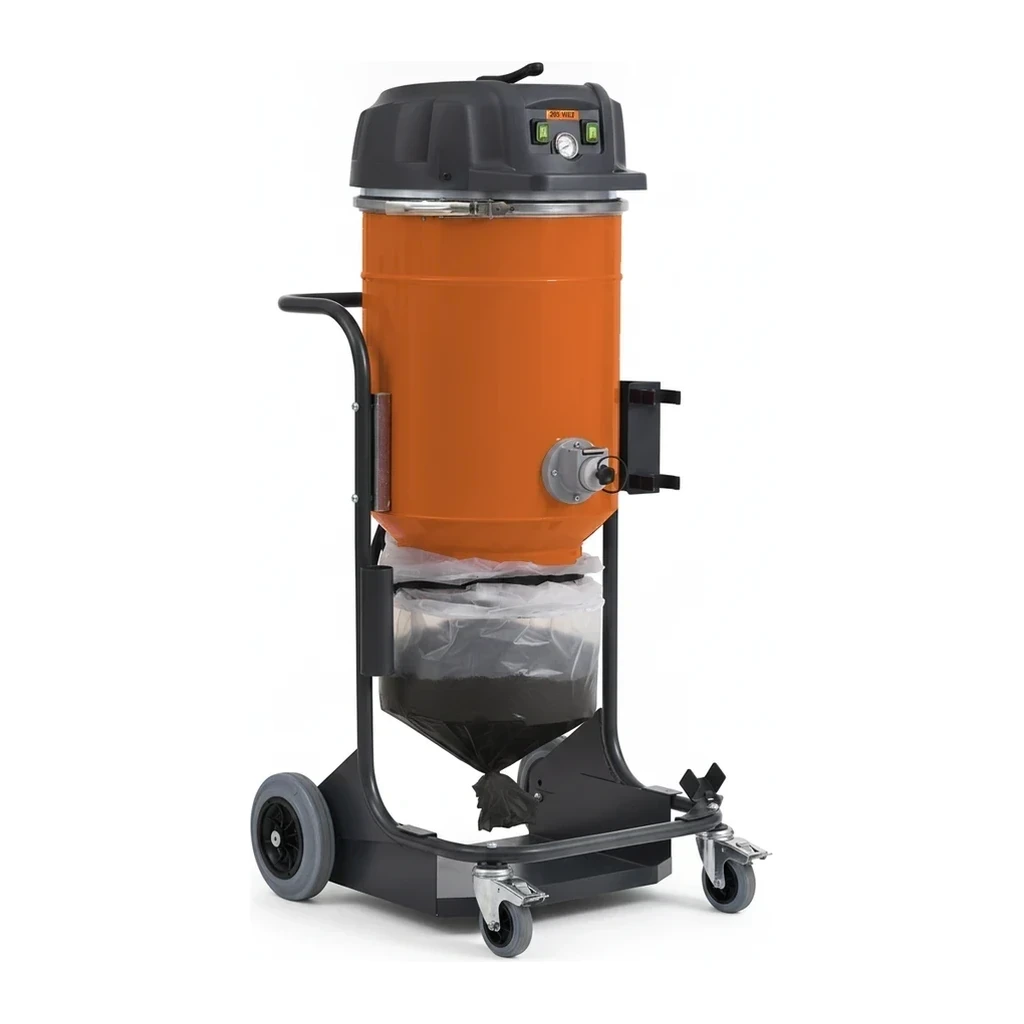
Key specifications
| Specification | Typical range | What it means |
|---|---|---|
| Flow rate | 200-336 cfm | Volume of air moved per minute; higher flow sustains extraction when filters load with fine concrete or silica dust. |
| Filtration class | HEPA (H13 or equivalent) | Captures at least 99.95% of particles ≥0.3 microns, meeting OSHA silica-dust-control requirements on most applications. |
| Filter area | Variable across models | Larger filter surface area extends runtime between cleaning cycles under heavy dust loads. |
How to choose
This 150-350 cfm class is appropriate when the work involves sustained operation of a single high-demand tool: 7" or 9" grinders, 14" or 16" walk-behind saws, rotary hammers with dust shrouds, or hand-held scarifiers. For intermittent hand-tool use (random-orbit sanders, small drills) where airflow demands are lighter and portability is paramount, the Up to 150 cfm Dust Extractor / HEPA Vacuum class offers a more compact footprint. When simultaneous extraction from multiple grinders is required, or when feeding ride-on floor equipment and large shot blasters, the 350+ cfm Dust Extractor / HEPA Vacuum class delivers the necessary reserve capacity and larger filter area to prevent flow loss.
What this size handles
- Concrete floor grinding with a single 7" or 9" cup-wheel grinder in occupied buildings
- Cutting control joints or slab penetrations with a 14" walk-behind saw during tenant improvement work
- Chipping and demolition prep with a rotary hammer fitted with a dust-collection shroud
- Epoxy and coating removal using a single-disc floor machine with carbide or diamond tooling
- Tuckpointing and masonry restoration where silica dust control is mandated
- Coring and drilling operations in healthcare, school, or food-processing facilities with strict air-quality protocols
Safety & operation
- HEPA filtration is essential for compliance with OSHA 29 CFR 1926.1153 (respirable crystalline silica); verify filter certification and replacement intervals
- Automatic filter-cleaning systems (mechanical shakers or reverse-pulse) maintain airflow and prevent dust breakthrough under sustained loads
- Grounded power cords and static-dissipative hoses reduce ignition risk when extracting combustible dusts (wood, certain coatings)
- Disposal of collected dust must follow site-specific protocols for hazardous materials, especially when silica content exceeds regulatory thresholds
Transport & logistics
- Machines in this class are typically wheeled carts weighing 60-120 lb; most load into a van, pickup bed, or trailer by one or two workers without mechanical assistance
- Compact footprint (often under 24" wide) allows passage through standard doorways and freight elevators; no special transport permits required
Power & supply
- Standard 120 V AC, 15-20 A circuits; some models offer 240 V options for higher sustained suction or faster filter-cleaning cycles
- Power consumption typically ranges from 1,500 to 3,000 watts; verify job-site circuit capacity when operating alongside the connected power tool
Frequently asked
What differentiates a dust extractor from a standard shop vacuum in this size range?
Can one 200-336 cfm extractor supply two grinders simultaneously?
How does filter loading affect performance over a shift?
Related equipment
Browse by manufacturer
Sources
Every specification is verified against the manufacturer's published data, with the source linked for reference.
150-350 cfm Dust Extractor / HEPA Vacuum
14 models · Every spec cited to source
